Economic effects (DP IB History: SL): Revision Note

Summary
Mao's policies transformed China's economy through land redistribution, collectivisation and state-directed industrialisation
Some reforms initially improved living standards and increased access to basic services
Major campaigns such as the Great Leap Forward caused widespread famine and economic disruption
By Mao's death in 1976, China had achieved greater industrial capacity, but this had come at a significant human cost
Land reform and collectivisation
The 1950 Land Reform Law confiscated land from landlords and redistributed it to approximately 300 million peasants
Many rural families gained land ownership for the first time, increasing support for the new Communist government
The reform ended the traditional landlord-peasant system that had dominated rural China for centuries
Greater equality was created in the countryside
For many peasants, land reform initially improved economic security and living standards
However, from 1953 onwards, private farms were gradually merged into collective farms
By 1956, most peasants belonged to large agricultural cooperatives controlled by the state
In 1958, Mao introduced the People's Communes during the Great Leap Forward
Communes often contained 20,000–30,000 people
They controlled farming, education, healthcare and local administration
Private ownership was largely abolished and peasants worked collectively for work points rather than individual profit
Communal dining halls reduced family control over food and daily life
Around 750 million people were organised into approximately 26,000 communes (1958)
Many peasants lost incentives to increase production because rewards were no longer linked directly to effort
Collectivisation increased state control over rural economic life but reduced individual freedom
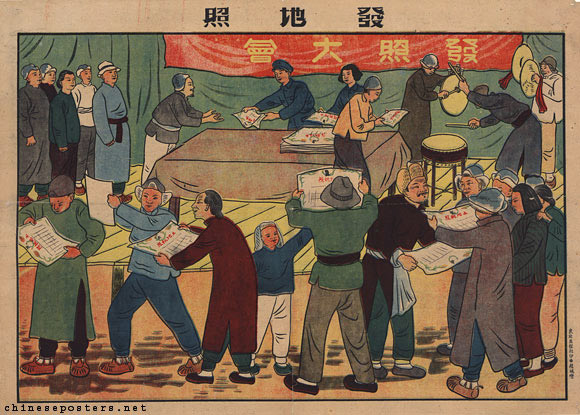
The Great Leap Forward and Famine (1958–1962)
Economic policies
Mao aimed to transform China into a major industrial power
Peasants were encouraged to produce steel in backyard furnaces while continuing agricultural work
Unrealistic production targets led local officials to exaggerate agricultural output figures
The state collected excessive grain quotas based on false reports
Labour was diverted away from farming into industrial and construction projects
Impact on people's lives
Agricultural production collapsed due to poor planning, bad weather and government policies
Food shortages developed across much of rural China
The resulting famine became the worst in modern Chinese history
Millions suffered from starvation, malnutrition and disease
Families were forced to sell possessions, eat tree bark and migrate in search of food
Some regions experienced reports of cannibalism during the worst stages of the famine
Rural living standards fell dramatically
Evidence: Historians estimate that between 20 and 45 million people died during the famine between 1959 and 1961
Historiography
The number of deaths during the Great Leap Forward (1958–1962) is debated because reliable records were often hidden or altered, but most historians agree it was the deadliest famine in human history.
Estimates:
Official Chinese figures (earlier estimates): around 15 million deaths
Most modern historians: 20–30 million deaths
Frank Dikötter estimates around 45 million deaths
Yang Jisheng estimates approximately 36 million deaths
Examiner Tips and Tricks
For essays, it is safest to write:
'The Great Leap Forward (1958–1962) led to a catastrophic famine in which between 20 and 45 million people died, making it the deadliest famine in modern history.'
Industrial development
The First Five-Year Plan (1953–1957) focused on heavy industry with assistance from the Soviet Union
Large investments were made in steel, coal, machinery and infrastructure
Industrial output increased significantly during the 1950s
New factories created employment opportunities in urban areas
Urban workers often received secure employment, housing and welfare benefits through state-owned enterprises
China developed a stronger industrial base than had existed before 1949
However, consumer goods remained limited because heavy industry was prioritised over improving living standards
Changes in living standards
Improvements
Basic healthcare became more widely available through the "Barefoot Doctors" programme
Literacy campaigns improved educational opportunities
Employment was generally guaranteed in urban areas
Women's participation in the workforce increased significantly
Life expectancy increased from around 35 years in 1949 to over 60 years by the mid-1970s
Limitations
Consumer goods remained scarce throughout much of Mao's rule
Housing shortages were common in growing cities
Rural incomes remained low
Food rationing existed in many areas
Economic opportunities were often determined by state planning rather than individual choice
Most Chinese citizens remained relatively poor compared with people in developed countries
Economic equality
Mao aimed to reduce economic inequalities between social classes
The landlord class was eliminated and wealth redistribution became widespread
Wage differences were deliberately kept small
Urban workers gained greater economic security through the "iron rice bowl" system of guaranteed employment and welfare
However, significant inequalities remained between urban and rural populations
City residents generally received better access to food, healthcare and education than rural citizens
Economic equality often came at the expense of personal choice and economic efficiency
Overall impact of economic policies
Mao's economic policies fundamentally transformed Chinese society and ended many traditional inequalities
Land reform and industrialisation initially improved conditions for many people
The Great Leap Forward caused catastrophic economic disruption and famine
Healthcare, education and life expectancy improved significantly during Mao's rule
Living standards remained relatively modest and consumer goods were scarce
By 1976, China was more industrialised and economically equal than in 1949, but economic growth had often been achieved through coercion and at a huge human cost
Historiography
Orthodox historians emphasise the human suffering caused by collectivisation and the Great Leap ForwardRevisionist historians argue that Mao's policies also laid the foundations for later economic growth through industrial development, improved literacy and better public health
Most historians agree that Mao's economic legacy was mixed; significant long-term development accompanied by severe short-term hardship, particularly during the Great Leap Forward

Unlock more, it's free!
Join the 100,000+ Students that ❤️ Save My Exams
the (exam) results speak for themselves:

Was this revision note helpful?
