Use of force (DP IB History: SL): Revision Note

Summary
Mao relied heavily on force, intimidation, and coercion to eliminate opposition and maintain CCP control after 1949
Violence was used against real and perceived enemies of the regime, creating a climate of fear that discouraged resistance
The PLA, Red Guards, labour camp system, and political campaigns all played important roles in enforcing obedience
The use of force was particularly effective because it operated alongside legal methods and propaganda, making opposition both dangerous and difficult
Although force was highly effective in removing opposition, it often created fear and suffering on a massive scale
Eliminating opposition
Suppression of Counter-Revolutionaries Campaign (1950–1953)
Introduced in October 1950 to eliminate individuals considered a threat to the communist revolution and strengthen the Chinese Communist Party (CCP) control over China
Former GMD officials, landlords, religious leaders, businessmen, and suspected spies were identified as potential enemies of the state
Public accusation meetings and mass rallies were organised to expose alleged counter-revolutionaries and demonstrate the authority of the CCP
Punishments included imprisonment, forced labour, and execution, with official figures reporting approximately 712,000 executions, although some historians suggest the true figure may have exceeded 1 million
The campaign created widespread fear and demonstrated that opposition to the regime would not be tolerated
Examiner Tips and Tricks
Evidence for the themes 'use of force' and 'legal methods' sometimes overlap, as Mao used force 'legally' as set out by the CCP law.
For example, the Suppression of Counter-Revolutionaries Campaign (1950–1953) can be used in both themes because it was a legal policy enforced by Mao, but it also shows how he used force to maintain control in China.
Purges within society
Mao regularly used political campaigns to identify and remove individuals considered insufficiently loyal to communist rule
Citizens accused of opposing socialism could face:
Investigation
Dismissal from employment
Imprisonment
Public humiliation
The threat of punishment encouraged conformity and reduced the likelihood of organised resistance
Mao regularly used political campaigns to identify and remove individuals considered insufficiently loyal to communist rule, particularly during:
The Three-Antis Campaign (1951)
The Five-Antis Campaign (1952)
The Anti-Rightist Campaign (1957–1959)
Following the Hundred Flowers Campaign (1956–1957), many intellectuals who criticised the CCP were denounced, removed from professional positions, or sent to labour camps
The Laogai system
Labour camps
The Laogai ("reform through labour") system was established to punish, isolate, and re-educate individuals considered enemies of the state
Prisoners included:
Political opponents
Religious believers
Former GMD supporters
Intellectuals
Individuals accused of anti-communist activities
Inmates were required to perform hard labour in mines, factories, farms, and construction projects under harsh conditions
Labour was intended not only as punishment but also as a means of ideological reform and political indoctrination
Millions of people passed through the Laogai system during Mao's rule
The existence of labour camps created a powerful deterrent against dissent
Many Chinese citizens avoided criticising the government because they feared imprisonment or forced labour
The Cultural Revolution (1966–76)
The Cultural Revolution was launched by Mao in 1966, after the failure of the Great Leap Forward had weakened his position within the CCP
Mao feared that leaders such as Liu Shaoqi and Deng Xiaoping were moving China away from revolutionary socialism and reducing his influence
Mao encouraged millions of young people to join the Red Guards to identify, attack and remove perceived enemies of the revolution
Red Guards targeted teachers, intellectuals, government officials and party members accused of being "capitalist roaders" or insufficiently loyal to Mao
Victims were subjected to struggle sessions, where they were publicly humiliated, beaten, forced to confess to alleged crimes and often imprisoned
Homes were searched, property was confiscated and cultural artefacts associated with the "Four Olds" were destroyed
Case Study
The Four Olds were:
Old Ideas (jiu sixiang)
Traditional beliefs and ways of thinking that conflicted with Maoist ideology
Old Culture (jiu wenhua)
Traditional Chinese literature, art, religion, and cultural practices
Old Customs (jiu fengsu)
Long-established social traditions and ceremonies
Old Habits (jiu xiguan)
Everyday behaviours and practices associated with pre-communist China
As part of the attack on the "Four Olds", Red Guards also attacked temples, churches, historical sites, books and artwork
People associated with traditional culture or religion were often publicly criticised and persecuted
The attack on the Four Olds helped Mao strengthen ideological control by removing alternative beliefs and encouraging loyalty to Maoism
Violence became widespread as Red Guard groups competed to prove their revolutionary commitment and loyalty to Mao
The Cultural Revolution also saw senior CCP leaders removed from power
This included Liu Shaoqi, who was imprisoned and died in custody in 1969
Historians estimate that between one and two million people died, while tens of millions experienced persecution, imprisonment or forced labour
The campaign created an atmosphere of fear throughout China, making criticism of Mao extremely dangerous
This allowed Mao to eliminate political rivals and re-establish himself as the dominant figure within the CCP
The revolution also demonstrated Mao's willingness to use violence against both ordinary citizens and senior party officials to maintain power
However, the disorder became so severe that Mao was eventually forced to rely on the People's Liberation Army (PLA) to restore stability
This highlights the limitations of mass violence as a method of control
The People's Liberation Army (PLA)
The PLA was the ultimate source of force within Mao's China
It ensured that CCP authority could be enforced throughout the country
Having secured Communist victory in the Chinese Civil War in 1949, the PLA remained one of the most loyal institutions within the regime
Its existence discouraged organised opposition because potential opponents knew that resistance could be met with overwhelming military force
The PLA also supported the implementation of government policies and reinforced CCP authority in both urban and rural areas
Under Defence Minister Lin Biao, the PLA played a major role in spreading Mao's cult of personality during the 1960s
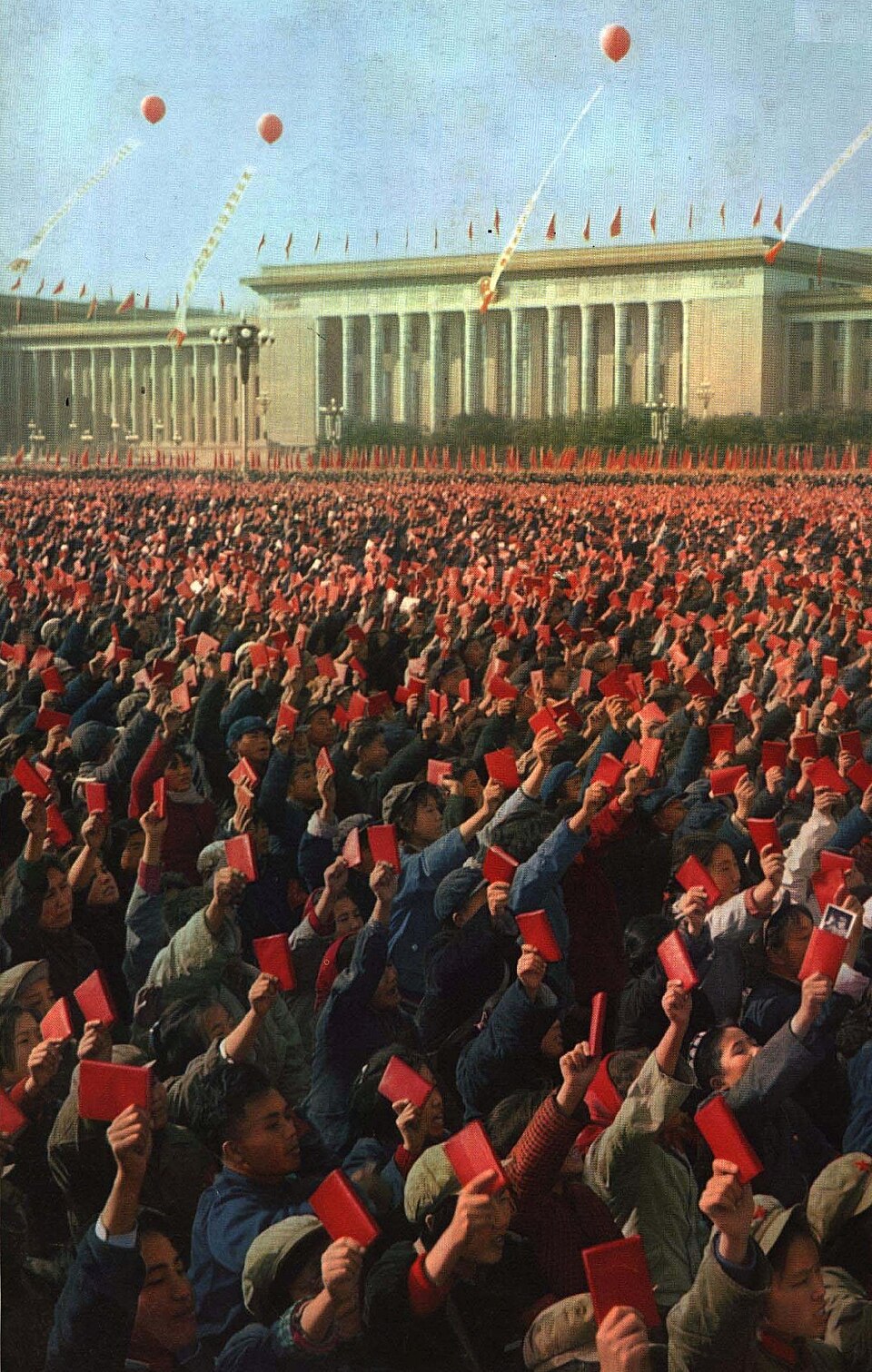
Soldiers were encouraged to study Mao's writings, while the Little Red Book was distributed widely throughout Chinese society
In 1967–68, Mao ordered the PLA to intervene with Red Guard violence, to restore stability and reassert central government control
Soldiers disarmed radical Red Guard groups, suppressed factional violence and took control of many local Revolutionary Committees
The PLA supervised the relocation of millions of urban youths to the countryside as part of Mao's re-education campaign
Case Study
Mao's re-education campaign
The re-education campaign was Mao's effort during the Cultural Revolution to reshape education so that it promoted Maoist ideology, revolutionary values, and loyalty to the CCP rather than traditional academic learning
What did it involve?
Schools and universities were closed for long periods during the early Cultural Revolution
Students were encouraged to study Mao's ideas and the Little Red Book
Teachers and academics accused of promoting bourgeois or capitalist ideas were publicly criticised, persecuted, or removed
Educational achievement became less important than political loyalty
Millions of urban students were later sent to the countryside to learn from peasants as part of the "Up to the Mountains and Down to the Countryside Movement" (see case study below)
Case Study
"Up to the mountains and down to the countryside movement"
This movement, introduced in 1968, was created to strengthen communist ideology and reduce the influence of intellectual and urban culture
It also helped reduce unemployment and social unrest caused by the disruption of schools and universities during the Cultural Revolution with the Red Guards
What happened?
Between 1968 and 1976, approximately 17 million urban youths were sent to the countryside
Young people worked on farms and in villages whilst receiving political education based on Maoist principles
Many lived in difficult conditions and had limited opportunities for further education or professional careers
Many remained there for years before being allowed to return home
Impact
It helped to spread Maoist ideology and reinforced political control over young people
It reduced the influence of potentially disruptive Red Guard groups in cities
However, it disrupted the education and career prospects of an entire generation of Chinese youth
The PLA demonstrated that Mao's power ultimately depended not only on propaganda and ideology, but also on the willingness of the armed forces to support his leadership
The PLA acted as the final guarantor of Communist rule
They ensured that Mao could maintain control during periods of political crisis
Importance of force
Force helped Mao eliminate opposition, discourage dissent, and reinforce CCP authority throughout China
The threat of arrest, imprisonment, labour camps, public humiliation, and execution created a climate of fear that reduced resistance to the regime
Security organisations and political campaigns ensured that opponents could be identified and suppressed quickly
The Cultural Revolution demonstrated how violence and coercion could be used to enforce ideological conformity and strengthen Mao's authority
Historiography
Orthodox Interpretation
Historians such as Maurice Meisner argue that strong measures were necessary to stabilise China after decades of war, foreign invasion, and civil conflict.
This interpretation suggests that campaigns against opponents helped consolidate the new communist state and maintain order.
Revisionist Interpretation
Historians such as Jung Chang argue that force became a central feature of Mao's rule and was used to suppress opposition on a massive scale.
Chang emphasises the human cost of political repression.

Unlock more, it's free!
Join the 100,000+ Students that ❤️ Save My Exams
the (exam) results speak for themselves:

Was this revision note helpful?
