Propaganda (DP IB History: SL): Revision Note

Summary
Propaganda was one of Mao's most important methods of maintaining control because it promoted loyalty to the CCP, encouraged support for Mao's policies, and limited criticism of the regime
The CCP controlled newspapers, radio, literature, art, education, and public information, allowing Maoist ideology to dominate Chinese society
Propaganda helped develop Mao's cult of personality, portraying him as the heroic leader of the Chinese Revolution and the source of political wisdom
During major campaigns such as the Great Leap Forward and Cultural Revolution, propaganda was used to mobilise support, encourage participation, and suppress opposition
By controlling information and shaping public opinion, Mao strengthened ideological conformity and reinforced authoritarian rule
Control of the media
State control of information
Following the establishment of the People's Republic of China in 1949, the CCP gained control over newspapers, radio broadcasts, publishing houses, and film production
Information was carefully monitored to ensure that only messages supporting communist ideology and government policies reached the public
Criticism of Mao, the CCP, or socialist policies was rarely permitted, limiting alternative viewpoints and political debate
The state-controlled press presented CCP achievements positively whilst concealing failures and social problems
Promoting government policies
Newspapers and radio broadcasts were used to encourage support for major campaigns such as the Great Leap Forward (1958–1962) and the Cultural Revolution (1966–1976)
Positive reports often exaggerated successes in agriculture and industry, creating the impression that Mao's policies were achieving remarkable results
Propaganda helped maintain public confidence in the regime even during periods of economic difficulty
Case Study
People's Daily Newspaper (Renmin Ribao)
The official newspaper of the Chinese Communist Party
It regularly praised Mao and promoted government campaigns
During the Great Leap Forward (1958–62), newspapers reported impossible agricultural achievements
Headlines claimed grain harvests had doubled or tripled, despite widespread crop failures
Reports from places such as Henan Province claimed yields of over 10,000 jin of grain per mu, figures that were physically impossible
These stories encouraged local officials to exaggerate production figures and reinforced belief that Mao's policies were succeeding
Mao's cult of personality
Propaganda portrayed Mao as an extraordinary revolutionary leader whose ideas provided solutions to China's problems
Mao was presented as the architect of communist victory, national unity, and socialist transformation
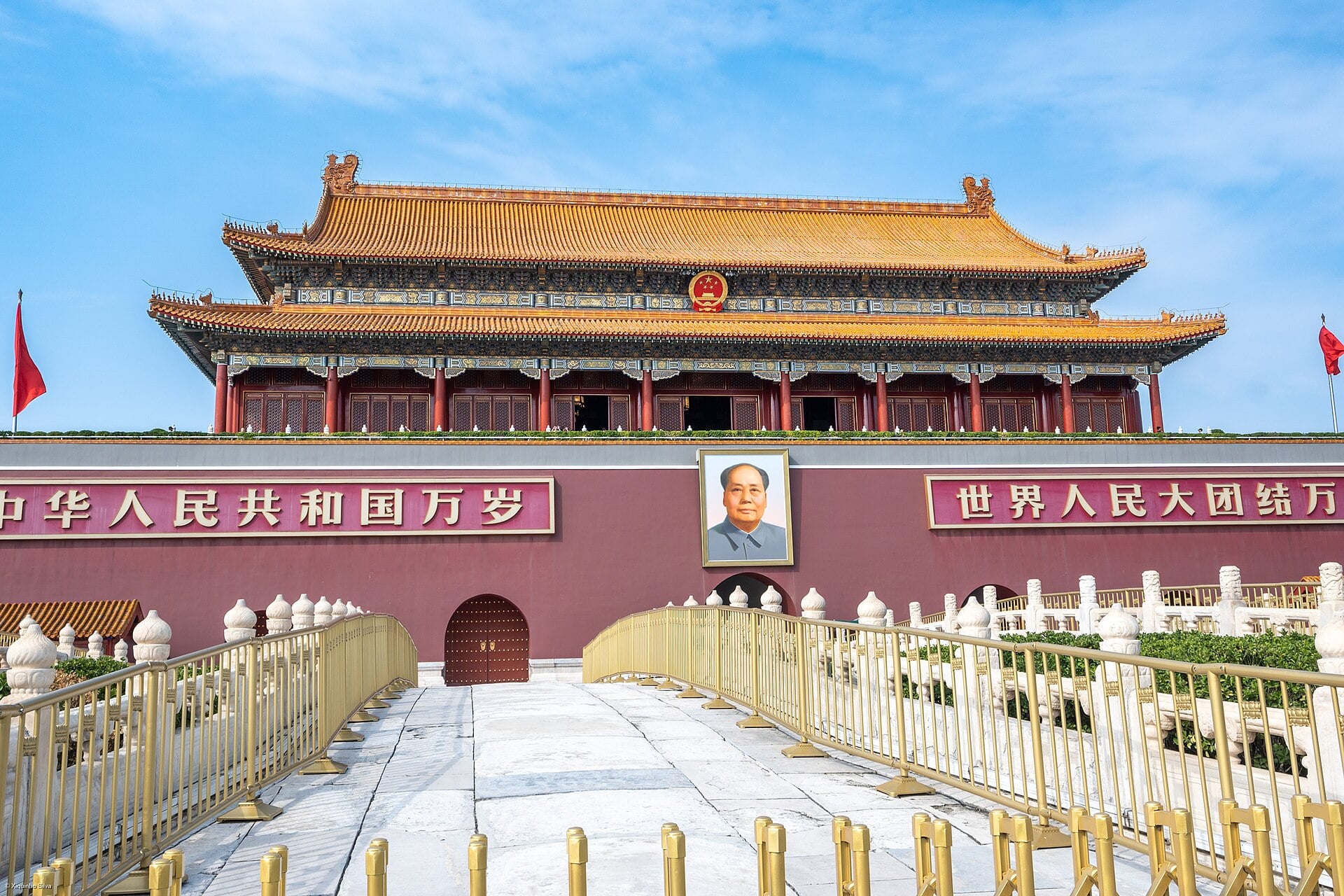
Portraits of Mao were displayed in schools, workplaces, public buildings, and homes across China
Mao's portrait dominated Tiananmen Square
Mao's symbolic swim in the Yangtze River (1966) was heavily publicised to demonstrate his strength and revolutionary spirit, helping to reinforce loyalty to Mao before the Cultural Revolution
Public displays of loyalty reinforced the image of Mao as the central figure within Chinese political life
Criticism of Mao could easily be interpreted as criticism of the revolution itself
The cult of personality strengthened Mao's authority by encouraging obedience and discouraging opposition
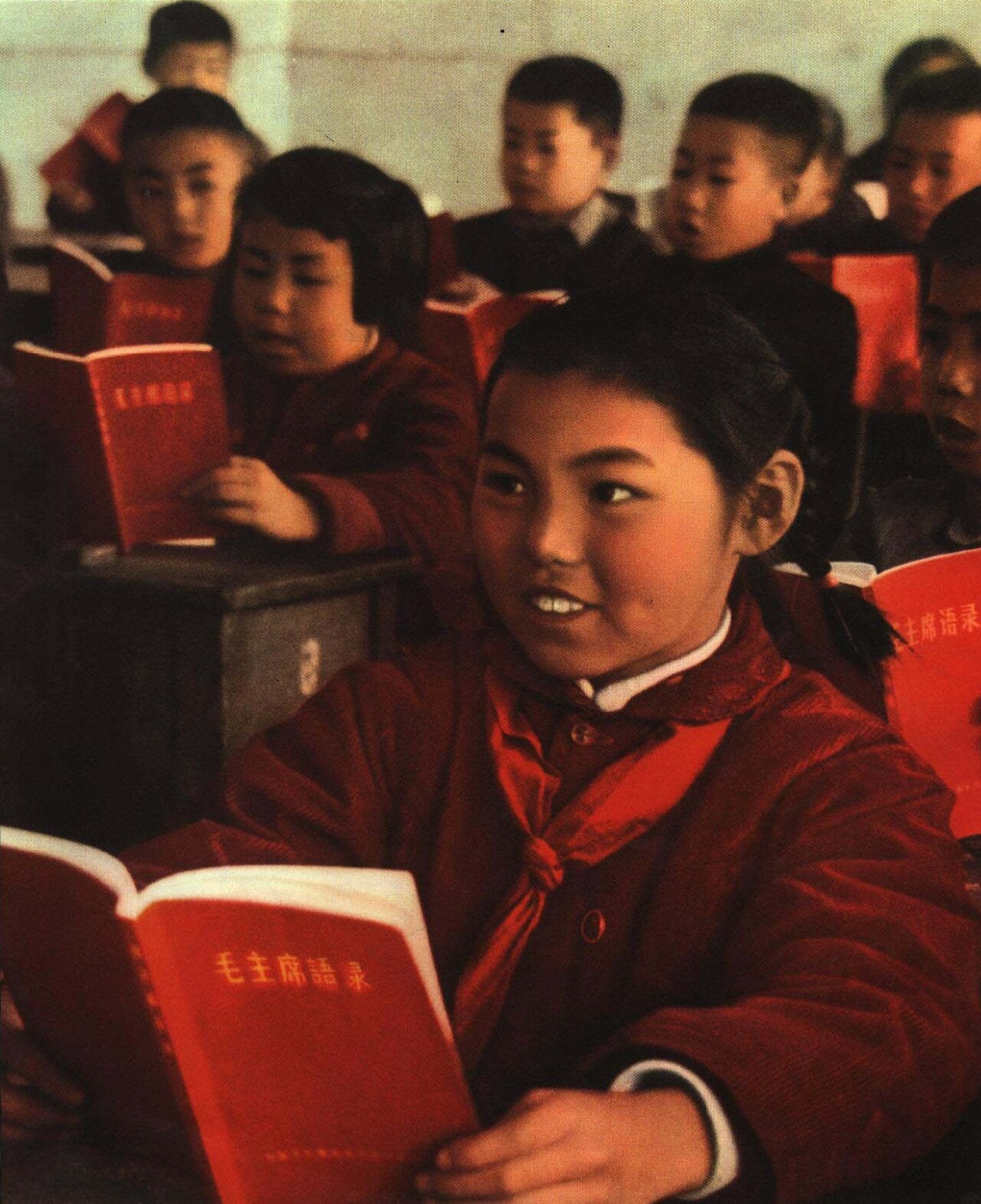
The Little Red Book
Mao's Little Red Book was first published in 1964 under the supervision of Lin Biao
It contained selected quotations from Mao's speeches and writings covering revolution, communism, class struggle, and political loyalty
Citizens were encouraged to read, memorise, and carry the book as a demonstration of commitment to Maoist ideology
The book became a powerful propaganda tool because it presented Mao's ideas as a source of guidance and wisdom
During the Cultural Revolution, Red Guards frequently used quotations from the book to justify their actions and demonstrate loyalty
Possessing and studying the book became an important sign of political commitment
More than 1 billion copies were printed during the 1960s
It is one of the most widely distributed books in world history
Education and mass campaigns
Education was used to promote communist values and loyalty to Mao from an early age
Students studied Maoist ideology and learned interpretations of history that emphasised CCP achievements
Teachers were expected to support government policies and reinforce communist beliefs in the classroom
During the Cultural Revolution, political loyalty became more important than academic achievement
Schools focused heavily on Maoist ideology, revolutionary values, and criticism of perceived enemies of the revolution
Young people were encouraged to see Mao as the ultimate source of political authority
Mao used propaganda to mobilise the Red Guards [INSERT LINK HERE TO USE OF FORCE PAGE]
They were portrayed as defenders of socialism and loyal followers
Posters, rallies, newspapers, and public speeches encouraged participation in revolutionary activities
Importance of propaganda
Propaganda allowed Mao to influence how citizens understood politics, society, and their role within communist China
Control of information limited criticism and reduced the visibility of alternative viewpoints
The cult of personality strengthened Mao's personal authority and encouraged obedience
Education and mass campaigns helped spread Maoist ideology throughout society
During major crises, such as the Great Leap Forward, propaganda helped maintain support for the regime despite economic difficulties and political unrest
Historiography
Meisner emphasises unity and mobilisation in China from the use of propaganda (Orthodox view).
Dikötter and Chang emphasise that propaganda was part of Mao and the CCP's indoctrination and manipulation of the Chinese people (Revisionist view).
Most historians agree that propaganda played a central role in strengthening Mao's authority and maintaining authoritarian rule.
Examiner Tips and Tricks
This is a highly rewarded area in consolidation/maintenance questions because it lets you show control, legitimacy AND comparison of methods
Top tips:
Always treat propaganda as a tool of control, don't just describe what forms of propaganda were used
Explain its function, not just examples (e.g. posters, Little Red Book, rallies)
Always evaluate its effectiveness compared to other methods
E.G. Propaganda, through the promotion of Mao’s cult of personality and widespread use of the Little Red Book, helped create ideological conformity and popularise Maoist thought, reinforcing loyalty to the regime. However, its effectiveness depended on the backing of coercive measures, as fear of punishment ensured compliance even where belief was limited

Unlock more, it's free!
Join the 100,000+ Students that ❤️ Save My Exams
the (exam) results speak for themselves:

Was this revision note helpful?
