Popular support (DP IB History: SL): Revision Note

Summary
Mao maintained authoritarian control not only through coercion and propaganda, but also by securing genuine support
Many Chinese citizens viewed the Chinese Communist Party (CCP) as the force that had restored stability after decades of war
People also saw how Mao and the CCP improved living standards for some groups and increased China's international status
Popular support strengthened Mao's authority and reduced the need for constant repression
Support was strongest during the 1950s, before being damaged by the failures of the Great Leap Forward [INSERT LINK HERE TO ECONOMIC EFFECTS PAGE]
Land reform and peasant support
The CCP's Land Reform Law (1950) redistributed land from landlords to approximately 300 million peasants
Around 40–47% of cultivated land was transferred to poorer peasants
Many rural families experienced land ownership for the first time
This created strong support for the new regime
Landlords were publicly criticised during "struggle sessions"
Peasants were able to express long-standing grievances
Historians estimate that between 1 and 2 million landlords were killed during the campaign
Peasants made up around 80–85% of China's population, making their support crucial for regime stability
Many villagers viewed the CCP as the party that had delivered social justice and ended rural inequality
Early successes in the countryside helped establish Mao's legitimacy after 1949
Case Study
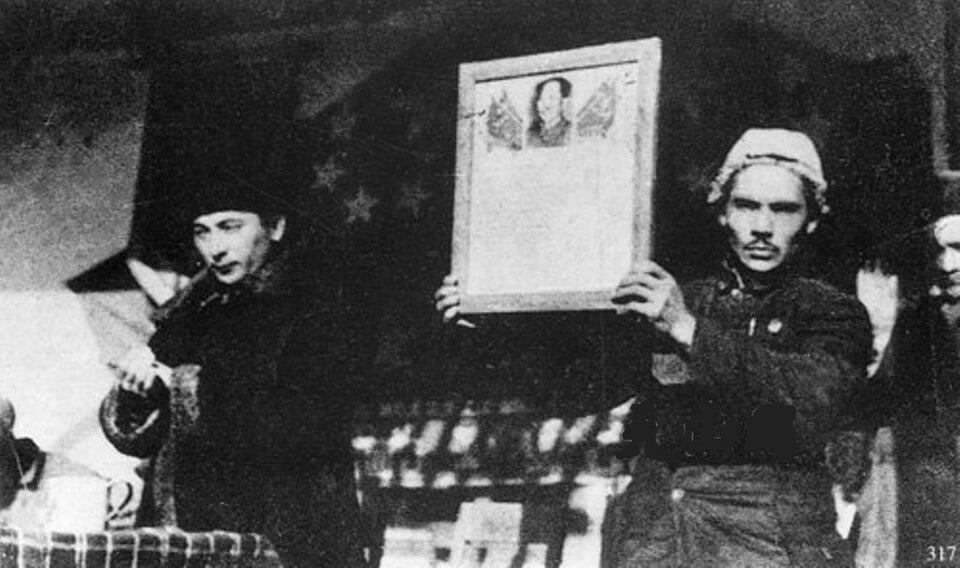
In 1952, in the land reform movement in Xinjiang Province, under the leadership of Saifuddin Azizi, Pahataikeli Township in Shufu County finished the land reform
The peasants (all of them were Uyghur people) in this township wrote a letter to Mao Zedong to report their happiness
Mao replied to them on 30 August 1952. Saifuddin Azizi gives Mao Zedong's letter to all the peasants of Pahataikeli Township in Shufu County, to celebrate the completion of land reform
Examiner Tips and Tricks
Remember - popular support was strongest during the early years of CCP rule. Support declined significantly after the failures of the Great Leap Forward
Social improvements and welfare
One way Mao gained support was by introducing literacy campaigns
The campaigns expanded access to education, increasing literacy rates
Many Chinese people associated social progress with Communist rule
Healthcare programmes were also introduced under Mao
These included vaccination campaigns and improved sanitation
These reforms reduced disease and increased life expectancy from approximately 35–40 years in 1949 to over 60 years by the mid-1970s, encouraging support amongst ordinary citizens
The regime's ability to improve public health contrasted sharply with the instability of the Republican era, strengthening perceptions that Mao had improved everyday life
These social improvements gave many Chinese clear reasons to support the government, making authoritarian rule appear beneficial rather than purely repressive
The introduction of the Marriage Law (1950) outlawed arranged marriages, child marriage and concubinage
These changes allowed the CCP to present itself as a modernising force
Women gained greater legal equality and increased opportunities for employment, broadening support beyond traditional Communist supporters
Social reforms like this helped Mao portray the CCP as transforming Chinese society for the better, increasing the regime's legitimacy amongst many families
By improving the status of women, the government demonstrated that Communist rule could deliver practical benefits as well as political change
Economic recovery and success
After decades of war and instability, the CCP restored order and reduced inflation, creating confidence in Communist leadership
The First Five-Year Plan (1953–57) produced significant industrial growth, convincing many citizens that Mao's government was successfully modernising China
Soviet assistance helped accelerate industrial development, allowing the CCP to point to visible economic achievements
Early economic success reinforced popular belief that Communist rule was more effective than the Guomindang government, strengthening support for Mao's leadership
Nationalism and China's rising status
Mao presented the Communist victory in 1949 as the end of China's "Century of Humiliation", appealing to widespread nationalist sentiment
Chinese involvement in the Korean War (1950–53) was portrayed as evidence that China could challenge major world powers, increasing national pride
Many citizens viewed Mao as the leader who had restored China's independence and international prestige after years of foreign domination
Nationalist successes encouraged citizens to identify support for China with support for Mao, helping to strengthen his authority
CCP legitimacy
Mao's role in the Long March (1934–35) and Communist victory in the Chinese Civil War (1946–49) earned him considerable respect amongst many Chinese citizens
The CCP was widely associated with defeating corruption, ending civil war and resisting Japanese occupation, giving the regime strong revolutionary credentials
Many citizens supported Mao because they believed the CCP had brought unity and stability after decades of conflict
This revolutionary legitimacy made it easier for Mao to maintain authority, as criticism of the regime could be portrayed as opposition to the achievements of the revolution itself
Importance of popular support
Popular support was important because it gave Mao genuine legitimacy amongst peasants, workers and many ordinary citizens
Land reform, social improvements, economic recovery and nationalist achievements all encouraged support for the regime
However, support fluctuated over time and declined after major failures such as the Great Leap Forward, meaning Mao continued to rely on other methods of control alongside popular support
Historiography
Traditional historians argue that Mao's authority ultimately rested on coercion, propaganda and fear, with popular support playing a secondary role
Revisionist historians such as Maurice Meisner argue that many Chinese genuinely supported the regime because of land reform, social improvements and national revival

Unlock more, it's free!
Join the 100,000+ Students that ❤️ Save My Exams
the (exam) results speak for themselves:

Was this revision note helpful?
