Derivatives of Parametric Equations (College Board AP® Calculus BC): Revision Note

Derivatives of parametric equations
What is the parametric first derivative?
The parametric first derivative is given by the formula:
This gives the slope of a line that is tangent to a parametric curve at the point with
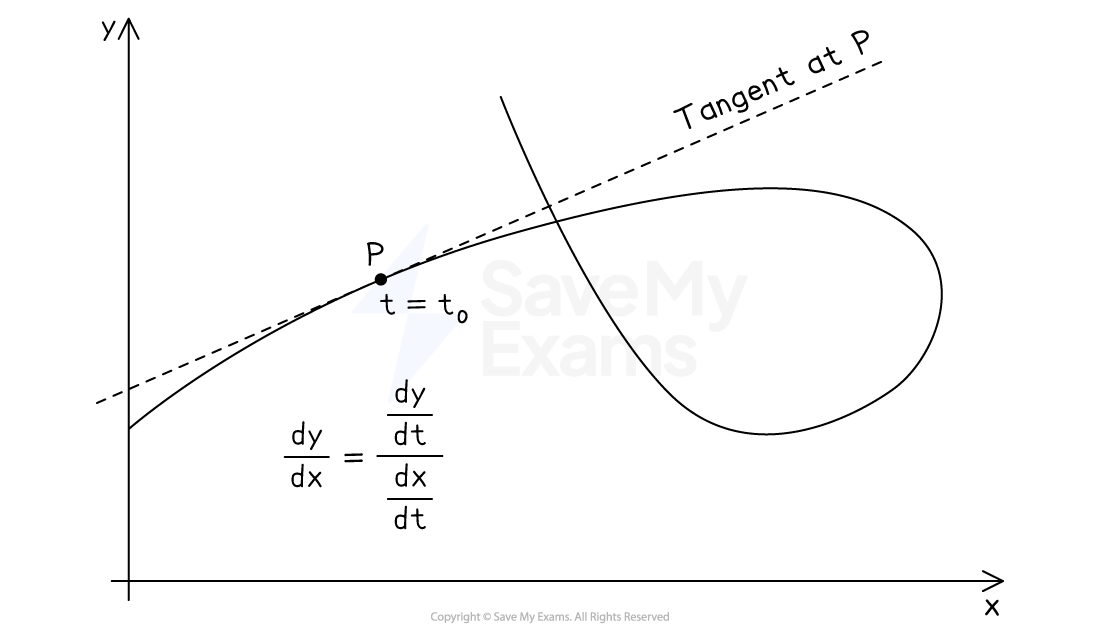
It comes from
You can use it provided at (to avoid division by zero)
How do I calculate the parametric first derivative?
For example, to find at on the curve given by and :
Differentiate the parametric equations individually
and
Substitute them into the parametric first derivative, getting the order correct
Evaluate this at :
Examiner Tips and Tricks
You may be asked to find the equation of the line tangent to a parametric curve at a particular point, which requires calculating the parametric first derivative.
How do I find horizontal and vertical tangents?
A horizontal tangent occurs at a point when at
and at
Substituting these into the parametric first derivative formula gives zero
A vertical tangent occurs at a point when at
and at
Substituting these into the parametric first derivative formula gives an infinite value
If both at then the limit of needs further investigation

Examiner Tips and Tricks
If asked to find any local maxima, minima or points of inflection on a parametric curve, start by finding all the points at which the tangent is horizontal (then investigate further, e.g. with a sketch or second-derivative method).
Worked Example
A curve is given parametrically by
Part of the curve is shown below.
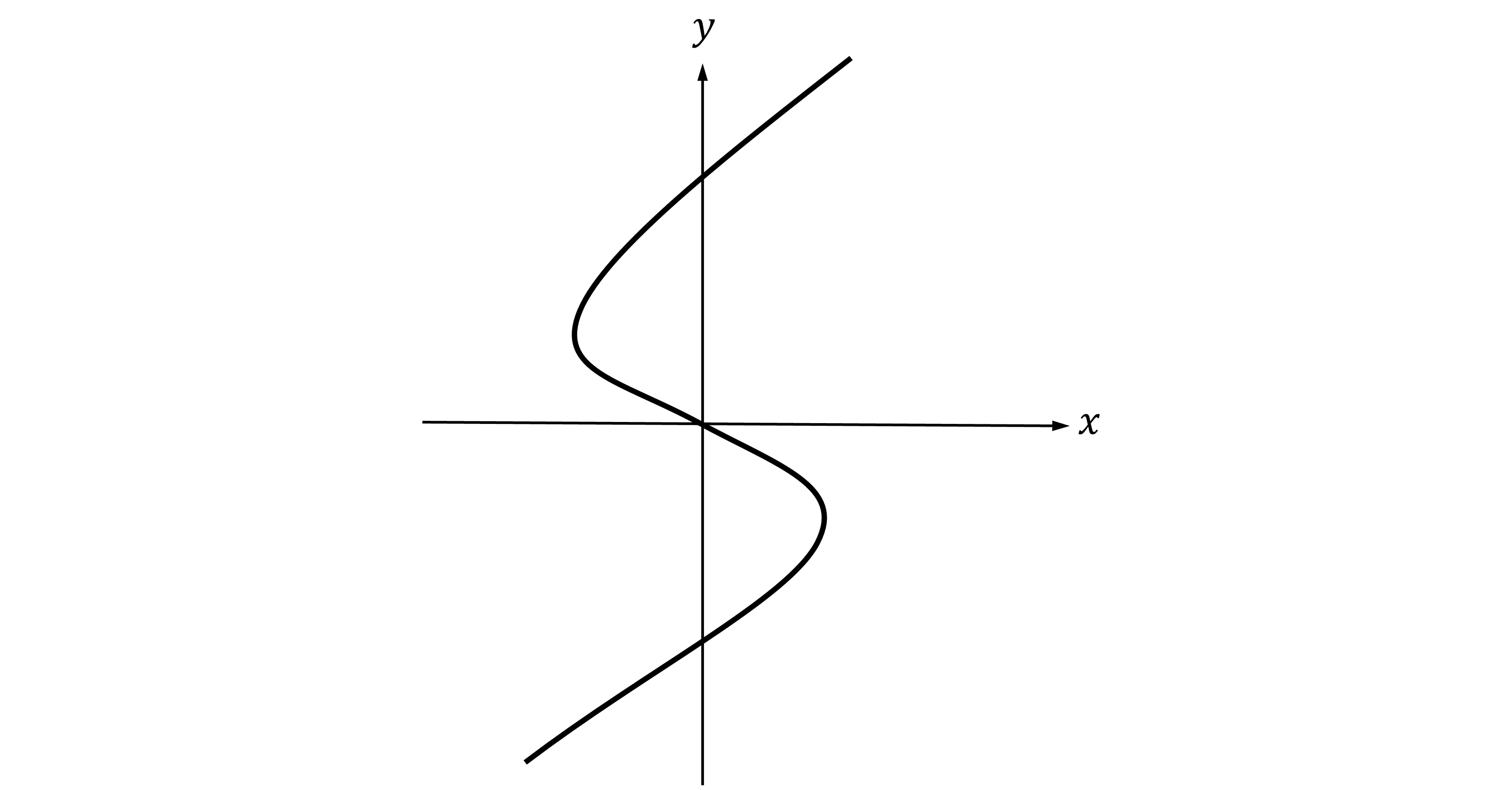
(a) Find the slope of the line that is tangent to the curve at .
(b) Find the values of at which the tangent to the curve is vertical. Find the equations of these tangents.
(c) Show that the curve has no horizontal tangents.
Answer:
(a)
You need to use the parametric first derivative,
First, differentiate the parametric equations individually
Then substitute these derivatives into the formula, with on the top and on the bottom
Substitute in the parameter and simplify
The slope of the line that is tangent to the curve at is 2
(b)
Vertical tangents are points when and
Set and solve
Check that by substituting into
To find the equations of the vertical tangents, remember that vertical lines have the equations where is a constant
Substitute into
and
The point at has a vertical tangent with equation
The point at has a vertical tangent with equation
(c)
Horizontal tangents are points when and
Set and try to solve
There are no real solutions to this equation
There is no value of for which so no horizontal tangents

Unlock more, it's free!
Join the 100,000+ Students that ❤️ Save My Exams
the (exam) results speak for themselves:

Was this revision note helpful?
Build on this topic
