Areas from a Single Polar Curve (College Board AP® Calculus BC): Revision Note

Areas from a single polar curve
How do I find the area enclosed by a polar curve?
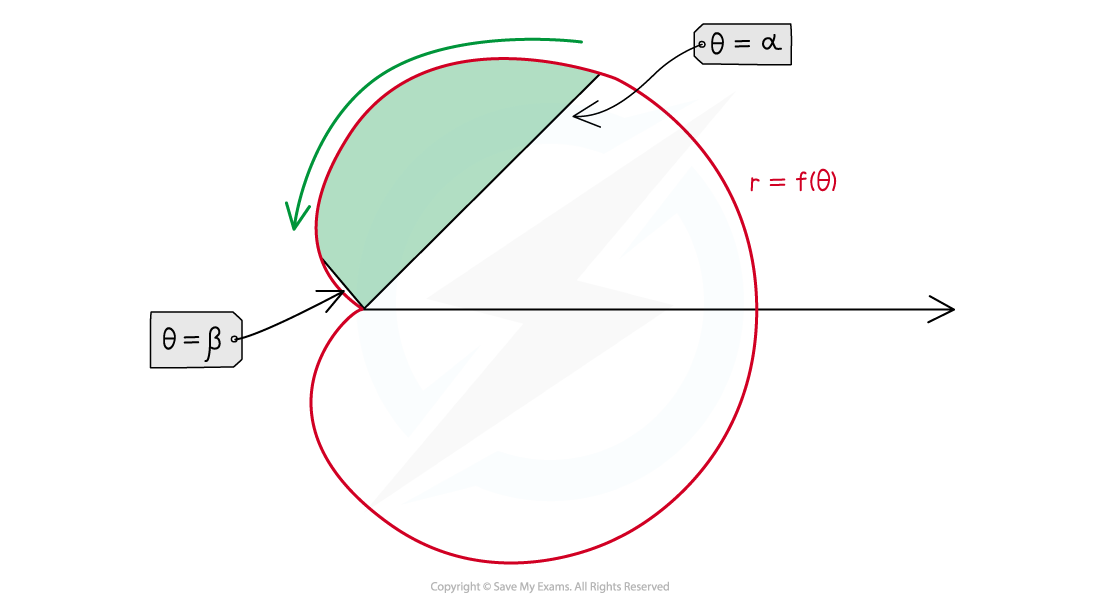
The area, , bounded by a polar curve, and the straight lines and is
The lines and are called rays
They extend from the origin (pole)
The area is swept out anticlockwise between them
The formula still works for parts of the curve with negative values of
This is because gets squared in the formula
Examiner Tips and Tricks
Look out for any symmetry, as it may be possible to express larger polar areas as multiples of smaller polar areas.
Examiner Tips and Tricks
In the non-calculator sections of the exam, you are often asked to leave polar areas as definite integrals. In the calculator sections, you are expected to use your calculator to evaluate these definite integrals.
Worked Example
The polar curve is shown below, where . Part of the total area enclosed has been shaded.
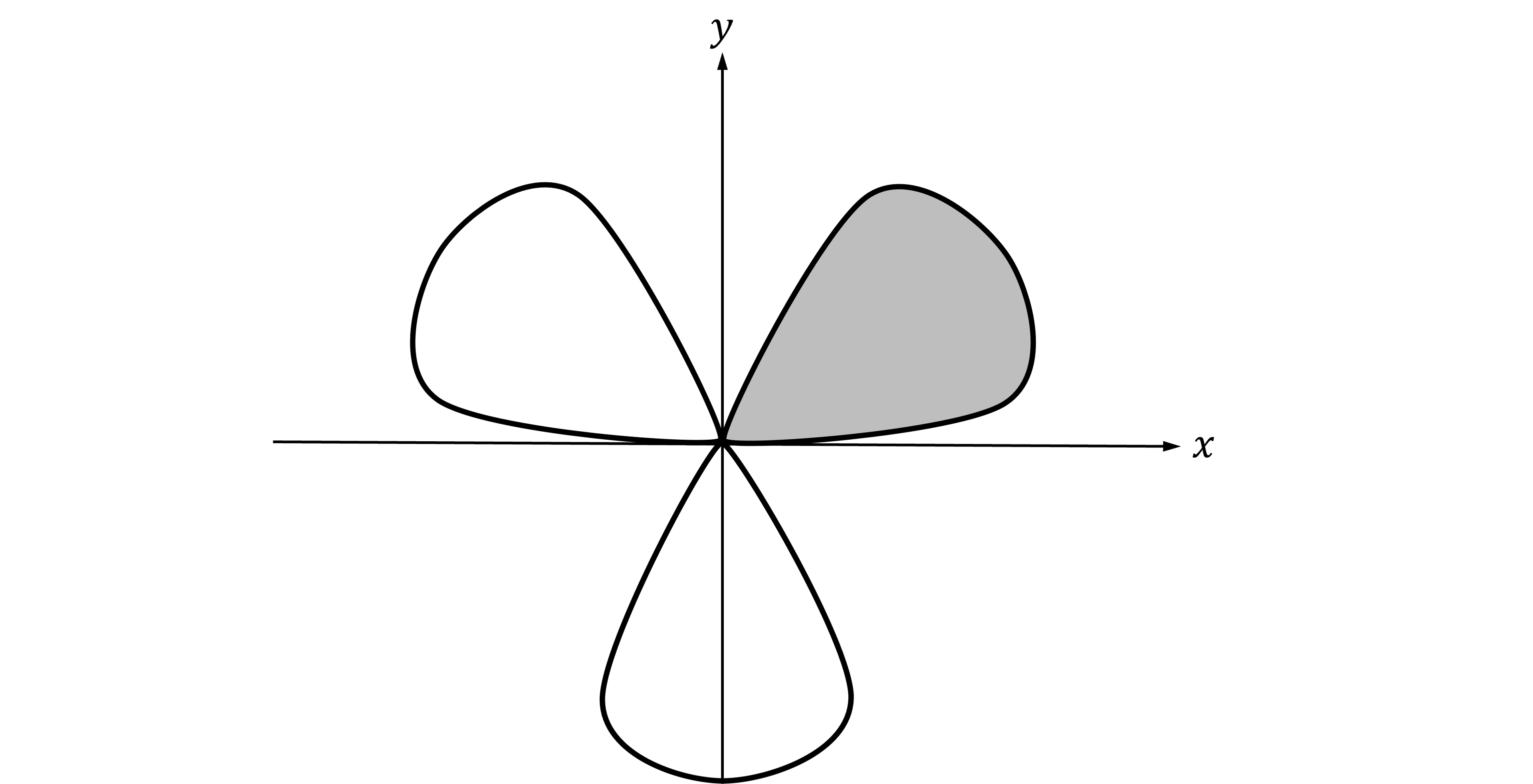
(a) Find the area of the single shaded loop on the diagram.
(b) Write down the definite integral that represents the area enclosed by the loop below the -axis.
(c) Find the total area enclosed by the curve.
Answer:
(a)
The loop starts and ends when so substitute into
Solving this equation gives
The first two rays are and as shown
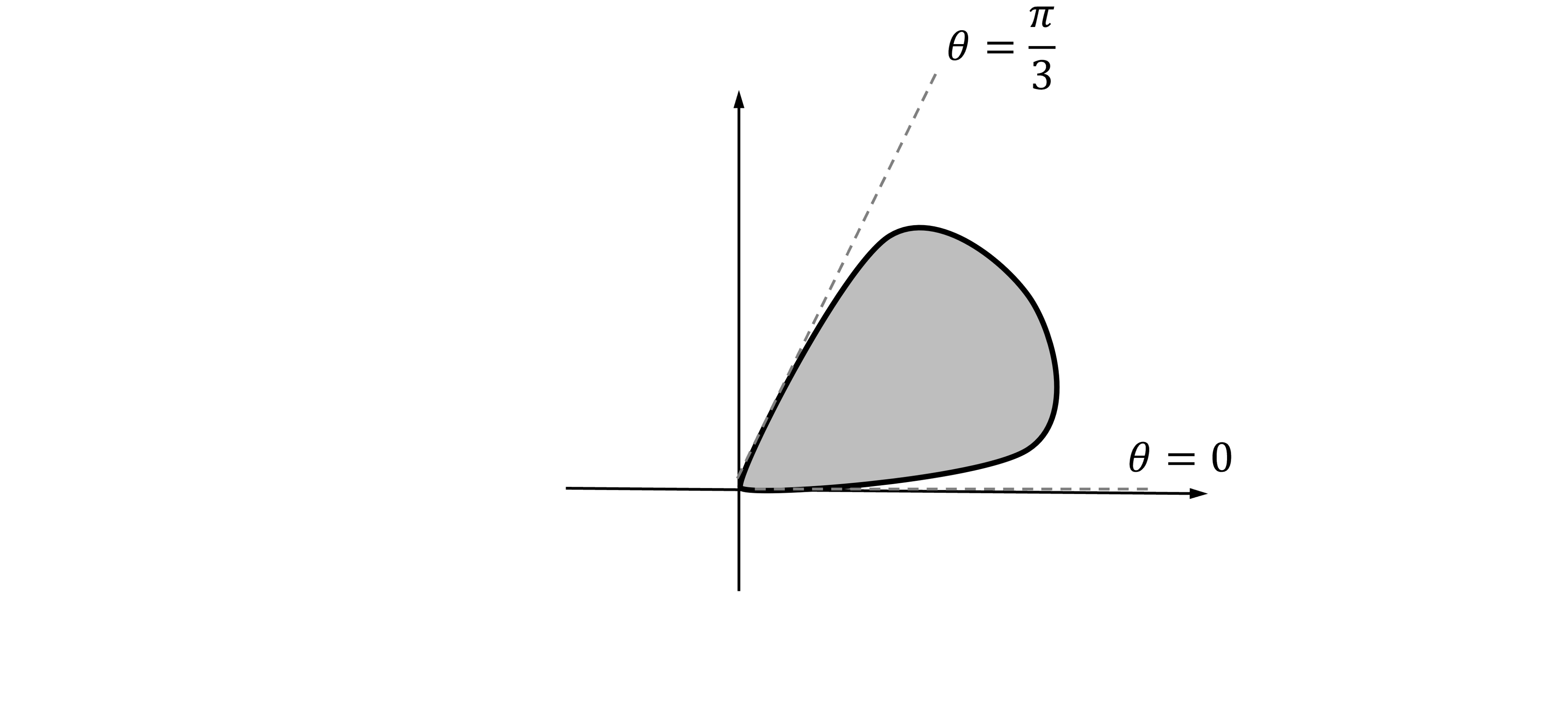
Substitute , and into the area formula,
Evaluate this definite integral on your calculator
0.261799...
The area of the single shaded loop is 0.262 (to 3 decimal places)
(b)
From part (a), when
The loop in part (a) is between and , where , so
The loop in this question is between and , where , so is negative, , shown below
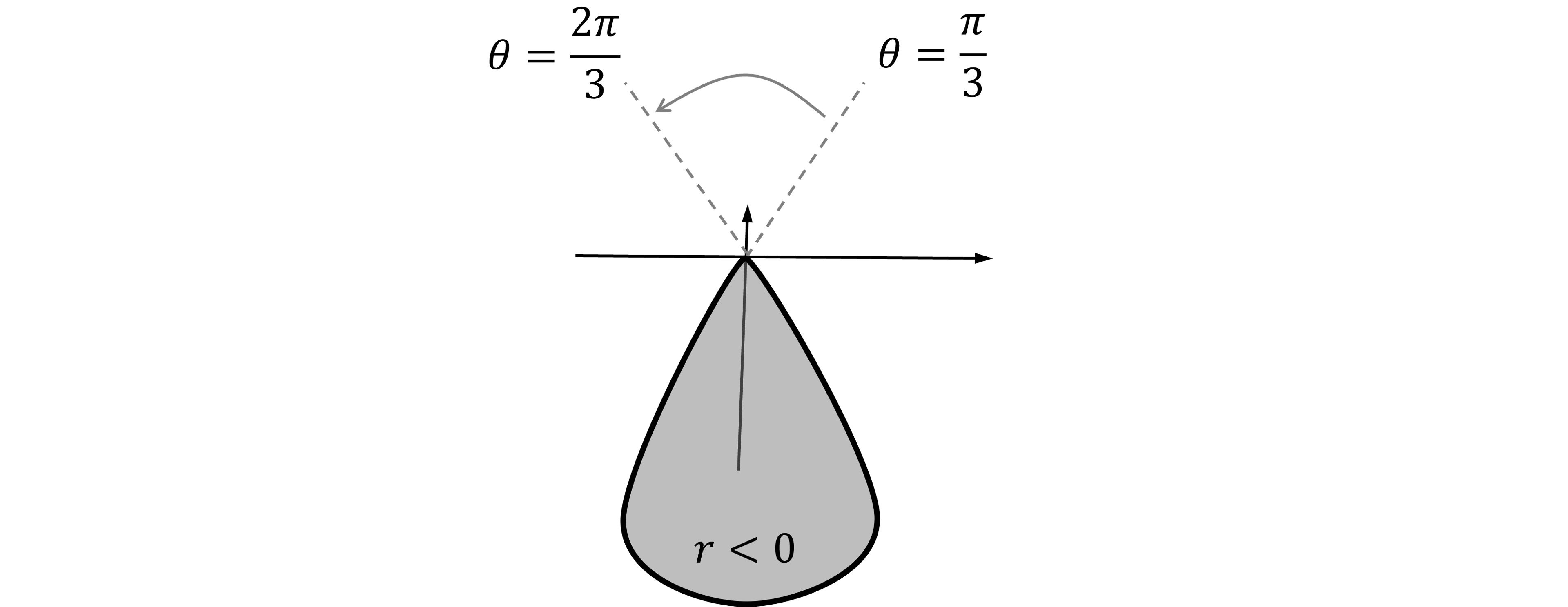
However, the formula still works for negative values of (as is squared in the integral), so substitute in , and
(c)
The total area enclosed by the curve will be the area of 3 loops
Multiply the answer in part (a) by 3
The total area enclosed is 0.785 (to 3 decimal places)

Unlock more, it's free!
Join the 100,000+ Students that ❤️ Save My Exams
the (exam) results speak for themselves:

Was this revision note helpful?
Build on this topic
