The Watts Riots & Urban Unrest (Edexcel IGCSE History: Paper 1: Depth Studies): Revision Note
Exam code: 4HI1

Summary
From July 1964, race riots broke out in American cities
This showed that laws alone had not ended unhappiness in Black communities
The largest riot was in the Watts district of Los Angeles in August 1965
It was started by the arrest of Marquette Frye
None of the riots was planned in advance by any group
The Kerner Report of 1968 blamed the riots on:
poor living conditions
the failure of the authorities to act on the problems that Black residents reported
unfair treatment by the police
The riots had negative effects on the movement
They lost the sympathy of some white supporters
They made some white people more afraid
They led to federal money being spent on police equipment instead of on the problems that caused the riots
The riots also had positive effects
They moved the focus of some campaigners to social and economic problems
They widened civil rights campaigns beyond the South
Race riots: Watts District
Why did the riots break out?
In July 1964, a large race riot took place in New York
This was just two weeks after the signing of the Civil Rights Act
This showed that there was still much unhappiness within Black communities
People realised that laws alone would not bring about equality
Over the next four years, there were 329 major riots in 257 American cities
Over 200 people were killed
Thousands were injured
Tens of thousands were arrested
Property and goods worth billions of dollars were damaged
Many of the riots took place in the city ghettos, where Black Americans faced poor living conditions and a lack of jobs
The Watts riot, 1965
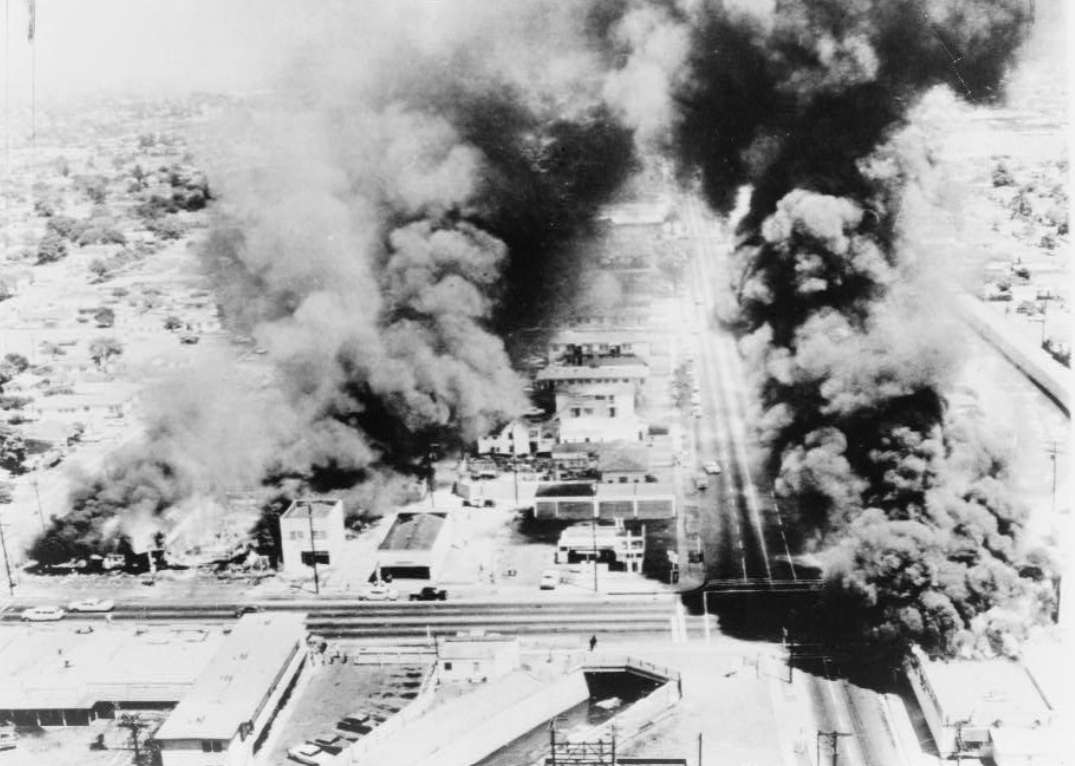
The largest riot was in the Watts district of Los Angeles between 11 and 16 August 1965
Marquette Frye was arrested on suspicion of drink-driving by two police officers
He resisted arrest
Rumours spread through the neighbourhood that the police had attacked his mother and a pregnant woman
Violent protests broke out
Over 14,000 California National Guard troops enforced a curfew zone of about 130 square kilometres to try to restore order
After six days:
34 people had died
Over 1,000 were injured
Around 3,400 were arrested
Hundreds of shops, businesses and homes had been badly damaged
Examiner Tips and Tricks
In your exam answers, use precise detail such as the arrest of Marquette Frye, the rumours, the National Guard and the 34 deaths. Use your own knowledge to say what each shows about the causes of the riots.
The causes of the riots and the Kerner Report
None of the riots was planned or organised in advance by any group
Most of the people who took part were young Black Americans
City authorities blamed the influence of Black Power
The Kerner Report of 1968, from a commission that President Johnson set up to investigate the riots, said that they had been caused by three things:
Frustration and anger at the poor living conditions in the ghettos, caused by segregation and discrimination
The failure of the police and city authorities to act on the complaints that Black residents made about their conditions and treatment
Unfair treatment, and sometimes violence, by the police, whose use of extreme violence during the riots made the situation worse
The report warned that the USA was moving towards two separate and unequal societies, one Black and one White
It recommended setting up more social programmes to deal with these problems
President Johnson largely ignored the report
Nixon, who became president in January 1969, did not act on it
These recommendations were never followed up
The impact of the riots
Positive impacts
They widened the area of civil rights campaigns
Before this point, most campaigns had focused on the South
They highlighted that discrimination continued to be a significant problem in the North
They helped to change the focus of some civil rights campaigners on to the social and economic problems that Black Americans faced in their everyday lives
For example, King's campaign in Chicago in 1966 focused on housing, education and employment
Negative impacts
The rioting lost the sympathy of some white supporters of civil rights
It made some white people more afraid of young Black Americans
This was partly due to the exaggerated reporting of the riots by the media
To many white Americans, rioting by Black Americans seemed to signal the end of the largely non-violent civil rights campaigns up to that point
Money was given by the federal government to improve conditions in the ghettos
This was often spent on weapons and training for police so that they could deal with the riots themselves, rather than on the problems that caused them
How far did race riots damage the civil rights movement?
Evidence of significant damage
The riots lost the sympathy of some white supporters and made some white people more afraid
The perception was that the civil rights movement, and Black Power, were to blame for the riots
It made the civil rights movement look more dangerous when it had previously been non-violent
Government money was often spent on weapons and police training instead of improving ghetto conditions
The riots that followed King's assassination on 4 April 1968 did huge damage to the movement
It seemed that his message of non-violence had been forgotten
The unity that he had mostly kept between different groups was lost once he was killed
The Kerner Report's recommendations were never followed up under Nixon
Its findings had little practical effect
Evidence of limited damage
None of the riots was planned by any civil rights group
The damage was not caused by the movement's own campaigns
The Kerner Report put the blame on discrimination, poor conditions and police behaviour
It did not blame Black Power or the wider civil rights movement
The riots changed the focus of some campaigners to social and economic problems
They widened civil rights campaigns beyond the South
They showed that laws alone would not bring equality
This made the problems of the ghettos impossible to ignore
Conclusions
The damage caused by the Watts riots and urban unrest can be judged by its effect on:
public support
the movement's aims and focus
On public support, the riots did damage
Some white supporters lost sympathy and many white Americans became more afraid
On aims and focus, the riots did less damage
They pushed campaigners towards the social and economic problems that were the real causes of unrest
Therefore, the riots damaged the movement's public image and support more than they damaged its aims
Worked Example
Explain two effects of the race riots of 1964–68 on the civil rights movement
(8)
Partial answer:
One effect of the race riots was that the movement lost the sympathy of some white supporters. The riots were reported in an exaggerated way by the media, which made some white people more afraid of young Black Americans. As a result, support for civil rights from some white Americans fell. To many people, the riots seemed to signal the end of the largely non-violent campaigns that had won sympathy earlier.
Examiner Tips and Tricks
Try to create a chain of consequences when explaining the effects of a person or an event.
In the worked example, the exaggerated media reporting of the riots made some white people more afraid of young Black Americans, which in turn led some white supporters to lose sympathy for civil rights.

Unlock more, it's free!
Join the 100,000+ Students that ❤️ Save My Exams
the (exam) results speak for themselves:

Was this revision note helpful?