The Origins of the Red Scare (Edexcel IGCSE History: Paper 1: Depth Studies): Revision Note
Exam code: 4HI1

Summary
The USA was a Capitalist democracy and the Soviet Union was Communist
The two superpowers distrusted each other even before the Cold War began
The fear of communism was not new in 1945
Americans had already lived through a Red Scare in 1919–20
Several events between 1945 and 1950, made many Americans believe that communism threatened the USA itself. These were:
The Communist takeovers in Eastern Europe
The Soviet atomic bomb
The Berlin Blockade
The Communist victory in China
The Korean War
The Hiss and Rosenberg spy cases seemed to prove that Communist spies were working inside the USA
A Red Scare was very likely given the deep rivalry between the two systems
Its size depended on particular events and on how leaders used them
The structure of the US government
The United States is a federation
This means a union of individual states
Each state has its own government
The federal government in Washington DC runs the whole country
Its powers are set out in the Constitution
This is the set of basic laws that the country is governed by
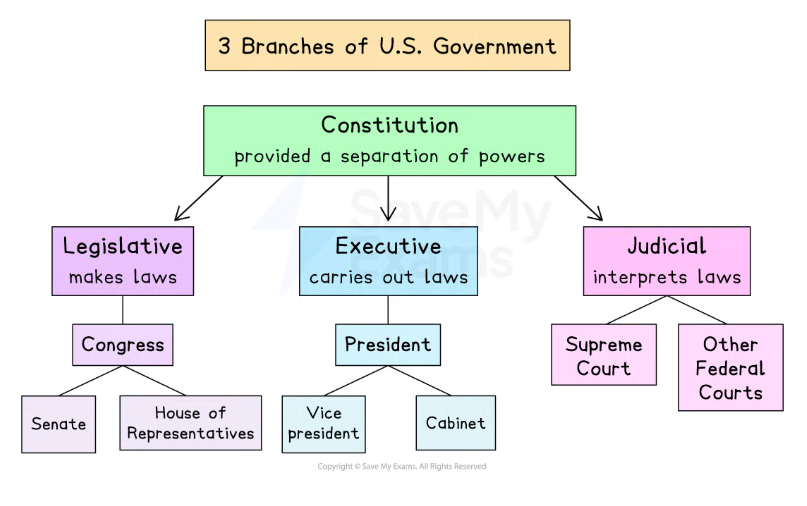
The federal government has three parts, and each one limits the power of the others
The president and members of Congress are elected separately
The president might not belong to the party that has a majority in Congress
The Constitution has been changed by amendments
The First Amendment protects the right of everyone to hold their own views, to speak freely and to gather peacefully
Examiner Tips and Tricks
You will not be asked to explain the US system of government, but terms like Congress, Senate and First Amendment appear in many answers on this option, so use them correctly.
The outbreak of the Cold War (1945–1950)
The Red Scare, 1919–1920
US hysteria around communism began after Russia experienced a Communist uprising in 1917
The USA prided itself on the "American Dream"
This meant that if someone worked hard, they had the right to freedom and opportunities
The Soviet Union believed wealth should be shared out equally
They removed property and private businesses from individual ownership
US citizens associated communism with a lack of freedom
People who spoke out against the Soviet government were imprisoned or killed
The USA was known as the ‘Land of the Free’
During the Red Scare of 1919–1920, many Americans believed that immigration brought Communists into every part of the USA
Thousands of suspected Communists were arrested
Some Russian immigrants were deported to the Soviet Union
The word 'red' was used because red was the main colour of the Communist revolutionaries’ flag
Fear of communism fell after 1920, but it did not disappear
Many Americans stayed worried that the Soviet Union wanted to destroy capitalism
How the Cold War began, 1945–49
IMAGE
A timeline showing key events in the beginning of the Cold War, 1945-1949
Examiner Tips and Tricks
Learn these events as a sequence rather than as separate facts. Each one added a new layer of fear for Americans, and examiners reward answers that show how one event built on another.
China and Korea, 1949–1950
In 1949, Communists won the Chinese civil war and took control of China
This was despite substantial US support for their opponents
In 1950, Communist North Korea invaded South Korea, which was Capitalist
The US government persuaded the United Nations to send military help to South Korea
The vast majority of the UN forces were American
China joined the war on the side of North Korea
The fighting ended in July 1953 with neither side having made lasting gains
Communist uprisings also broke out in Malaya, Indonesia, Burma and the Philippines
Truman feared a domino effect
This is the idea that if one country becomes Communist, its neighbours will follow, like a row of dominoes falling over
Communism seemed to be spreading over Asia

Together, these events convinced many Americans, including people in government, that the Soviet Union wanted world domination
The Hiss and Rosenberg cases
Alger Hiss
Alger Hiss was a State Department official who had been an important adviser to President Roosevelt in the 1930s and during the Second World War
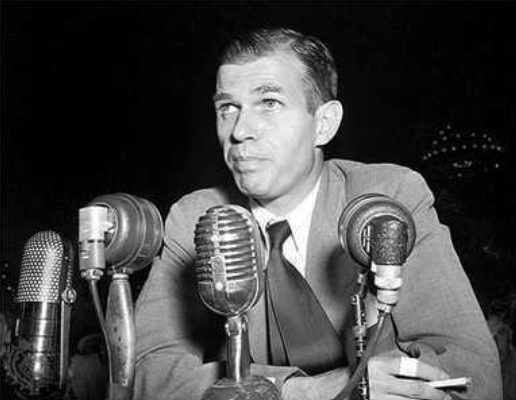
In 1948, during a HUAC hearing, Hiss was named as a member of a Communist group
He denied it
Richard Nixon, a member of HUAC, insisted that Hiss had been leaking information to the Soviet Union
Hiss was put on trial
In January 1950, Hiss was sentenced to five years in prison for lying under oath
Hiss was never convicted of spying
Many Americans still thought he had been a spy, because he had been found guilty of something and sent to prison
The case seemed to show that Communist spies were everywhere
Ethel and Julius Rosenberg
In February 1950, Klaus Fuchs was arrested in Britain for passing information to the Soviets about how to develop an atomic bomb
Fuchs confessed and was sentenced to 14 years in prison
He also named other spies, and the trail led to David Greenglass in the USA
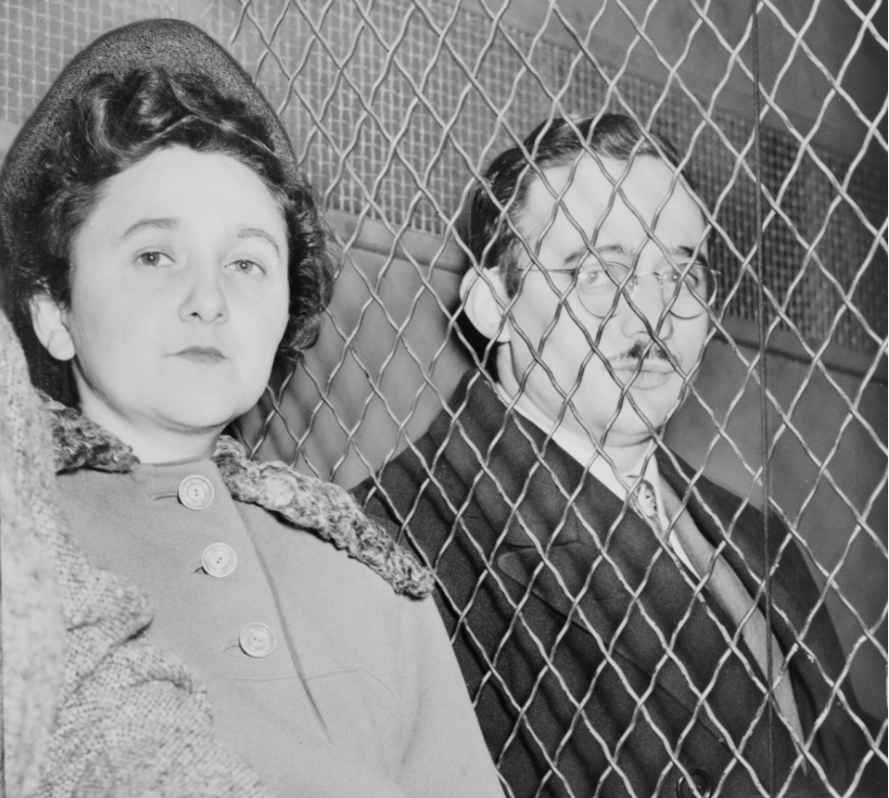
Greenglass was arrested and named his sister and brother-in-law, Ethel and Julius Rosenberg
The Rosenbergs denied all charges at their trial in March 1951
The evidence against them at the time was weak, although some historians today are sure of their guilt
The Rosenbergs were found guilty
They were sentenced to death and executed on 19 June 1953
Many Americans blamed the Rosenbergs for helping the Soviets to make atomic bombs
Some people believed in their innocence
Large protests followed the sentence, although most Americans did not question it
The impact of the two cases
News of the Soviet atomic bomb arrived while the Hiss case was dominating the headlines
Together these two events meant that American fear of Communists had never been greater
The public nature of the cases, combined with international events, made ordinary Americans worry that Communists were everywhere
Many people believed they were surrounded by spies trying to bring down the USA
They became suspicious of colleagues and neighbours
They were afraid of being accused themselves
It led the way to McCarthyism
Both cases came before McCarthy's rise in 1950, so Hiss and the Rosenbergs were not McCarthy's victims
How inevitable was the Red Scare?
Evidence that the Red Scare was very likely
The USA and the Soviet Union had opposite systems
The rivalry was built in from 1917 onwards
The USA had already had one Red Scare in 1919–20
The fear never completely disappeared
Each Cold War event between 1945 and 1950 gave Americans a fresh reason to fear communism
Communist governments spread across Eastern Europe
The Berlin Blockade seemed to show that the Soviet Union would risk war
China became Communist and the Soviet Union tested an atomic bomb
Real spying did take place, as the confession of Klaus Fuchs shows
Some fear was based on fact
Evidence that it was not inevitable
Fear of communism had been falling after 1920
The USA and the Soviet Union had fought on the same side from 1941 to 1945
The Soviet bomb arrived during the Hiss case
The two together pushed fear to its highest level
Different timing or different events might have produced a smaller reaction
Some historians argue that American leaders exaggerated the Soviet threat to win public and Congressional support
An example of this is the Truman Doctrine in 1947
Not all Americans panicked
Large protests followed the Rosenberg sentence, although these were unusual reactions
Conclusions
The deep rivalry between capitalism and communism made some form of Red Scare very likely
The events of 1948–50 and the way leaders used them decided how severe the Red Scare became
Therefore, a Red Scare was close to inevitable, but its scale and intensity were not
Worked Example
Study Extract G.
Extract G: From a history about the fear of communism in postwar America, published in 2026
"The roots of this fear go back to the ‘Red Scare’ of the 1920s, but events following World War II escalated the paranoia. The Cold War had begun, and events were going against democracy. In 1949, the Soviet Union had blockaded West Berlin and successfully tested its first atomic bomb, leading to an arms race that made the possibility of nuclear war terrifyingly real. Also in 1949, communists took over China, and in 1950 North Korea invaded South Korea, almost conquering it. These events made many Americans believe that communism was spreading rapidly and could soon reach the U.S."
What impression does the author give about American fears of communism after 1945?
You must use Extract G to explain your answer.
(6)
Partial answer:
The author gives the impression that Americans’ fear of communism was growing out of control because events abroad seemed to show communism spreading. The phrase “terrifyingly real” makes the danger of nuclear war sound close and personal, and the claim that communism was “spreading rapidly” suggests the USA could be next. The author also lists the Berlin blockade, the Soviet bomb, China and Korea one after another, which makes it seem as if communism was winning everywhere and democracy was losing.
Examiner Tips and Tricks
To reach the top level for this question, you must analyse the author's choices: comment on the effect of one or two emotive words, and explain what the author has chosen to stress. You can also point out what the author has left out, but only if you explain how the omission strengthens the impression.

Unlock more, it's free!
Join the 100,000+ Students that ❤️ Save My Exams
the (exam) results speak for themselves:

Was this revision note helpful?