Geometry of Complex Numbers (DP IB Analysis & Approaches (AA): HL): Revision Note

Geometry of complex addition & subtraction
What does addition look like on an Argand diagram?
Addition can be seen using addition of vectors
To add the complex numbers and
first travel along the vector
then travel along the vector
is the resultant vector
This works in either order
or
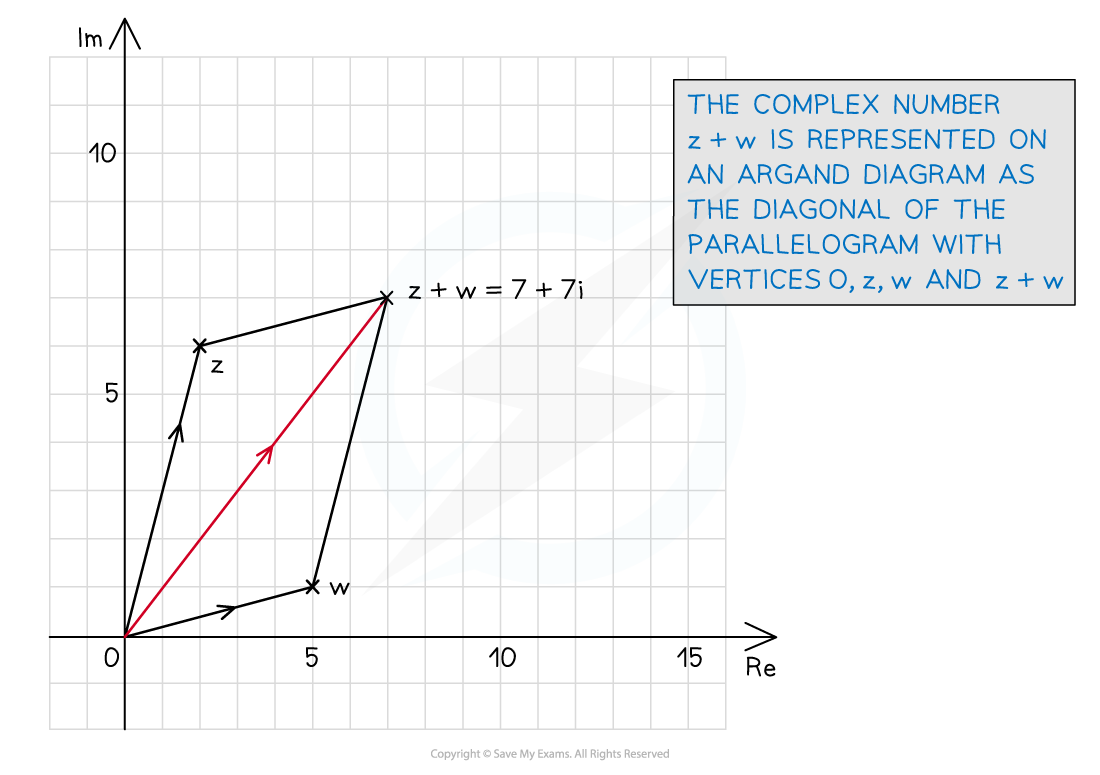
Geometrically, adding to is the same as
a translation of by the vector
What does subtraction look like on an Argand diagram?
Subtraction can be seen using subtraction of vectors
To find
first travel along the vector
then travel along the vector (the reverse of )
You cannot swap the order
is not the same as
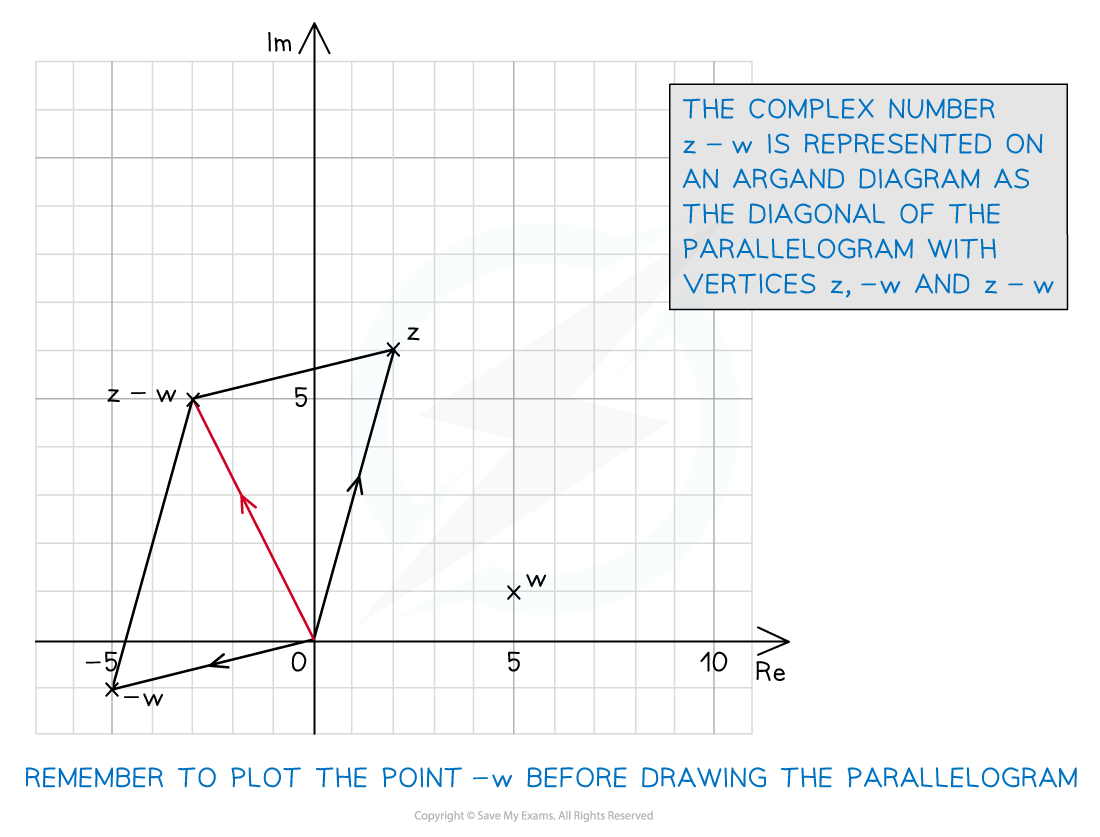
Geometrically, subtracting from is the same as
a translation of by the vector
Worked Example
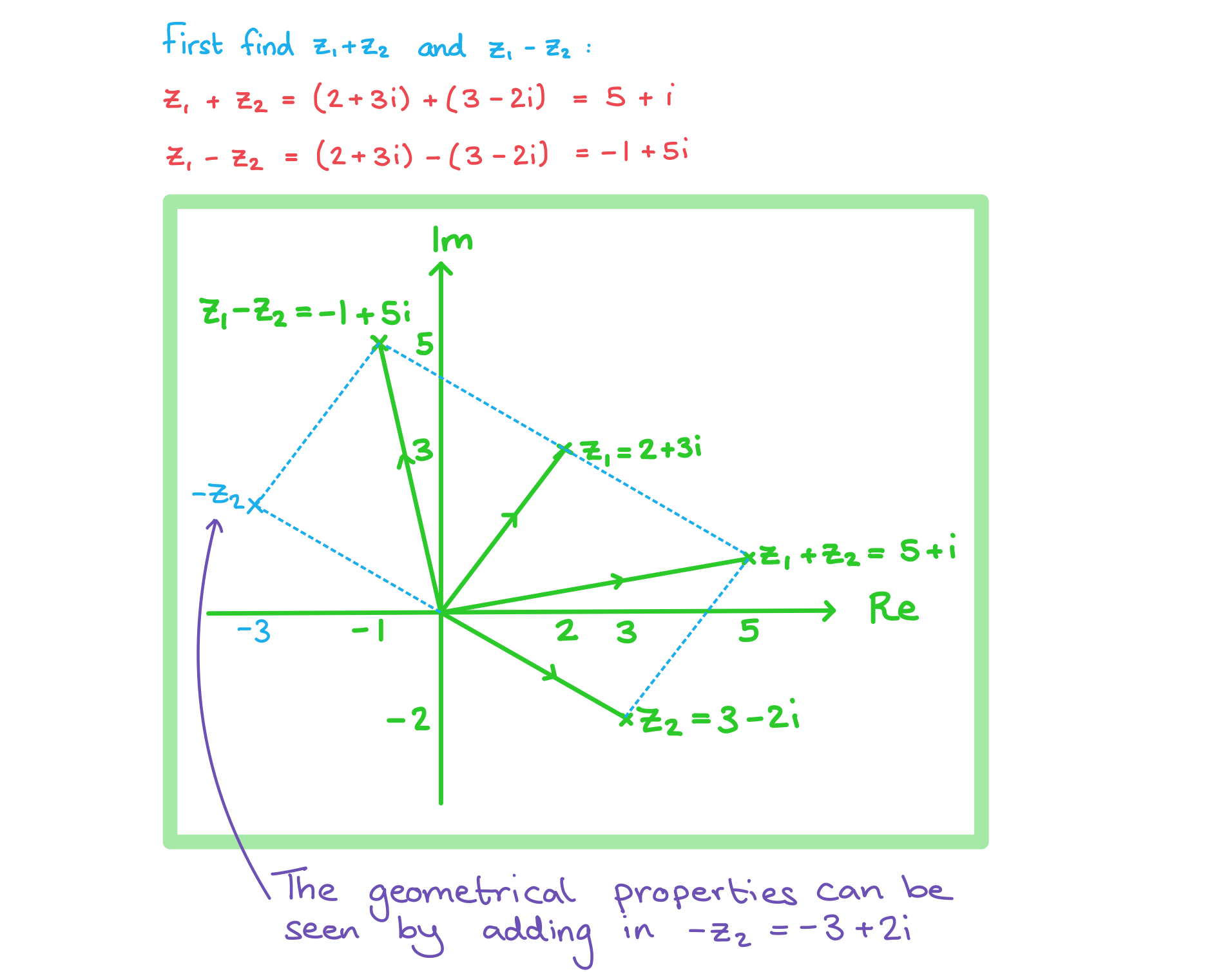
Consider the complex numbers and .
On an Argand diagram, sketch the complex numbers , , and .
Answer:
Geometry of complex multiplication & division
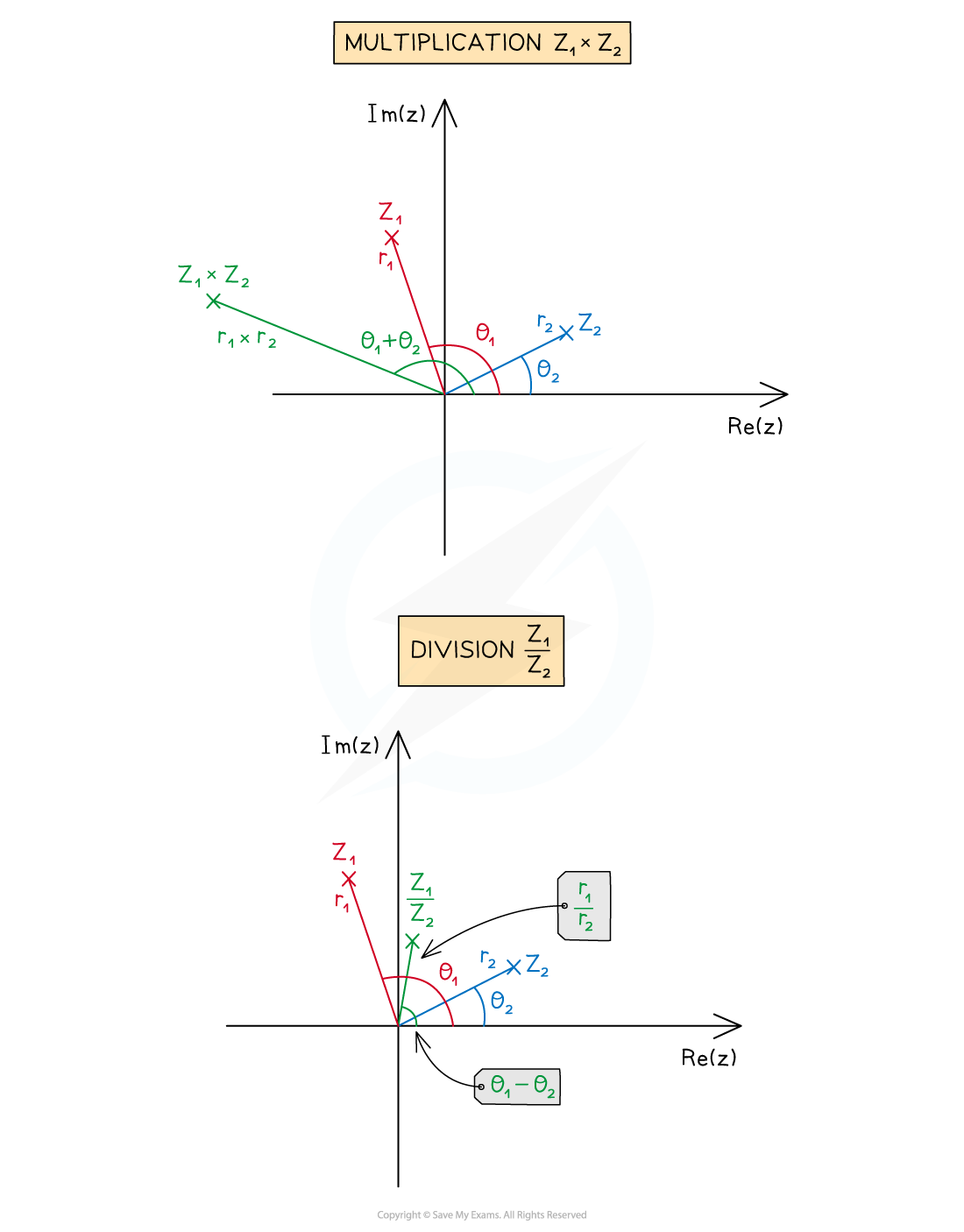
What do multiplication and division look like on an Argand diagram?
If the complex number is multiplied by the complex number then
will be enlarged by a scale factor of
will be rotated by an angle of
If the complex number is divided by the complex number then
will be enlarged by a scale factor of
will be rotated by an angle of
What special cases do I need to know?
Some special cases are
multiplying / dividing by a real number,
enlarges by a scale factor of /
where could be negative
multiplying / dividing by an imaginary number,
rotates the point 90° counter-clockwise / clockwise
enlarges by a scale factor of /
where could be negative
What does complex conjugation look like on an Argand diagram?
For the complex number , the complex conjugate
is a reflection of in the real axis
Worked Example
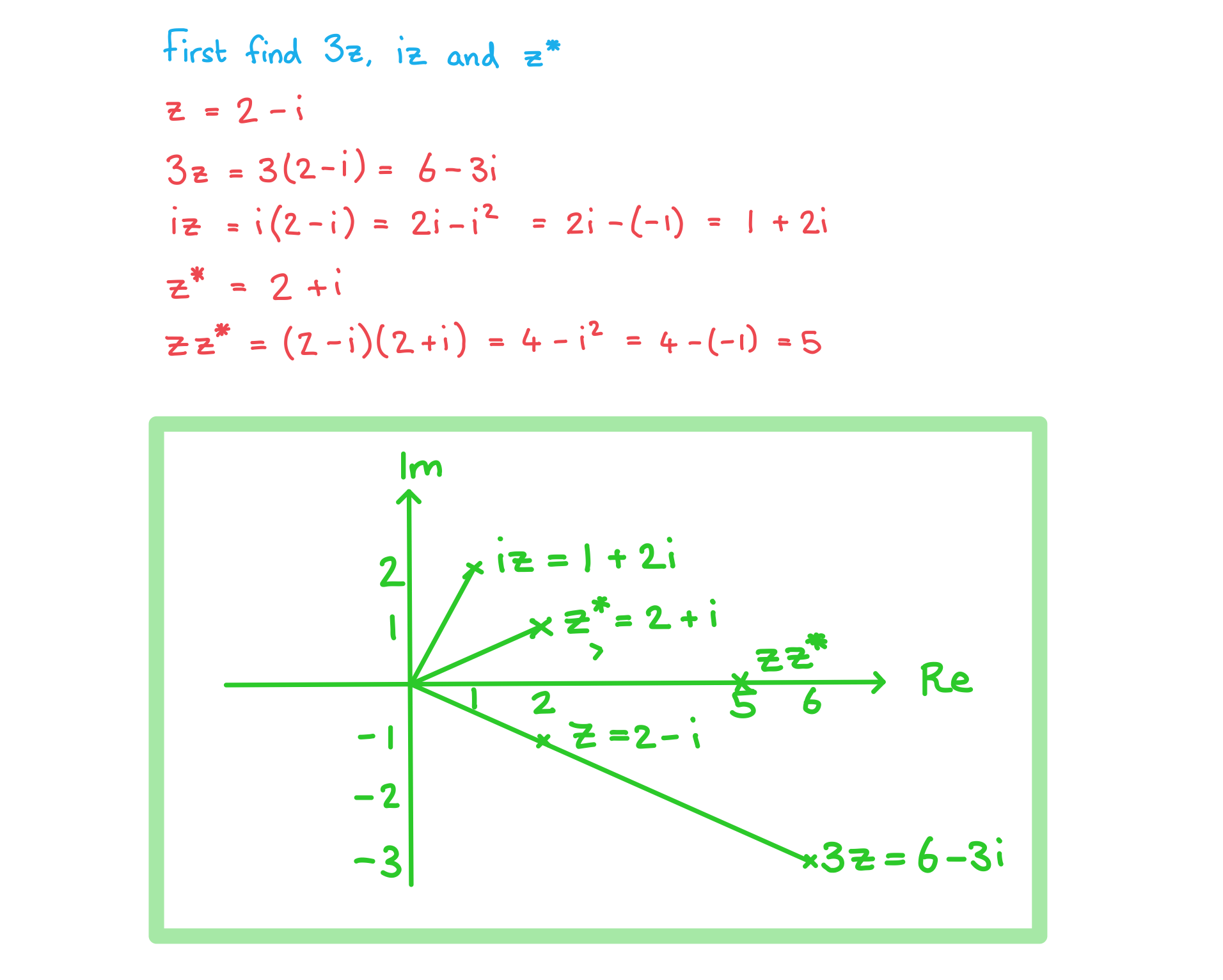
Consider the complex number .
On an Argand diagram, sketch the complex numbers , , , and .
Answer:

Unlock more, it's free!
Join the 100,000+ Students that ❤️ Save My Exams
the (exam) results speak for themselves:

Was this revision note helpful?
Build on this topic