Reciprocal Transformations (DP IB Analysis & Approaches (AA): HL): Revision Note

Reciprocal transformations
What is a reciprocal transformation?
For the graph the reciprocal transformation is
It transforms points on the graph
by changing their -coordinates
from a height of to a height of
All -coordinates stay the same
Points that lie on the line y = 1 or the line y = -1 stay the same
Examiner Tips and Tricks
It helps to know, when sketching, that any points with -coordinates of stay the same under a reciprocal transformation.
How do I sketch a reciprocal transformation y = 1/f(x)?
To sketch a reciprocal transformation, you need to know
how key features on the original graph
transform to different key features on the graph of
In general
the larger the heights of points on
the closer to the -axis they become on
and vice versa
If is positive
then is positive
If is negative
then is negative
If is increasing
then is decreasing
If is decreasing
then is increasing
More specifically
If has a -intercept at where
has a -intercept at
If has an -intercept (root)at
has a vertical asymptote at
If has a vertical asymptote at
has a discontinuity at
The discontinuity looks like a root when you sketch
If has a local maximum at where
has a local minimum at
If has a local minimum at where
has a local maximum at
If has a horizontal asymptote at
if then has a horizontal asymptote at
if then
If as
has a horizontal asymptote at
Worked Example
The diagram below shows the graph of which has a local maximum at the point .
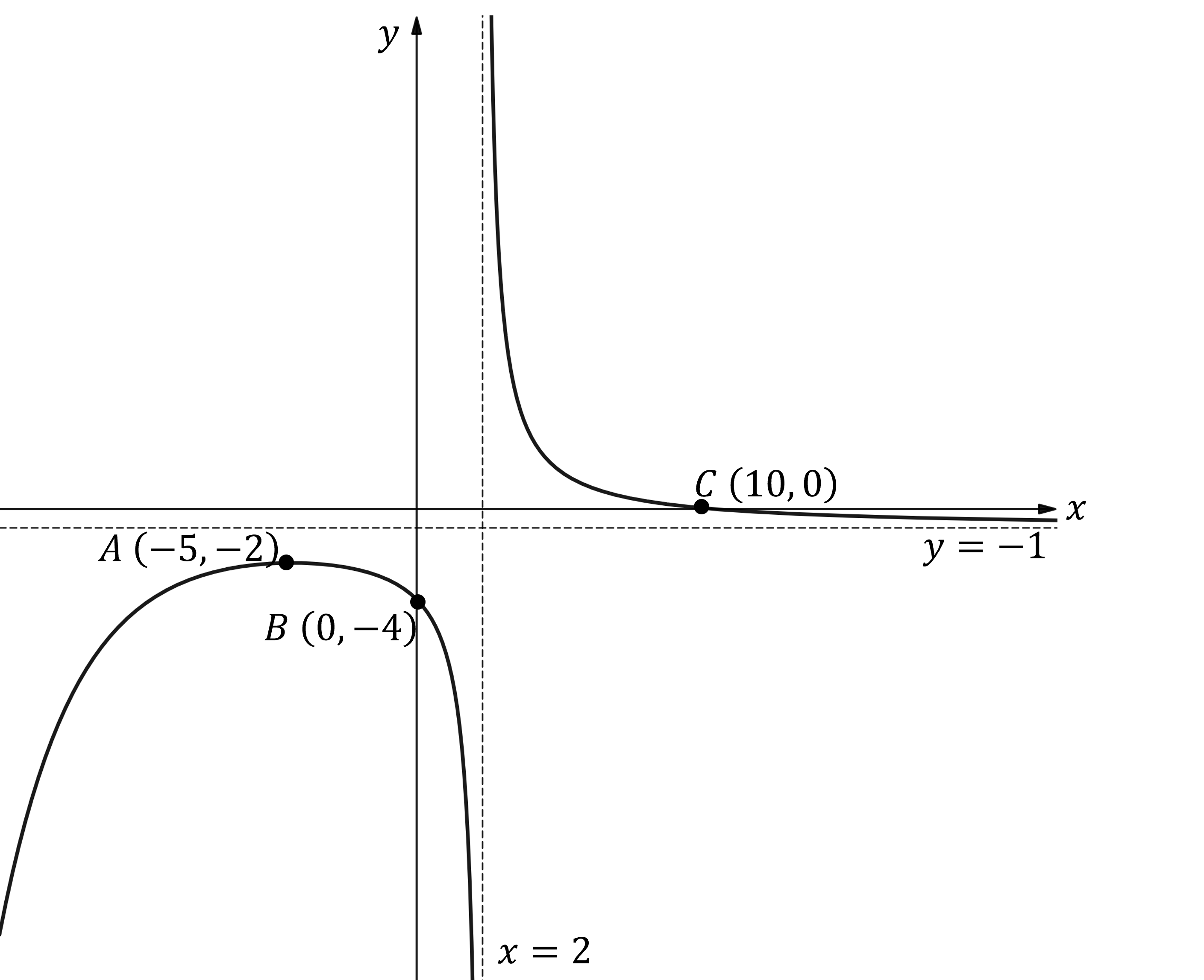
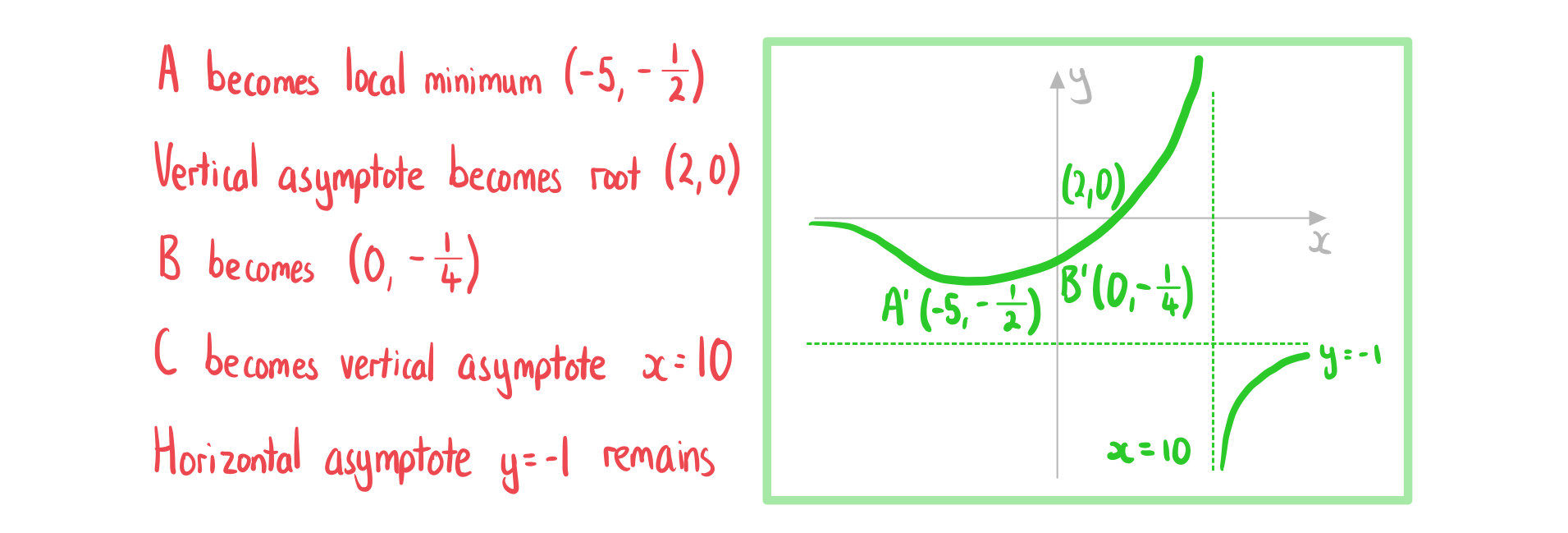
Sketch the graph of .
Answer:

Unlock more, it's free!
Join the 100,000+ Students that ❤️ Save My Exams
the (exam) results speak for themselves:

Was this revision note helpful?
Build on this topic