The Biological Theory of Depression (AQA GCSE Psychology): Revision Note
Exam code: 8182

Influence of nature: imbalance of neurotransmitters
Biological explanations of depression take the ‘nature’ side of the nature/nurture debate
One biological explanation assumes that human behaviour (such as depression) is the result of inherited traits
Another biological explanation is the role of neurotransmitters in depression
Neurotransmitters
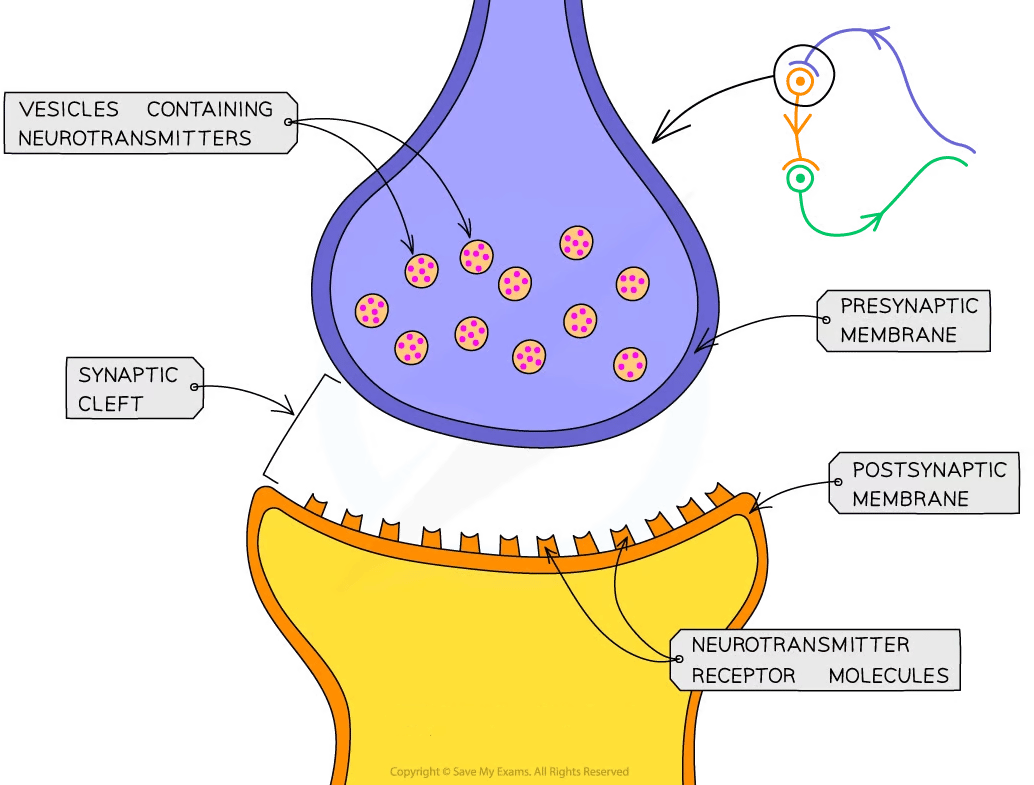
Neurotransmitters are chemicals that are transported via electrical impulses from the presynaptic neuron to the postsynaptic neuron across the synaptic cleft
An action potential begins the process of neurotransmission in the form of an electrochemical impulse:
This impulse travels down the axon to the terminal knob of the neuron
The terminal knob contains the neurotransmitter which is then released into the synaptic cleft
Molecules of the neurotransmitter which are not passed across the synaptic cleft are taken back up into the axon of the presynaptic neuron (known as reuptake)
The key neurotransmitter in the study of depression is serotonin
Serotonin is implicated in mood disorders such as depression i.e. low levels of serotonin have been linked to depressive symptoms
The idea that low serotonin levels are implicated in depression is known as the serotonin hypothesis
Some people may inherit a dysfunctional gene (known as the MAOA/warrior gene) that disrupts serotonin levels and has been linked to anti-social behaviour (one symptom of depression is heightened anger and hostility)
Serotonin is also implicated in core body temperature and sleep (for sleep to occur, body temperature needs to be lower than throughout the day)
Examiner Tips and Tricks
In a question on a biological explanation for depression make sure that you link the effects/action of serotonin to the behaviour (depression). The term ‘behaviour’ covers the range of what is involved in depression; it does not mean that you have to single out one, specific type of depressive behaviour.
Evaluation of the biological explanation of depression
Strengths
The link between serotonin and depression fuelled the development of antidepressant medication which can be effective in treating depression (Thase, 20023)
People with depression are often relieved to have a concrete explanation for how they are feeling e.g. ‘It’s not in my imagination, there is something biologically wrong with me’
Weaknesses
Moncrieff et al. (2023) conducted a large-scale systematic review of research into the serotonin hypothesis and found that:
the main areas of serotonin research provide no consistent evidence of there being an association between serotonin and depression
there is no support for the hypothesis that depression is caused by lowered serotonin activity or concentrations
The serotonin hypothesis is reductionist in that it attempts to explain the complex, multifaceted phenomenon of depression as a neurochemical mechanism; there are many more factors which likely contribute to the onset of depressive symptoms
Worked Example
Here is an example of a question you might be asked on this topic - for AO2.
AO2: You need to apply your knowledge and understanding, usually referring to the ‘stem’ in order to do so (the stem is the example given before the question)
You have decided to conduct research into the link between serotonin and depression. You will be using fMRI scanning on your adult participants as part of the research process.
Question: Identify an appropriate way of dealing with the ethical issue of informed consent in your fMRI research. [1]
Model answer:
I would ensure that participants are told what will happen during the scan, how long the scan is likely to take and make sure that none of them are claustrophobic or have metal inserts in any part of their body.

Unlock more, it's free!
Join the 100,000+ Students that ❤️ Save My Exams
the (exam) results speak for themselves:

Was this revision note helpful?
Build on this topic