Preventing the Spread of Disease (Cambridge (CIE) IGCSE Biology): Revision Note
Exam code: 0610 & 0970

Preventing the spread of disease: Extended
Extended Tier Only
If a large enough percentage of the population is vaccinated (opens in a new tab), it provides protection for the entire population because there are very few places for the pathogen to breed - it can only do so if it enters the body of an unvaccinated person
This is known as herd immunity
If the number of people vaccinated against a specific disease drops in a population, it leaves the rest of the population at risk of mass infection, as they are more likely to come across people who are infected and contagious
This increases the number of infections, as well as the number of people who could die from a specific infectious disease
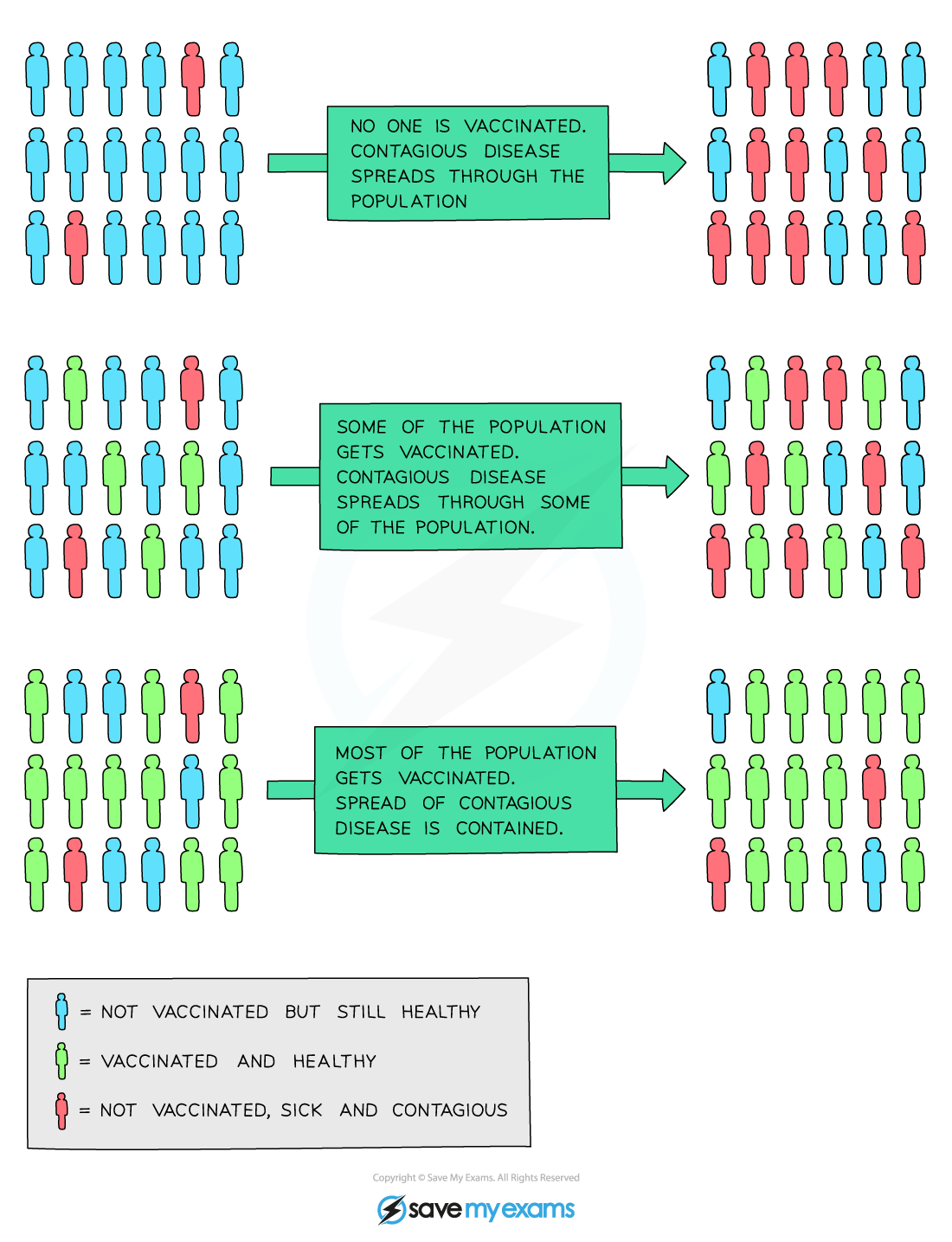
Herd immunity prevents epidemics and pandemics from occurring in populations
This is the reason that many vaccinations are given to children, as they are regularly seen by medical practitioners and can be vaccinated early to ensure the entire vaccinated population remains at a high level
In certain instances, vaccination programmes are run with the aim of eradicating certain dangerous diseases, as opposed to controlling them at low levels
An example of a disease which has been eradicated as a result of a successful vaccination programme is smallpox, which was officially eradicated in 1980 after a vaccination programme run by the World Health Organisation since the mid-1950s

Unlock more, it's free!
Join the 100,000+ Students that ❤️ Save My Exams
the (exam) results speak for themselves:

Was this revision note helpful?
Build on this topic