Sexual Reproduction (Cambridge (CIE) IGCSE Biology): Revision Note
Exam code: 0610 & 0970

Gametes & zygotes
Sexual reproduction
Sexual reproduction is a process involving the fusion of the nuclei of two gametes (sex cells) to form a zygote (fertilised egg cell) and the production of offspring that are genetically different from each other
Fertilisation is defined as the fusion of gamete nuclei, and as each gamete comes from a different parent, there is variation in the offspring
Gametes
A gamete is a sex cell (in animals: sperm and ovum; in plants pollen nucleus and ovum)
Gametes differ from normal cells as they contain half the number of chromosomes found in other body cells - we say they have a haploid nucleus
This is because they only contain one copy of each chromosome, rather than the two copies found in other body cells
In human beings, a normal body cell contains 46 chromosomes but each gamete contains 23 chromosomes
When the male and female gametes fuse, they become a zygote (fertilised egg cell)
This contains the full 46 chromosomes, half of which came from the father and half from the mother - we say the zygote has a diploid nucleus
Haploid & diploid cells: Extended
The nuclei of gametes are haploid
A haploid nucleus contain half the number of chromosomes of a normal body cell
In humans, a haploid cell has 23 chromosomes
The nucleus of a zygote is diploid
A diploid nucleus contains the same number of chromosomes as a normal body cell
In humans, this is 23 pairs of chromosomes
The zygote continues to stay diploid as it grows into a foetus and embryo during pregnancy
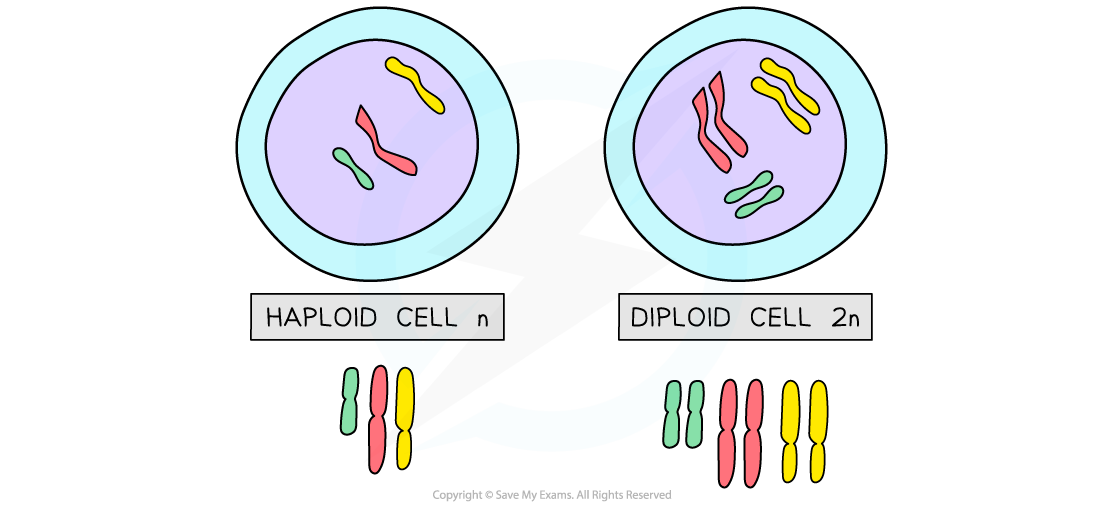
Advantages & disadvantages of sexual reproduction: Extended
Advantages of sexual reproduction:
increases genetic variation within a population
this variation gives the population a better chance of adapting to a changing environment
a population with more variation is less likely to be wiped out entirely by a single disease, since some individuals may be resistant
Disadvantages of sexual reproduction:
finding a mate costs time and energy
individuals that are isolated from others may struggle to find a mate at all
Many crop plants reproduce sexually:
This is an advantage as it means variation is increased and a genetic variant may be produced which is better able to cope with weather changes, or produces significantly higher yield
The disadvantage is that the variation may lead to offspring that are less successful than the parent plant at growing well or producing a good harvest

Unlock more, it's free!
Join the 100,000+ Students that ❤️ Save My Exams
the (exam) results speak for themselves:

Was this revision note helpful?
Build on this topic