The Role of the Liver in Excretion (Cambridge (CIE) IGCSE Biology): Revision Note
Exam code: 0610 & 0970

Excretion by Deamination of Amino Acids: Extended
Many digested food molecules absorbed into the blood in the small intestine are carried to the liver for assimilation (when food molecules are converted to other molecules that the body needs)
These include amino acids, which are used to build proteins such as fibrinogen, a protein found in blood plasma that is important in blood clotting
Excess amino acids absorbed in the blood that are not needed to make proteins cannot be stored, so they are broken down in a process called deamination
The amino group of all amino acids - NH2 (which contains the nitrogen atoms) is removed, hence the term de-amin(o)-ation
Enzymes in the liver split up the amino acid molecules
The part of the molecule which contains carbon is turned into glycogen and stored
The other part, which contains nitrogen, is turned into ammonia, which is highly toxic, and so is immediately converted into urea, which is less toxic
The urea dissolves in the blood and is taken to the kidney to be excreted
A small amount is also excreted in sweat
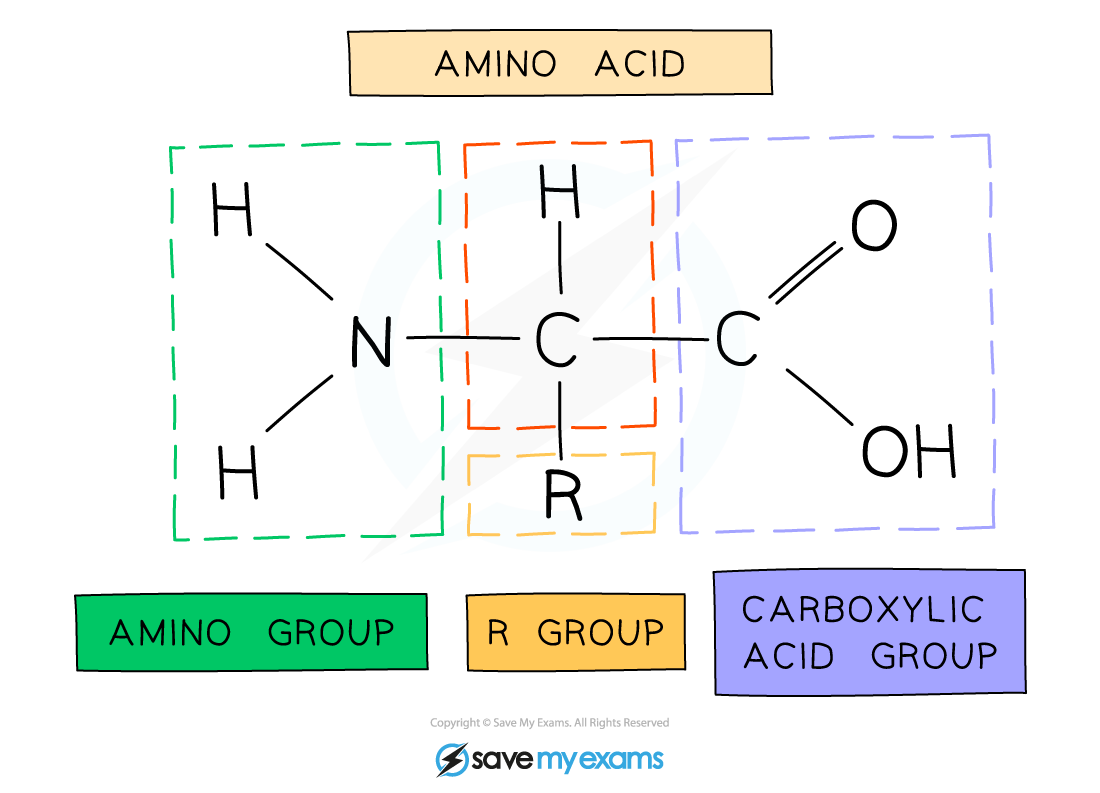
Amino acid groups
In deamination, the nitrogen-containing amino group is removed and converted into ammonia and then urea to be excreted
The toxic consequences of high urea levels, if it is not excreted effectively, are very serious:
Cell death
Reduced response to insulin, leading to diabetes
Deposits inside blood vessels
Examiner Tips and Tricks
Excretion and egestion are two terms that often get confused:
Excretion is the removal from the body of waste products of metabolic reactions, toxic substances and substances in excess of requirements.
Egestion is the expulsion of undigested food waste from the anus.

Unlock more, it's free!
Join the 100,000+ Students that ❤️ Save My Exams
the (exam) results speak for themselves:

Was this revision note helpful?
Build on this topic