Budgets (AQA A Level Business): Exam Questions

Exam code: 7132

Syllabus Edition

First teaching 2026

First exams 2028

2 hours15 questions
1
6 marks

Source B: Battersea Dogs' and Cats' Home

Battersea Dogs' and Cats' Home is a registered charity, number 206394. It works with animals, provides services to the general public, and operates in London, in Windsor and Maidenhead, and in Kent. It has no shareholders and no owners. Any money left over at the end of the year stays in the charity.

Almost all of its money is given rather than earned. In the year to 31 December 2024 its total income was £70.34 million, of which £59.35 million came from donations and legacies. A legacy is money left to a charity in somebody's will, and legacies alone came to £32.57 million, almost half of everything Battersea received.

Raising that money costs money. Battersea spent £14.48 million on raising funds during the year. It spent £45.33 million on its charitable activities and £3.62 million on other costs, giving total expenditure of £63.43 million.

Income has grown in three of the past four years, from £52.71 million in 2020 to £70.34 million in 2024. Expenditure has risen every year over the same period.

The charity faces a planning problem that a company selling to customers does not. Nobody can be told in advance how much will be left to Battersea in wills, or when. Legacies are the largest single source of its income and the least predictable.

Source: Charity Commission register of charities, entry 206394

Appendix F: Battersea Dogs' and Cats' Home spending on raising funds

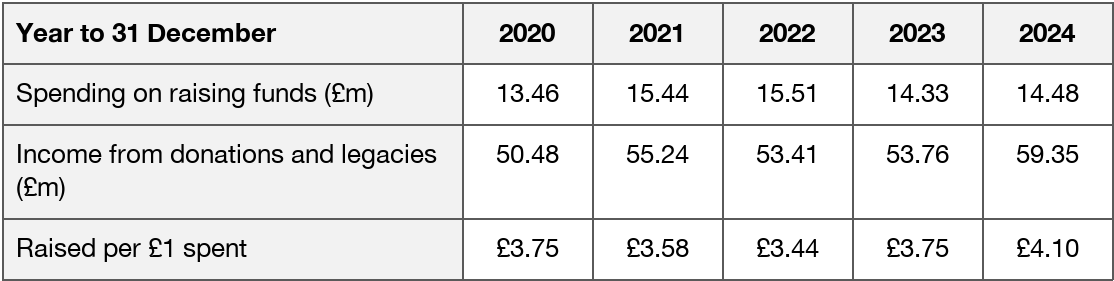
Table for 2020–2024: spending on raising funds was £13.46m, £15.44m, £15.51m, £14.33m and £14.48m; raised per £1 spent was £3.75, £3.58, £3.44, £3.75 and £4.10.

Source: Charity Commission

Battersea Dogs' and Cats' Home spent £14.48 million on raising funds in 2024, having spent £15.51 million in 2022.

Analyse one reason why setting a budget for raising funds might be difficult for Battersea Dogs' and Cats' Home.

2
6 marks

Source B: Paper Lane Ltd

Paper Lane Ltd sells stationery, cards and gifts from two small shops in market towns about 15 miles apart. Nina Okafor and Rhys Pritchard opened the first shop nine years ago and set the business up as a private limited company, with the two of them as the only directors and shareholders. They now employ nine other people, most of them part time.

The shops sell notebooks, pens, wrapping paper, cards and small gifts. Customers come in to browse, and a large share of what they buy was not on a list when they walked through the door. Nina and Rhys buy most of their inventory from small makers and from two wholesalers, and they order the Christmas range in August to get an 8% early order discount.

The business makes most of its profit in six weeks. December takes more money than August, September and October put together. That pattern is the heart of Paper Lane's problem. The inventory for Christmas is paid for in the autumn, months before it is sold, so the money goes out long before it comes back.

Sales have been steady and the shops are busy. Even so, cash at the bank fell from £19 000 to £2 000 during the year to 31 January 2026, and at its lowest point in the autumn the company was £22 000 into its overdraft. The overdraft limit is £25 000. Appendix D sets out the company's financial position and Appendix E shows what Nina and Rhys forecast will happen to the cash balance over the coming year.

They have been talking about opening a third shop. Their accountant has told them to sort the cash out first. They are also arguing about whether to ask their customers what they actually want, or to trust what nine years behind the counter has taught them.

Paper Lane Ltd orders its Christmas inventory in August, four months before most of it is sold.

Analyse one reason why setting a budget for inventory might be difficult for Nina and Rhys.

3
6 marks

Source B: Cranswick plc

Cranswick plc makes food. It is a public limited company listed on the London Stock Exchange and it supplies fresh pork, poultry, cooked meats, pastry, sandwiches and pet food to supermarkets, to foodservice customers such as restaurant chains, and to export markets.

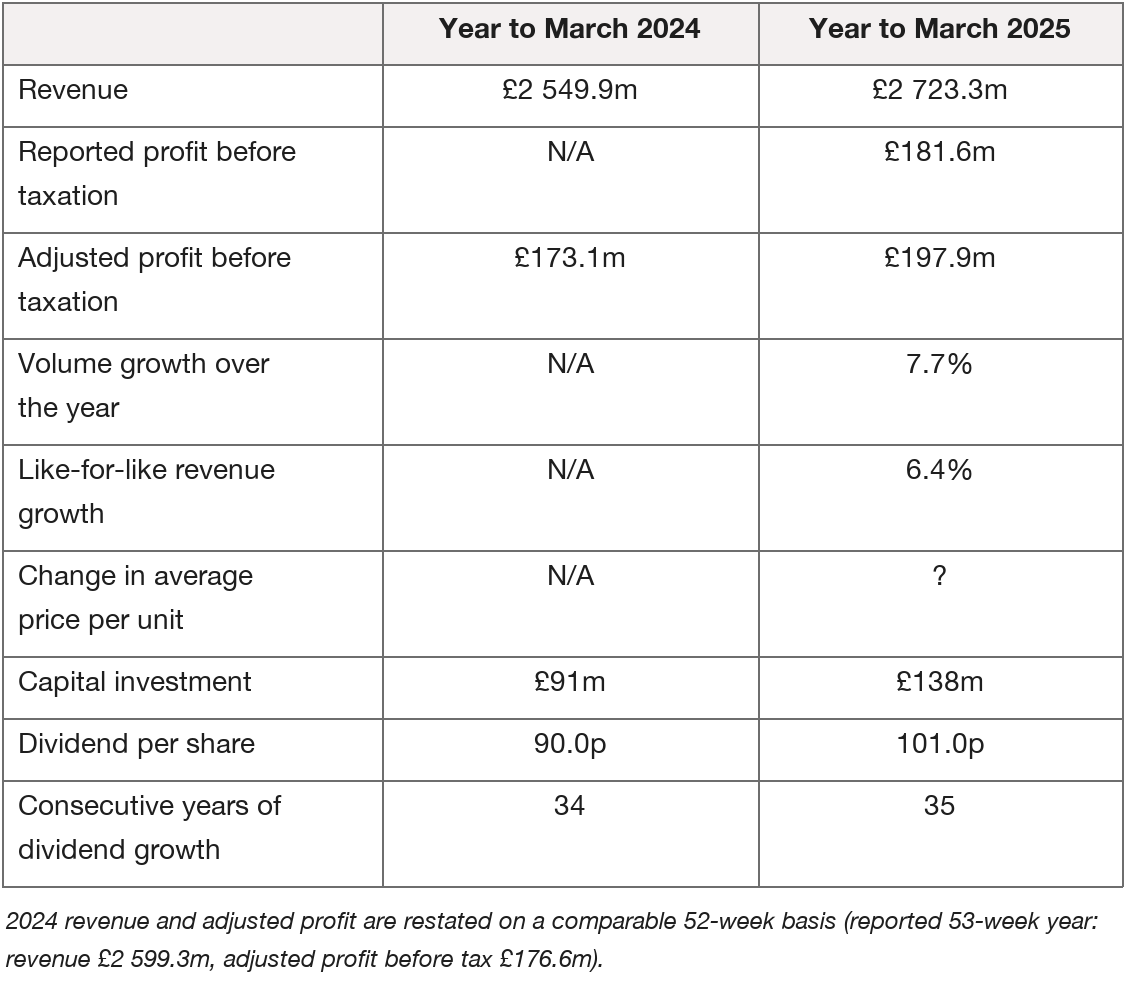
The year to March 2025 was a strong one. The previous financial year was 53 weeks long, so the company compares the two years on a 52-week basis. On that basis, revenue rose 6.8% to £2 723.3 million and adjusted profit before tax rose 14.3% to £197.9 million. Reported profit before tax was £181.6 million. Like-for-like revenue, which strips out the effect of businesses bought or sold, rose 6.4%.

The volume figure is the interesting one. Cranswick sold 7.7% more food than the year before, which is more than its revenue grew. Appendix E shows what has been happening to volumes and to the average price of a unit over five years: prices rose steeply through the inflation of 2022 and 2023, and have now started to come back down while volumes keep climbing.

The company has been spending. Capital investment reached a record £138 million, up from £91 million, going into extra capacity and into making its existing factories more efficient. Its largest customers are a small number of supermarkets, each of which buys in enormous quantities and negotiates hard.

Cranswick has raised its dividend every year for 35 years, and raised it again this year by 12.2% to 101.0p a share.

Source: information sourced from Cranswick plc preliminary results for the year ended March 2025

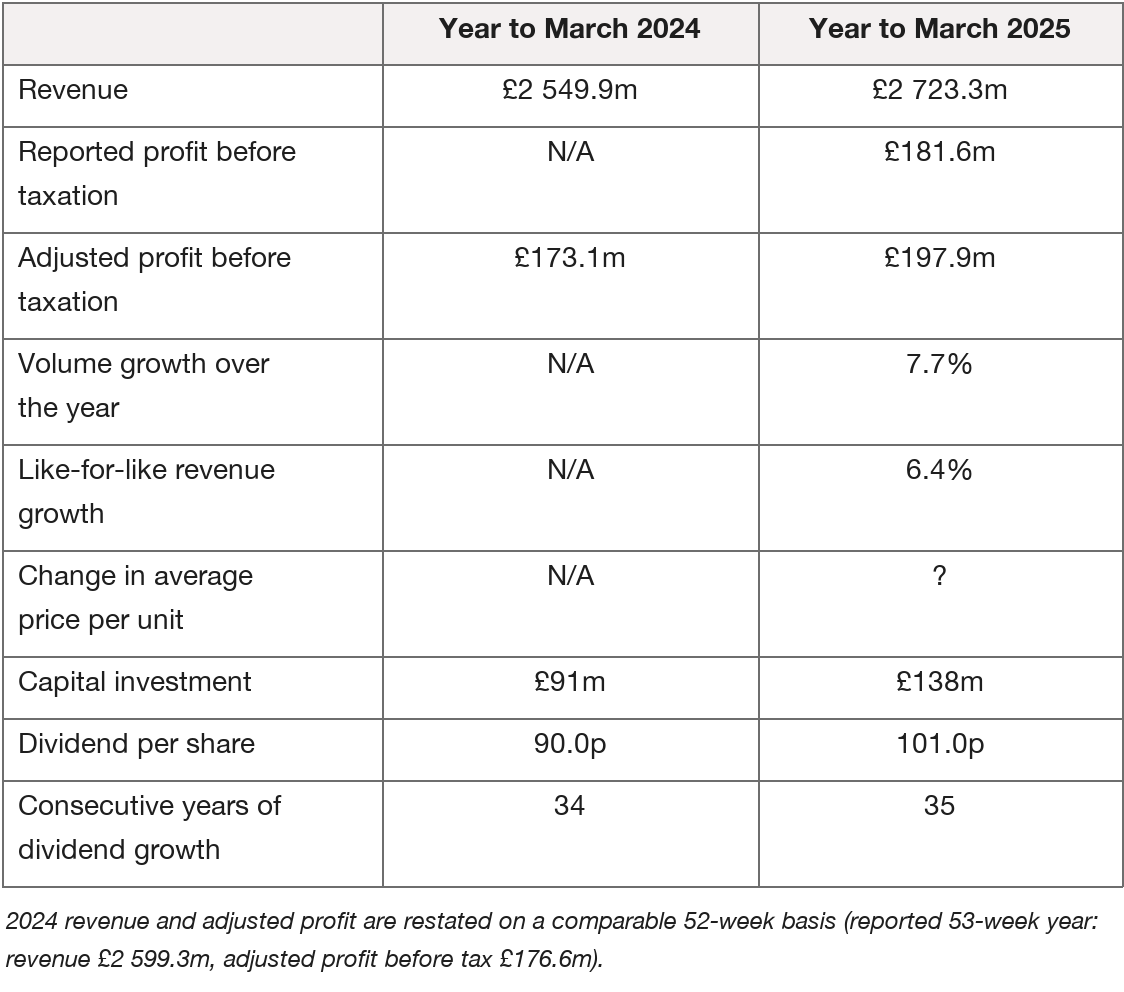
Appendix D: Cranswick plc selected results

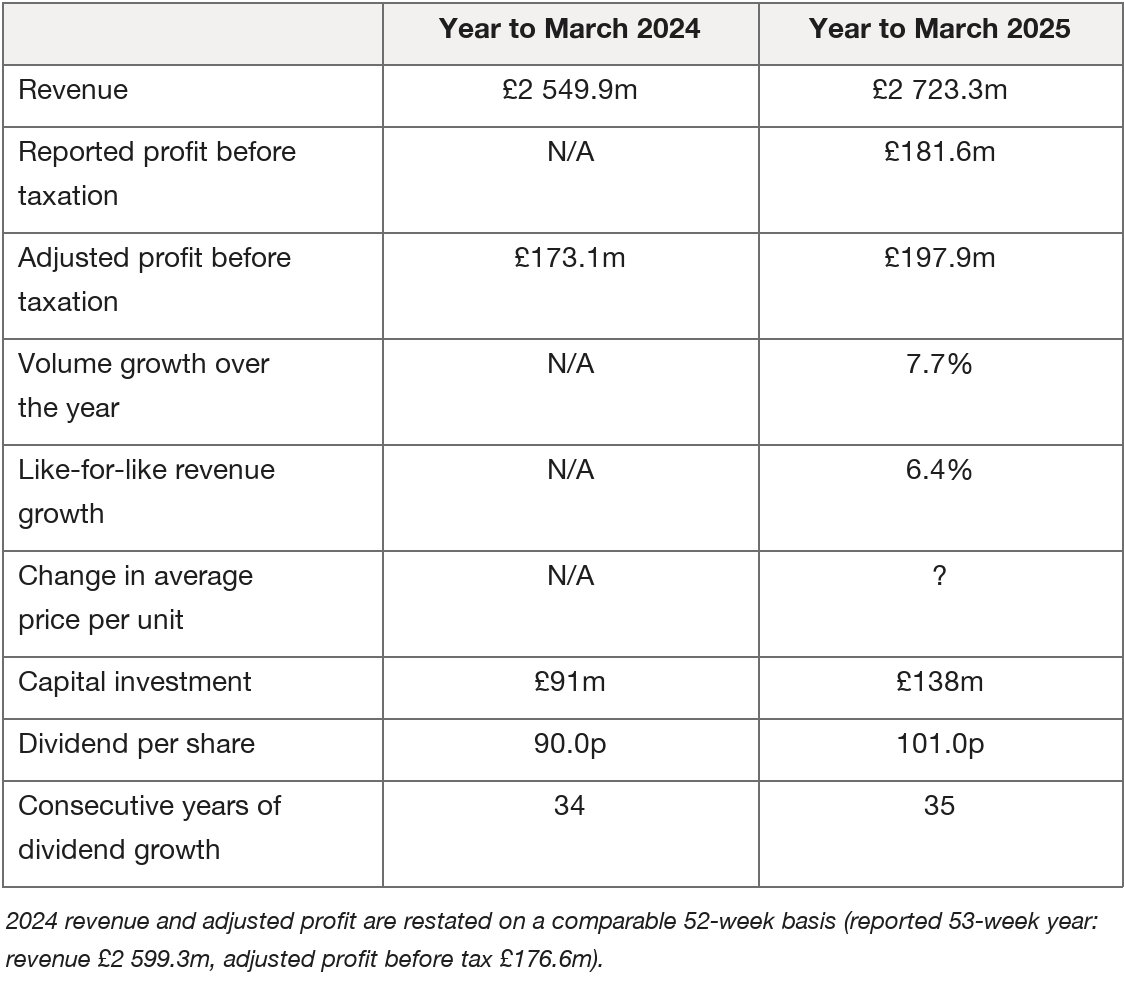
Table comparing Cranswick’s results for years to March 2024 and 2025: revenue, profit, volume and like-for-like growth, average price change, investment, dividends and dividend-growth years. 2024 figures use 52 weeks.

Source: Cranswick plc

Cranswick plc set a capital investment budget of £138 million, up from £91 million.

Analyse one reason why Cranswick plc might find it difficult to set this budget accurately.

4
6 marks

Source B: Brackenhill Films Ltd

Brackenhill Films Ltd makes documentaries and children's series in Bristol. It is a private limited company with eleven permanent staff: producers, an office manager and two editors. Everyone else is hired for the length of a production.

It does not sell to the public. Broadcasters and streaming services commission a programme, agree a fee and a budget, and Brackenhill Films Ltd delivers it. Last year it delivered four productions for a total of £2 140 000, an average of £535 000 each. The direct costs of making them came to £1 722 000. Fixed overheads, meaning the office, the permanent staff and the edit suites, were £468 000, and they are paid whether a production is in progress or not. The company therefore lost £50 000 on the year.

The budget for each production is agreed with the broadcaster at the start. If a production comes in under budget Brackenhill Films Ltd keeps the difference. If it goes over, Brackenhill Films Ltd pays the difference itself. On the four productions delivered last year the budgets were set by copying the previous year's figures for a similar programme and adding a little for inflation.

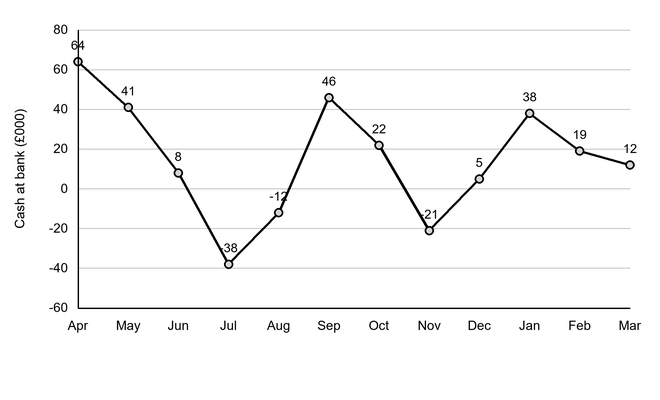
Money arrives in three instalments: a third when the programme is commissioned, a third when a rough cut is delivered and a third on final delivery. Costs do not arrive in three instalments. Crews, camera hire and studio time are paid as the work happens, which is why the company's bank balance looks the way it does.

Brackenhill Films Ltd has an overdraft facility of £50 000.

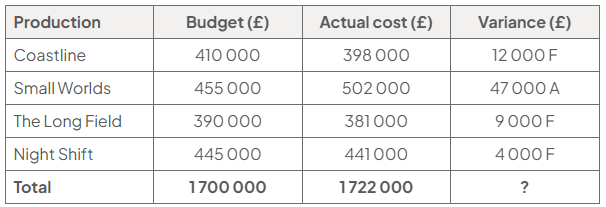
Appendix E: Brackenhill Films Ltd, budget against actual on last year's four productions

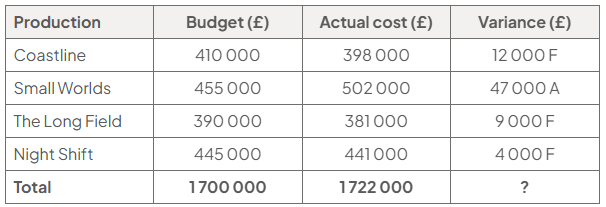
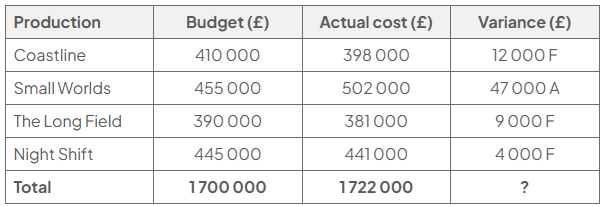
Table of budget versus actual costs: Coastline £410,000/£398,000, £12,000 F; Small Worlds £455,000/£502,000, £47,000 A; The Long Field £390,000/£381,000, £9,000 F; Night Shift £445,000/£441,000, £4,000 F. Total: £1,700,000 budget and £1,722,000 actual; variance blank.

Source: Analyst

Brackenhill Films Ltd sets each production budget by taking the previous year's figures for a similar programme and adding a little for inflation.

Analyse one way in which setting budgets this way might affect the costs Brackenhill Films Ltd ends up paying.

5
6 marks

Source B: Whitbourne Coaches Ltd

Whitbourne Coaches Ltd runs 18 coaches out of a depot in Herefordshire. It is a private limited company owned by Carol Whitbourne and her son Ryan, and it employs 22 people, most of them drivers.

Rather more than half its work is school contracts, run for the county council and for three private schools, which together brought in £1.36 million last year. The rest is private hire and day trips, which brought in £0.98 million. Total revenue was £2.34 million.

The company thinks in coach-days. A coach out on the road for a day earns an average of £420 and costs £180 in fuel, tolls and cleaning, leaving £240. Last year its coaches were out for 5 570 days. Against that it pays £1 200 000 a year in costs that do not change with use: the depot, insurance, vehicle finance and the drivers' basic wages. Profit for the year was £136 800.

The difficulty is that the profit is not in the bank. The council and the schools pay on their own timetable, which is usually somewhere between 60 and 90 days, and at the year end Whitbourne Coaches Ltd was owed £286 000. It had £31 000 in the bank and £18 000 of fuel in the tank. Against that it owed £142 000 to suppliers, £198 000 of vehicle finance falling due within the year, and £64 000 of VAT and PAYE.

Carol and Ryan Whitbourne take most of their own pay as dividends rather than salary, which is legal and costs the company less in national insurance than paying themselves the same amount as wages.

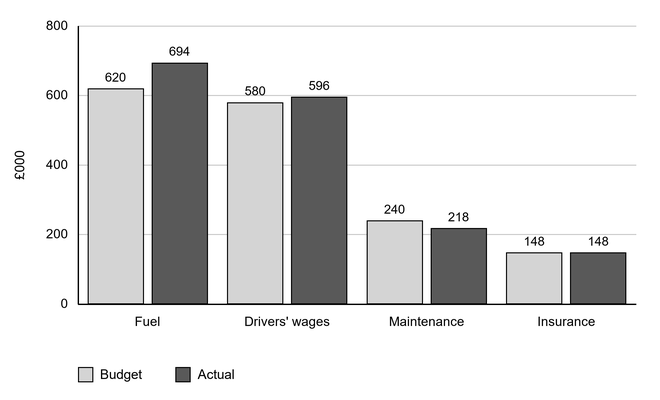
Appendix E: Whitbourne Coaches Ltd, budget against actual on its four largest costs

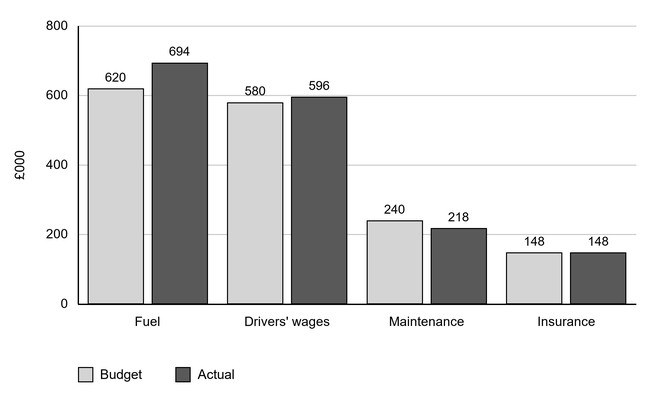
Bar chart comparing Whitbourne Coaches’ budget and actual costs (£000): fuel 620 versus 694, drivers’ wages 580 versus 596, maintenance 240 versus 218, and insurance 148 versus 148.

Source: Analyst

Whitbourne Coaches Ltd budgeted £620 000 for fuel last year and spent £694,000.

Analyse one way in which an overspend of this size on a single cost might affect how Carol and Ryan Whitbourne set next year's budget.

6
6 marks

Source B: Aldergate Landscapes Ltd

Aldergate Landscapes Ltd designs and builds gardens across Cheshire and north Staffordshire. It is a private limited company owned by Joss Aldergate and his wife Ruth, and it employs 19 people alongside regular subcontractors for stonework and electrics.

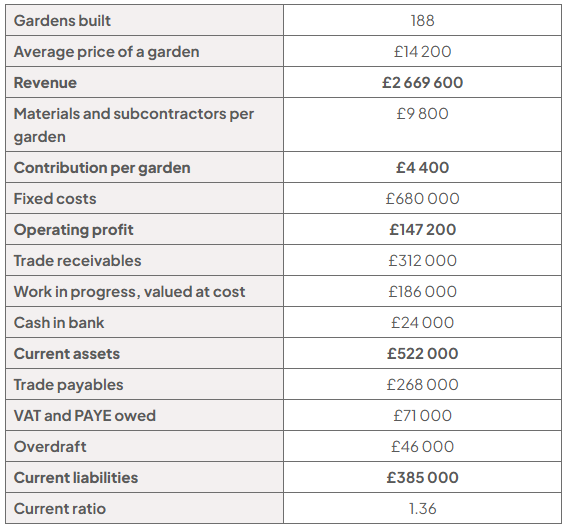
Most of the work is for private clients having a whole garden rebuilt, at an average of £14 200 a garden. The rest is for two housing developers who want the gardens finished before a show home opens. Last year the company built 188 gardens for revenue of £2 669 600. Materials and subcontractors cost £9 800 a garden. Everything else, meaning the yard, the vans, the permanent staff, the designer and the office, cost £680 000.

The work does not arrive evenly. Appendix E shows what comes in each month, and the three months from December to February brought in £214 000 between them, against fixed costs of about £170 000 for the same period.

To manage this, Aldergate Landscapes Ltd asks private clients for a 50% deposit when the design is signed off. The deposit is spent almost immediately, though not usually on that client's garden: it pays for materials on the job already running.

At the year end the company was owed £312 000 by clients and developers, held £186 000 of gardens that were half built and not yet invoiced, and had £24 000 in the bank. Against that it owed £268 000 to suppliers and subcontractors, £71 000 in VAT and PAYE, and was £46 000 into its overdraft.

Appendix D: Aldergate Landscapes Ltd, summary of last year

Summary table for Aldergate Landscapes Ltd: 188 gardens, average price £14,200, revenue £2,669,600, materials and subcontractors £9,800 per garden, contribution £4,400, fixed costs £680,000 and operating profit £147,200.

Source: Analyst

Aldergate Landscapes Ltd sets a materials budget for each garden when the design is signed off.

Analyse one way in which setting a budget for each garden separately might affect how Joss Aldergate controls his costs.

7
6 marks

Source A: MPB Group Ltd

MPB Group Limited buys and sells used cameras and video equipment. Matt Barker founded the business in Brighton in 2011. Customers can sell their old equipment to MPB, trade it in against something else, or buy used gear at a lower price than new. The company recirculates around 570 000 items a year, and says it wants to extend the life of photo and video equipment rather than see it sit unused in a drawer.

Everything is bought and sold through MPB's own website. There are no shops. The company has offices in Brighton, Brooklyn and Berlin, so it trades in the United Kingdom, the United States and Germany. Every item is inspected by a product specialist and graded for its condition, then sold with a twelve-month warranty. Prices are set by the make, model, condition and the market the item is being sold in.

Because MPB has no shops and does not advertise on television, almost all of its customers arrive through a search engine. Some of those visits are earned, when MPB's own articles, reviews and buying guides appear in the search results without being paid for. Others are bought, when MPB pays to appear above the free results and is charged every time somebody clicks.

MPB has grown quickly. Turnover rose by 15.5% in the year to 31 March 2025 and the company took on 49 more staff. Some of that growth has been funded by borrowing. Over the same year total liabilities rose by 22.7% while net assets fell by 19.7%. Matt Barker is still a director, but he no longer runs the company alone. In 2021 an outside investment company placed directors on the board, and MPB now has 16 shareholders and an independent chairman.

MPB wants to sell more in the United States and Germany. It could spend more on paid search advertising, or it could invest in its own content so that more customers find it without a payment being made for every click.

Source: information sourced from Companies House and MPB Group Ltd, 2026

Appendix B: MPB Group Ltd marketing budget for the year ended 31 March 2025

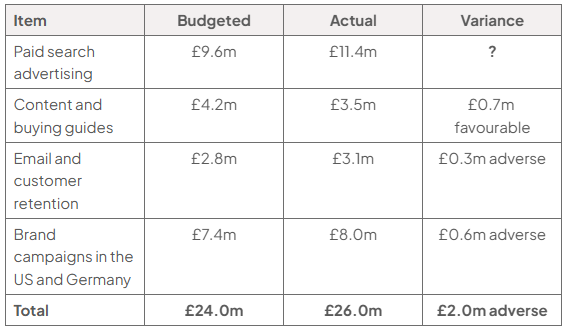
Marketing budget table (£m), showing budgeted/actual/variance: paid search advertising 9.6/11.4/?; content and buying guides 4.2/3.5/0.7 favourable; email retention 2.8/3.1/0.3 adverse; US and Germany brand campaigns 7.4/8.0/0.6 adverse; total 24.0/26.0/2.0 adverse.

Source: Analyst

MPB Group Ltd budgeted £24.0 million for marketing during the year to 31 March 2025 and spent £26.0 million.

Analyse one way in which setting a marketing budget in advance might affect how MPB Group Ltd chooses between paid search advertising and its own content.

1
9 marks

Source A: MPB Group Ltd

MPB Group Limited buys and sells used cameras and video equipment. Matt Barker founded the business in Brighton in 2011. Customers can sell their old equipment to MPB, trade it in against something else, or buy used gear at a lower price than new. The company recirculates around 570 000 items a year, and says it wants to extend the life of photo and video equipment rather than see it sit unused in a drawer.

Everything is bought and sold through MPB's own website. There are no shops. The company has offices in Brighton, Brooklyn and Berlin, so it trades in the United Kingdom, the United States and Germany. Every item is inspected by a product specialist and graded for its condition, then sold with a twelve-month warranty. Prices are set by the make, model, condition and the market the item is being sold in.

Because MPB has no shops and does not advertise on television, almost all of its customers arrive through a search engine. Some of those visits are earned, when MPB's own articles, reviews and buying guides appear in the search results without being paid for. Others are bought, when MPB pays to appear above the free results and is charged every time somebody clicks.

MPB has grown quickly. Turnover rose by 15.5% in the year to 31 March 2025 and the company took on 49 more staff. Some of that growth has been funded by borrowing. Over the same year total liabilities rose by 22.7% while net assets fell by 19.7%. Matt Barker is still a director, but he no longer runs the company alone. In 2021 an outside investment company placed directors on the board, and MPB now has 16 shareholders and an independent chairman.

MPB wants to sell more in the United States and Germany. It could spend more on paid search advertising, or it could invest in its own content so that more customers find it without a payment being made for every click.

Source: information sourced from Companies House and MPB Group Ltd, 2026

Appendix B: MPB Group Ltd marketing budget for the year ended 31 March 2025

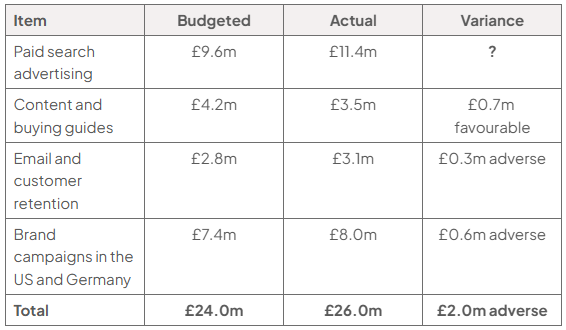
Marketing budget table (£m): paid search £9.6 budget, £11.4 actual, variance “?”; content £4.2/£3.5, £0.7 favourable; email £2.8/£3.1, £0.3 adverse; brand £7.4/£8.0, £0.6 adverse; total £24.0/£26.0, £2.0 adverse.

Source: Analyst

Assess whether the variances in Appendix B show that MPB Group Ltd's marketing spending is out of control.

Calculate the variance for paid search advertising to support your answer.

2
9 marks

Source A: Ridgeway Signs

Tomasz Nowak trades as Ridgeway Signs. He is a sole trader, which means the business is not separate from him in law: he owns everything it owns and he is personally responsible for everything it owes. He has no employees and works from a rented unit on a small industrial estate, with a van.

He designs, prints and fits signs for local businesses: shop fascias, vehicle graphics, banners, menu boards and exhibition displays. Almost all of his customers are other businesses within about twenty miles. Every job is quoted separately, and he wins roughly one quote in three.

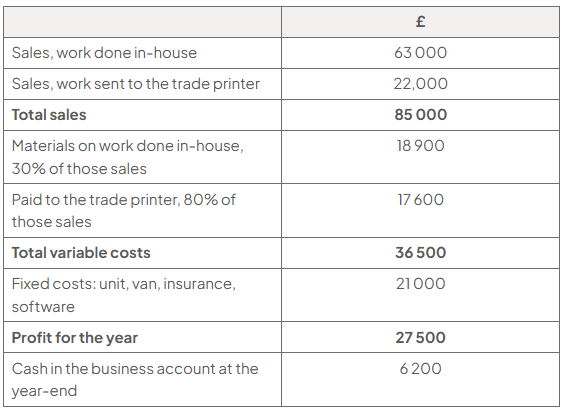
Last year Ridgeway Signs took £85 000. Materials cost about 30p in every pound of work Tomasz does himself, so he keeps about 70p. Rent on the unit, the van, insurance and design software cost £21 000 a year whatever he sells.

The business has a shape to it. Appendix B shows sales month by month. October and November are his best months, because retailers refit before Christmas, and January and February are his worst.

There is one piece of work he cannot do. Large-format printing — vehicle wraps and big banners — needs a machine he does not own, so he sends those jobs to a trade printer in another town. Last year that work was worth £22 000 of his sales, but the trade printer takes most of it: Tomasz keeps only about 20p in the pound. He also turns away large jobs when the trade printer is busy.

A wide-format printer costs £24 000. Tomasz has £6 200 in the business account. Appendix C sets out what his accountant thinks would happen if he bought one.

Appendix A: Ridgeway Signs, summary of last year

Appendix A table, Ridgeway Signs last-year summary (£): in-house sales 63,000; trade-printer sales 22,000; total sales 85,000; materials 18,900; variable costs 36,500; fixed costs 21,000; profit 27,500; year-end cash 6,200.

Source: Analyst

Assess whether Tomasz Nowak should set a yearly budget for the materials Ridgeway Signs buys.

3
9 marks

Source B: Brackenhill Films Ltd

Brackenhill Films Ltd makes documentaries and children's series in Bristol. It is a private limited company with eleven permanent staff: producers, an office manager and two editors. Everyone else is hired for the length of a production.

It does not sell to the public. Broadcasters and streaming services commission a programme, agree a fee and a budget, and Brackenhill Films Ltd delivers it. Last year it delivered four productions for a total of £2 140 000, an average of £535 000 each. The direct costs of making them came to £1 722 000. Fixed overheads, meaning the office, the permanent staff and the edit suites, were £468 000, and they are paid whether a production is in progress or not. The company therefore lost £50 000 on the year.

The budget for each production is agreed with the broadcaster at the start. If a production comes in under budget Brackenhill Films Ltd keeps the difference. If it goes over, Brackenhill Films Ltd pays the difference itself. On the four productions delivered last year the budgets were set by copying the previous year's figures for a similar programme and adding a little for inflation.

Money arrives in three instalments: a third when the programme is commissioned, a third when a rough cut is delivered and a third on final delivery. Costs do not arrive in three instalments. Crews, camera hire and studio time are paid as the work happens, which is why the company's bank balance looks the way it does.

Brackenhill Films Ltd has an overdraft facility of £50 000.

Appendix E: Brackenhill Films Ltd, budget against actual on last year's four productions

Table of four productions showing budget and actual costs: Coastline £410,000/£398,000; Small Worlds £455,000/£502,000; The Long Field £390,000/£381,000; Night Shift £445,000/£441,000. Totals: £1,700,000 and £1,722,000; variance blank.

Source: Analyst

Assess whether Brackenhill Films Ltd's budgets were well set last year.

Calculate Brackenhill Films Ltd's total budget variance for the year to support your answer.

State whether it is favourable or adverse.

4
9 marks

Source B: Whitbourne Coaches Ltd

Whitbourne Coaches Ltd runs 18 coaches out of a depot in Herefordshire. It is a private limited company owned by Carol Whitbourne and her son Ryan, and it employs 22 people, most of them drivers.

Rather more than half its work is school contracts, run for the county council and for three private schools, which together brought in £1.36 million last year. The rest is private hire and day trips, which brought in £0.98 million. Total revenue was £2.34 million.

The company thinks in coach-days. A coach out on the road for a day earns an average of £420 and costs £180 in fuel, tolls and cleaning, leaving £240. Last year its coaches were out for 5 570 days. Against that it pays £1 200 000 a year in costs that do not change with use: the depot, insurance, vehicle finance and the drivers' basic wages. Profit for the year was £136 800.

The difficulty is that the profit is not in the bank. The council and the schools pay on their own timetable, which is usually somewhere between 60 and 90 days, and at the year end Whitbourne Coaches Ltd was owed £286 000. It had £31 000 in the bank and £18 000 of fuel in the tank. Against that it owed £142 000 to suppliers, £198 000 of vehicle finance falling due within the year, and £64 000 of VAT and PAYE.

Carol and Ryan Whitbourne take most of their own pay as dividends rather than salary, which is legal and costs the company less in national insurance than paying themselves the same amount as wages.

Appendix E: Whitbourne Coaches Ltd, budget against actual on its four largest costs

Bar chart comparing budget and actual costs (£000): fuel 620/694, drivers’ wages 580/596, maintenance 240/218, and insurance 148/148; fuel and wages exceeded budget, maintenance was below, insurance matched.

Source: Analyst

Assess whether the variances in Appendix E show that Whitbourne Coaches Ltd's budgets were set well last year.

5
9 marks

Source B: Kettleby Plant Hire Ltd

Kettleby Plant Hire Ltd hires excavators, dumpers and telehandlers to builders across the East Midlands. It is a private limited company owned by Sean Kettleby and it employs 22 people, including four fitters who service the machines and two drivers who deliver them.

It owns 68 machines. Last year they were out on hire for 15 400 machine-days in total, at an average of £118 a day, which is revenue of £1 817 200. Fuel, delivery and servicing cost £34 for every day a machine is out. Everything else costs £1 050 000 a year and is paid whether the machines are out or standing in the yard.

Its customers are not alike. National housebuilders take more than half the revenue and are given sixty days to pay, which in practice becomes seventy-one. Small builders and sole traders are given seven days, or asked for a card when they collect. Sean Kettleby set it up that way and is candid about why: the housebuilders would go elsewhere if he pushed them, and the sole traders would not.

The machines are wearing out. Three excavators need replacing this year at £74 000 each. Sean Kettleby can buy them, which is what he has always done, or he can hire them in from a larger national firm when a customer needs one and hand the margin over. The bank has offered him a five-year loan for the £222 000, and he has enough in the company to pay cash if he chooses to.

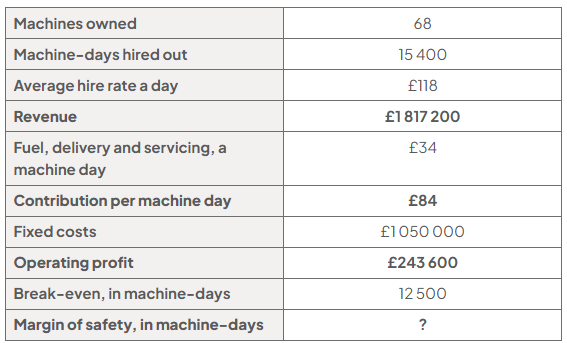
Appendix D: Kettleby Plant Hire Ltd, summary of last year

Summary table for last year: 68 machines, 15,400 machine-days, £118 average rate, £1,817,200 revenue, £34 variable cost, £84 contribution, £1,050,000 fixed costs, £243,600 profit and 12,500 break-even machine-days; margin of safety is shown as “?”.

Source: Analyst

Assess whether Kettleby Plant Hire Ltd should set its £1 050 000 standing-cost budget separately for each of its three machine types.

1
15 marks

Source B: Cranswick plc

Cranswick plc makes food. It is a public limited company listed on the London Stock Exchange and it supplies fresh pork, poultry, cooked meats, pastry, sandwiches and pet food to supermarkets, to foodservice customers such as restaurant chains, and to export markets.

The year to March 2025 was a strong one. The previous financial year was 53 weeks long, so the company compares the two years on a 52-week basis. On that basis, revenue rose 6.8% to £2 723.3 million and adjusted profit before tax rose 14.3% to £197.9 million. Reported profit before tax was £181.6 million. Like-for-like revenue, which strips out the effect of businesses bought or sold, rose 6.4%.

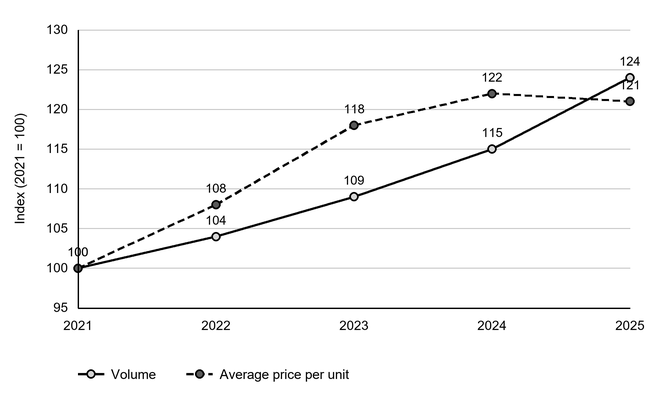
The volume figure is the interesting one. Cranswick sold 7.7% more food than the year before, which is more than its revenue grew. Appendix E shows what has been happening to volumes and to the average price of a unit over five years: prices rose steeply through the inflation of 2022 and 2023, and have now started to come back down while volumes keep climbing.

The company has been spending. Capital investment reached a record £138 million, up from £91 million, going into extra capacity and into making its existing factories more efficient. Its largest customers are a small number of supermarkets, each of which buys in enormous quantities and negotiates hard.

Cranswick has raised its dividend every year for 35 years, and raised it again this year by 12.2% to 101.0p a share.

Source: information sourced from Cranswick plc preliminary results for the year ended March 2025

Appendix D: Cranswick plc selected results

Table comparing Cranswick’s 2024 and 2025 results: revenue, reported and adjusted profit before tax, volume and like-for-like growth, average price change, investment, dividend per share, and consecutive dividend-growth years; some 2024 figures are N/A and 2025 average price is unknown.

Source: Cranswick plc

Appendix E: Cranswick plc volume and average price per unit, analyst estimates

Line chart of Cranswick’s volume and average price per unit index (2021 = 100), 2021–2025: volume rises from 100 to 124, while price peaks at 122 in 2024 then falls to 121.

Source: Analyst

Appendix F: Data for two ways of spending next year's investment budget

Table comparing 2024 and 2025: revenue £2,549.9m/£2,723.3m, adjusted profit £173.1m/£197.9m, investment £91m/£138m, dividend 90.0p/101.0p, dividend-growth years 34/35; 2025 also shows 7.7% volume and 6.4% like-for-like growth.

Source: Analyst

Cranswick plc invested a record £138 million during the year. Appendix F shows two ways in which next year's investment budget could be spent.

Evaluate both options and recommend which one would be the better use of Cranswick plc's investment budget.

2
15 marks

Source B: Brackenhill Films Ltd

Brackenhill Films Ltd makes documentaries and children's series in Bristol. It is a private limited company with eleven permanent staff: producers, an office manager and two editors. Everyone else is hired for the length of a production.

It does not sell to the public. Broadcasters and streaming services commission a programme, agree a fee and a budget, and Brackenhill Films Ltd delivers it. Last year it delivered four productions for a total of £2 140 000, an average of £535 000 each. The direct costs of making them came to £1 722 000. Fixed overheads, meaning the office, the permanent staff and the edit suites, were £468 000, and they are paid whether a production is in progress or not. The company therefore lost £50 000 on the year.

The budget for each production is agreed with the broadcaster at the start. If a production comes in under budget Brackenhill Films Ltd keeps the difference. If it goes over, Brackenhill Films Ltd pays the difference itself. On the four productions delivered last year the budgets were set by copying the previous year's figures for a similar programme and adding a little for inflation.

Money arrives in three instalments: a third when the programme is commissioned, a third when a rough cut is delivered and a third on final delivery. Costs do not arrive in three instalments. Crews, camera hire and studio time are paid as the work happens, which is why the company's bank balance looks the way it does.

Brackenhill Films Ltd has an overdraft facility of £50 000.

Appendix D: Brackenhill Films Ltd cash at bank, month by month

Line chart of monthly cash at bank (£000), falling from 64 in April to −38 in July, then fluctuating: 46 in September, −21 in November and 12 in March. Vertical axis ranges from −60 to 80.

Source: Analyst

Appendix E: Brackenhill Films Ltd, budget against actual on last year's four productions

Table of budget, actual cost and variance for four productions: Coastline £410,000, £398,000, £12,000 F; Small Worlds £455,000, £502,000, £47,000 A; The Long Field £390,000, £381,000, £9,000 F; Night Shift £445,000, £441,000, £4,000 F. Total budget is £1,700,000 and actual cost £1,722,000; variance is ?.

Source: Analyst

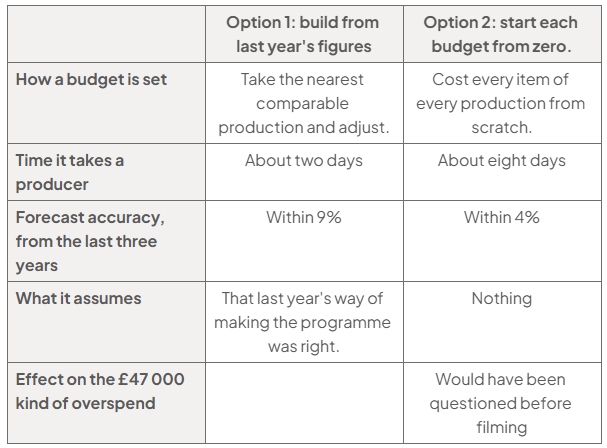
Appendix F: Data for two ways of setting next year's budgets

Appendix F comparison table. Option 1, build from last year's figures: take the nearest comparable production and adjust; about two days of a producer's time; forecast accuracy within 9% over the last three years; assumes last year's way of making the programme was right; effect on the £47 000 kind of overspend not given. Option 2, start each budget from zero: cost every item of every production from scratch; about eight days; within 4%; assumes nothing; the £47 000 kind of overspend would have been questioned before filming.

Source: Analyst

Appendix F shows two ways in which Brackenhill Films Ltd could set next year's budgets.

Evaluate whether Brackenhill Films Ltd should build next year's budgets from last year's figures or start each one from zero.

3
15 marks

Source B: Marlowe Joinery Ltd

Marlowe Joinery Ltd makes bespoke staircases in a workshop outside Shrewsbury. It is a private limited company run by Gethin Marlowe, the third generation of his family to run it, and it employs 17 people, nine of them joiners who served apprenticeships there.

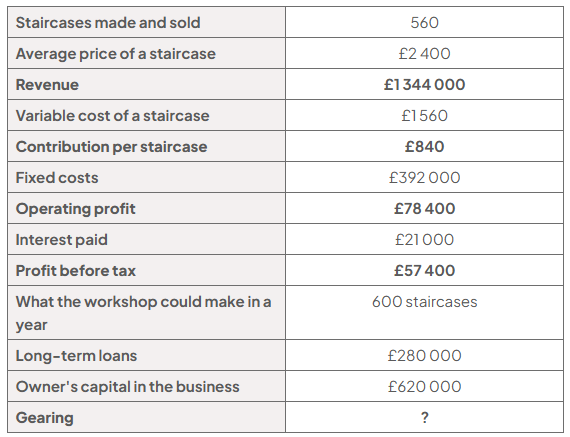
Every staircase is different. An architect or a builder sends drawings, Gethin Marlowe quotes a price, and if the quote is accepted the workshop builds it. Last year it made 560 staircases at an average price of £2 400, which is revenue of £1 344 000. Timber, fittings and the joiners' time on the job come to £1 560 a staircase. Everything else, meaning the workshop, the machinery, insurance, administration and the wages of people not on a job, comes to £392 000 a year.

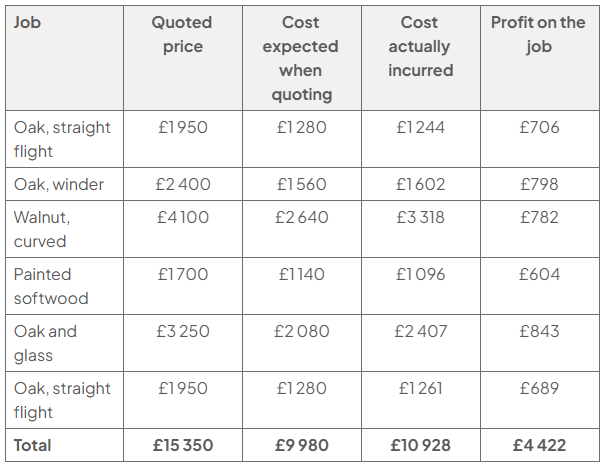
The quoting is done by eye. Gethin Marlowe has forty years of it and is good at it, but each quote is its own small budget and nobody adds them up until the year end.

He is considering a computer-controlled cutting machine costing £340 000. It would cut the cost of a staircase to £1 410 and raise the workshop's fixed costs by £68 000 a year once depreciation and finance are counted. It would also lift what the workshop could make in a year from 600 staircases to 900.

The machine would be paid for by borrowing. Marlowe Joinery Ltd already has £280 000 of long-term loans against £620 000 of Gethin Marlowe's own money in the business.

Appendix D: Marlowe Joinery Ltd, summary of last year

Appendix D table: 560 staircases sold; average price £2,400; revenue £1,344,000; variable cost £1,560 each; contribution £840 each; fixed costs £392,000; operating profit £78,400; interest £21,000; profit before tax £57,400; capacity 600; loans £280,000; owner’s capital £620,000; gearing unknown.

Source: Analyst

Appendix E: Marlowe Joinery Ltd, six recent staircases

Appendix E table: six staircase jobs with quoted, expected, actual cost and profit (£): oak straight £1950/1280/1244/706; oak winder £2400/1560/1602/798; walnut curved £4100/2640/3318/782; painted softwood £1700/1140/1096/604; oak and glass £3250/2080/2407/843; oak straight £1950/1280/1261/689. Total £15350/9980/10928/4422.

Source: Analyst

Appendix E shows what Marlowe Joinery Ltd expected six recent staircases to cost and what they actually cost.

Evaluate whether Gethin Marlowe should set a budget for each staircase or a single budget for the workshop as a whole.