Purpose and Value of Budgeting (AQA A Level Business): Revision Note
Syllabus Edition
First teaching 2026
First exams 2028
Exam code: 7132

Purpose and value of budgeting
A budget is a financial plan that sets out expected income, spending or profit over a future period - typically a month, a quarter or a financial year
It gives managers a clear target to aim for and a benchmark against which actual performance can be measured
Budgets are prepared in advance and are based on the best available information about future trading conditions
Why budgeting is important
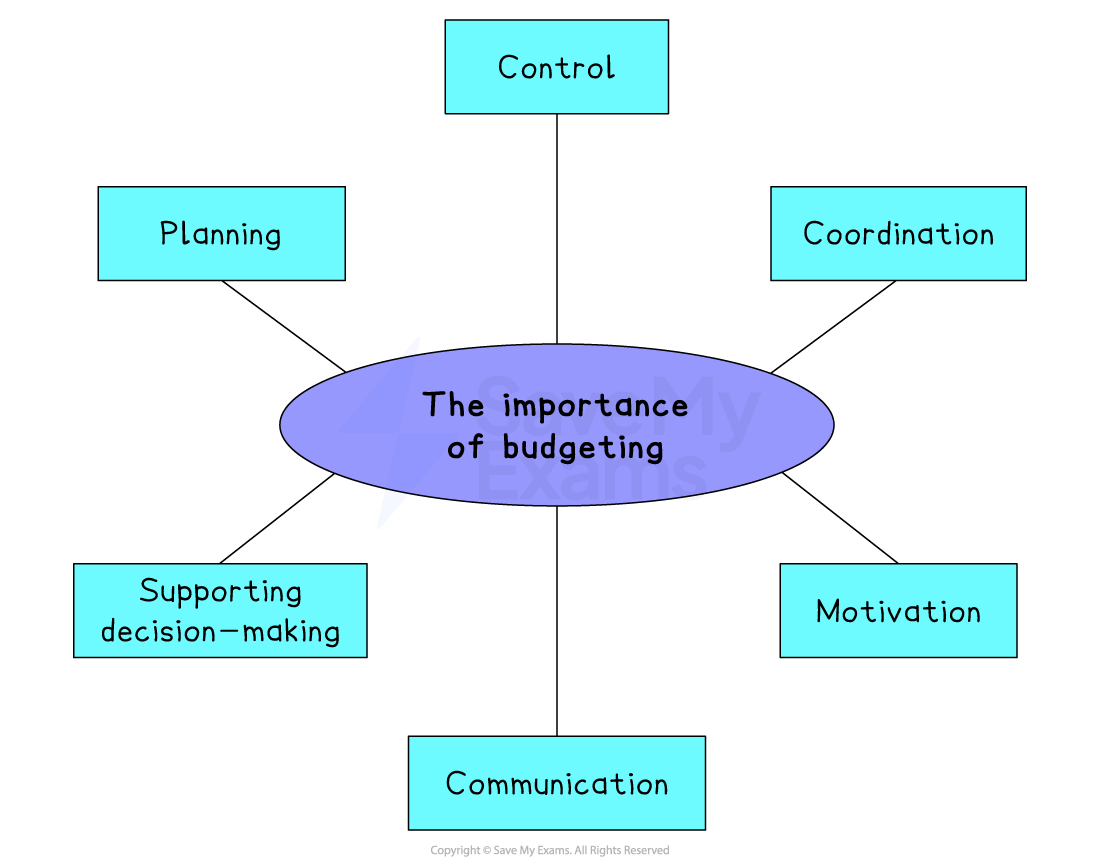
Planning
Preparing a budget forces managers to think carefully about the future
Forecasting sales, anticipating costs and identifying potential financial pressures before they arise
This helps the business to prepare for challenges rather than simply react to them
Control
Once a budget is set, actual performance can be compared against it at regular intervals
The difference between a budgeted figure and the actual figure is called a variance
Identifying variances early allows managers to investigate problems and take corrective action before they escalate
Coordination
Budgets help ensure that different departments within a business are working towards the same financial goals
For example, if the sales team plans to increase revenue by 20%, the production and logistics departments need to know this so they can plan their own spending accordingly
Motivation
Giving individual managers responsibility for their own budget can increase their sense of ownership and accountability
Having a clear target to work towards can be motivating
Particularly if managers are involved in setting the budget rather than simply having figures imposed on them
Communication
The budgeting process communicates financial priorities and expectations of senior management throughout the organisation
It ensures that everyone understands what the business is trying to achieve financially and what resources are available to them
Supporting decision-making
Budgets provide a financial framework for evaluating decisions
For example, if a manager wants to invest in new equipment or hire additional staff, the budget helps assess whether the business can afford it and what impact it will have on profit
Types of budget
Businesses typically use several different budgets, each focusing on a different aspect of financial performance
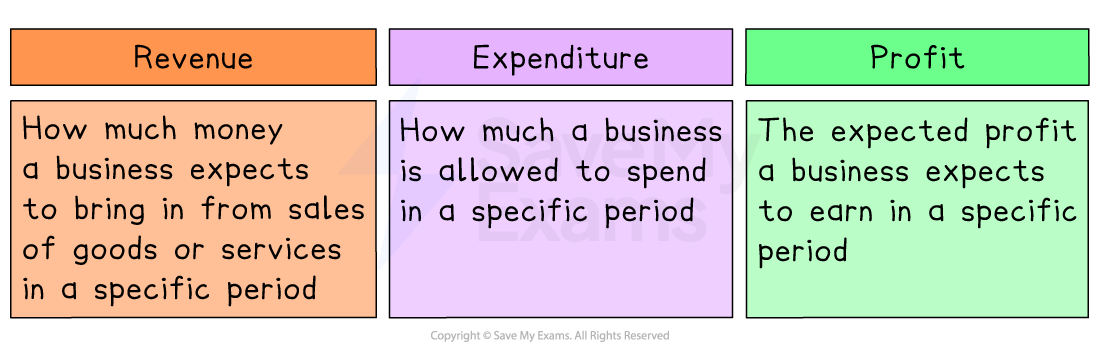
In practice, these budgets are linked
A change in expected revenue will affect the profit budget
A rise in costs in one department will need to be reflected in the overall expenditure budget
Approaches to setting budgets
Incremental budgeting
Incremental budgeting uses the previous year's budget as a starting point and adjusts it by a set amount or percentage to reflect expected changes, such as inflation, anticipated growth, or planned cost increases
It is the most widely used approach in large organisations
Example
A marketing department had a budget of £80,000 last year.
Using incremental budgeting with a 5% increase for inflation, next year's budget would be set at £84,000 without necessarily reviewing whether every element of last year's spending was necessary
Benefits | Challenges |
|---|---|
|
|
Zero-based budgeting
Zero-based budgeting starts from scratch every budget period
Rather than adjusting last year's figures, every department must justify all of its planned spending from zero, as if the budget were being set for the first time
No spending is automatically approved simply because it happened in a previous year
Example
A customer service department using zero-based budgeting cannot simply ask for last year's budget plus inflation
Instead, it must justify every cost, such as staffing levels, software subscriptions and training, by explaining what value each delivers to the business
Benefits | Challenges |
|---|---|
|
|
Examiner Tips and Tricks
When evaluating budgeting approaches in an exam question, consider the context of the business. Zero-based budgeting may be superior at eliminating waste, but for a large organisation with hundreds of departments, the time and cost of implementing it fully may outweigh the benefits. Incremental budgeting is not necessarily a poor choice - it depends on the stability of the business and whether efficiency is the primary concern

Unlock more, it's free!
Join the 100,000+ Students that ❤️ Save My Exams
the (exam) results speak for themselves:

Was this revision note helpful?
