Secondary Market Research (AQA A Level Business): Revision Note
Syllabus Edition
First teaching 2026
First exams 2028
Exam code: 7132

Secondary market research sources
Secondary research involves the collection, compilation and analysis of data that already exists
Sources of secondary research
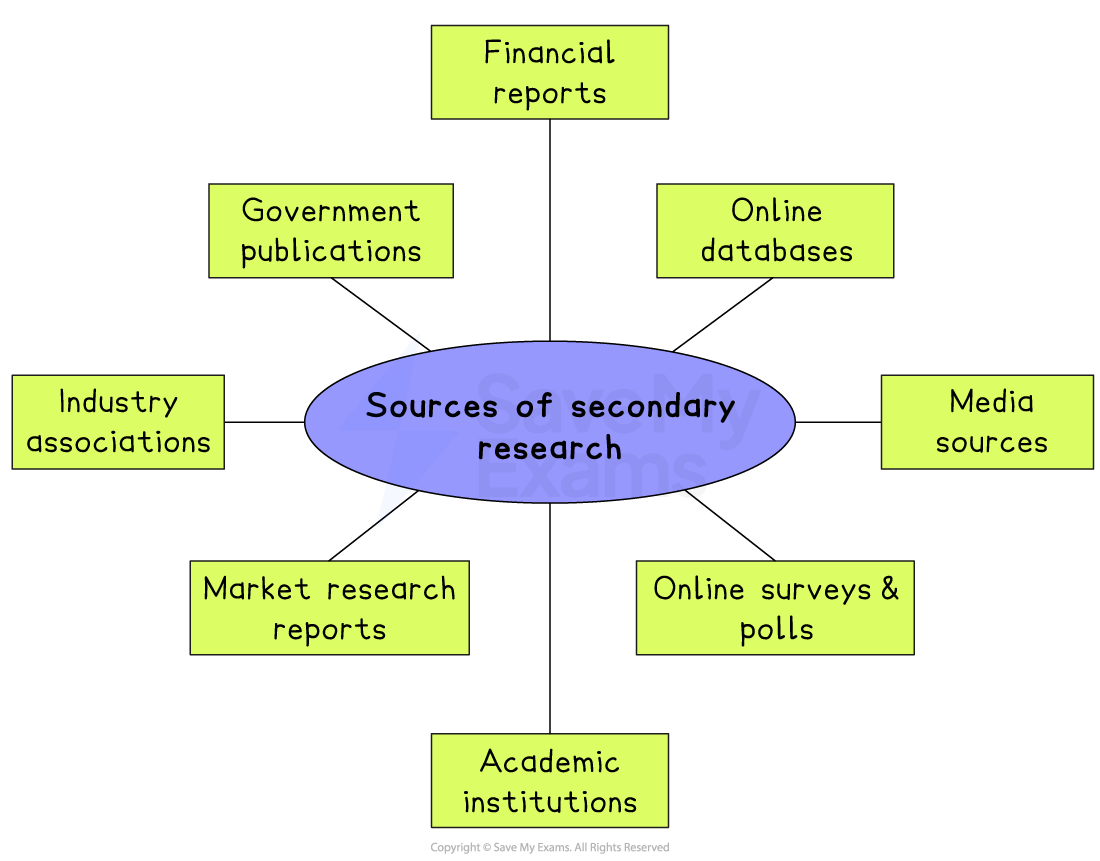
Source | Explanation |
|---|---|
Government publications |
|
Academic institutions |
|
Industry associations |
|
Marketing research reports |
|
Financial reports |
|
Media sources |
|
Case Study
Greenleaf Nutrition's use of secondary market research

Greenleaf Nutrition is a small supplement brand based in Bristol. Before launching a new range of plant-based protein products, founder Dan Okafor used secondary market research to assess whether the market was large enough to justify the investment.
Drawing on three freely available sources, he found:
Office for National Statistics (ONS) data - showing a 40% rise in the number of UK consumers following a plant-based diet over five years
A Mintel health and wellness report - identifying plant-based protein as the fastest-growing supplement category in the UK
Competitor annual reports - revealing that established brands were struggling to keep up with rising demand
Dan concluded that the market was growing rapidly and underserved at an affordable price point.
He launched the range without commissioning expensive primary research, saving over £8,000 while still making a well-informed, evidence-based decision that proved highly profitable within its first year
Advantages and disadvantages of secondary marketing research
Advantages | Disadvantages |
|---|---|
|
|
|
|
|
|
Influences on market research
Businesses do not always conduct market research in the same way
The type, scale and method of research used will vary depending on the circumstances
Factors influencing how market research is conducted
Risk
The higher the risk attached to a business decision, the more thorough the market research is likely to be
Launching a new product into an unfamiliar market carries significant financial risk - this justifies investing in detailed, expensive research
A lower-risk decision, such as a minor change to packaging, may require only basic research
In general, the greater the potential consequences of getting a decision wrong, the more a business should invest in finding out the facts first
Cost
All market research has a cost - in terms of money, staff time and resources
Businesses must weigh the cost of research against the value of the information it provides
Primary research (such as focus groups or large-scale surveys) tends to be more expensive than secondary research
Smaller businesses with limited budgets may have to rely on cheaper methods, even if these provide less specific data
The cost of research should always be proportionate to the size and financial resources of the business
Time
Some research methods take considerably longer than others - in-depth interviews and product trials can take weeks or months to complete
If a business needs to make a quick decision
For example, responding rapidly to a competitor's new product, it may not have time for extensive primary research
Time pressure often leads businesses towards secondary research, which can be accessed far more quickly
However, rushing research to meet a deadline can reduce the quality and reliability of the findings
Need for reliability
Businesses need data they can trust
Unreliable research can lead to worse decisions than having no research at all
Reliability is affected by factors such as sample size, the design of questions and the honesty of respondents
A larger, more representative sample produces more reliable results, but also increases cost and time
Businesses must balance the desire for highly reliable data against the practical constraints of budget and time available
Examiner Tips and Tricks
In exam questions on this topic, you may be asked to explain why a business chose a particular approach to market research. Always consider all four influences together - they interact with each other. For example, a business facing a high-risk decision (risk) may be willing to spend more (cost) and wait longer (time) to get highly reliable data (reliability). Apply your answer to the specific situation described in the case study

Unlock more, it's free!
Join the 100,000+ Students that ❤️ Save My Exams
the (exam) results speak for themselves:

Was this revision note helpful?
