Search Engine Optimisation (SEO), Website Cookies & Pay Per Click (AQA A Level Business): Revision Note
Syllabus Edition
First teaching 2026
First exams 2028
Exam code: 7132

Search engine optimisation (SEO)
Search engine optimisation (SEO) is the process of improving a website's visibility in organic (non-paid) search engine results, such as Google, so that it appears higher when users search for relevant keywords or phrases
When a user searches for a term related to a business's product or service, appearing near the top of the results - without paying for an advert - is the goal of SEO
Key elements of SEO
Element | Explanation |
|---|---|
Keywords |
|
On-page SEO |
|
Off-page SEO |
|
Technical SEO |
|
Local SEO |
|
The value of SEO
Generates cost-effective, sustainable traffic
Unlike paid advertising, organic search rankings do not require a payment every time a user clicks
Once strong rankings are established, they can deliver ongoing traffic at no extra cost
Reaches high-intent customers
Users who search for a specific term are actively looking for information, products or services related to that term
This makes them more likely to convert than audiences reached through untargeted advertising
Builds credibility and trust
Users generally trust organic search results more than paid adverts
Appearing at the top of results signals to potential customers that the business is reputable and relevant
Provides long-term competitive advantage
Strong SEO rankings are difficult for competitors to copy quickly
Gets better over time
As a website builds authority and content, its SEO performance tends to improve progressively
Digital technology and AI in SEO
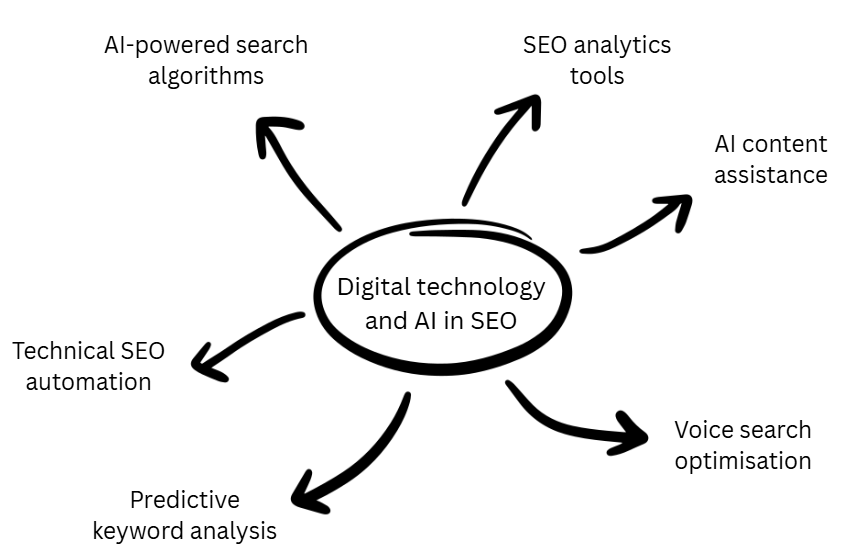
AI-powered search algorithms
Google uses AI systems to understand the intent behind a search query, not just the individual keywords used
This means businesses must create genuinely useful, well-written content rather than simply repeating keywords
AI rewards quality and relevance above all else
SEO analytics tools
Platforms such as Google Search Console and Ahrefs use AI to analyse keyword performance, identify content gaps, monitor competitor rankings and suggest specific improvements to boost search visibility
AI content assistance
AI tools can help businesses generate SEO-optimised content, suggesting the most effective headings, keywords and structure to improve rankings
Voice search optimisation
AI-powered voice assistants (such as Siri, Alexa and Google Assistant) have changed search behaviour
Businesses need to optimise content for more conversational, natural language queries rather than short keyword phrases
Predictive keyword analysis
AI can identify which search terms are likely to grow in popularity before they peak
This allows businesses to create content in advance of emerging trends
Technical SEO automation
AI tools can automatically scan websites for technical problems (broken links, slow-loading pages, duplicate content) that damage search rankings
Examiner Tips and Tricks
SEO is a long-term strategy - results typically take months to materialise. In evaluation questions, consider whether a business has the time and resources to invest in SEO, or whether it needs the immediate visibility that paid advertising can provide. The two strategies are often most effective when used together
Website cookies
Website cookies are small text files stored on a user's device when they visit a website
They record information about the visit - such as pages viewed, items added to a basket, and whether the user has visited before
They use this data to improve the user experience and deliver more targeted marketing
Types of cookies
Type | Explanation |
|---|---|
Seasonal |
|
Persistent |
|
First-party |
|
Third-party |
|
The value of website cookies
Personalisation
Cookies remember preferences and browsing history
This makes the experience more relevant and convenient for returning visitors
Retargeting
Cookies identify users who visited the site without purchasing and allow the business to show targeted adverts to those users elsewhere online
This keeps the brand in front of consumers who have shown some interest
Website analytics
Cookies reveal how users navigate the site, where they drop off and how long they spend on different pages
This helps businesses improve the customer journey and increase conversion rates
E-commerce functionality
Session cookies enable users to add items to a basket and complete a purchase smoothly
Digital technology and AI in website cookies
AI-powered personalisation
AI analyses cookie data to deliver highly personalised experiences, including product recommendations based on browsing and purchase history
E.g."customers who viewed this also bought..."
Retargeting algorithms
AI identifies which users are most likely to convert if shown a retargeted advert
It can then determine when and where those adverts appear
Consent management tools
Digital platforms automate cookie consent processes, helping businesses comply with UK GDPR law
This requires explicit user consent before non-essential cookies are placed
The responsible use of cookies
Growing concern about data privacy means businesses must use cookies responsibly
For example, third-party cookies are being phased out by some browsers
Examiner Tips and Tricks
Cookies deliver significant commercial value but raise genuine ethical questions about consumer privacy. In evaluation questions, weigh the marketing benefits against the reputational and legal risks of collecting and using customer data without clear consent
Pay per click
Pay per click (PPC) is a form of paid digital advertising in which a business pays a fee each time a user clicks on one of its adverts
The most common form is search engine advertising (such as Google Ads), where businesses bid on keywords so their advert appears at the top of search results when users search for relevant terms
Key terms
Key term | Explanation |
|---|---|
Keyword bidding |
|
Quality score |
|
Cost per click (CPC) |
|
Conversion rate |
|
The value of pay per click
Immediate visibility
Unlike SEO, PPC places the business at the top of search results from the moment a campaign launches
This makes it ideal for product launches or time-sensitive promotions
Highly targeted
Adverts can be directed at specific keywords, locations, devices, times of day and audience demographics
Pay only for engagement
The business only pays when a user clicks
This makes it more efficient than traditional advertising, where a cost is incurred regardless of response
Fully measurable
Every click, conversion and pound spent is tracked precisely, making the return on investment easy to calculate
Flexible
Budgets can be increased, reduced or paused in real time based on performance
Digital technology and AI in pay per click
Dynamic adverts
AI automatically tailors advert contents and selects the most relevant landing page based on what the user searched for
Click fraud detection
AI identifies and filters invalid clicks (e.g. from bots or competitors), protecting the advertising spend
Case Study
Pebble Pet Supplies
Pebble Pet Supplies is an online-only retailer of pet food, accessories, and grooming products. Competing against large national pet chains that also sell online, Pebble must use its digital marketing budget carefully to attract and retain customers.
SEO is central to its long-term strategy. The business publishes detailed guides, including 'The Best Food for Senior Dogs' and 'How to Groom a Golden Retriever at Home', optimised to rank highly in Google searches. These articles attract pet owners who are actively researching purchases, generating organic traffic at no cost per click and positioning Pebble as a trusted, knowledgeable brand.
For high-competition searches such as "buy dog food online," organic rankings are harder to achieve, so Pebble runs pay-per-click campaigns to appear immediately above organic results and capture those customers who are ready to buy now.
Cookies enable Pebble to retarget visitors who browsed specific products, such as a particular brand of cat food, but left without purchasing. AI analyses each visitor's browsing history to serve them personalised adverts and adjust the homepage to show products relevant to their pet type, significantly improving conversion rates among returning visitors
Examiner Tips and Tricks
PPC delivers immediate traffic but requires continuous spend - when the budget stops, so does the traffic. SEO takes longer but delivers sustainable, free traffic once established. The two strategies work best together: PPC for immediate results, SEO for long-term growth

Unlock more, it's free!
Join the 100,000+ Students that ❤️ Save My Exams
the (exam) results speak for themselves:

Was this revision note helpful?
