Effective Management of Inventory (AQA A Level Business): Revision Note
Syllabus Edition
First teaching 2026
First exams 2028
Exam code: 7132

Reasons to hold inventory
Inventory is everything a business owns today for the purpose of selling tomorrow
It is sometimes called stock, and the terms are used interchangeably
Businesses hold inventory for immediate use in production or to distribute without delay to customers
Types of inventory
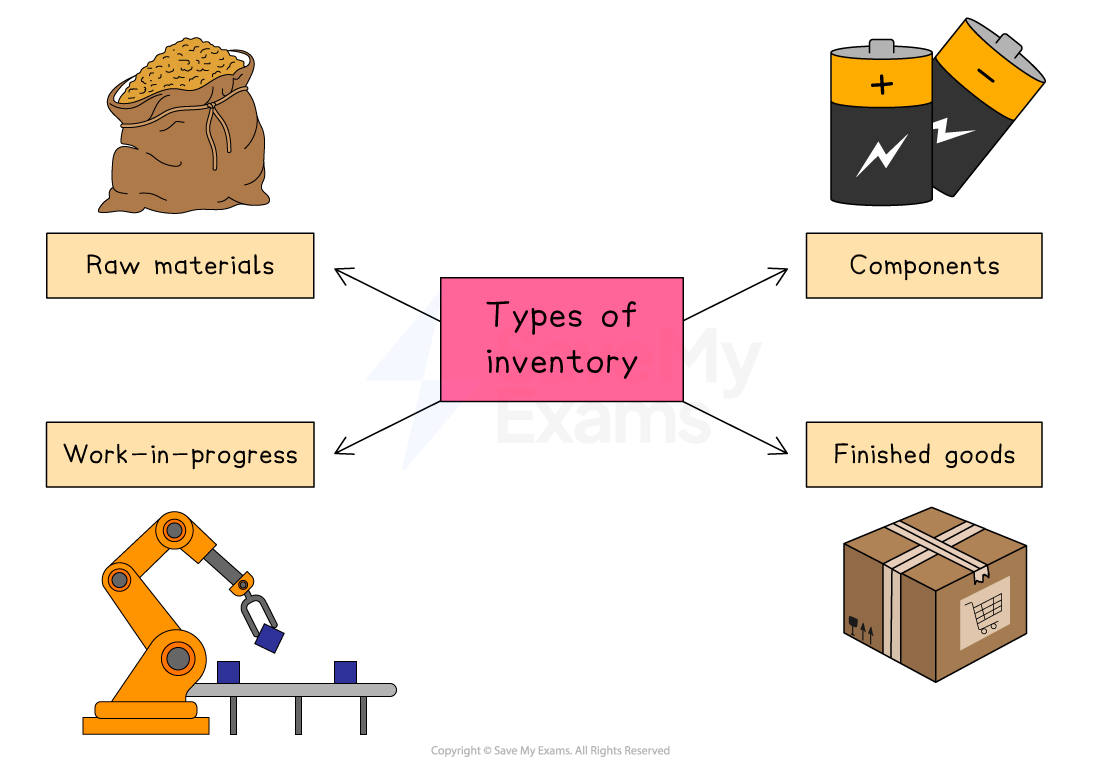
Type | Description | Example |
|---|---|---|
Raw materials |
|
|
Components |
|
|
Work-in-progress |
|
|
Finished goods |
|
|
Why hold inventory?
Businesses hold inventory for several reasons, each helping operations run smoothly despite changes in supply or demand
To meet unexpected increases in customer demand without delay, avoiding lost sales
To protect against delays or disruption from suppliers, so production can continue even if a delivery is late
To take advantage of bulk-buying discounts by purchasing larger quantities of materials at once
To allow for smooth, continuous production, rather than depending on materials arriving at exactly the right moment
To cope with seasonal or cyclical changes in demand, by building up inventory ahead of a known busy period
Example
A supermarket holds extra stock of umbrellas and raincoats ahead of the wetter autumn months, anticipating a rise in demand
The importance of inventory management
Inventory management means planning and controlling the amount, location and movement of stock a business holds
Effective inventory management ensures a business holds enough stock to meet demand and avoid disruption, without holding so much that it wastes money or storage space
The value of inventory management
Reduces the risk of running out of stock, which can lead to lost sales and dissatisfied customers
Minimises the cost of holding excess stock, including storage, insurance and the risk of stock becoming obsolete or unsellable
Frees up cash that would otherwise be tied up in unused stock, improving cash flow
Supports efficient production, ensuring materials are available when needed without unnecessary delays
Helps a business respond quickly to changes in demand, by giving accurate, up-to-date information on stock levels
Example
A clothing retailer uses inventory management software to track stock levels in real time across all its stores, moving items from quieter branches to busier ones rather than reordering unnecessarily
Implications of poor inventory management
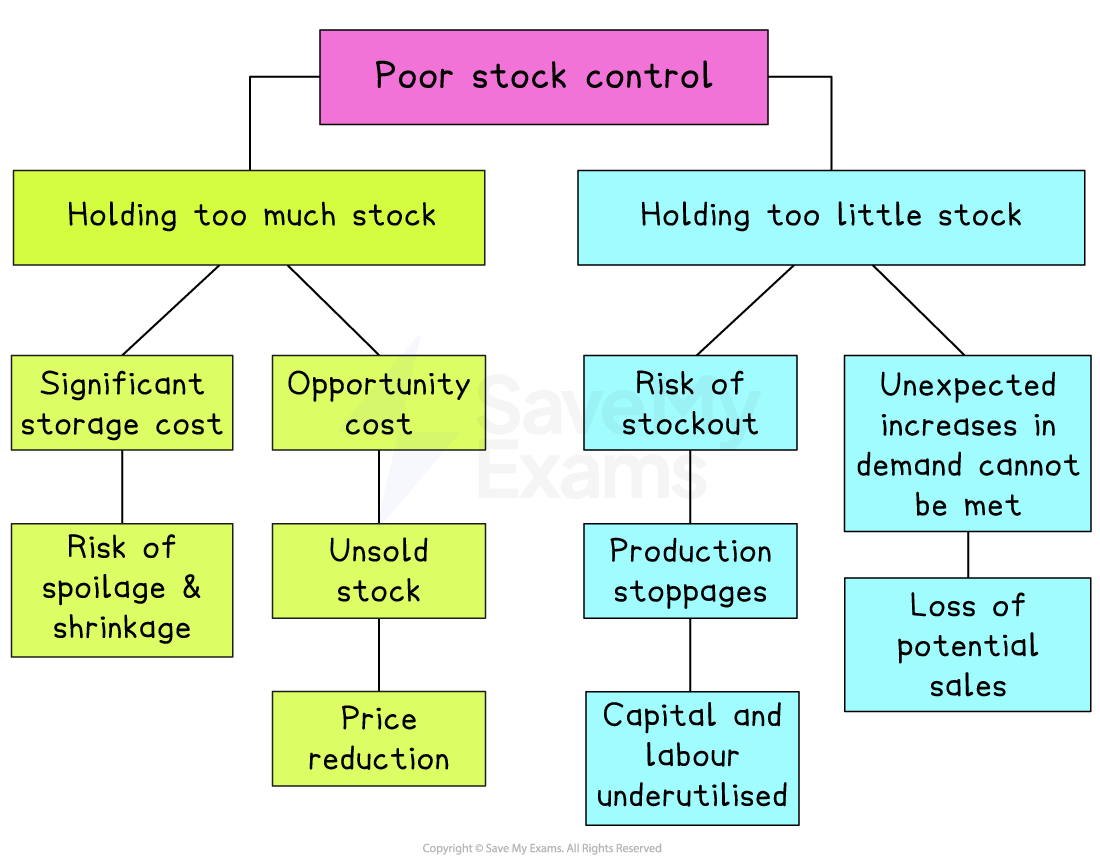
Problems may arise from holding too much inventory
Storage costs (e.g. warehouse rental, security costs) will be higher than necessary
The risk of inventory shrinkage or spoilage is increased
Excess inventory may need to be sold at a lower price, reducing revenue
Similarly, holding too little inventory is risky
A business may run out of inventory, resulting in production stoppages and higher unit costs due to underused capacity
A business may not be capable of meeting a sudden increase in demand
Influences on the amount of inventory held
Level and predictability of demand
Unpredictable or highly seasonal demand encourages a business to hold more inventory as a buffer
Stable, predictable demand allows a business to maintain lower stock levels
Example
A fireworks retailer holds very little stock for most of the year but builds up large amounts of inventory ahead of Bonfire Night, when demand rises sharply and unpredictably
Cost of storage
High storage costs, such as needing refrigerated warehousing, discourage a business from holding large amounts of inventory
Perishability of the product
Perishable goods, such as fresh food, must be held in smaller quantities to avoid waste
Non-perishable goods can be stored in bulk for long periods
Example
A bakery holds only a day or two's worth of fresh ingredients, as they spoil quickly, but can store tinned or dried ingredients for much longer
Reliability of suppliers
Unreliable suppliers encourage a business to hold more inventory
Dependable suppliers means a business can maintain lower stock levels
Cost of capital tied up in stock
Holding large amounts of inventory ties up cash that could be used elsewhere, encouraging businesses to minimise stock where possible
Example
A small business with limited cash available holds lower stock levels, as tying up money in inventory would leave less available to pay staff or suppliers
Lead time for reordering
The lead time is the amount of time that passes from placing an order until inventory is delivered
A longer wait between placing an order and receiving stock encourages a business to hold more inventory to avoid running out in the meantime
Just in time vs just in case
The just-in-time approach
The just-in-time (JIT) approach is where raw materials and components are ordered as required and delivered at precisely the time they are to be used in production
Raw materials and components are ordered from a small number of trusted key suppliers just before they are to be used
Close, long-term relationships with these suppliers need to be developed
Many businesses using JIT inventory management systems aim to source raw materials and components from local or regional suppliers
They must be flexible and reliable
They may be required to hold inventory on behalf of a JIT-operating customer
They are often in close proximity to their key JIT-operating customer
Evaluating the just-in-time approach
Advantages |
|
|---|---|
Disadvantages |
|
Examiner Tips and Tricks
When you explain the JIT approach, link every benefit (less inventory, lower storage costs) to a risk (stockouts if deliveries slip)
Showing both sides proves you understand why lean systems boost profit only when suppliers are rock‑solid
The just-in-case approach
Just-in-case inventory management involves a business holding a quantity of raw materials, components or finished goods as buffer stock
Stock is held in case of shortages so as to provide a competitive edge over rivals unable to meet demand
The decision to keep buffer stocks is one that businesses have to weigh up very carefully
Holding inventory incurs storage and security costs and can increase waste, as stock could be damaged, stolen or become obsolete
Failing to hold enough inventory could mean a business is unable to meet demand, potentially missing out on sales revenue
Evaluating the just-in-case approach
Advantages |
|
|---|---|
Disadvantages |
|

Unlock more, it's free!
Join the 100,000+ Students that ❤️ Save My Exams
the (exam) results speak for themselves:

Was this revision note helpful?
