Niche & Mass Markets (AQA A Level Business): Revision Note
Syllabus Edition
First teaching 2026
First exams 2028
Exam code: 7132

What is a target market?
Every business must decide who its products are aimed at, and how broad or narrow that target should be
This decision determines the entire marketing strategy, from product design and pricing to distribution and promotion
A target market is the specific group of customers a business aims its products and marketing activity at
Businesses cannot realistically appeal to everyone
Identifying a clear target market allows resources and marketing spending to be focused where they are most likely to generate sales
Businesses can choose to pursue a niche market or a mass market — each has distinct advantages and disadvantages
Niche markets
A niche market is a small, specific segment of a larger market with distinct needs or preferences that are not fully met by mainstream products
Characteristics of niche markets
Feature | Explanation | Example |
|---|---|---|
Product style |
|
|
Production scale |
|
|
Average cost per unit |
|
|
Price level |
|
|
Why target a niche?
Advantages
Less direct rivalry, as big firms may ignore small segments, giving a small brand 'room to breathe'
Price power, as customers value a product that perfectly fits their needs and will often pay more
Loyal customer base, as buyers feel understood, which increases repeat sales and word-of-mouth recommendations
Specialist reputation as a business can become the recognised expert or go-to brand within its niche, placing it in a strong competitive position
Precise marketing as a promotional activity can be targeted very specifically, reducing wasted spending
Disadvantages
Limited potential to grow revenue, as new sales may be difficult to achieve once the niche is saturated
High unit costs, as specialised inputs and short production runs push costs up
Vulnerability to mass‑market copies, as their scale advantage can squeeze smaller brands out
Vulnerability to change — if the niche disappears, tastes shift, or the niche shrinks, the business has few alternatives to fall back on
Case Study
Success in a niche market - Brompton Bicycle
Brompton Bicycle has made only one type of product since 1975: a compact, foldable bicycle for urban commuters

Rather than competing with mainstream bike manufacturers, Brompton carved out a highly specific niche and built one of the most loyal customer bases in the cycling industry.
Product
Every Brompton is handmade in London to a consistent, iconic design
Customers can customise components to suit their exact needs, reinforcing the premium, specialist appeal
Price
Bikes start at around £1,000, well above most competitors
Customers willingly pay because no other product meets their commuting needs as precisely
Place
Bikes are sold through specialist retailers and Brompton's own showrooms in major cities, reinforcing the premium brand image
Promotion
Marketing targets the urban commuter lifestyle
A devoted global community of bike owners acts as a powerful source of word-of-mouth recommendations
Brompton's success demonstrates the power of meeting the needs of a specific market exceptionally well rather than trying to appeal to everyone
Mass markets
The mass market is the broadest part of a market, where a product appeals to most people the majority of the time
E.g. Kellogg’s Cornflakes for the average breakfast eater
Characteristics of mass markets
Feature | Explanation | Example |
|---|---|---|
Product style |
|
|
Production scale |
|
|
Average cost per unit |
|
|
Price level |
|
|
Why target the mass market?
Advantages
Huge sales volume, as even a small profit per item multiplies into a large overall profit
Economies of scale, such as bulk buying materials and components and the use of automated production lines
Brand visibility, such as national advertising campaigns that target many customers, spreads risk across millions of potential buyers
More stable demand as the business is not dependent on a small group of customers, reducing vulnerability to changes in any one segment
Disadvantages
Fierce competition as rivals battle on price and promotion, so profit margins may be limited
Heavy marketing spend on TV, sponsorships and global campaigns costs millions, increasing business costs
One‑size‑fits‑all risk, as shifting consumer tastes can leave a mass product looking bland or dated
Difficult to differentiate - it is harder to stand out from rivals and build a distinctive identity
Case Study
Success in a global mass market - McDonald's
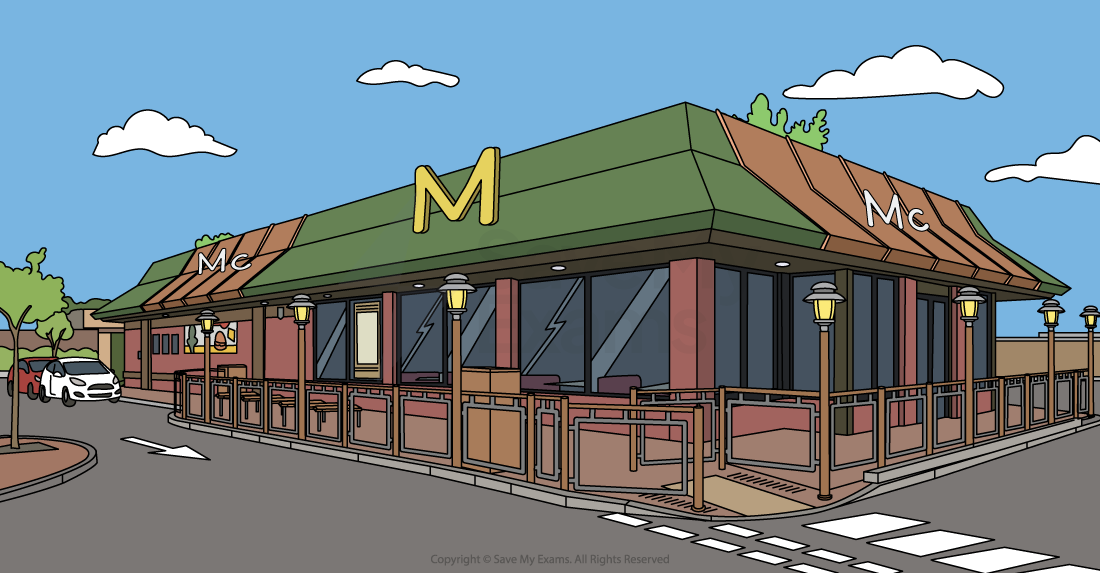
McDonald's is one of the world's most recognisable mass-market brands, serving around 69 million customers a day across more than 40,000 restaurants in over 100 countries
Product
A standardised menu designed to appeal to the broadest possible range of customers, from families and children to students and commuters, with consistent quality across every location
Price
Highly competitive pricing, made possible by enormous economies of scale
Value meals and budget options ensure the brand remains accessible to price-sensitive consumers
Place
Strategically located on high streets, retail parks, motorway services and airports to maximise convenience and footfall
Drive-through facilities extend their reach further
Promotion
McDonald's invests hundreds of millions in advertising annually, including television campaigns, social media and major sponsorships such as the FIFA World Cup and the Olympic Games
McDonald's illustrates the power of the mass market approach - serving an enormous, diverse audience drives down costs and ensures its profitability

Unlock more, it's free!
Join the 100,000+ Students that ❤️ Save My Exams
the (exam) results speak for themselves:

Was this revision note helpful?
