The Importance of Quality (AQA A Level Business): Revision Note
Syllabus Edition
First teaching 2026
First exams 2028
Exam code: 7132

The significance of quality
Quality products are those whose characteristics and features satisfy the needs of customers
Customers may consider products or services to be of good quality if they
look good and are sold by a reputable business or brand
are reliable and durable
are safe and fit for purpose
receive good customer service, including after-sales service
Factors that influence quality perception

Many businesses set quality targets to focus staff and resources on meeting customer expectations
Example
Deliveroo displays an estimated delivery time for every order placed through its app, and automatically offers customers a refund or credit if their food arrives significantly later than this estimate
The quality of a business's products can provide a competitive advantage
High levels of quality can be used in promotional activity and provide a unique selling point for businesses in competitive markets
Successfully developing a USP for quality can ease expansion into new markets as a result of the positive reputation it creates
Increased finance may be available to fund marketing activity to improve brand recognition and attract new customers
Quality is closely linked to price
High-quality products can usually command a high price
Lower-quality products may need to be sold at a discount to persuade customers to buy them
Costs of poor quality
Every business faces some risk of quality failures, whether through faulty products, poor service or processing errors
When quality falls below customer expectations, the costs go beyond fixing or replacing the item involved
These costs can be financial, such as refunds and compensation, or reputational, such as lost trust and negative publicity
Problems caused by poor quality
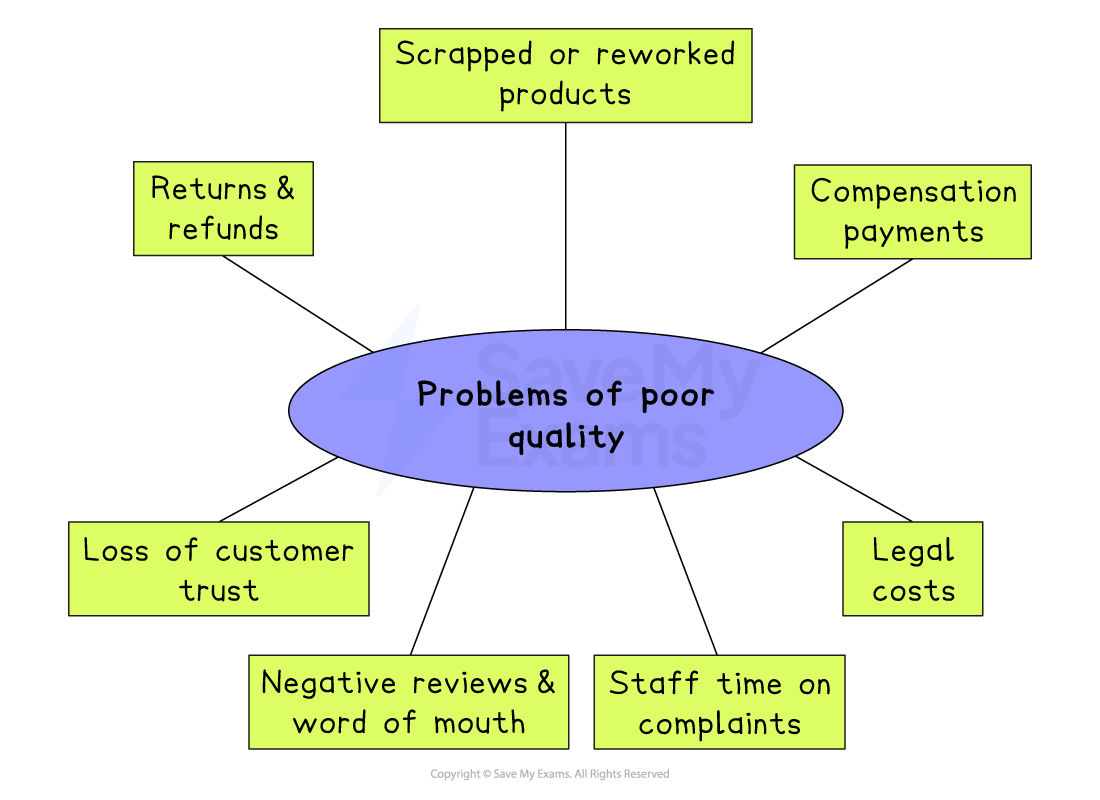
Scrapped or reworked products
Faulty items must be discarded or corrected before sale, wasting materials, labour and machine time
E.g. A furniture manufacturer scraps a batch of chairs after discovering a fault in the varnish finish
Returns and refunds
Customers send back faulty goods, reducing revenue and increasing administration costs
E.g. An online retailer processes hundreds of returns after a clothing line is found to shrink after one wash
Compensation payments
A business may need to pay customers who are harmed or suffer loss because of a faulty product or service
E.g. An airline compensates passengers after repeated delays caused by poorly maintained aircraft
Legal costs
Breaches of consumer protection law or product liability claims can lead to fines or court costs
E.g. A toy company faces legal action after a choking hazard is found in one of its products
Staff time on complaints
Employees spend time resolving issues instead of serving new customers or improving the business
E.g. A call centre diverts staff from sales calls to deal with a surge in complaints about a faulty product batch
Negative reviews and word of mouth
Poor experiences are shared online or between customers, discouraging future sales
E.g. A restaurant's rating falls sharply after several customers post reviews about undercooked food
Loss of customer trust
Once confidence is damaged, customers may switch to competitors even after the fault is fixed
E.g. A phone brand struggles to regain sales after a battery fault damaged its reputation for reliability
Case Study
Foldwell Furniture Ltd
Foldwell Furniture is a homeware retailer selling flat-pack furniture online and in three UK stores.
After switching to a cheaper overseas supplier to cut costs, several batches of wardrobes were delivered with weak hinges and misaligned panels. Within weeks, customers reported doors falling off and drawers jamming, and dozens of items were returned for full refunds.
Foldwell also had to send technicians to two customers' homes after furniture collapsed, causing minor injuries, and paid compensation to avoid a formal legal claim under consumer protection law.
Customer service staff spent hours each day handling complaints instead of processing new orders, and online reviews quickly filled with warnings about poor build quality.
Sales of the affected wardrobe range fell sharply, and some customers cancelled unrelated orders, unwilling to trust the brand again.
In response, Foldwell returned to its original supplier and introduced stricter inspections before goods reached stores. This solved the immediate problem, though customer trust proved harder to regain.

Unlock more, it's free!
Join the 100,000+ Students that ❤️ Save My Exams
the (exam) results speak for themselves:

Was this revision note helpful?
