Source B: Dyson
Dyson designs and sells vacuum cleaners, hair care products, air purifiers and robots. It began in the United Kingdom, it is privately owned by its founder's family, and its global headquarters is now in Singapore. It employs over 14 500 people worldwide.
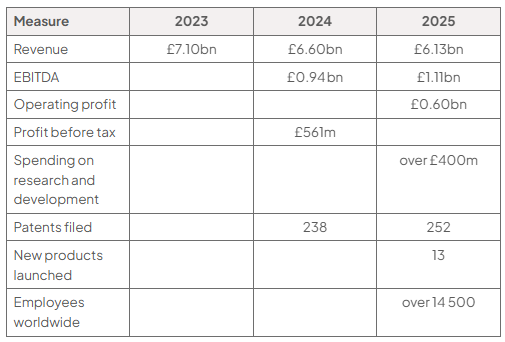
The company competes by inventing things other manufacturers have not, and then stopping them from copying it. In 2025 it spent more than £400 million on research and development, including on artificial intelligence and machine learning, and filed 252 patents to protect what it had invented. It filed 238 the year before. In the same year it launched 13 new products, more than in any previous year.
Dyson designs in one place and makes in another. Around 2 000 people work in Singapore, nearly half of them engineers and scientists, and its Singapore Advanced Manufacturing site has produced roughly 100 million of the Hyperdymium motors that go inside its machines. In Johor, Malaysia, it has a 50 000 square metre site with over 1 200 professionals. In late 2024 it scaled back the hair care work in Malaysia and moved almost 50 staff to other work on the same site.
Trading has been hard. Revenue fell from £7.1 billion in 2023 to £6.6 billion in 2024 and £6.13 billion in 2025, and tariffs and movements in exchange rates both hurt. Even so, earnings before interest, tax, depreciation and amortisation rose 18% in 2025 to £1.11 billion and operating profit rose 15% to £0.6 billion.
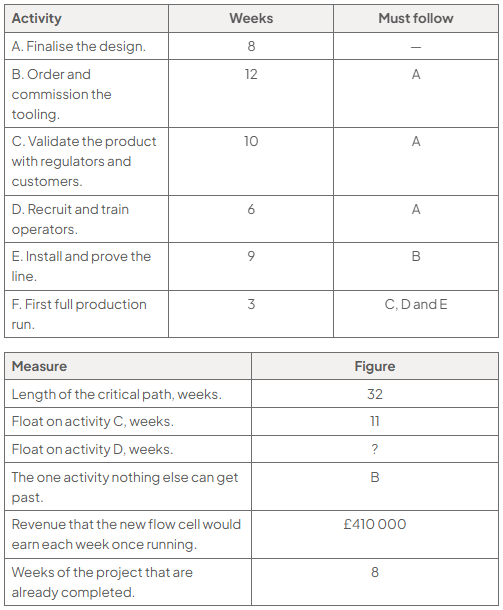
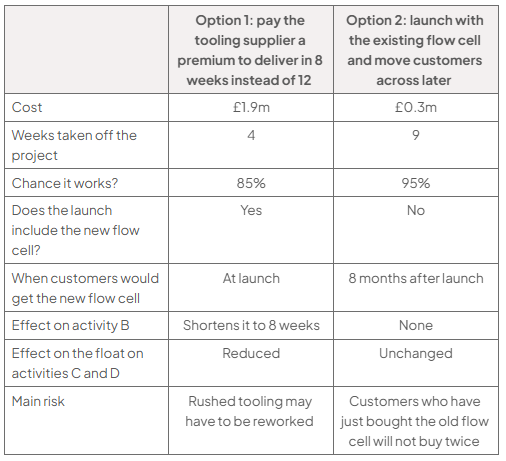
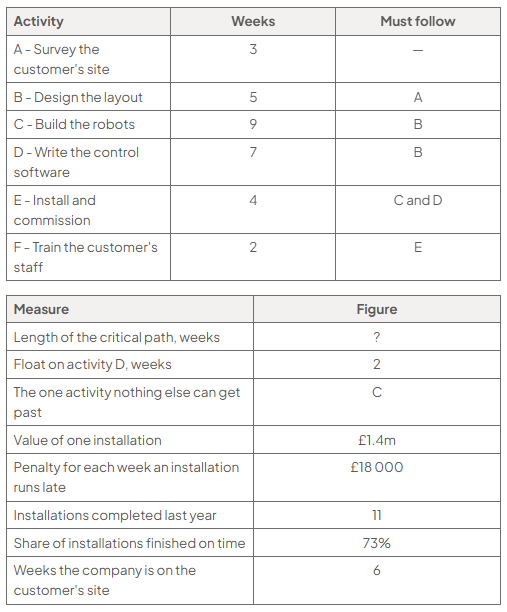
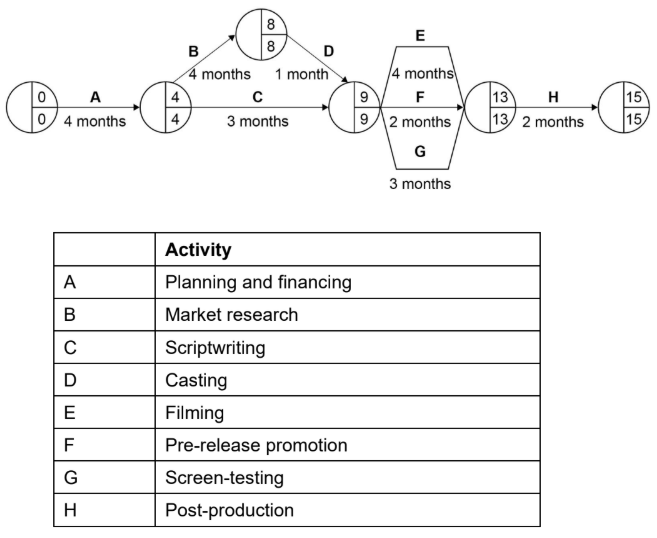
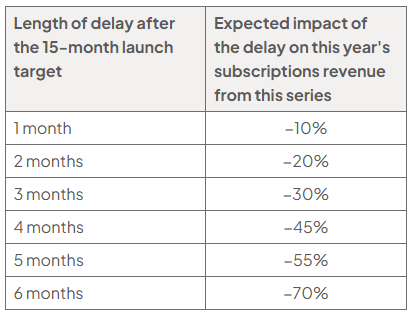
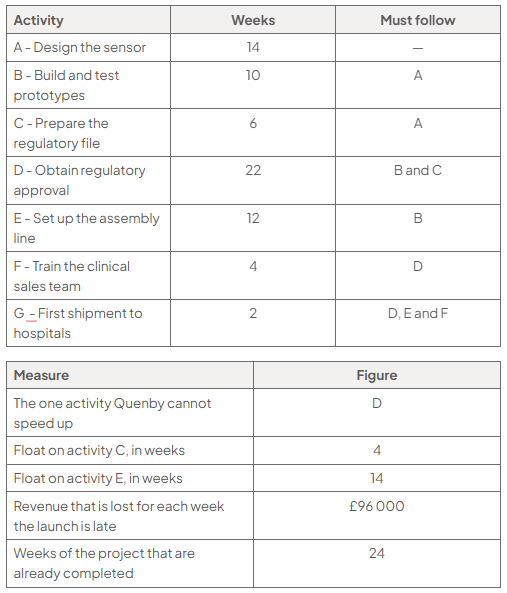
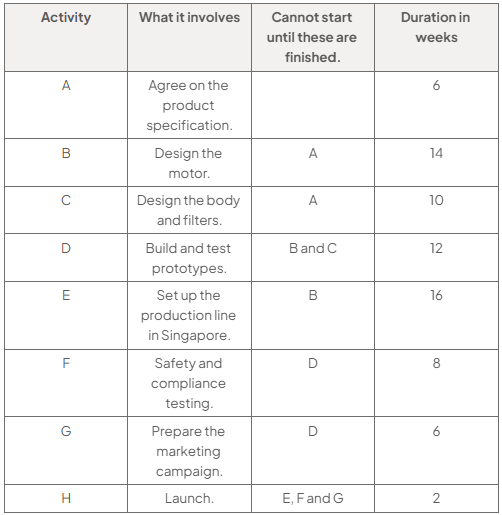
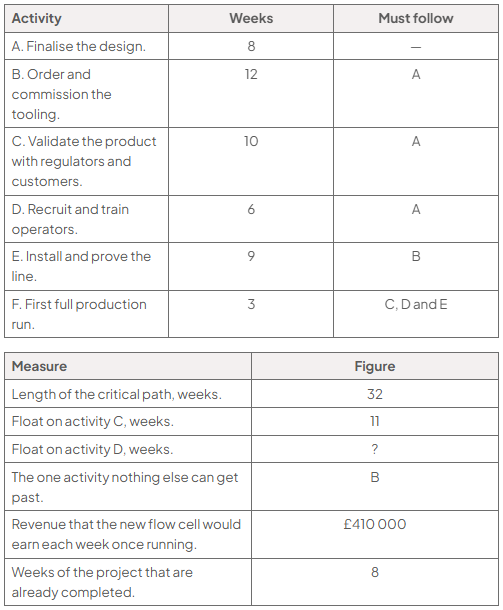
Getting a new machine from an idea to a shop shelf is a project with many stages, and some of those stages cannot start until others have finished.
Source: Dyson financial results for 2024 and 2025
Appendix G: Bringing a new Dyson machine to market
Source: Analyst
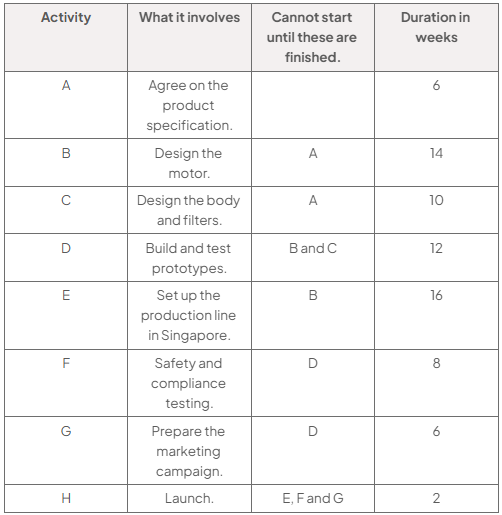
Analyse one way in which using network analysis to plan a new machine might affect Dyson's costs.
Was this exam question helpful?