Forms of Business & Stakeholders (AQA A Level Business): Exam Questions

Exam code: 7132

Syllabus Edition

First teaching 2026

First exams 2028

2 hours15 questions
1
6 marks

Source B: Apple's Vision Pro

In September 2023, Apple launched the Vision Pro in North America. Vision Pro is a virtual reality (VR) headset. Unlike rival headsets which require hand-held controllers, Vision Pro is controlled by hand movements, voice commands and eye tracking. Analysts estimated over $8 billion had been spent developing Vision Pro over five years.

The Vision Pro may turn out to be one of Apple's lowest-selling products. Apple reportedly hoped to sell 3 million units in the first year. Some experts expected sales would be below 200,000 units in this period, lower than any of Apple's other major product launches. Others were more optimistic about Vision Pro's long-term sales. Apple set a high price of $3499. This price was three times more expensive than Meta's competing headset, the Quest. Other issues with the product included a battery that lasted only two-hours and a headset that some users said was awkward to wear.

Apple was keen to release the Vision Pro because of strong competition, especially from Meta. Meta had been selling the Quest at a loss to increase its market share.

Steve Jobs, Apple's founder, once said that customers do not know what they want until Apple makes it.

Over 2 billion Apple devices are in use around the world. Apple also has:

  • a huge database of information about current users of its products.

  • a wide product portfolio including iPads, Mac computers, iPods, Apple TV, and the Apple watch.

  • a trusted brand. In a 2021 survey, three times as many people said they would buy a headset from Apple compared to its closest competitor.

In 2023, Apple increased its dividend payments to about 15% of its yearly profits.

Source: Apple, 2024

Appendix D: Selected financial data for Apple in 2021 and 2023

  • Sales: $365 817 million in 2021, rising to $394 328 million in 2023

  • Operating profit: $108 949 million in 2021, rising to $125 344 million in 2023

  • Investment in new product development: $21 914 million in 2021, rising to $29 915 million in 2023

Source: Apple, 2024

Appendix E: Apple share price

  • 30 September 2021: $142.65

  • 29 September 2023: $171.21

Source: AppleApple's share price changed between September 2021 and September 2023 (Appendix E).

Analyse one factor that might have caused this change in share price.

2
6 marks

Source A: Jet2 plc

Jet2 plc describes itself as the UK's leading provider of package holidays and its third largest airline. It is a public limited company with shares traded on the London Stock Exchange, based at Leeds Bradford Airport, and it employs more than 14 000 people. Steve Heapy is the chief executive.

The company sells two different things. A package holiday combines flights, a hotel and transfers in one booking. A flight-only seat is just the flight. In the year to 31 March 2026 Jet2 flew a record 20.83 million passengers, up 5%. Within that total, flight-only passengers rose 15% to 7.64 million while package holiday customers rose 1% to 6.62 million. Jet2 counts each package holiday customer once, while flown passengers are counted on every flight, outbound and return.

Customers pay for a holiday months before they take it, so money arrives long before the flight happens. At the year end the company held £3 292.5 million in cash and money market deposits, and net cash of £2 012.9 million.

The year's results were mixed. Revenue reached a record £7 482.1 million, up 4%. But operating profit fell 2% to £439.6 million, after absorbing £11.0 million of start-up costs for a new base at London Gatwick and £50 million of increased costs from employment taxes and sustainable aviation fuel. Profit before tax fell 7% and earnings per share fell 1% to 211.2p.

Shareholders were rewarded anyway. Jet2 returned £363.0 million to them during the year through share buybacks and dividends, raised the final dividend 2% to 12.4p a share, and announced a further £250 million buyback. The company says this reflects its strong liquidity and its confidence in the medium-term outlook.

Source: Jet2 plc preliminary results, 8 July 2026, and Companies House

Appendix A: Jet2 plc selected financial results

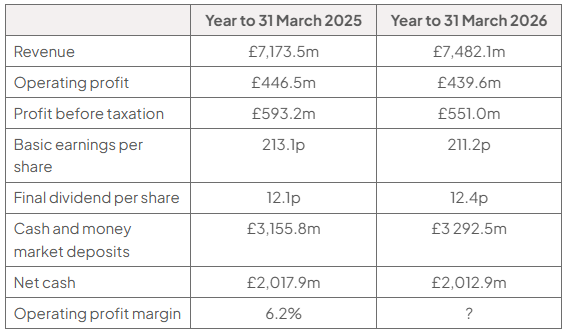
Table comparing Jet2 results for 2025 and 2026: revenue £7,173.5m/£7,482.1m; operating profit £446.5m/£439.6m; profit before tax £593.2m/£551.0m; EPS 213.1p/211.2p; dividend 12.1p/12.4p; cash £3,155.8m/£3,292.5m; net cash £2,017.9m/£2,012.9m; operating margin 6.2%/unknown.

Source: Jet2 plc

Jet2 plc raised its final dividend from 12.1p to 12.4p a share, in a year when profit before tax fell 7%.

Analyse one way in which the rise in the final dividend to 12.4p might affect Jet2 plc's shareholders.

3
6 marks

Source B: Riverford Organic Farmers Ltd

Riverford Organic Farmers Limited grows and delivers organic vegetables. Guy Singh-Watson began delivering boxes of vegetables to local households from the family farm in Devon, and the business was registered as a private limited company in 1999. Its registered office is still Wash Barn at Buckfastleigh in Devon, and its registered business activity is the growing of vegetables, roots and tubers.

Customers subscribe to a weekly box rather than choosing individual items. Boxes are packed at Riverford's own sites and delivered straight to the door by its own drivers, so the company controls its route to market and does not sell through supermarkets. Subscribers pay in advance and can pause or change an order online. Riverford owns five of its sites outright and holds another nine on lease.

In 2018 Guy Singh-Watson began transferring ownership of the company to the people who work in it. The process finished on 8 June 2023, when he sold his remaining shares and the Riverford Employee Ownership Trust became the company's only person with significant control. The business is now held in trust on behalf of its roughly 1 000 employees. There are no outside shareholders, so no dividends are paid to investors outside the business.

In the year ended 3 May 2025 turnover rose by 5.9% to £116.9 million. Cash held at the bank rose by a quarter to £12.31 million, and total liabilities fell by 13.0%.

Organic food remains a small part of UK grocery, and supermarkets have been widening their own organic ranges at lower prices.

Because there are no outside shareholders, the directors and the trust decide together what to do with each year's profit. There is £2.4 million available this year. It could be paid to the co-owners as a profit share, or it could be spent on solar panels and new refrigeration at Wash Barn, which would cut the company's running costs every year from then on. Appendix F shows information on the two options.

Source: information sourced from Companies House, 2026

The Riverford Employee Ownership Trust became Riverford Organic Farmers Ltd's only person with significant control in June 2023.

Analyse one way in which this change of ownership might affect Riverford Organic Farmers Ltd's business objectives.

4
6 marks

Source A: Kids Planet Day Nurseries Ltd

Kids Planet Day Nurseries Limited runs day nurseries for children below school age. Clare Roberts set the business up in Cheshire in 2008 and has been a director since the August of that year. Its registered activity is pre-primary education and its head office is still in Lymm, near Warrington.

The company has grown mainly by buying other nurseries rather than by building new ones. It is now the parent of a group of 152 companies, most of them businesses it has taken over, and it holds 69 properties, 28 of which it owns outright and 41 of which it leases. It employs around 5 000 people. There is a single shareholder.

Growth has been fast. Turnover rose by 42.3% in the year to 31 March 2025, reaching £204.56 million, and cash at the bank more than doubled. But buying nurseries has been paid for largely by borrowing. The group's total liabilities are now slightly larger than its total assets, which means its net assets are negative. That figure is moving in the right direction: net assets improved from minus £16.04 million to minus £3.50 million over the year.

The number of children available to fill nursery places is not fixed. Live births in England and Wales have fallen in three of the past four years, from 624 828 in 2021 to 585 396 in 2025. Appendix B shows the trend. The government also pays for a set number of childcare hours for many families, so a nursery's income comes partly from parents and partly from the state.

The directors must now decide whether to carry on buying nurseries.

Source: information sourced from Companies House and the Office for National Statistics, 2026

Kids Planet Day Nurseries Ltd has grown mainly by buying other nurseries.

Analyse one way in which this growth might affect one group of Kids Planet Day Nurseries Ltd's stakeholders.

5
6 marks

Source B: Paper Lane Ltd

Paper Lane Ltd sells stationery, cards and gifts from two small shops in market towns about 15 miles apart. Nina Okafor and Rhys Pritchard opened the first shop nine years ago and set the business up as a private limited company, with the two of them as the only directors and shareholders. They now employ nine other people, most of them part time.

The shops sell notebooks, pens, wrapping paper, cards and small gifts. Customers come in to browse, and a large share of what they buy was not on a list when they walked through the door. Nina and Rhys buy most of their inventory from small makers and from two wholesalers, and they order the Christmas range in August to get an 8% early order discount.

The business makes most of its profit in six weeks. December takes more money than August, September and October put together. That pattern is the heart of Paper Lane's problem. The inventory for Christmas is paid for in the autumn, months before it is sold, so the money goes out long before it comes back.

Sales have been steady and the shops are busy. Even so, cash at the bank fell from £19 000 to £2 000 during the year to 31 January 2026, and at its lowest point in the autumn the company was £22 000 into its overdraft. The overdraft limit is £25 000. Appendix D sets out the company's financial position and Appendix E shows what Nina and Rhys forecast will happen to the cash balance over the coming year.

They have been talking about opening a third shop. Their accountant has told them to sort the cash out first. They are also arguing about whether to ask their customers what they actually want, or to trust what nine years behind the counter has taught them.

Nina Okafor and Rhys Pritchard set Paper Lane Ltd up as a private limited company rather than trading as sole traders.

Analyse one way in which this decision might affect the risk Nina and Rhys take on.

6
6 marks

Source A: Games Workshop Group PLC

Games Workshop Group PLC designs, makes and sells fantasy miniatures and the games and stories that go with them. Its main brand is Warhammer. The company is based at Willow Road in Nottingham, where it makes its models, and it is a public limited company whose shares are traded on the London Stock Exchange. Kevin Rountree is the chief executive. It employs about 3 000 people.

The company earns money in two quite different ways. Most of it comes from the core business: selling miniatures and books through its own shops, through independent retailers it calls trade accounts, and through its own website. The rest comes from licensing, which means letting other companies pay to use Warhammer characters and worlds in their own products, such as video games and television.

In the 52 weeks to 31 May 2026 the core business had its best year yet. Core revenue rose 10.9% to £626.8 million and core operating profit rose to £245.1 million. Licensing went the other way. Licensing revenue fell from £52.5 million to £32.9 million, and licensing operating profit fell from £49.5 million to £29.9 million.

Licensing matters more than its size suggests. It costs very little to run, because the company is selling permission rather than a product, so almost all of the revenue it brings in becomes profit.

Total revenue still reached a record £659.7 million and profit before tax a record £275.7 million. Earnings per share rose from 594.9p to 624.0p. Even so, the dividend paid during the year fell from 520p a share to 485p.

Games Workshop says its decisions are focused on long-term success rather than short-term gains and that it intends to carry on making the best fantasy miniatures in the world forever.

Source: Games Workshop Group PLC results, 28 July 2026

Appendix B: Games Workshop Group PLC earnings, dividends and cash

  • Earnings per share = 624.0p in 2026 (594.9p in 2025)

  • Dividends per share declared and paid during the year = 485p in 2026 (520p in 2025)

  • Net increase in cash before dividends paid = £210.3m in 2026 (£197.5m in 2025)

  • Cash held at the end of the year = £182.9m

Source: Games Workshop Group PLC and Companies House

Appendix C: Extract from Games Workshop Group PLC's stated strategy

"Our ambitions remain clear: to make the best fantasy miniatures in the world, to engage and inspire our customers, and to sell our products globally at a profit. We intend to do this forever. Our decisions are focused on long-term success, not short-term gains."

"We nurture a craft-based hobby. We understand that what we make may not appeal to everyone, so to recruit and retain customers we are absolutely focused on making our models the best in the world."

Source: Games Workshop Group PLC annual report, 2026

Games Workshop Group PLC is a public limited company, and it paid its shareholders 485p a share in dividends during the year.

Analyse one way in which having to reward outside shareholders might affect the amount Games Workshop Group PLC has available to invest.

7
6 marks

Source B: Wetherby Green Garden Centre

Wetherby Green is a garden centre on the edge of a market town, owned and run by Priya Sharma as a sole trader. The business has no separate legal identity from her, so she keeps all of the profit and is personally responsible for all of its debts.

The business sells plants it grows itself in polytunnels behind the site, plants bought in from nurseries, plus compost, tools, pots and garden furniture. There is a small coffee hut. Twelve people work there, most of them part-time, and most of them only from March to June.

The business took £864 000 last year. Appendix E shows when. April and May alone take £310 000 of it, and the whole of July to October together comes to £178 000, barely more than May on its own.

The difficulty is the inventory. A pot of compost keeps. A shrub does not. Plants have to be bought or sown months before anybody wants them, they need watering and space while they wait, and if they are not sold in their season they either have to be discounted heavily or kept through the winter. Kept plants take up space, need heating in a cold snap, and a proportion of them die.

At the end of last July the business was holding £96 000 of unsold plants at cost. Appendix F sets out the two things it could do with them.

Appendix D: Wetherby Green Garden Centre, summary of last year

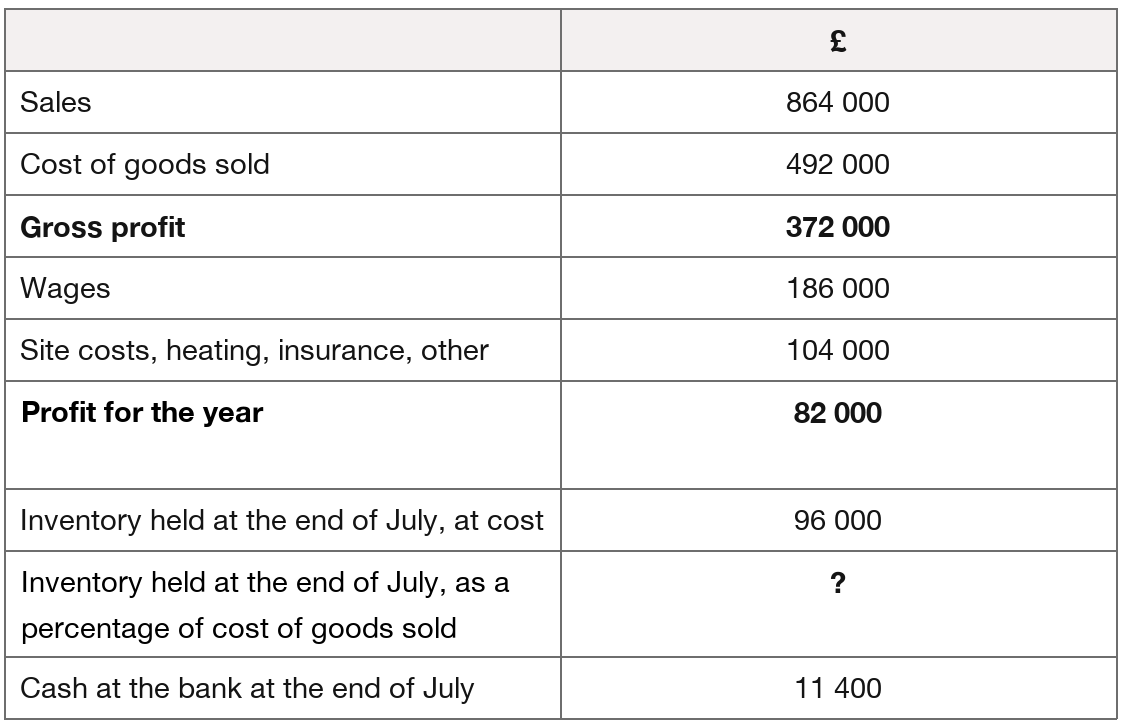
Table of last year’s summary: sales £864,000; cost of goods sold £492,000; gross profit £372,000; wages £186,000; other costs £104,000; profit £82,000; July inventory £96,000, percentage unknown; bank cash £11,400.

Source: Analyst

Priya Sharma runs Wetherby Green Garden Centre as a sole trader and keeps all of the profit.

Analyse one way in which running the business as a sole trader might affect the risk Priya Sharma takes.

1
9 marks

Source B: Farmoor Cycles

Farmoor Cycles is an independent bicycle retailer in the UK. It was established in Oxford in 2002 as a worker cooperative by a group of cycling enthusiasts. It now has two other shops in Birmingham and Manchester. The UK bicycle retail sector has a few large national chains that sell bikes, such as Halfords, Decathlon and Argos, as well as many small independent businesses. The entry threat to the industry is high.

The mission of Farmoor Cycles is to:

  • provide affordable bicycles for cyclists of all kinds

  • promote the benefits of cycling for cyclists of all kinds

  • build a fairer society through cooperative ownership.

The business states that 'we have the passion, specialist expertise and links with the local community that customers want'.

It values:

  • democracy

  • honesty

  • openness

  • social responsibility

  • caring for others.

The business is considering investing in a new inventory management system (Appendix C) which has a forecast life span of 4 years. It usually aims for an average rate of return on its investments of at least 10%. The current rate of interest for taking out a bank loan is 8%.

Appendix D: Farmoor Cycles' data

  • Revenue: £1 904 000 in 2023, falling to £1 880 000 in 2024

  • Marketing spending as a percentage of revenue: 5% in 2023, 4% in 2024

  • Number of employees: 30 in 2023, 32 in 2024

  • Employee costs as a percentage of revenue: 25% in 2023, 27% in 2024

  • Operating profit margins: 3% in 2023, 2% in 2024

  • Cashflow: £125 000 in 2023, (£5 000) in 2024

  • Average spending per employee on training: £2 000 in 2023, £750 in 2024

  • Average time for customers to pay: 6 months in 2023 and 2024

  • Average payment time to suppliers: 4 weeks in 2023, 3 weeks in 2024

Assess whether Farmoor Cycles' stakeholders would be likely to oppose the business becoming a private limited company.

2
9 marks

Source B: Riverford Organic Farmers Ltd

Riverford Organic Farmers Limited grows and delivers organic vegetables. Guy Singh-Watson began delivering boxes of vegetables to local households from the family farm in Devon, and the business was registered as a private limited company in 1999. Its registered office is still Wash Barn at Buckfastleigh in Devon, and its registered business activity is the growing of vegetables, roots and tubers.

Customers subscribe to a weekly box rather than choosing individual items. Boxes are packed at Riverford's own sites and delivered straight to the door by its own drivers, so the company controls its route to market and does not sell through supermarkets. Subscribers pay in advance and can pause or change an order online. Riverford owns five of its sites outright and holds another nine on lease.

In 2018 Guy Singh-Watson began transferring ownership of the company to the people who work in it. The process finished on 8 June 2023, when he sold his remaining shares and the Riverford Employee Ownership Trust became the company's only person with significant control. The business is now held in trust on behalf of its roughly 1 000 employees. There are no outside shareholders, so no dividends are paid to investors outside the business.

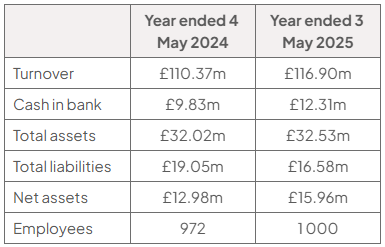
In the year ended 3 May 2025 turnover rose by 5.9% to £116.9 million. Cash held at the bank rose by a quarter to £12.31 million, and total liabilities fell by 13.0%.

Organic food remains a small part of UK grocery, and supermarkets have been widening their own organic ranges at lower prices.

Because there are no outside shareholders, the directors and the trust decide together what to do with each year's profit. There is £2.4 million available this year. It could be paid to the co-owners as a profit share, or it could be spent on solar panels and new refrigeration at Wash Barn, which would cut the company's running costs every year from then on. Appendix F shows information on the two options.

Source: information sourced from Companies House, 2026

Appendix D: Riverford Organic Farmers Ltd selected financial data

Riverford financial table for years ended 4 May 2024 and 3 May 2025: turnover £110.37m/£116.90m; cash £9.83m/£12.31m; assets £32.02m/£32.53m; liabilities £19.05m/£16.58m; net assets £12.98m/£15.96m; employees 972/1,000.

Source: Companies House

Appendix E: UK organic vegetable box market

Share of the UK organic vegetable box market, 2025

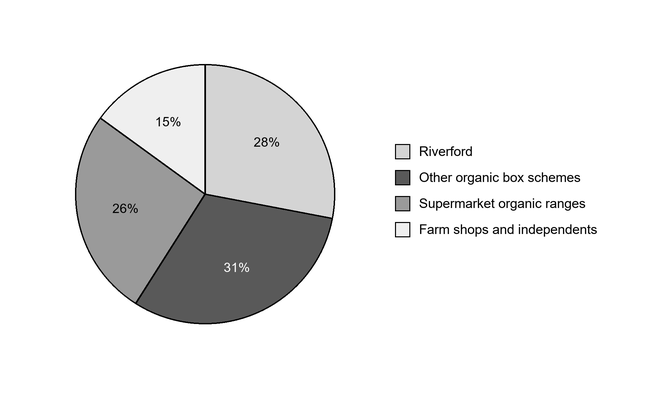
Pie chart showing UK organic vegetable box market shares: other organic box schemes 31%, Riverford 28%, supermarket organic ranges 26%, and farm shops and independents 15%.
  • Average annual growth in UK organic food sales, 2021 to 2025 = 3.2%

Source: Analyst

Assess whether being owned by an employee ownership trust makes it easier or harder for Riverford Organic Farmers Ltd to compete with supermarket organic ranges.

3
9 marks

Source B: Big Issue Media Ltd

Big Issue Media Limited publishes The Big Issue, a weekly magazine sold on the street by people who are homeless or at risk of becoming homeless. The company was set up in 1991 and is part of a group of 16 companies known as the Big Issue Group. It is a social enterprise: it trades like any other business, but it exists to create work for its vendors rather than to pay outside shareholders.

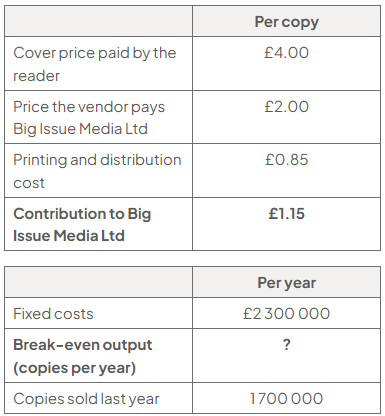
The selling model is unusual. Vendors buy copies of the magazine from Big Issue Media Limited at half the cover price, then sell them at the full price and keep the difference. A vendor is not an employee. What they earn depends entirely on how many copies they sell, so the number of magazines moving through the business is also the number that decides whether a vendor can pay their rent.

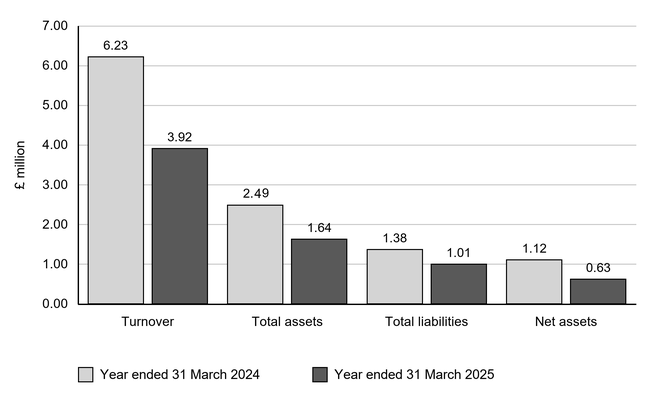
That number has been falling. Fewer people carry cash, fewer people buy print magazines, and the streets are quieter than they were. In the year to 31 March 2025 turnover fell by 37.1% to £3.92 million. The company cut its workforce from 74 people to 56. Cash at the bank fell to £297 000 and net assets fell by 43.6% to £630 000. Appendix D shows how the business changed.

The directors are considering two ways forward. They could raise the cover price, which would give each vendor more money for every copy sold. Or they could push more sales through the Big Issue app and website, which costs less to run but cuts the vendors out of the sale. Appendix F sets out the two options.

Source: information sourced from Companies House, 2026

Appendix D: How Big Issue Media Ltd changed during the year

Grouped bar chart of Big Issue Media Ltd finances in £ million for years ended 31 March 2024 and 2025: turnover 6.23 to 3.92, total assets 2.49 to 1.64, liabilities 1.38 to 1.01, net assets 1.12 to 0.63.

Source: Companies House

Appendix E: Information on the economics of the magazine

Magazine economics: per copy, reader price £4, vendor pays £2, printing and distribution £0.85, contribution £1.15. Per year: fixed costs £2.3m, break-even output unknown, last year’s sales 1.7m copies.

Source: Analyst

Assess whether being a social enterprise makes it harder for Big Issue Media Ltd to respond to a 37.1% fall in turnover.

4
9 marks

Source A: MJ Gleeson plc

MJ Gleeson plc builds houses. It is a public limited company listed on the London Stock Exchange and it works in two quite different ways. Gleeson Homes builds and sells houses, mainly in the North of England and the Midlands. Gleeson Land buys options on farmland, obtains planning permission and sells the land on to other housebuilders.

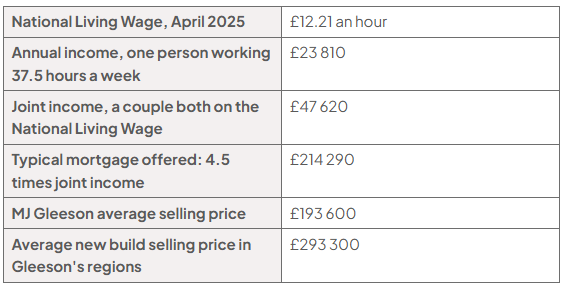
What makes Gleeson unusual is who it sells to. It builds the lowest-priced new homes in Britain and says its average selling price is 34% lower than the average new build price in the regions where it works. In the year to 30 June 2025, 78% of the homes it sold were affordable to a couple both earning the National Living Wage. Many of its buyers are first-time buyers who would otherwise be renting.

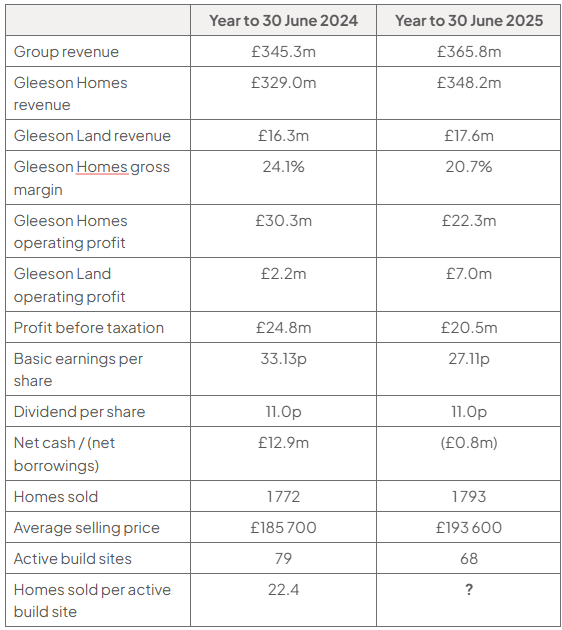
The year was a difficult one. Group revenue rose 5.9% to £365.8 million and the company sold 1 793 homes, only 21 more than the year before. The average selling price rose 4.3% to £193 600, but almost all of that came from building a different mix of houses rather than from charging more for the same house: underlying price growth was just 0.6%.

Costs went the other way. The gross margin at Gleeson Homes fell from 24.1% to 20.7%, and its operating profit fell 26.4% to £22.3 million. Gleeson Land had a much better year, completing seven land sales and lifting its operating profit from £2.2 million to £7.0 million, but it is far too small to make up the difference. Group profit before tax fell 17.3% to £20.5 million.

The company built from fewer places. Active build sites fell from 79 to 68, while the land pipeline grew slightly to 19 638 plots. Gleeson holds a medium-term target of building 3 000 homes a year, which is well above the 1 793 it managed this year.

Money left the business. Gleeson began the year with net cash of £12.9 million and ended it with net borrowings of £0.8 million, having held its dividend at 11.0p a share even though earnings per share fell from 33.13p to 27.11p.

Source: MJ Gleeson plc audited results for the year ended 30 June 2025, 16 September 2025

Appendix A: MJ Gleeson plc selected results

Appendix A table compares 2024 and 2025: Homes revenue £329.0m/£348.2m; Land revenue £16.3m/£17.6m; homes sold per active site 22.4/?; other figures repeat the extract.

Source: MJ Gleeson plc

Appendix C: Affordability information

Affordability table: April 2025 National Living Wage £12.21 an hour; annual income for one worker £23,810; couple’s joint income £47,620; 4.5-times mortgage £214,290; Gleeson average £193,600 versus regional new-build average £293,300.

Source: Analyst

Assess whether MJ Gleeson plc can meet the needs of its shareholders and the needs of its first-time buyers at the same time.

5
9 marks

Source B: Wetherby Green Garden Centre

Wetherby Green is a garden centre on the edge of a market town, owned and run by Priya Sharma as a sole trader. The business has no separate legal identity from her, so she keeps all of the profit and is personally responsible for all of its debts.

The business sells plants it grows itself in polytunnels behind the site, plants bought in from nurseries, plus compost, tools, pots and garden furniture. There is a small coffee hut. Twelve people work there, most of them part time and most of them only from March to June.

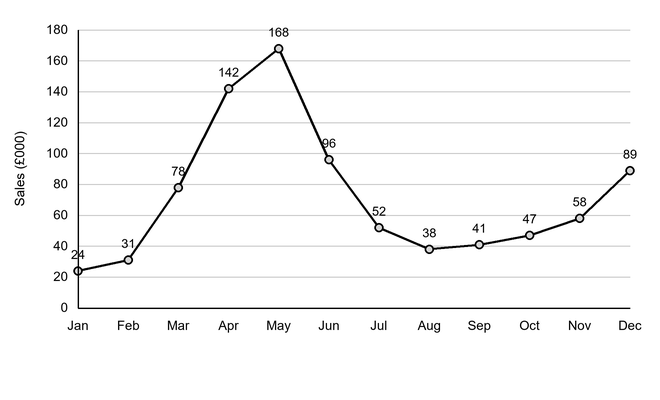
The business took £864 000 last year. Appendix E shows when. April and May alone take £310 000 of it, and the whole of July to October together comes to £178 000, barely more than May on its own.

The difficulty is the inventory. A pot of compost keeps. A shrub does not. Plants have to be bought or sown months before anybody wants them, they need watering and space while they wait, and if they are not sold in their season they either have to be discounted heavily or kept through the winter. Kept plants take up space, need heating in a cold snap, and a proportion of them die.

At the end of last July the business was holding £96 000 of unsold plants at cost. Appendix F sets out the two things it could do with them.

Appendix D: Wetherby Green Garden Centre, summary of last year

Table of last year’s summary: sales £864,000; cost of goods sold £492,000; gross profit £372,000; wages £186,000; other costs £104,000; profit £82,000; July inventory £96,000, percentage unknown; bank cash £11,400.

Source: Analyst

Appendix E: Wetherby Green Garden Centre monthly sales

Line chart of monthly sales (£000): Jan 24, Feb 31, Mar 78, Apr 142, May 168, Jun 96, Jul 52, Aug 38, Sep 41, Oct 47, Nov 58 and Dec 89; sales peak in May and are lowest in August.

Source: Analyst

Assess whether Wetherby Green Garden Centre should become a private limited company.

1
15 marks

Source B: Battersea Dogs' and Cats' Home

Battersea Dogs' and Cats' Home is a registered charity, number 206394. It works with animals, provides services to the general public, and operates in London, in Windsor and Maidenhead, and in Kent. It has no shareholders and no owners. Any money left over at the end of the year stays in the charity.

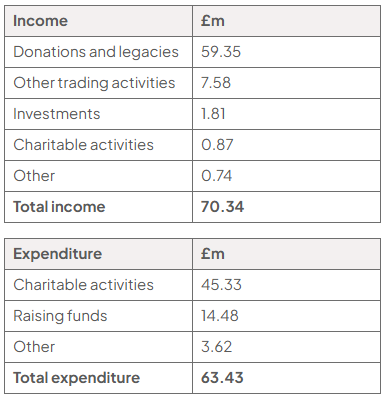
Almost all of its money is given rather than earned. In the year to 31 December 2024 its total income was £70.34 million, of which £59.35 million came from donations and legacies. A legacy is money left to a charity in somebody's will, and legacies alone came to £32.57 million, almost half of everything Battersea received. The rest came from other trading activities, £7.58 million, from charitable activities, £869 000, from investments, £1.81 million, and from other sources, £741 000.

Raising that money costs money. Battersea spent £14.48 million on raising funds during the year. It spent £45.33 million on its charitable activities and £3.62 million on other costs, giving total expenditure of £63.43 million.

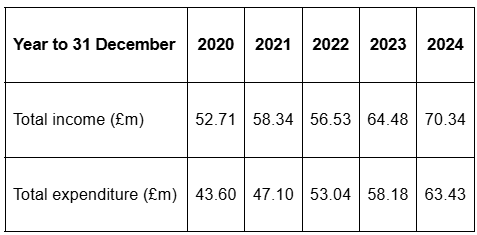
Income has grown in three of the past four years, from £52.71 million in 2020 to £70.34 million in 2024. Expenditure has risen every year over the same period. Appendix E shows both.

The charity faces a planning problem that a company selling to customers does not. Nobody can be told in advance how much will be left to Battersea in wills, or when. Legacies are the largest single source of its income and the least predictable.

Source: Charity Commission register of charities, entry 206394

Appendix D: Battersea Dogs' and Cats' Home income and expenditure, year to 31 December 2024

Income (£m): donations and legacies 59.35, other trading activities 7.58, investments 1.81, charitable activities 0.87, other 0.74; total 70.34. Expenditure: charitable activities 45.33, raising funds 14.48, other 3.62; total 63.43.

Appendix E: Battersea Dogs' and Cats' Home income and expenditure, 2020 to 2024

Table of Battersea’s total income and expenditure (£m) for years ending 31 December: income 52.71, 58.34, 56.53, 64.48, 70.34; expenditure 43.60, 47.10, 53.04, 58.18, 63.43.

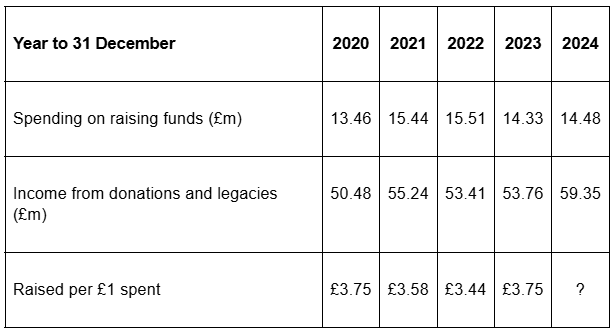
Appendix F: Battersea Dogs' and Cats' Home spending on raising funds

Table for 2020–2024 (£m): spending on raising funds £13.46, £15.44, £15.51, £14.33, £14.48; donations and legacies £50.48, £55.24, £53.41, £53.76, £59.35; raised per £1 spent £3.75, £3.58, £3.44, £3.75, ?.

Source: Charity Commission

Battersea Dogs' and Cats' Home cannot know in advance how much will be left to it in wills.

Evaluate whether Battersea Dogs' and Cats' Home should try to grow its other trading activities or concentrate on raising more donations and legacies.

2
15 marks

Source B: Foxhall Creamery Ltd

Foxhall Creamery Ltd makes hard cheese on the Shropshire border. It is a private limited company owned in equal shares by Kate Foxhall, who is 61, and Owen Ridd, who is 58, and it employs 48 people. Revenue last year was £6 800 000, sold to farm shops, delicatessens and independent grocers, none of whom takes more than 4% of output.

The cheese has to sit. The youngest thing Foxhall Creamery Ltd sells has been in the store for nine months, and its best-known cheese comes out at fourteen. Every wheel in the store is money already spent and not yet earned, and there are two rooms of them.

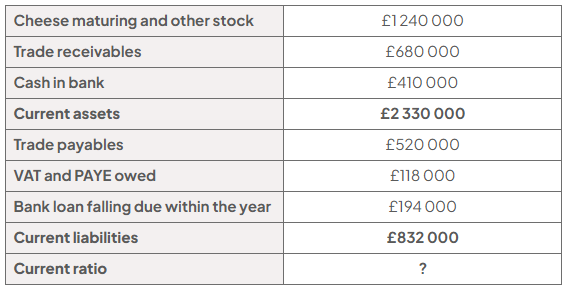
The accounts look reassuring. At the year end the company held £1 240 000 of inventory, was owed £680 000 by customers and had £410 000 in the bank, against £520 000 owed to suppliers, £118 000 in VAT and PAYE, and £194 000 of the bank loan falling due within the year. The loan stands at £1 460 000 in total, and the financial objective for this year is to reduce it by £200 000.

Foxhall Creamery Ltd values the cheese in its store at what the milk, the labour and the power have cost. A wheel that has been maturing for thirteen months appears in the accounts at the same figure as it did on the day it was made, although the price it will fetch has roughly doubled in the meantime.

The company needs a third maturing store, which will cost £900 000. It can pay for it out of the bank balance and this year's retained profit, or it can borrow again.

There is a larger question behind that one. Kate Foxhall wants to retire within five years. A cheese wholesaler has offered £4 900 000 for the company. The alternative the two of them have been reading about is an employee ownership trust, which would buy the business on behalf of the 48 staff and pay Kate Foxhall and Owen Ridd out of future profits over about seven years.

Appendix D: Foxhall Creamery Ltd, current assets and current liabilities

Table of current assets and liabilities: cheese inventory £1,240,000, receivables £680,000 and cash £410,000 (£2,330,000 total); payables £520,000, VAT/PAYE £118,000 and loan £194,000 (£832,000 total). Current ratio: ?

Source: Analyst

Kate Foxhall wants to retire within five years. A cheese wholesaler has offered £4 900 000 for the company.

Evaluate whether Foxhall Creamery Ltd should be sold to the wholesaler or transferred to an employee ownership trust.

3
15 marks

Source A: Nationwide Building Society

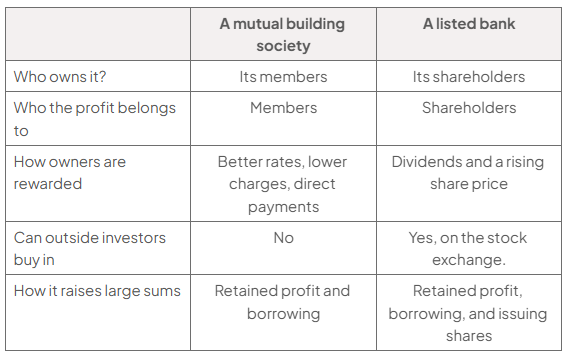
Nationwide is the world's largest building society and the second largest mortgage lender in the United Kingdom. It is a mutual, which means it has no shareholders. It is owned by its members, who are the people who bank, save or hold a mortgage with it, and in principle every member is an owner. Nobody outside the membership has a claim on its profit.

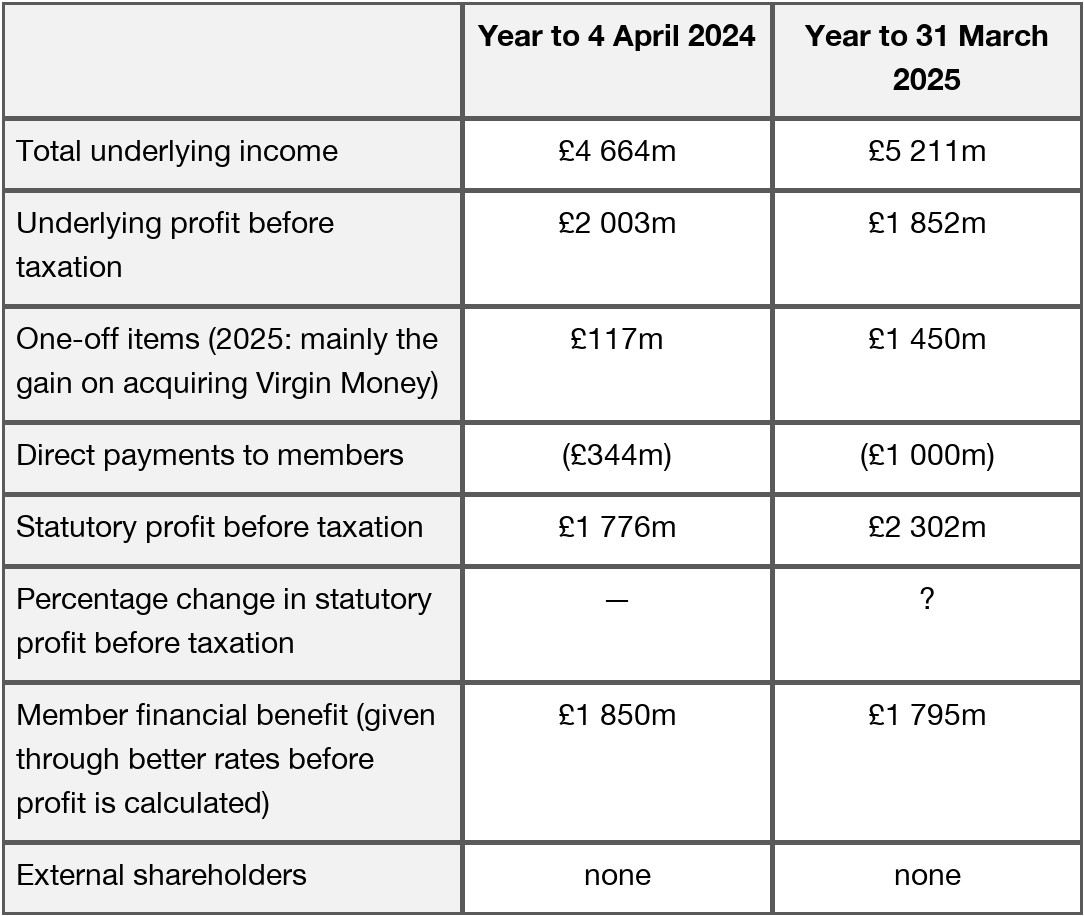
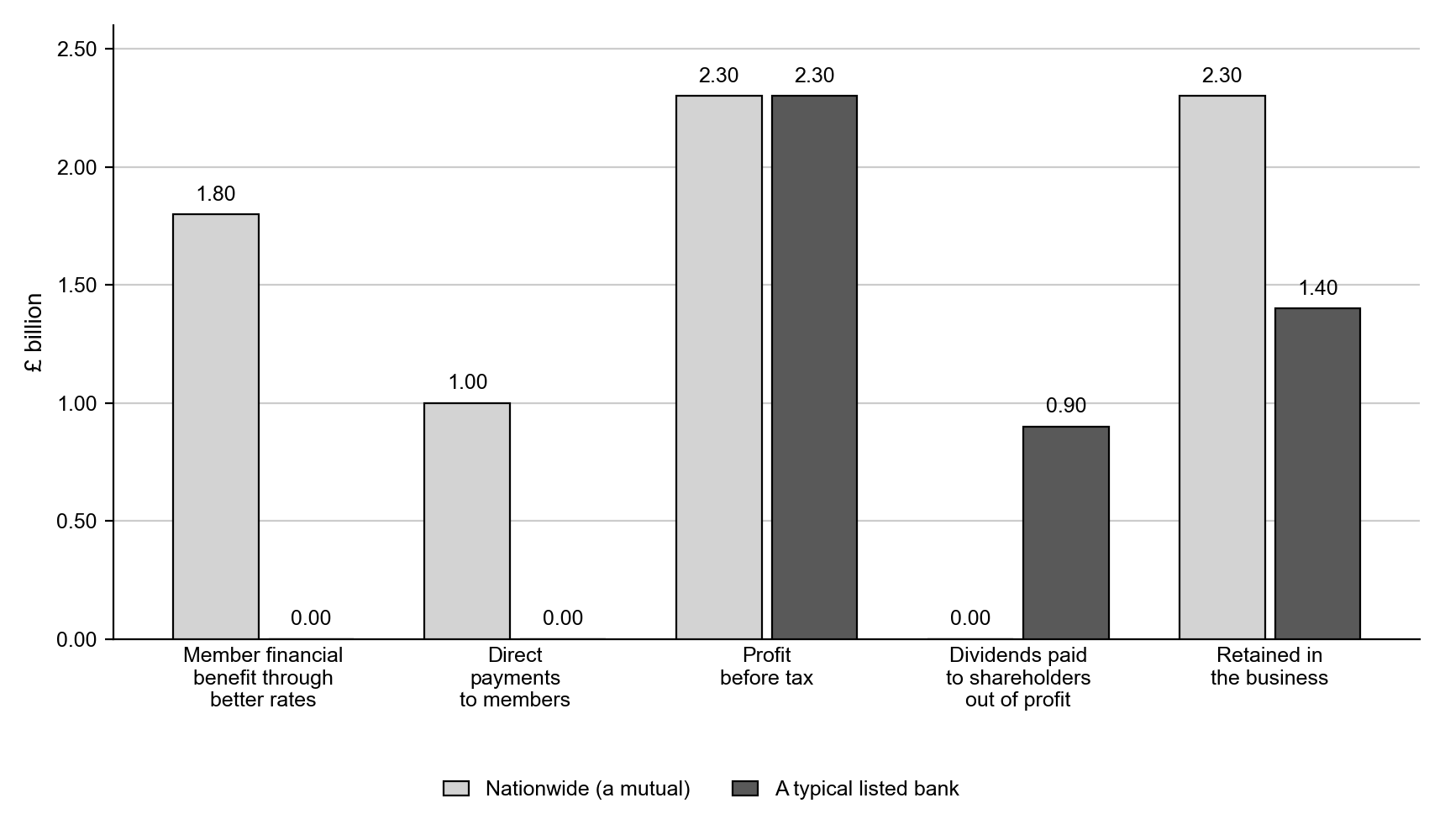
That changes what profit is for. A listed bank divides its profit between dividends to shareholders and money kept in the business. Nationwide has no shareholders to pay, so it keeps almost all of its profit in the business to build its financial strength, and gives value to members in two other ways. The first is pricing, through better savings rates and lower mortgage rates. In the year to 31 March 2025 it put this at £1 795 million of member financial benefit, which is its estimate of how much better off its members were than they would have been with a typical high street bank. The second is direct payments: £1 000 million paid to eligible members through the Fairer Share Payment and a one-off reward called The Big Nationwide Thank You. Both reach members before profit is calculated, so neither is paid out of profit.

The year was a large one. On 1 October 2024 Nationwide completed the acquisition of Virgin Money, a bank with its own customers, brand and business lending arm. Statutory profit before tax rose to £2 302 million from £1 776 million, even after the direct payments to members. The rise was mainly due to a one-off accounting gain of £2.3 billion on buying Virgin Money, which arose because the assets acquired were valued at more than the £2.8 billion price. Underlying profit before tax, which leaves out one-off items and the direct payments, fell to £1 852 million from £2 003 million, which the society put down to its decision to pay members better rates. Total underlying income reached £5.2 billion, and Pay.UK switching data for the nine months to December 2024 showed more current account switchers moving to Nationwide than to any other brand.

Buying a bank is an unusual thing for a mutual to do. Virgin Money's customers did not choose a mutual, and integrating it will take years and a great deal of money. Every pound spent on that integration is a pound not returned to members this year, which is the tension the society is now living with.

Source: information sourced from Nationwide Building Society preliminary results for the year ended 31 March 2025

Appendix A: Nationwide Building Society selected results

Table comparing Nationwide results for 2024 and 2025: underlying income £4,664m/£5,211m; underlying profit £2,003m/£1,852m; one-off items £117m/£1,450m; member payments £344m/£1,000m; statutory profit £1,776m/£2,302m; member benefit £1,850m/£1,795m; no external shareholders.

Source: Nationwide Building Society

Appendix B: What being a mutual means

Comparison table: mutuals offer better rates, lower charges and direct payments, cannot accept outside investors, and raise funds through retained profit and borrowing; listed banks pay dividends, issue shares and accept stock-exchange investment.

Source: Analyst

Appendix C: Where the value went, Nationwide and a typical listed bank with the same profit before tax

Bar chart (£ billions, scale 0–2.5) comparing Nationwide with a typical listed bank: member benefit 1.80 versus 0; direct payments 1.00 versus 0; profit before tax 2.30 each; dividends 0 versus 0.90; retained 2.30 versus 1.40.

Source: Analyst

Nationwide completed the acquisition of Virgin Money on 1 October 2024. Every pound spent on integrating it is a pound not returned to members this year.

Evaluate whether Nationwide should put its profit into integrating Virgin Money or into increasing member financial benefit.