Demand (AQA A Level Business): Exam Questions

Exam code: 7132

Syllabus Edition

First teaching 2026

First exams 2028

2 hours15 questions
1
6 marks

Source A: Gymshark Ltd

Ben Francis was 19 when he asked his parents if he could use their garage to start making gym clothes he had designed. Whilst studying business at university, Ben teamed up with a school friend, and the gymwear business Gymshark Ltd was born.

Ben used his £5-an-hour wage at Pizza Hut and £1000 savings to invest in equipment like a sewing machine. Ben taught himself to sew and went to bodybuilding events to raise brand awareness. In 2012, Ben dropped out of university to focus on the business full-time.

The Gymshark Ltd brand has become a hit with younger gym goers and is doing well in a highly competitive market. Its competitors include Nike, Adidas and Puma. Instead of using traditional advertising or selling in high street shops, Gymshark Ltd has grown by having athletes and social media 'influencers' wear its clothes on platforms like Instagram, TikTok, and Facebook. Ben is also well known and still shares his own fitness videos online to promote the brand. The company now has 18 million followers on social media.

Gymshark Ltd is a private limited company. In 2021, it raised £200 million by selling shares to a company called General Atlantic. This made Gymshark Ltd one of relatively few British businesses valued at over $1 billion. Ben still owns a 70% stake in the company and has a clear vision of how he wants the business to develop. General Atlantic owns just over 20%. Managers at Gymshark Ltd own 10%. The funds were raised with the aim of expanding the business in North America, where Gymshark Ltd already makes a large part of its sales, and to grow the business rapidly in Asia. Ben has ambitious plans and wants to make the Gymshark Ltd brand the UK equivalent of Nike. The Nike brand was worth $31 billion in 2023 globally; market research suggests that 43% of people who buy Nike sportswear would do so again.

In October 2022, Gymshark Ltd made a significant investment and opened its first physical store on Regent Street in London.

Source: information sourced from Gymshark, 2024

Ben Francis wants to make the Gymshark Ltd brand as strong as Nike's.

Analyse one way in which having a brand as strong as Nike's could affect the price elasticity of demand for Gymshark Ltd's products.

2
6 marks

Source A: Kids Planet Day Nurseries Ltd

Kids Planet Day Nurseries Limited runs day nurseries for children below school age. Clare Roberts set the business up in Cheshire in 2008 and has been a director since the August of that year. Its registered activity is pre-primary education and its head office is still in Lymm, near Warrington.

The company has grown mainly by buying other nurseries rather than by building new ones. It is now the parent of a group of 152 companies, most of them businesses it has taken over, and it holds 69 properties, 28 of which it owns outright and 41 of which it leases. It employs around 5 000 people. There is a single shareholder.

Growth has been fast. Turnover rose by 42.3% in the year to 31 March 2025, reaching £204.56 million, and cash at the bank more than doubled. But buying nurseries has been paid for largely by borrowing. The group's total liabilities are now slightly larger than its total assets, which means its net assets are negative. That figure is moving in the right direction: net assets improved from minus £16.04 million to minus £3.50 million over the year.

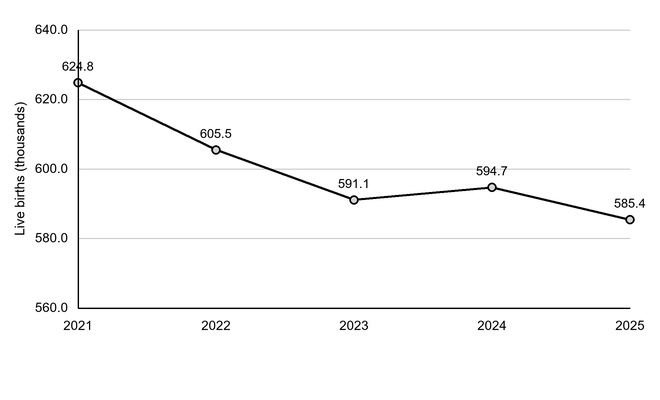
The number of children available to fill nursery places is not fixed. Live births in England and Wales have fallen in three of the past four years, from 624 828 in 2021 to 585 396 in 2025. Appendix B shows the trend. The government also pays for a set number of childcare hours for many families, so a nursery's income comes partly from parents and partly from the state.

The directors must now decide whether to carry on buying nurseries.

Source: information sourced from Companies House and the Office for National Statistics, 2026

Appendix B: Live births in England and Wales

Line chart of live births in England and Wales, in thousands: 624.8 in 2021, 605.5 in 2022, 591.1 in 2023, 594.7 in 2024 and 585.4 in 2025. The y-axis ranges from 560 to 640 thousand.

Source: Office for National Statistics

Appendix B shows the number of live births in England and Wales between 2021 and 2025.

Analyse one way in which a fall in the number of live births might affect Kids Planet Day Nurseries Ltd's revenue.

3
6 marks

Source A: The Gym Group plc

The Gym Group plc runs low cost gyms. It opened its first in 2008 and is now a public limited company with shares traded on the London Stock Exchange. It describes itself as a leading low cost gym operator and its offer as high value, low cost. Members pay by the month, there is no long contract to sign, and the gyms are open 24 hours a day.

The company calls its approach a labour light business model. Gyms are largely self-service, so a site can run with a small team, and the savings go into the price rather than into staff on the front desk. In the six months to 30 June 2026 The Gym Group had an average of one million members, up 5% on the same period a year earlier, and average revenue per member per month rose 5%.

Growth comes from two places. The company opens new gyms, and it improves the ones it already has. Four new sites opened in the first half of 2026, with eleven more being built, and it expects to open at least 20 during the year as part of a plan to open around 75 over three years, paid for out of its own cash. It also refurbishes older gyms to a newer design. Three were refurbished in the first half of 2026 and eighteen more were planned for the second half. Gyms refurbished during 2025 went on to win 10% more members than before.

The business is not short of demand, but it is carrying a lot of debt. At the end of 2025 its total liabilities were £474.2 million against total assets of £615.9 million, and it held only £3 million in cash. The company says its aim is a 30% return on the money invested in its mature gyms, and it is buying back some of its own shares.

Appendix C shows where The Gym Group sits against other kinds of gym.

Source: The Gym Group plc interim results, 9 September 2026, and Companies House

The Gym Group plc charges less than most other gyms and asks for no long contract.

Analyse one way in which a fall in people's real incomes might affect demand for The Gym Group plc's memberships.

4
6 marks

Source A: Moonpig Group plc

Moonpig Group plc sells greeting cards, gifts and experience days online. It has no shops. The group owns the Moonpig brand in the UK, Greetz in the Netherlands, and Buyagift and Red Letter Days, which sell experience days such as spa breaks and driving days. It is a public limited company listed in London.

The business runs on knowing when a customer's friends and family have birthdays. A customer who sends one card gives Moonpig Group plc a name and a date, and the company then reminds them when that date comes round again. Around that reminder it offers a gift to send with the card, which is where much of the growth now comes from. It also sells a paid membership called Plus, and during the year it launched tools that use artificial intelligence to help customers write and design cards.

In the year to 30 April 2025 revenue was £350.1 million, 2.6% up on the year before. That figure hides three very different businesses. The Moonpig brand grew 8.6%, and its revenue in the United States, Australia and Ireland grew 36.1% between them. Greetz fell 4.7%. The Experiences business was difficult enough that the group wrote £56.7 million off the value of it.

Underneath, the numbers the company watches most closely moved the right way. Active customers across Moonpig and Greetz reached 12.0 million, up from 11.5 million. Total orders grew 4.1% and the average order value grew 2.1%.

Profit depends entirely on which figure is read. Adjusted profit before tax, which leaves out the write-off, was £67.5 million against £58.2 million, a rise of 16.0%. Reported profit before tax, which includes it, was £3.0 million against £46.4 million, a fall of 93.6%. Free cash flow was £66.1 million, and the company bought back £25 million of its own shares during the second half.

Source: information sourced from Moonpig Group plc results announcement for the year ended 30 April 2025

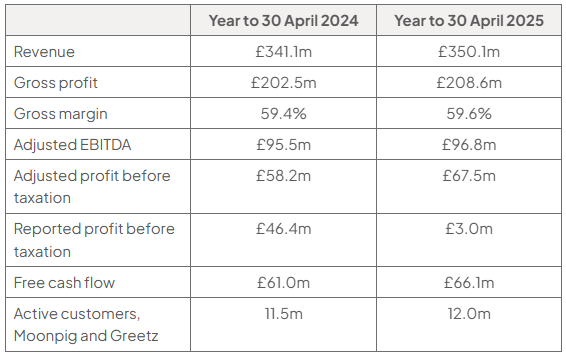
Appendix A: Moonpig Group plc selected results

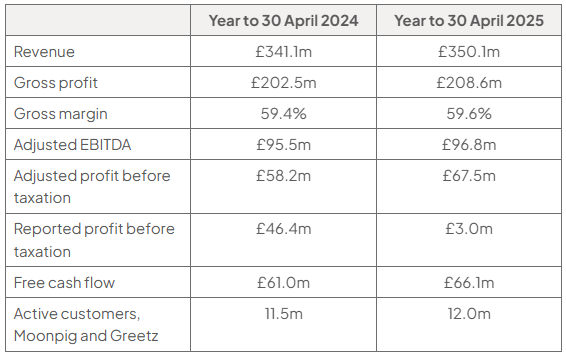
Table comparing Moonpig Group plc results for 2024 and 2025: revenue £341.1m to £350.1m, gross profit £202.5m to £208.6m, gross margin 59.4% to 59.6%, adjusted EBITDA £95.5m to £96.8m, adjusted profit before tax £58.2m to £67.5m, reported profit before tax £46.4m to £3.0m, free cash flow £61.0m to £66.1m, and active customers 11.5m to 12.0m.

Source: Moonpig Group plc

In the year to 30 April 2025 Moonpig Group plc's total orders grew 4.1% and its average order value grew 2.1%.

Analyse one way in which selling a gift alongside a card might affect the average order value at Moonpig Group plc.

5
6 marks

Source A: Warpaint London plc

Warpaint London plc makes and sells cosmetics. Its largest brand is W7, which sells eyeshadow palettes, lipsticks and foundations at prices most teenagers can afford, and it also owns Technic, Skin & Tan, Super Facialist, Dirty Works and Fish Soho. It does not own shops. Its products reach customers through other retailers, from supermarkets and high street chains to discounters, in the United Kingdom, across Europe and in the United States. It is a public limited company quoted on AIM.

The way it competes is not a secret. Premium cosmetics houses employ studios of designers, run laboratories and spend heavily on advertising to decide what a season's colours will be. Warpaint London plc watches what those trends turn out to be and puts a version on the shelf quickly, at a fraction of the price. It also states that all of its products are manufactured cruelty free.

The year to 31 December 2024 was a record. Group sales grew 13% to £101.6 million, from £89.6 million. The gross profit margin rose to 41.2% from 39.9%, and the company ended the year with no debt at all.

Where that revenue comes from is the surprise. The European Union is now Warpaint London plc's largest market, at £54.7 million against £45.1 million the year before. The United Kingdom, the country the company is based in, came second at £35.0 million against £32.4 million. The United States brought in £8.7 million against £7.3 million, and the remaining £3.2 million came from the rest of the world.

Source: information sourced from Warpaint London PLC results for the year ended 31 December 2024

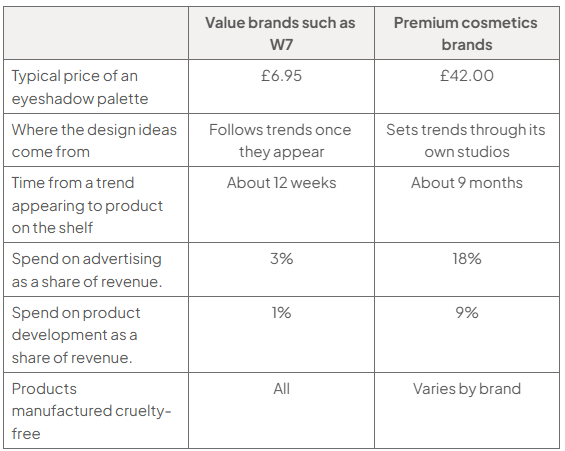
Appendix C: Value and premium cosmetics compared, analyst estimates

Comparison table of value brands such as W7 and premium cosmetics: palette £6.95/£42; ideas follow trends/set trends in studios; shelf time 12 weeks/9 months; advertising 3%/18%; development 1%/9%; cruelty-free all/varies by brand.

Source: Analyst

A W7 eyeshadow palette sells for about £6.95, while a premium brand's palette sells for about £42.00.

Analyse one way in which this price difference might affect the number of customers Warpaint London plc attracts when household incomes fall.

6
6 marks

Source A: Meadowbank Pet Foods Ltd

Meadowbank Pet Foods Ltd makes dry dog food at a single factory in Shropshire. It is a private limited company owned by Ros Calderwood, who started it after eleven years as a vet, and it employs 34 people.

It does not sell in supermarkets and has never wanted to. Its food reaches customers through independent pet shops, veterinary practices and its own website, where about a third of customers buy on a repeating subscription. A 12 kilogram bag costs £48. Supermarket own label sells at around £22 for the same weight, and the mid-range brands sit between the two.

What the company sells is an explanation. Every bag lists the percentage of each ingredient, names the farm the meat came from and carries a batch number that a customer can look up. Ros Calderwood's view is that people who read the label are the only customers worth having, because they are the ones who do not switch when a rival runs a promotion.

Last year Meadowbank Pet Foods Ltd took £9.02 million, up from £8.20 million. Almost all of it is still British: £8.06 million against £7.71 million the year before. The two export markets are small and growing quickly. Ireland went from £0.38 million to £0.62 million and the Netherlands from £0.11 million to £0.34 million, both sold through independent pet shops in the same way as at home.

Ros Calderwood has £400 000 to spend and two ways to spend it. She has been offered a distributor in Germany, which is one of the largest pet food markets in Europe and one Meadowbank Pet Foods Ltd has never sold into. Or she can spend the money at home, where growth has slowed to 4.5% and where nine tenths of the revenue already is.

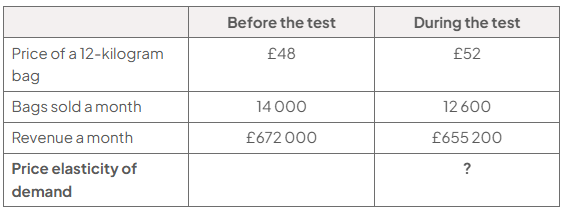
Before deciding anything she ran a test. For three months the price of the 12 kilogram bag went up from £48 to £52, and she watched what happened to the number of bags sold.

Appendix B: Meadowbank Pet Foods Ltd, the three-month price test

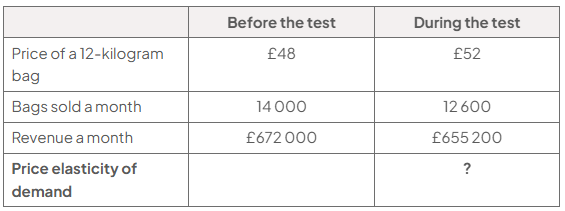
Table comparing before and during the test: price per 12-kilogram bag £48 and £52; monthly sales 14,000 and 12,600; monthly revenue £672,000 and £655,200. Price elasticity of demand is blank.

Source: Analyst

During Meadowbank Pet Foods Ltd's three-month test, the price of a 12 kilogram bag rose from £48 to £52 and monthly sales fell from 14 000 bags to 12 600.

Analyse one way in which a customer buying on a repeating subscription might respond differently to a price rise from one buying a single bag in a shop.

7
6 marks

Source A: Skylark Adventure Ltd

Skylark Adventure Ltd runs six indoor adventure parks, in converted warehouses on the edges of northern towns. Each one has climbing walls, trampolines, an obstacle course and a café. It is a private limited company owned by Ben Attah and Priya Shergill, who opened the first site in 2016, and it employs 148 people, most of them part time.

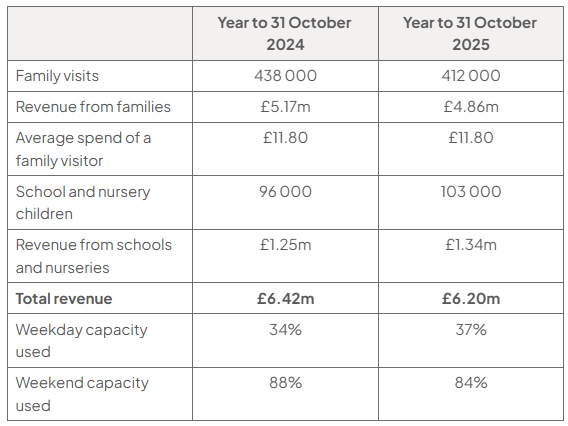
Almost all of the money comes from families. Last year 412 000 family visits brought in £4.86 million, an average of £11.80 a head once the café is counted. The rest, £1.34 million, came from schools and nurseries, who book weekday mornings a whole year ahead.

The two kinds of customer behave nothing like each other. A school booking is made in September for the following July and is almost never cancelled. A family visit is decided on a Saturday morning and is the first thing to go when money is tight. Appendix B shows what happened to family visits over five years as real household disposable income moved, and the two lines are hard to look at separately.

Ben Attah and Priya Shergill have £250 000 to spend across the six sites. They can lower prices, which they have never done, or they can put a new activity into every site and leave the price where it is. They are also arguing about something larger: whether a business that depends on families having spare money is one they should be trying to change.

Appendix A: Skylark Adventure Ltd, where the money comes from

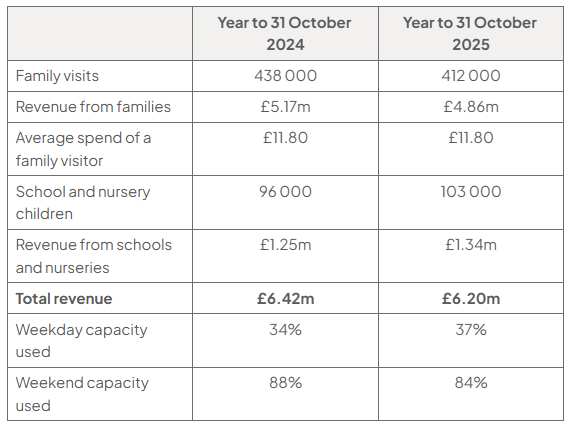
Table comparing years to 31 October 2024 and 2025: family revenue £5.17m to £4.86m; school and nursery revenue £1.25m to £1.34m; total revenue £6.42m to £6.20m; weekday capacity 34% to 37%, weekend 88% to 84%.

Source: Analyst

Appendix A shows that Skylark Adventure Ltd's family visits fell from 438 000 to 412 000 last year, while the average spend a visitor stayed at £11.80.

Analyse one way in which this might affect what Ben Attah and Priya Shergill conclude about why revenue fell.

1
9 marks

Source B: Brompton Bicycle Ltd

Brompton Bicycle Limited makes folding bicycles. Andrew Ritchie designed the first one in 1975 and built it in a workshop under a railway arch, and the company was registered the following year. Fifty years on, every Brompton is still made by hand and quality checked at the company's own factory in Greenford, west London. It is a private limited company with around 100 shareholders and is led by chief executive Will Butler-Adams, who joined the company in 2002 and has led it since 2008.

In principle the product has barely changed. A Brompton folds into a small package in under 20 seconds, so an owner can carry it onto a train, put it in a car boot or tuck it under a restaurant table. The range now includes electric, lightweight titanium and larger-wheel models. Brompton describes its purpose as creating urban freedom for happier lives, and it sells durability as part of the deal. Every frame carries a seven-year warranty, the bikes are designed to be repaired rather than replaced, and there are now more than a million Brompton owners and over 300 owners' groups around the world.

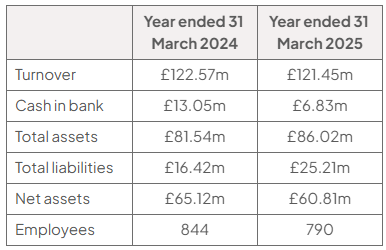
The year to 31 March 2025 was harder than usual. Turnover slipped by 0.9% to £121.45 million, the workforce fell by 54 people to 790, and cash at the bank almost halved. Over the same year the company's total liabilities rose by 53.5%.

Brompton would like to invest £15 million in its factory so that it can build more bikes at a lower cost per bike. It does not hold enough cash to pay for this out of its own resources. It could borrow the money from a bank, or it could ask its existing shareholders to buy new shares.

Source: information sourced from Companies House and Brompton Bicycle Ltd, 2026

Appendix D: Brompton Bicycle Ltd selected financial data

Table of Brompton’s financial data for years ended 31 March 2024 and 2025: turnover £122.57m/£121.45m; cash £13.05m/£6.83m; total assets £81.54m/£86.02m; liabilities £16.42m/£25.21m; net assets £65.12m/£60.81m; employees 844/790.

Source: Companies House

Appendix E: Analyst estimates of pricing for the Brompton C Line model

  • Average selling price, 2024 = £1 650

  • Average selling price, 2025 = £1 815

  • C Line bicycles sold, 2024 = 38 000

  • C Line bicycles sold, 2025 = 36 480

  • Price elasticity of demand for the C Line = ?

Source: Analyst

Assess whether raising the price of the C Line was likely to increase Brompton Bicycle Ltd's revenue.

Calculate the price elasticity of demand for the C Line to support your answer.

Give your answer to one decimal place.

2
9 marks

Source B: Center Parcs

Center Parcs runs five holiday villages in the United Kingdom: Sherwood Forest in Nottinghamshire, Elveden Forest in Suffolk, Longleat Forest in Wiltshire, Whinfell Forest in Cumbria and Woburn Forest in Bedfordshire. Woburn Forest, which opened in 2014, is the newest. Guests stay in lodges set in woodland and pay separately for activities, restaurants and the spa.

It is a private limited company, so it has no shares traded on any exchange and no share price. During the 53 weeks to 24 April 2025 it paid dividends of £115.5 million to its owner.

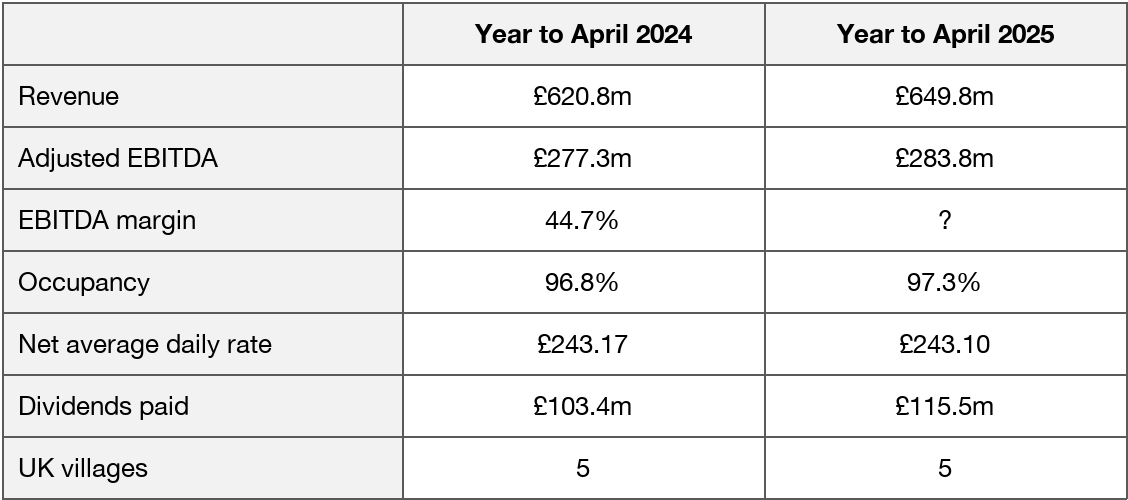
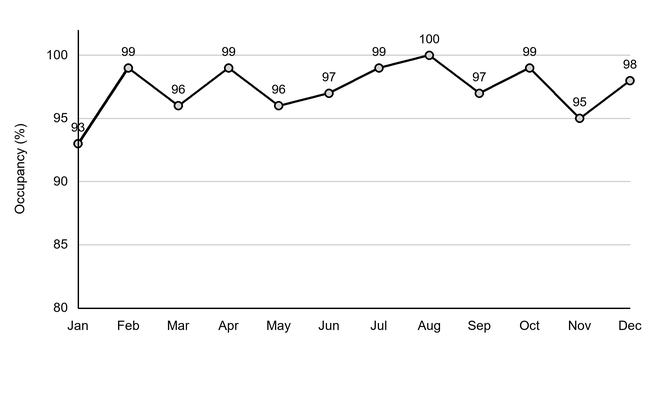
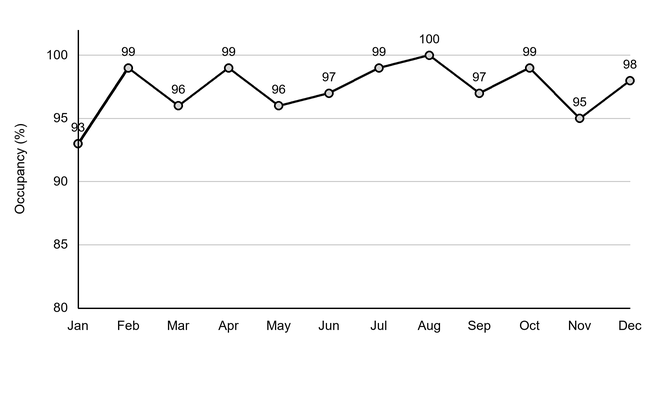
The business is close to full. Occupancy for the year was 97.3%, up from 96.8%, and Appendix E shows that it is not full only in summer: in every month of the year the villages run at or above 93%. Revenue rose 4.7% to £649.8 million and adjusted EBITDA rose to £283.8 million from £277.3 million.

The number that stands still is the price. The net average daily rate was £243.10, against £243.17 the year before. Across a year in which costs rose, Center Parcs took seven pence a night less than it had the year before.

That leaves the company in an unusual position. It cannot sell many more nights, because it has almost no empty ones. It has not raised its daily rate for two years. Growth has therefore had to come from somewhere other than filling lodges or charging more for them, and the directors must decide where the next stage of growth is going to come from. Building a sixth village would take years and a great deal of money. Raising the price would work immediately, if guests accepted it.

Source: information sourced from the Center Parcs (Holdings 1) Limited annual report and financial statements for the 53 weeks ended 24 April 2025, which cover the five UK villages only

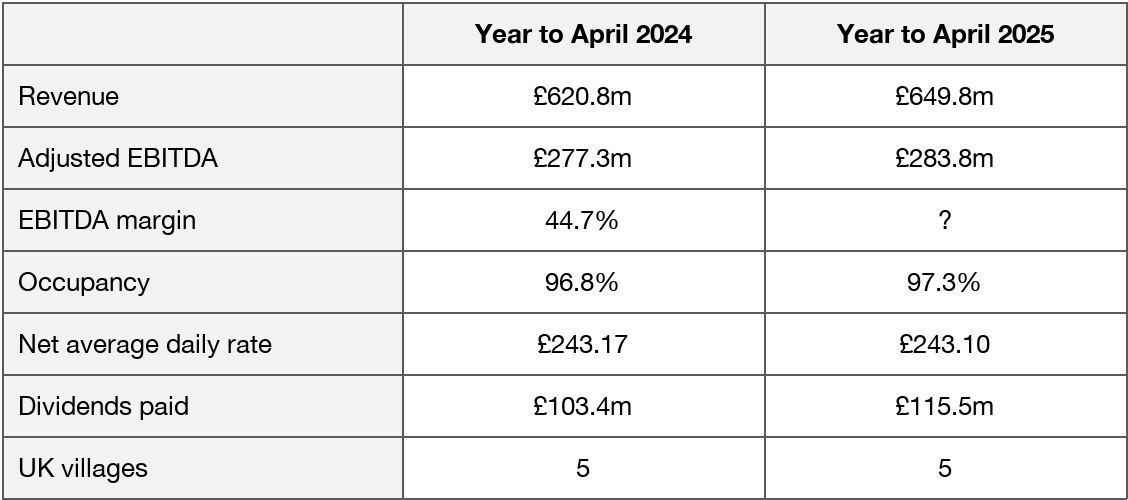
Appendix D: Center Parcs selected results

Selected results for years to April 2024 and 2025: revenue £620.8m and £649.8m; adjusted EBITDA £277.3m and £283.8m; EBITDA margin 44.7% and unknown; occupancy 96.8% and 97.3%; daily rate £243.17 and £243.10; dividends £103.4m and £115.5m; five UK villages in both years.

Source: Center Parcs

Appendix E: Center Parcs occupancy by month, analyst estimates

Line chart of Center Parcs’ estimated monthly occupancy, January to December: 93%, 99%, 96%, 99%, 96%, 97%, 99%, 100%, 97%, 99%, 95% and 98%; vertical axis spans 80% to 100%.
  • Average occupancy across the year: 97.3%

Source: Analyst

Assess whether Center Parcs is likely to increase its revenue by raising its average daily rate.

3
9 marks

Source A: Moonpig Group plc

Moonpig Group plc sells greeting cards, gifts and experience days online. It has no shops. The group owns the Moonpig brand in the UK, Greetz in the Netherlands, and Buyagift and Red Letter Days, which sell experience days such as spa breaks and driving days. It is a public limited company listed in London.

The business runs on knowing when a customer's friends and family have birthdays. A customer who sends one card gives Moonpig Group plc a name and a date, and the company then reminds them when that date comes round again. Around that reminder it offers a gift to send with the card, which is where much of the growth now comes from. It also sells a paid membership called Plus, and during the year it launched tools that use artificial intelligence to help customers write and design cards.

In the year to 30 April 2025 revenue was £350.1 million, 2.6% up on the year before. That figure hides three very different businesses. The Moonpig brand grew 8.6%, and its revenue in the United States, Australia and Ireland grew 36.1% between them. Greetz fell 4.7%. The Experiences business was difficult enough that the group wrote £56.7 million off the value of it.

Underneath, the numbers the company watches most closely moved the right way. Active customers across Moonpig and Greetz reached 12.0 million, up from 11.5 million. Total orders grew 4.1% and the average order value grew 2.1%.

Profit depends entirely on which figure is read. Adjusted profit before tax, which leaves out the write-off, was £67.5 million against £58.2 million, a rise of 16.0%. Reported profit before tax, which includes it, was £3.0 million against £46.4 million, a fall of 93.6%. Free cash flow was £66.1 million, and the company bought back £25 million of its own shares during the second half.

Source: information sourced from Moonpig Group plc results announcement for the year ended 30 April 2025

Appendix A: Moonpig Group plc selected results

Table of Moonpig Group plc results for years to 30 April 2024 and 2025. Revenue £341.1m/£350.1m; gross profit £202.5m/£208.6m; gross margin 59.4%/59.6%; adjusted EBITDA £95.5m/£96.8m; adjusted profit before tax £58.2m/£67.5m; reported profit before tax £46.4m/£3.0m; free cash flow £61.0m/£66.1m; active customers 11.5m/12.0m.

Source: Moonpig Group plc

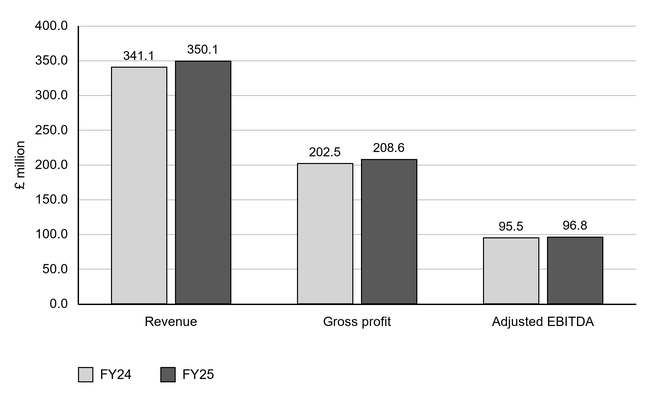
Appendix B: Moonpig Group plc, three measures

Bar chart comparing FY24 with FY25 in £ million: revenue rises from 341.1 to 350.1, gross profit from 202.5 to 208.6, and adjusted EBITDA from 95.5 to 96.8. Axis range: £0–400 million.

Source: Moonpig Group plc

Assess whether Moonpig Group plc should encourage more of its customers to add a gift to the card they are sending.

4
9 marks

Source A: Meadowbank Pet Foods Ltd

Meadowbank Pet Foods Ltd makes dry dog food at a single factory in Shropshire. It is a private limited company owned by Ros Calderwood, who started it after eleven years as a vet, and it employs 34 people.

It does not sell in supermarkets and has never wanted to. Its food reaches customers through independent pet shops, veterinary practices and its own website, where about a third of customers buy on a repeating subscription. A 12 kilogram bag costs £48. Supermarket own label sells at around £22 for the same weight, and the mid-range brands sit between the two.

What the company sells is an explanation. Every bag lists the percentage of each ingredient, names the farm the meat came from and carries a batch number that a customer can look up. Ros Calderwood's view is that people who read the label are the only customers worth having, because they are the ones who do not switch when a rival runs a promotion.

Last year Meadowbank Pet Foods Ltd took £9.02 million, up from £8.20 million. Almost all of it is still British: £8.06 million against £7.71 million the year before. The two export markets are small and growing quickly. Ireland went from £0.38 million to £0.62 million and the Netherlands from £0.11 million to £0.34 million, both sold through independent pet shops in the same way as at home.

Ros Calderwood has £400 000 to spend and two ways to spend it. She has been offered a distributor in Germany, which is one of the largest pet food markets in Europe and one Meadowbank Pet Foods Ltd has never sold into. Or she can spend the money at home, where growth has slowed to 4.5% and where nine tenths of the revenue already is.

Before deciding anything she ran a test. For three months the price of the 12 kilogram bag went up from £48 to £52, and she watched what happened to the number of bags sold.

Appendix B: Meadowbank Pet Foods Ltd, the three-month price test

Table comparing the three-month price test before and during: price per 12-kilogram bag £48 and £52; monthly sales 14,000 and 12,600; monthly revenue £672,000 and £655,200; price elasticity of demand is ?.

Source: Analyst

Assess whether Meadowbank Pet Foods Ltd should raise the price of its 12 kilogram bag to £52.

Calculate the price elasticity of demand shown by the three-month test to support your answer.

Give your answer to one decimal place.

5
9 marks

Source A: Nine Acres Kitchen Ltd

Nine Acres Kitchen Ltd delivers meal kits: a box of measured ingredients and a recipe card for each meal. It is a private limited company founded by Dan Ferreira and Aisha Nkemelu, it employs 210 people across a packing site in Northamptonshire and an office in Manchester, and it has 12 600 active subscribers.

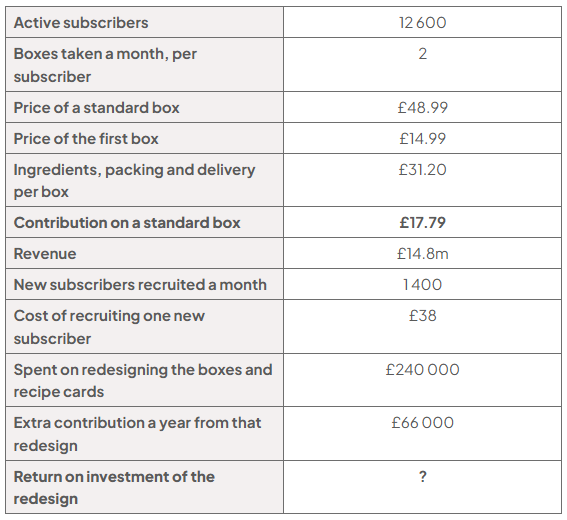
A subscriber chooses their meals on an app each week. The standard box costs £48.99 and the average subscriber takes two a month, which gives revenue of £14.8 million a year. Ingredients, packing and delivery cost £31.20 a box.

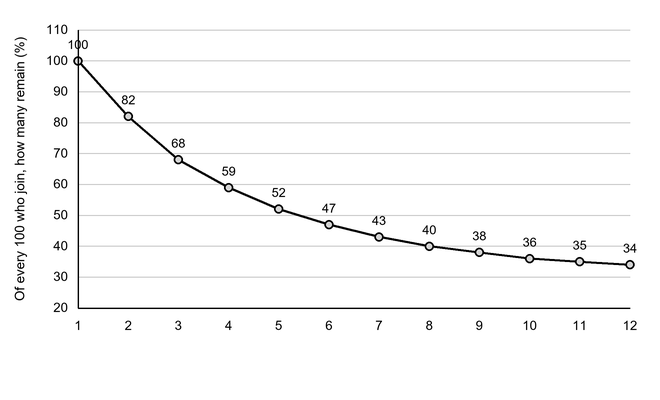
Getting people to try it is not the problem. The first box costs £14.99, and the offer works: the company recruits about 1 400 new subscribers a month. Keeping them is a different matter. Appendix B shows what happens to every hundred people who join. By the fourth box, the third charged at the full £48.99, 41 of them have gone.

The company knows a great deal about all of this. The app records what each subscriber cooks, what they skip, when they pause and what they were looking at before they cancelled. Dan Ferreira wants to use it to work out who is about to leave so the company can offer them something. Aisha Nkemelu wants to use it to suggest what they might cook next, on the grounds that people who enjoy the food do not cancel.

There is a third thing neither of them has raised at a board meeting. Starting a subscription takes about two minutes on the app. Cancelling one requires a telephone call, on weekdays between nine and five.

Appendix A: Nine Acres Kitchen Ltd, last year

Appendix A table: 12,600 active subscribers, 2 boxes monthly; first/standard prices £14.99/£48.99; costs £31.20 and contribution £17.79 per box; revenue £14.8m; 1,400 new subscribers monthly at £38 each; £240,000 redesign for £66,000 extra annual contribution; ROI unknown.

Source: Analyst

Appendix B: Nine Acres Kitchen Ltd, what happens to every 100 subscribers who join

Line chart of subscriber retention across boxes: of every 100 who join, 100 remain after box 1, falling to 59 after box 4 and 34 after box 12. The horizontal axis shows boxes 1–12; vertical axis shows percentage remaining.

Source: Analyst

Assess whether Nine Acres Kitchen Ltd should reduce the gap between its £14.99 first-box price and the £48.99 it charges for every box after it.

1
15 marks

Source B: Center Parcs

Center Parcs runs five holiday villages in the United Kingdom: Sherwood Forest in Nottinghamshire, Elveden Forest in Suffolk, Longleat Forest in Wiltshire, Whinfell Forest in Cumbria and Woburn Forest in Bedfordshire. Woburn Forest, which opened in 2014, is the newest. Guests stay in lodges set in woodland and pay separately for activities, restaurants and the spa.

It is a private limited company, so it has no shares traded on any exchange and no share price. During the 53 weeks to 24 April 2025 it paid dividends of £115.5 million to its owner.

The business is close to full. Occupancy for the year was 97.3%, up from 96.8%, and Appendix E shows that it is not full only in summer: in every month of the year the villages run at or above 93%. Revenue rose 4.7% to £649.8 million and adjusted EBITDA rose to £283.8 million from £277.3 million.

The number that stands still is the price. The net average daily rate was £243.10, against £243.17 the year before. Across a year in which costs rose, Center Parcs took seven pence a night less than it had the year before.

That leaves the company in an unusual position. It cannot sell many more nights, because it has almost no empty ones. It has not raised its daily rate for two years. Growth has therefore had to come from somewhere other than filling lodges or charging more for them, and the directors must decide where the next stage of growth is going to come from. Building a sixth village would take years and a great deal of money. Raising the price would work immediately, if guests accepted it.

Source: information sourced from the Center Parcs (Holdings 1) Limited annual report and financial statements for the 53 weeks ended 24 April 2025, which cover the five UK villages only

Appendix D: Center Parcs selected results

Center Parcs selected results for years to April 2024/2025: revenue £620.8m/£649.8m; adjusted EBITDA £277.3m/£283.8m; EBITDA margin 44.7%/?; occupancy 96.8%/97.3%; daily rate £243.17/£243.10; dividends £103.4m/£115.5m; villages 5/5.

Source: Center Parcs

Appendix E: Center Parcs occupancy by month, analyst estimates

Line chart of monthly Center Parcs occupancy, showing 93% in Jan, 99% Feb, 96% Mar, 99% Apr, 96% May, 97% Jun, 99% Jul, 100% Aug, 97% Sep, 99% Oct, 95% Nov and 98% Dec.
  • Average occupancy across the year: 97.3%

Source: Analyst

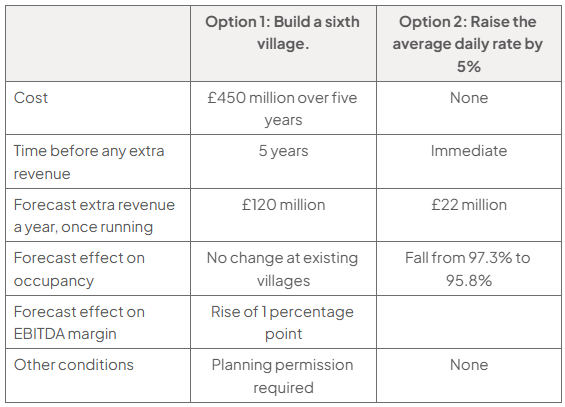
Appendix F: Data for two ways of growing

Growth-options table: sixth village versus 5% rate rise. Sixth: £450m, five-year wait, £120m annual revenue, unchanged occupancy, EBITDA margin +1 point, planning permission; rate rise: free, immediate, £22m annual revenue, occupancy 97.3% to 95.8%, no conditions.

Source: Analyst

Appendix F shows two ways in which Center Parcs could grow.

Evaluate both options and recommend which one would be the better way for Center Parcs to grow.

2
15 marks

Source A: Dr. Martens plc

Dr. Martens plc designs and sells boots, shoes and accessories. The footwear is what the brand is known for, but it also sells bags, belts, socks and shoe care products alongside it. It is a public limited company listed in London, and it sells in more than 60 countries through its own shops, its own website and wholesale customers such as department stores and independent retailers.

Almost everything the brand is worth rests on two ideas. The first is where it comes from: the company began in Northamptonshire and still makes its Made in England range at the Cobbs Lane factory in Wollaston. The great majority of its boots are not made there. They are made in Asia, and the Made in England range costs a good deal more than the standard one. The second idea is that the boots last. Customers are told they are buying something they will still be wearing in ten years, and that promise is why many of them accept the price.

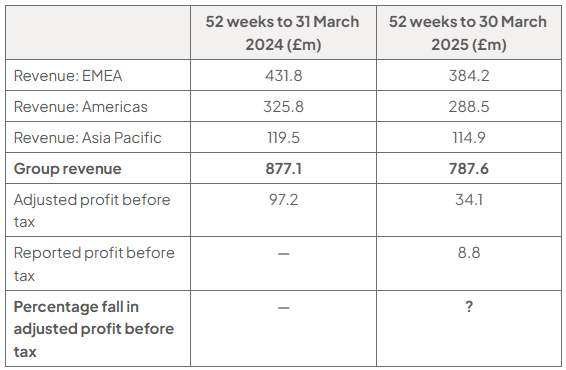
The year to 30 March 2025 was the second difficult one in a row. Revenue fell 10.2% to £787.6 million, from £877.1 million. At constant exchange rates, which strips out the effect of the pound moving against other currencies, the fall was 8.2%. It was not the same everywhere: revenue fell 11.0% in EMEA, 11.4% in the Americas and 3.8% in Asia Pacific, and on a constant currency basis Asia Pacific actually rose 0.6%, helped by Japan and China.

Nor was it the same in every channel. Selling direct to the customer, through Dr. Martens plc's own 239 shops and its website, was down 4%. Selling wholesale, to other retailers, was down 19.5%.

Profit fell much further than revenue. Adjusted profit before tax was £34.1 million against £97.2 million the year before. Reported profit before tax was £8.8 million.

The company spent the year fixing what it could control. It took £25 million a year out of its costs, cut its inventory by £67 million and reduced its net debt, excluding leases, by £83 million. It also says it has reset its marketing so that it talks about the product rather than the brand around it.

Source: information sourced from Dr. Martens plc preliminary results for the 52 weeks ended 30 March 2025

Appendix A: Dr. Martens plc selected results

Table comparing 52 weeks to 31 March 2024 and 30 March 2025 (£m): EMEA 431.8 to 384.2, Americas 325.8 to 288.5, Asia Pacific 119.5 to 114.9, group revenue 877.1 to 787.6, adjusted profit 97.2 to 34.1, reported profit 8.8; percentage fall is blank.

Source: Dr. Martens plc

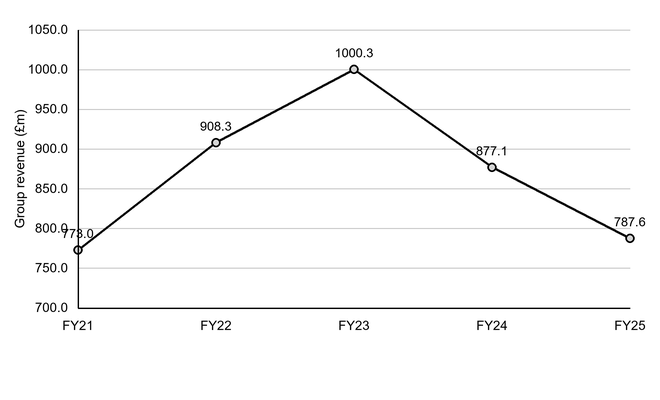
Appendix B: Dr. Martens plc group revenue, five years

Line chart of Dr. Martens group revenue by financial year, in £m, rising from 773.0 in FY21 to 1,000.3 in FY23 before falling to 877.1 in FY24 and 787.6 in FY25.

Source: Dr. Martens plc

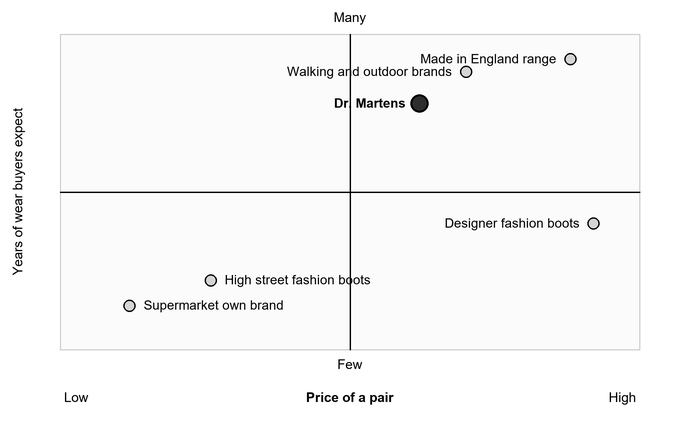
Appendix C: Where boot brands sit, analyst estimates

Scatter plot of boot brands by price and expected lifespan: supermarket own brand and high-street fashion boots are low price and few years; Dr Martens, Made in England and walking/outdoor brands are high and many; designer fashion boots are high price but few years.

Source: Analyst

Appendix B shows that Dr. Martens plc's revenue has fallen for two years running, from £1 000.3 million to £787.6 million.

Evaluate whether Dr. Martens plc should lower the price of its classic boot or hold its price and spend more on marketing the brand.

3
15 marks

Source A: Skylark Adventure Ltd

Skylark Adventure Ltd runs six indoor adventure parks, in converted warehouses on the edges of northern towns. Each one has climbing walls, trampolines, an obstacle course and a café. It is a private limited company owned by Ben Attah and Priya Shergill, who opened the first site in 2016, and it employs 148 people, most of them part time.

Almost all of the money comes from families. Last year 412 000 family visits brought in £4.86 million, an average of £11.80 a head once the café is counted. The rest, £1.34 million, came from schools and nurseries, who book weekday mornings a whole year ahead.

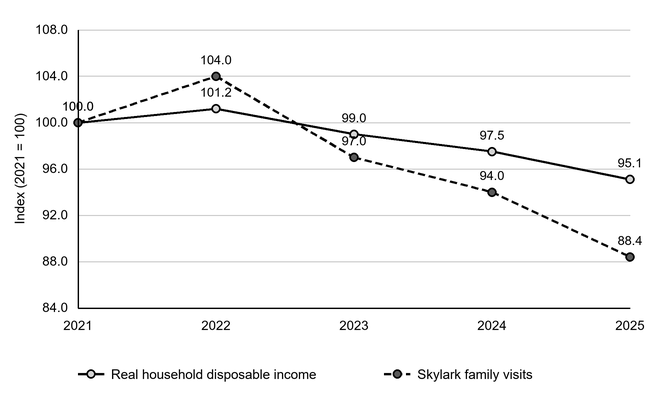
The two kinds of customer behave nothing like each other. A school booking is made in September for the following July and is almost never cancelled. A family visit is decided on a Saturday morning and is the first thing to go when money is tight. Appendix B shows what happened to family visits over five years as real household disposable income moved, and the two lines are hard to look at separately.

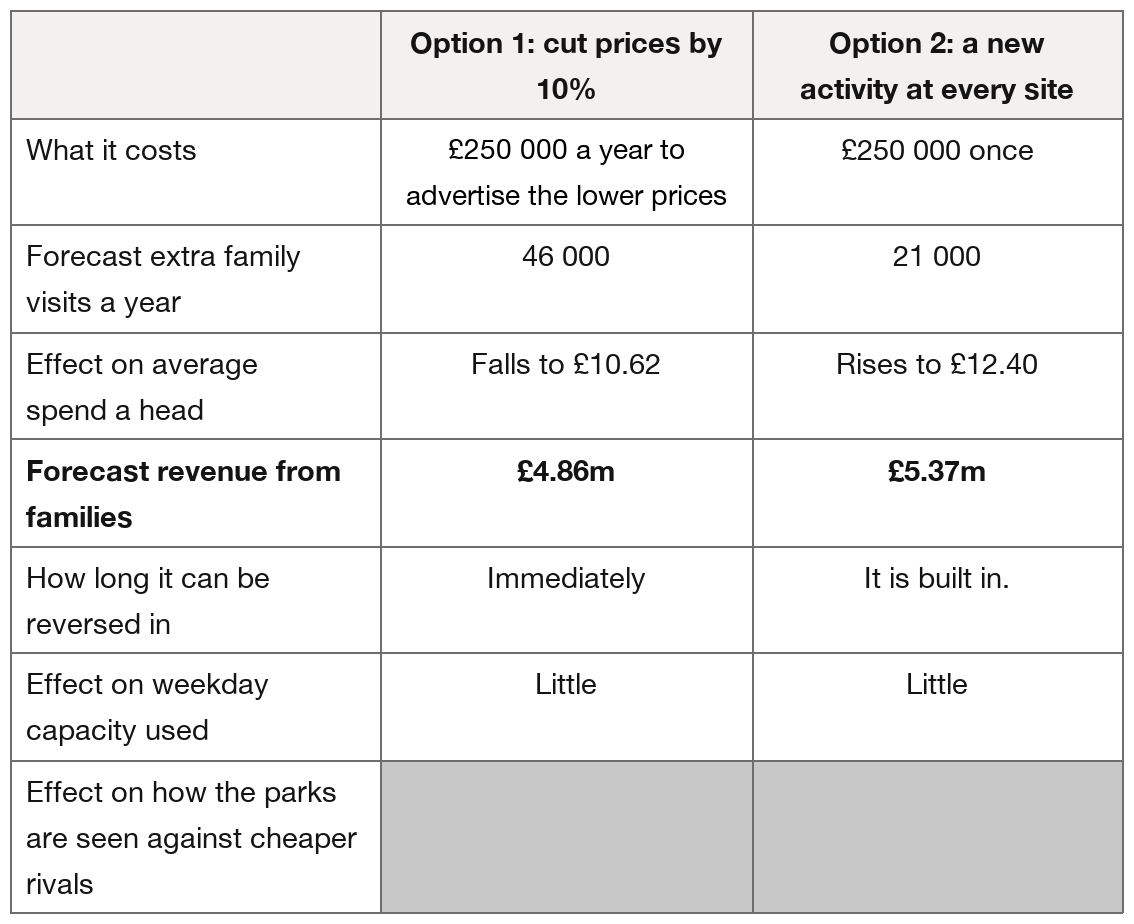
Ben Attah and Priya Shergill have £250 000 to spend across the six sites. They can lower prices, which they have never done, or they can put a new activity into every site and leave the price where it is. They are also arguing about something larger: whether a business that depends on families having spare money is one they should be trying to change.

Appendix A: Skylark Adventure Ltd, where the money comes from

Appendix A table, 2024/2025: family visits 438 000/412 000; family revenue £5.17m/£4.86m; spend £11.80 both; school/nursery children 96 000/103 000; revenue £1.25m/£1.34m; total revenue £6.42m/£6.20m; weekday capacity 34%/37%, weekend 88%/84%.

Source: Analyst

Appendix B: Skylark Adventure Ltd family visits and household income

Line chart of indexed real household disposable income and Skylark family visits, 2021 to 2025 (2021=100): income 100, 101.2, 99, 97.5, 95.1; visits 100, 104, 97, 94, 88.4.

Source: Analyst

Appendix C: Data for two ways of spending £250 000

Comparison table of two ways of spending £250 000: option 1, cut prices by 10%, or option 2, a new activity at every site. What it costs: £250 000 a year to advertise the lower prices against £250 000 once. Forecast extra family visits a year: 46 000 against 21 000. Effect on average spend a head: falls to £10.62 against rises to £12.40. Forecast revenue from families: £4.86m against £5.37m. How long it can be reversed in: immediately against it is built in. Effect on weekday capacity used: little for both. Effect on how the parks are seen against cheaper rivals: not provided for either option.

Source: Analyst

Appendix B shows how Skylark Adventure Ltd's family visits have moved with household income.

Evaluate whether Skylark Adventure Ltd should protect itself against falling household incomes by selling more to schools and nurseries or by making itself cheaper for families.