Source B: Primark
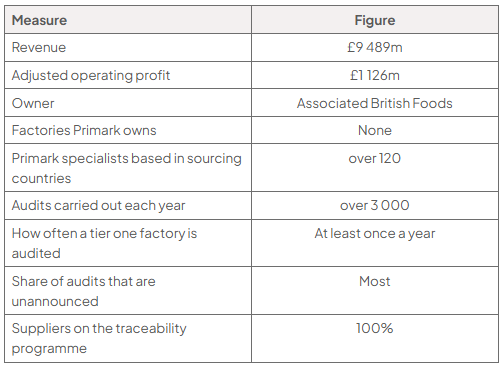
Primark sells clothing at prices far below most of the high street. It is owned by Associated British Foods, and in the 52 weeks to 13 September 2025 it had revenue of £9 489 million and an adjusted operating profit of £1 126 million.
Selling cheap clothing in very large quantities raises two questions that the company is asked constantly: who made it, and what it does to the planet.
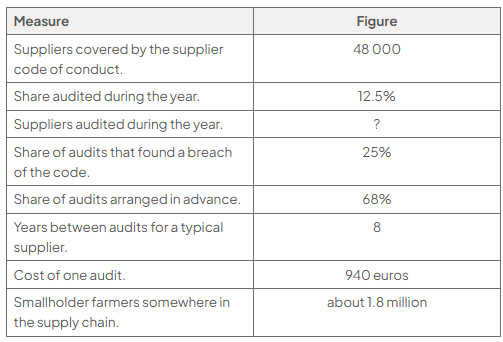
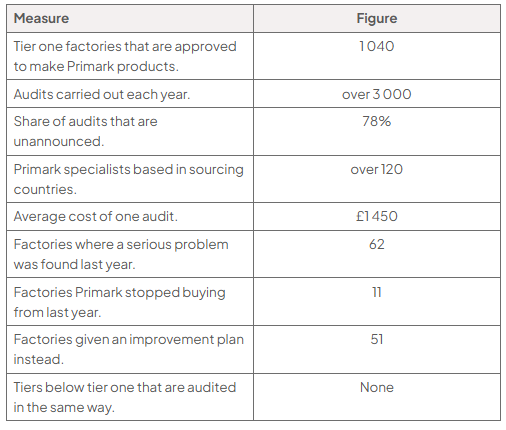
On the first, Primark does not own the factories that make its clothes. It buys from suppliers, mostly in Asia, and checks them. More than 120 of its own specialists are based in the main countries it buys from, and together with approved third-party auditors they carry out over 3 000 audits a year. Every tier one factory approved to make Primark products is audited at least once a year, and most audits are unannounced.
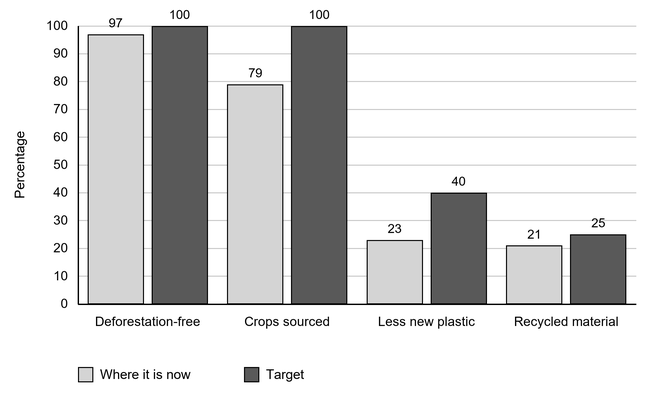
On the second, it has set out what it has changed. 74% of its clothing is now made with recycled or more sustainably sourced fibres, up from 66% in 2023. 57% of its clothing contains cotton that is organic, recycled or grown through the Primark Cotton Project, and over 90% of the farmers in that project have adopted at least two regenerative farming practices on at least 30% of their land. Every clothing, textile and footwear supplier is now on its traceability programme. Emissions across the whole value chain are down 5.7% against 2019, with the emissions Primark controls directly down 71% and those in its supply chain down 4%.
That last pair of figures is the difficulty in one line. The part Primark can change itself has almost gone. The part it cannot has barely moved.
Source: Associated British Foods annual results 2025 and Primark Sustainability and Ethics Progress Report
Appendix G: How Primark checks the factories that make its clothes
Source: Analyst
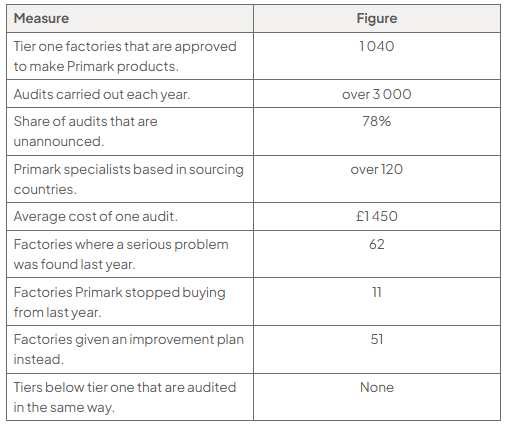
Analyse one way in which making most of its factory audits unannounced might affect what Primark finds.
Was this exam question helpful?