Strategic Investment Decisions (AQA A Level Business): Exam Questions

Exam code: 7132

Syllabus Edition

First teaching 2026

First exams 2028

2 hours16 questions
1
6 marks

Source A: JCB

J.C. Bamford Excavators Limited, known as JCB, makes construction and agricultural machinery, including backhoe loaders, excavators and telescopic handlers. It was founded in 1945 by Joseph Cyril Bamford and is still owned by the Bamford family. Its headquarters are at Rocester, Staffordshire, and it employs more than 20 000 people in 23 factories around the world. It sells its machines through independent dealers. Its competitors include Caterpillar and Komatsu, both of which are larger.

In 2025 JCB's turnover was £5.7 billion, compared with £5.8 billion in 2024, and its profit before tax fell from £687 million to £642 million. It sold 113 498 machines, about 5% fewer than in 2024, although it increased its share of the global market. Demand for machinery was flat in North America and fell by 12% in India. The company has no net borrowing, and it expects moderate growth in 2026.

Demand for construction machinery depends on the amount of building taking place, which tends to fall when interest rates are high. Many machines in the UK are bought by plant hire companies, which buy in large numbers and rent the machines to builders.

JCB is investing £100 million at its Staffordshire headquarters, including £60 million in a fully automated paint plant, which it says will help to secure more than 8 000 UK jobs.

In April 2025 the United States introduced tariffs on imports, including a tariff of 10% on most goods from the UK. JCB responded by doubling the size of the factory it was building in San Antonio, Texas, which will be its largest in the world. It said that in the short term the tariffs would have a significant impact on its business, but that in the medium term the Texas factory would help to reduce that impact.

Over three years JCB spent £100 million, and employed more than 150 engineers, developing an engine which burns hydrogen instead of diesel. In January 2025 the engine was approved for use in Great Britain, Northern Ireland and nine other European countries. JCB also makes machines powered by batteries.

Source: JCB and press reports

JCB is investing £60 million in a fully automated paint plant at its Staffordshire headquarters. In 2025 it sold about 5% fewer machines than in 2024.

Analyse one way in which investing in the automated paint plant might affect JCB's costs.

2
6 marks

Source A: AstraZeneca

AstraZeneca plc is a global pharmaceutical company with its headquarters in Cambridge, UK. Its medicines treat cancer, heart, kidney and metabolic disease, respiratory disease and rare diseases. It had 16 "blockbuster" medicines, each with annual sales of more than $1 billion, in 2025. It is one of the largest companies in the FTSE 100, and since 2 February 2026 its shares have also traded on the New York Stock Exchange. It remains listed and headquartered in the UK.

In 2025 total revenue rose by 9% to $58.7 billion, with growth in every major region. AstraZeneca has set itself the ambition of reaching $80 billion of total revenue in 2030.

In July 2025 AstraZeneca announced plans to invest $50 billion in the United States by 2030, including a manufacturing plant in Virginia. In October 2025 it agreed with the US government to offer US patients lower prices, in return for three years' exemption from US tariffs on pharmaceuticals. In the UK, it dropped a planned £450 million vaccine plant at Speke, Merseyside, in 2025, and in September 2025 paused a £200 million expansion of its research centre in Cambridge.

Developing a new medicine takes many years, and most candidates fail in clinical trials. AstraZeneca also buys and licenses medicines discovered by other companies.

Source: AstraZeneca plc, results for the full year 2025 and the first half of 2026

In July 2025 AstraZeneca announced plans to invest $50 billion in the United States by 2030, including a manufacturing plant in Virginia.

Analyse one way in which building a manufacturing plant in the United States might affect AstraZeneca's costs.

3
6 marks

Source B: Pukka Pads

Pukka Pads is a stationery business based in Poole, Dorset, owned and controlled by Chris Stott. It sells notebooks, pads, files, packaging and party products to retailers, to other businesses and online. It makes products in its UK factories and buys others from suppliers in China and the Far East, paying them in US dollars. It has companies in the United States, Hong Kong, China and the Netherlands.

In the year to 30 September 2025:

  • turnover fell by 10% to £21.8 million, "primarily as a result of moving away from very low margin product sales in the UK business"

  • gross profit rose, and operating profit rose to £652 055

  • inventory was reduced by £1.57 million

  • the average number of employees fell from 84 to 71

The company faces two main pressures:

  • Currency. No contracts to fix the exchange rate were in place at 30 September 2025, though some were taken out shortly afterwards. Administrative expenses included an exchange loss of £68 483 in 2025, against an exchange gain of £413 141 in 2024.

  • Trade. Since April 2025 the United States has charged a tariff of 10% on most goods imported from the UK, and higher tariffs on many goods from China.

For 2026, Pukka Pads says that "new machines have been acquired to improve manufacturing processes, reduce waste and headcount". In 2024-25, £367 080 of new machinery was financed through hire purchase. It also says that leaving one of its UK warehouses by 30 June 2026 will save more than £700 000 a year.

Source: Pukka Pads UK Limited, group accounts for the year ended 30 September 2025

Pukka Pads says that "new machines have been acquired to improve manufacturing processes, reduce waste and headcount".

Analyse one way in which this investment might affect Pukka Pads' unit costs.

4
6 marks

Source B: Culverton Biotech

Culverton Biotech Limited was founded in 2017 by two scientists from the University of Oxford and is based at a science park near Abingdon, Oxfordshire. It has 46 employees. It is developing one medicine, CLV-201, for a rare inherited liver disease that affects about 1 in 25 000 people and for which there is no approved treatment in the UK.

Culverton Biotech's mission is "to turn rare-disease science into medicines that patients can actually get". Its objective is to have CLV-201 approved in the UK by 2029.

In 2025 CLV-201 completed a Phase II clinical trial. To be approved, it must now pass a larger Phase III trial, expected to cost £45 million over three years. The company has no revenue: it is funded by venture capital investors, who own most of its shares, and by research grants. It made a loss of £19.6 million in the year to 30 June 2026.

Two large pharmaceutical companies have approached Culverton Biotech about licensing CLV-201.

Source: Culverton Biotech

Culverton Biotech has no revenue and made a loss of £19.6 million in the year to 30 June 2026. Its Phase III trial is expected to cost £45 million over three years.

Analyse one reason why investors might be willing to fund the Phase III trial even though Culverton Biotech makes losses.

5
6 marks

Source B: Ravenshall Engineering

Ravenshall Engineering Limited is a private limited company, founded in Burnley, Lancashire, in 1978. It makes aluminium body frames, floors and battery housings for buses and coaches, which bus makers use to build complete vehicles. It employs 240 people. Its customers are:

  • three UK bus makers

  • five bus and coach makers in Poland, the Netherlands and Spain, whom it invoices in euros

Its products can be sold to EU customers without tariffs if they meet the rules of origin in the UK-EU trade agreement, but every shipment needs a customs declaration and delivery takes four days.

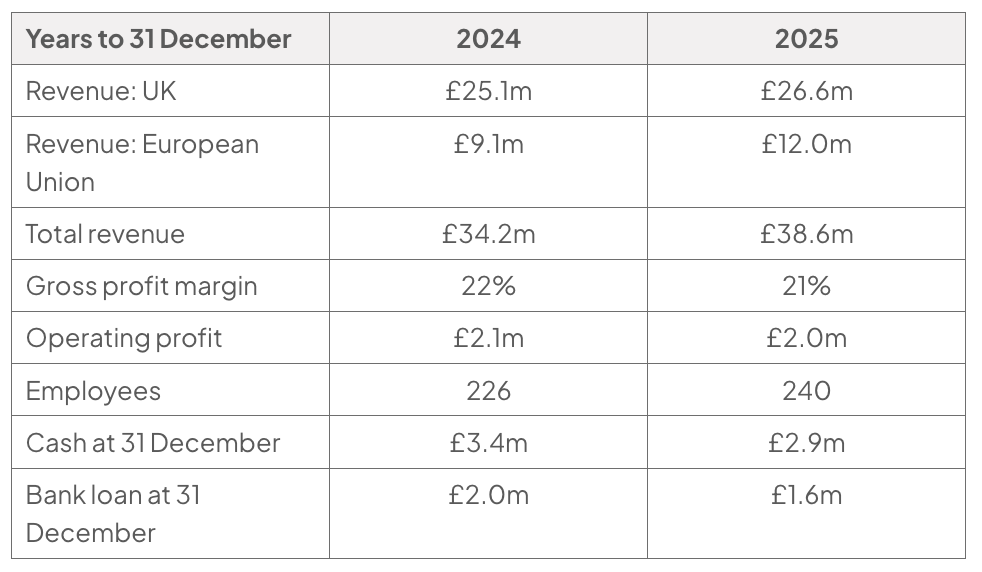
In 2025 revenue rose to £38.6 million, helped by growing exports to the European Union. The gross profit margin was 21%, compared with 22% in 2024.

The company faces three main pressures:

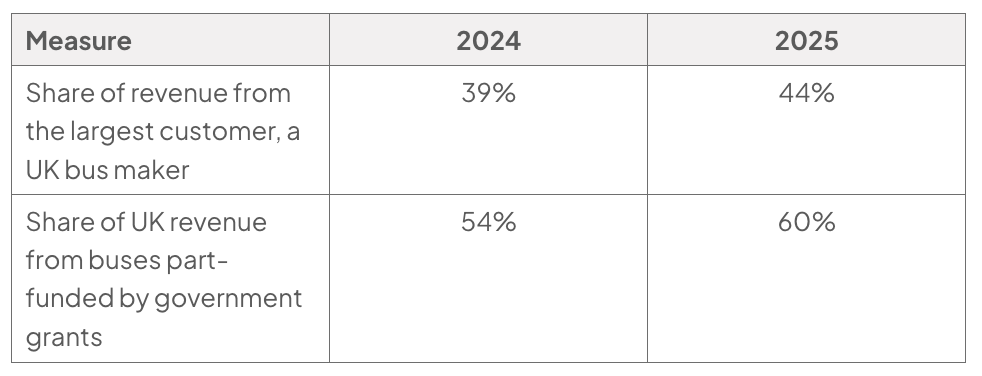
  • One large customer. 44% of its sales go to one UK bus maker, up from 39% in 2024. That customer has reduced its workforce and sites in the last two years.

  • Government grants. Most of its UK customers' orders are for buses bought with the help of government grants, which do not require buses to be built in the UK.

  • Chinese competition. Chinese bus makers such as Yutong ship complete buses to the UK, built with their own frames and battery housings.

Ravenshall's board is considering two investments:

  • An automated welding line in Burnley. It would reduce labour costs and rework, with 30 fewer welding jobs and 6 new technician roles.

  • A new factory in Poland, close to its EU customers.

Source: Ravenshall Engineering

Ravenshall Engineering is considering investing in an automated welding line at its factory in Burnley.

Analyse one factor, other than cost, that might influence Ravenshall Engineering's decision to invest in automation.

6
6 marks

Source A: Glastonbury Festival

Glastonbury Festival Events Limited organises the Glastonbury Festival of Contemporary and Performing Arts at Worthy Farm, a working dairy farm in Pilton, Somerset, where the festival has been held since 1970. The company is owned by Emily Eavis, who replaced her father, the festival's founder Michael Eavis, as the person with significant control in October 2024. Both are directors. The company employs an average of 105 people.

The company's objective is "to host an event that joyfully celebrates music and culture". It aims to keep ticket prices "as low as possible" so that the festival remains accessible, and it supports charities including Oxfam, Greenpeace and WaterAid.

The festival's licence allows up to 210 000 people on site. Tickets are sold online under three rules:

  • Registration. Everyone aged 13 or over must register before buying a ticket.

  • Photo tickets. Each ticket carries the holder's photo and cannot be transferred.

  • One ticket agent. Tickets are sold only through See Tickets and are "not available for sale on any secondary sales sites".

Every five or six years the festival takes a fallow year, with no festival, so that the farmland can recover. 2026 is a fallow year, and the company expects "a significant cost". Tickets for the 2027 festival went on sale in October 2026.

The company finances its operations through retained profits and paid no dividends. It describes its main risk as cancellation because of "extremely bad weather or a global pandemic". In the year to March 2025 it spent £3.5 million buying land to "protect the future of the Festival".

Source: Glastonbury Festival Events Limited, annual report and financial statements for the year ended 31 March 2025, and press reports

In the year to March 2025 Glastonbury Festival Events Limited spent £3.5 million buying land, which it said would help "protect the future of the Festival".

Analyse one reason why Glastonbury might choose to invest in buying land.

7
6 marks

Source B: Woolmere Data Services

Woolmere Data Services Limited was founded in Sheffield in 2009. It analyses customer data for retailers and leisure businesses, helping them understand what their customers buy and why. It employs 160 people, most of whom are either consultants, who analyse data and advise clients, or software engineers. It stores its clients' data on its own computer servers in Sheffield.

For most of its history Woolmere earned its revenue from consultancy projects, in which its analysts studied a client's data and presented their findings. In 2022 it launched Woolmere Insight, an online platform that clients pay for by annual subscription and use to run their own analysis. The number of subscription clients rose in 2025.

In 2025 Woolmere reorganised into teams built around the platform and announced the changes to staff by email. Consultants now spend part of their time supporting platform clients instead of leading projects.

Woolmere opened a small office in Dublin in 2024, and its revenue from clients in Ireland rose in 2025. Two of its UK clients, which also have stores in the United States, have asked whether Woolmere could support them there.

The company faces two main pressures:

  • Competition. Two large international software businesses sell platforms similar to Woolmere Insight.

  • Staff. Most of the employees who left in 2025 were consultants with more than five years' service.

Its board is considering where to expand outside the UK, whether to stop taking new consultancy projects, and whether to move its clients' data to a cloud computing provider.

Source: Woolmere Data Services

Woolmere Data Services is considering moving its clients' data from its own computer servers in Sheffield to a cloud computing provider.

Analyse one factor, other than cost, that might influence Woolmere Data Services' decision.

1
9 marks

Source B: Farmoor Cycles

Farmoor Cycles is an independent bicycle retailer in the UK. It was established in Oxford in 2002 as a worker cooperative by a group of cycling enthusiasts. It now has two other shops in Birmingham and Manchester. The UK bicycle retail sector has a few large national chains that sell bikes, such as Halfords, Decathlon and Argos, as well as many small independent businesses. The entry threat to the industry is high.

The mission of Farmoor Cycles is to:

  • provide affordable bicycles for cyclists of all kinds

  • promote the benefits of cycling for cyclists of all kinds

  • build a fairer society through cooperative ownership.

The business states that 'we have the passion, specialist expertise and links with the local community that customers want'.

It values:

  • democracy

  • honesty

  • openness

  • social responsibility

  • caring for others.

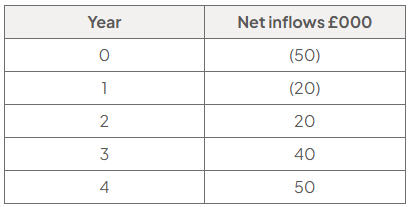
The business is considering investing in a new inventory management system (Appendix C) which has a forecast life span of 4 years. It usually aims for an average rate of return on its investments of at least 10%. The current rate of interest for taking out a bank loan is 8%.

Appendix C: Investment in a new inventory management system

Table of investment cash flows: net inflows in £000 are year 0, minus 50; year 1, minus 20; year 2, 20; year 3, 40; and year 4, 50.

Source: based on calculations of Farmoor Cycles' Operations Manager using data provided by the supplier of the equipment

Appendix D: Farmoor Cycles' data

  • Revenue: £1 904 000 in 2023, falling to £1 880 000 in 2024

  • Marketing spending as a percentage of revenue: 5% in 2023, 4% in 2024

  • Number of employees: 30 in 2023, 32 in 2024

  • Employee costs as a percentage of revenue: 25% in 2023, 27% in 2024

  • Operating profit margins: 3% in 2023, 2% in 2024

  • Cashflow: £125 000 in 2023, (£5 000) in 2024

  • Average spending per employee on training: £2 000 in 2023, £750 in 2024

  • Average time for customers to pay: 6 months in 2023 and 2024

  • Average payment time to suppliers: 4 weeks in 2023, 3 weeks in 2024

Assess whether Farmoor Cycles should invest in the new inventory system.

Calculate the average rate of return of investing in the inventory system to support your answer.

2
9 marks

Source B: Wrenbury Castings

Wrenbury Castings Limited makes iron castings at a foundry near Crewe, Cheshire. It was founded in 1921 and is owned by the Fairclough family; its Managing Director is Tom Fairclough. It employs 118 people. It melts scrap iron and steel in two electric induction furnaces and pours the metal into sand moulds to make castings weighing between 2 and 8 tonnes, such as counterweights for excavators, pump housings and parts for agricultural machinery. Its largest customer, a UK manufacturer of construction machinery, buys 41% of its output, and customers in the EU buy 18%.

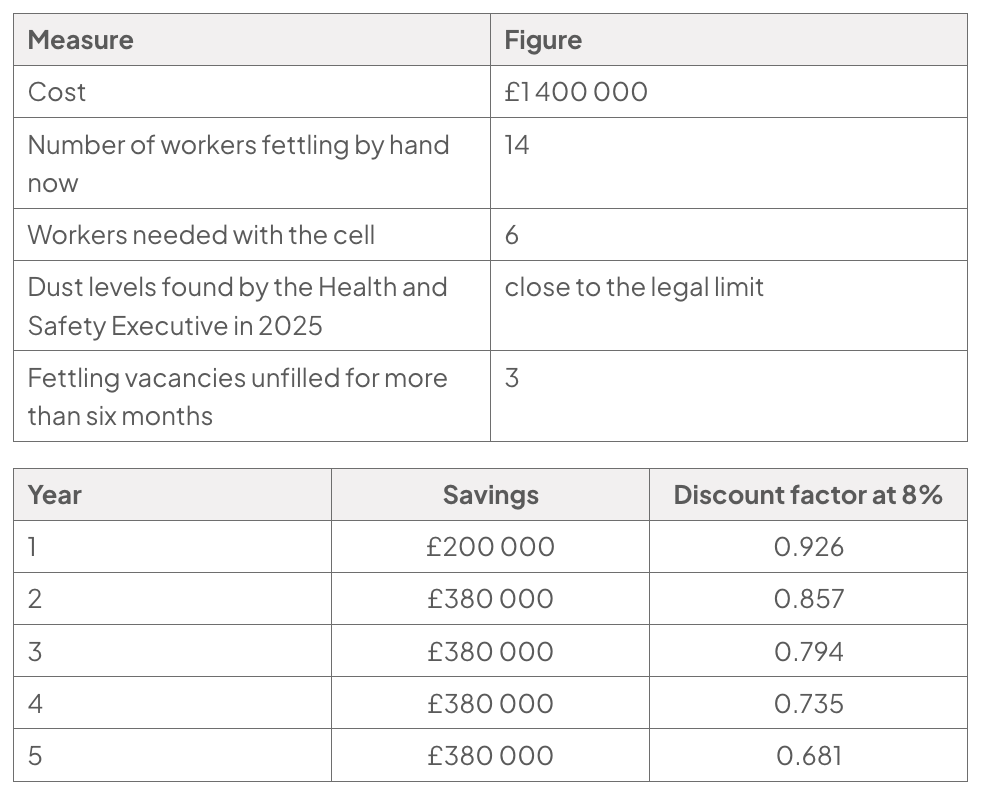
When the moulds are broken open and the castings are cleaned by grinding, a process called fettling, fine silica dust is released. The law sets a limit on the amount of this dust that workers may breathe, and the Health and Safety Executive inspects foundries to check that employers control it.

Electricity is the company's second-largest cost, after scrap metal. Wrenbury Castings competes with imported castings, many of them made in foundries which melt iron using coke, a process that emits more carbon dioxide.

Several changes in government policy affect the business:

  • The EU carbon border charge. From 2026, businesses in the EU which import iron and steel goods, including castings, must pay a charge for the carbon dioxide emitted in making them, unless a similar carbon price has already been paid. In May 2025 the UK and the EU agreed to work towards linking their carbon markets, which would remove the charge on UK goods.

  • The UK carbon border charge. From 1 January 2027 the UK will charge a similar levy on imports of iron and steel and some other goods.

  • Electricity costs. In June 2025 the government's Industrial Strategy promised to cut electricity costs by up to 25% from 2027 for manufacturers which use large amounts of electricity.

Wrenbury Castings has been offered the chance to buy Lyme Foundry, a smaller rival in Staffordshire whose owner is retiring. Its largest customer has asked it to supply 3 000 more tonnes of castings a year from 2028.

Source: Wrenbury Castings

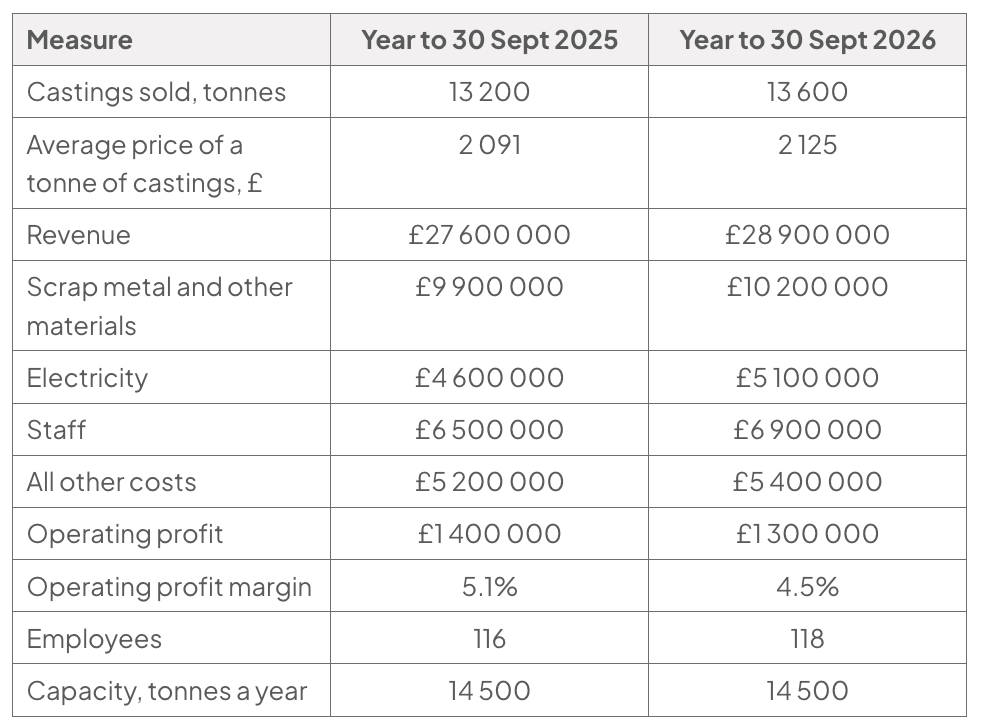
Appendix D: Wrenbury Castings selected data

Table comparing 2025 and 2026: sales rose from 13 200 to 13 600 tonnes and revenue from £27.6 million to £28.9 million, while operating profit fell from £1.4 million to £1.3 million and margin from 5.1% to 4.5%.

Source: Wrenbury Castings

Appendix G: A robotic fettling cell

Two tables provide the robotic fettling cell’s investment, staffing, dust and vacancy data, plus five years of projected savings and 8% discount factors for calculating net present value.

Source: Wrenbury Castings

Assess whether Wrenbury Castings should invest in the robotic fettling cell.

Calculate the net present value of the robotic fettling cell to support your answer.

3
9 marks

Source A: Premier Foods

Premier Foods plc is one of the UK's largest food manufacturers. Its brands include Ambrosia, Batchelors, Bisto, Loyd Grossman, Mr Kipling, Oxo and Sharwood's, and it makes Cadbury cakes under licence. It has bought three newer brands: The Spice Tailor, FUEL10K and, in 2025, Merchant Gourmet, for £46.1 million. It is listed on the London Stock Exchange.

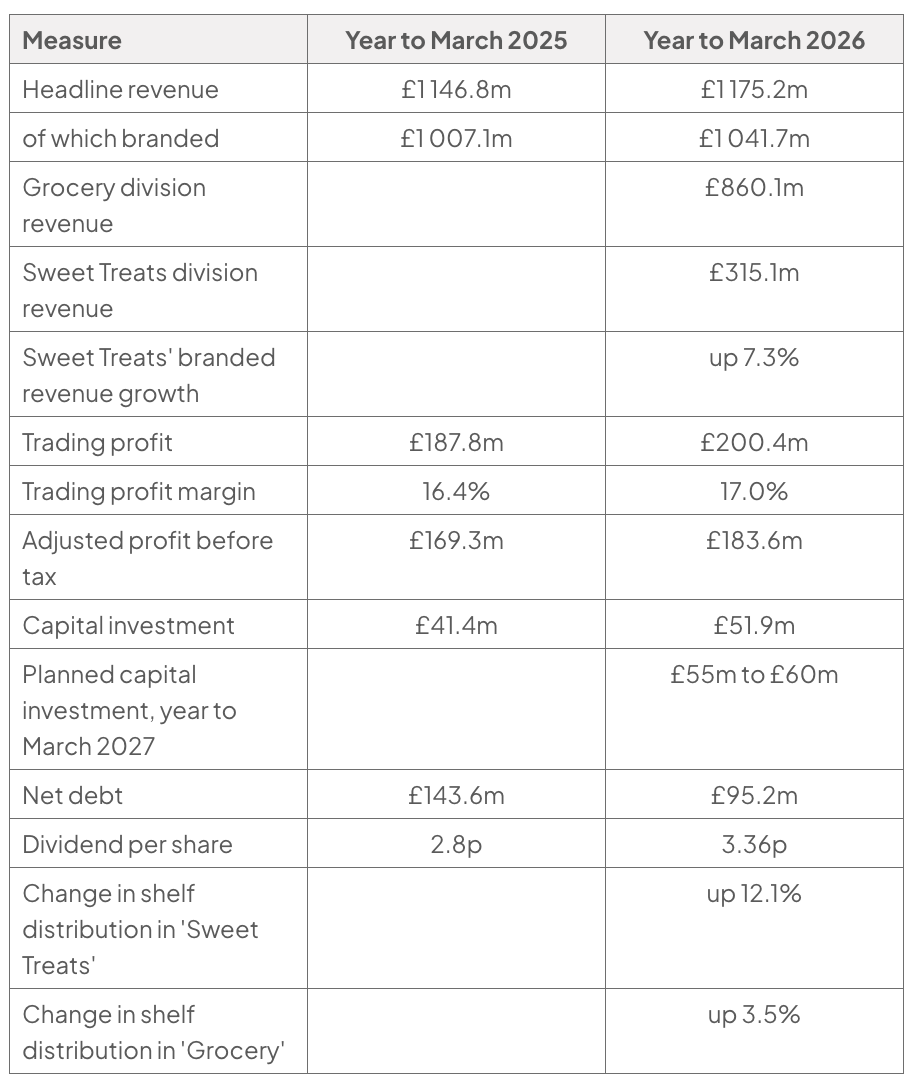
In the 52 weeks to 28 March 2026 Premier Foods' headline revenue rose by 2.5% to £1 175.2 million and its trading profit rose by 6.7% to £200.4 million. Sales of its branded products grew by 3.4%. Mr Kipling had its biggest ever year, helped by new products such as cake bites tubs, and the company gained market share in both of its divisions, Grocery and Sweet Treats.

The company's strategy has five pillars:

  • Grow the UK core through brand investment and new products.

  • Enter new categories, such as FUEL10K yogurt and granola pots.

  • Build international businesses in Australia and New Zealand, North America and Europe.

  • Acquire brands with strong growth potential.

  • Invest in its factories to increase efficiency and automation.

During the year capital investment rose by 25% to £51.9 million. It included a solar farm at its cake factory near Barnsley, which can supply up to 70% of the site's electricity, and an investment that made the pot filling and packing line at its Ambrosia site in Devon faster and more efficient.

Many of the company's products, including most cakes, are classed by law as less healthy because they are high in fat, sugar or salt. From 5 January 2026 such products may not be advertised on television or on-demand services between 5.30am and 9pm, or in paid-for online adverts at any time. Adverts which show a brand without showing a less healthy product are still allowed.

Source: Premier Foods plc, Full Year Results for the 52 weeks ending 28 March 2026

Appendix A: Premier Foods selected data

Table of Premier Foods’ selected data for the years to March 2025 and March 2026: headline revenue £1 146.8m and £1 175.2m, of which branded £1 007.1m and £1 041.7m; in 2026, Grocery division revenue £860.1m and Sweet Treats division revenue £315.1m, with Sweet Treats’ branded revenue up 7.3%; trading profit £187.8m and £200.4m; trading profit margin 16.4% and 17.0%; adjusted profit before tax £169.3m and £183.6m; capital investment £41.4m and £51.9m; planned capital investment for the year to March 2027 £55m to £60m; net debt £143.6m and £95.2m; dividend per share 2.8p and 3.36p; in 2026, shelf distribution up 12.1% in Sweet Treats and up 3.5% in Grocery.

Source: Premier Foods plc

Appendix B: Strategy and investment in the year to March 2026

  • UK core. UK branded revenue up 3.7%, and up 5.0% in the second half of the year. Market share gained in Grocery and Sweet Treats. Marketing uses television, radio, outdoor, digital and social media, "the latter to drive greater connection with younger demographic audiences".

  • New categories. Revenue up 37%, from a small base, led by FUEL10K yogurt and granola pots.

  • International. Revenue £50.4m, down 1.8%, because retailers in Australia reduced their inventories of cake; revenue up 17% in the US and 9% in Europe.

  • Acquisitions. The Spice Tailor, FUEL10K and Merchant Gourmet all grew revenue by more than 10%. Merchant Gourmet's annual revenue is about £30m.

  • Factories. Investment aimed at automation and efficiency. Planned for the year to March 2027: more cooking sauce capacity at Worksop, more flexible production lines at the Mr Kipling site near Barnsley, and upgrades to IT systems. The company says efficiency benefits from capital investment contributed to the growth in profit.

  • Finance. Net debt is 0.4 times adjusted EBITDA, low enough to fund further investment or acquisitions.

Source: Analyst, using Premier Foods plc

Assess whether increasing its capital investment is likely to improve Premier Foods' profit.

4
9 marks

Source A: AstraZeneca

AstraZeneca plc is a global pharmaceutical company with its headquarters in Cambridge, UK. Its medicines treat cancer, heart, kidney and metabolic disease, respiratory disease and rare diseases. It had 16 "blockbuster" medicines, each with annual sales of more than $1 billion, in 2025. It is one of the largest companies in the FTSE 100, and since 2 February 2026 its shares have also traded on the New York Stock Exchange. It remains listed and headquartered in the UK.

In 2025 total revenue rose by 9% to $58.7 billion, with growth in every major region. AstraZeneca has set itself the ambition of reaching $80 billion of total revenue in 2030.

In July 2025 AstraZeneca announced plans to invest $50 billion in the United States by 2030, including a manufacturing plant in Virginia. In October 2025 it agreed with the US government to offer US patients lower prices, in return for three years' exemption from US tariffs on pharmaceuticals. In the UK, it dropped a planned £450 million vaccine plant at Speke, Merseyside, in 2025, and in September 2025 paused a £200 million expansion of its research centre in Cambridge.

Developing a new medicine takes many years, and most candidates fail in clinical trials. AstraZeneca also buys and licenses medicines discovered by other companies.

Source: AstraZeneca plc, results for the full year 2025 and the first half of 2026

Appendix B: Markets, medicines and risks

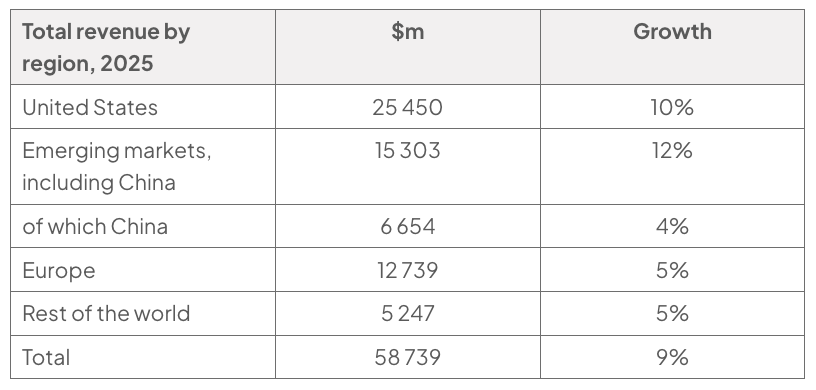
Table of AstraZeneca’s 2025 total revenue by region, in millions of dollars, with growth: United States 25 450, growth 10%; emerging markets including China 15 303, growth 12%; of which China 6 654, growth 4%; Europe 12 739, growth 5%; rest of the world 5 247, growth 5%; total 58 739, growth 9%.
  • Pipeline. More than 100 Phase III studies under way; more than 20 high-value trial results due in the 18 months from July 2026. Research and development is 24% of total revenue.

  • Setbacks, 2026. Several Phase III trials did not meet their main goal, including trials of Wainua in a heart condition and Imfinzi in liver cancer.

  • Loss of exclusivity. Farxiga, a diabetes and heart medicine, lost its US patent protection and now faces cheaper copies. Its sales fell 11% at constant exchange rates in the first half of 2026, when it was still 13% of product revenue.

  • China. Volume-based procurement, in which the government buys large volumes of medicines from the lowest bidders, continues to put pressure on prices.

  • Buying in. In 2025 AstraZeneca bought EsoBiotec for $403m, with up to $575m more if regulatory milestones are met. In July 2026 it licensed two medicines from Chinese companies: $600m upfront for Zegfrovy, with up to $900m more, and $200m upfront for TQC3721, with up to $1.9bn more.

Source: Analyst, using AstraZeneca plc

Appendix C: Investment, governments and listing

  • United States. $50bn by 2030 for manufacturing and research, including a plant in Virginia that is AstraZeneca's largest single manufacturing investment. It will use artificial intelligence, automation and data analytics, and make ingredients for weight-management and metabolic medicines. It is due to open in 2030.

  • US pricing agreement, October 2025. AstraZeneca will offer state Medicaid programmes prices no higher than in other developed countries, launch new medicines at those prices, and sell to patients directly with discounts of up to 80%. In return it is exempt from US tariffs on pharmaceuticals for three years.

  • China. $15bn of investment in manufacturing and research in China through 2030.

  • United Kingdom. The Speke vaccine plant was dropped after AstraZeneca said government support had been reduced; the Chief Executive said it "couldn't be made economically viable". The £200m Cambridge expansion, expected to create about 1 000 jobs, was paused in September 2025, while pharmaceutical companies were in dispute with the UK government over the prices the NHS pays for medicines.

  • Listing. Shares began trading on the New York Stock Exchange on 2 February 2026, alongside London and Stockholm, "enabling more shareholders to participate". AstraZeneca remains UK-listed, headquartered and tax resident.

Source: Analyst, using AstraZeneca plc and press reports

Assess whether investing $50 billion in the United States is likely to benefit AstraZeneca.

5
9 marks

Source B: Culverton Biotech

Culverton Biotech Limited was founded in 2017 by two scientists from the University of Oxford and is based at a science park near Abingdon, Oxfordshire. It has 46 employees. It is developing one medicine, CLV-201, for a rare inherited liver disease that affects about 1 in 25 000 people and for which there is no approved treatment in the UK.

Culverton Biotech's mission is "to turn rare-disease science into medicines that patients can actually get". Its objective is to have CLV-201 approved in the UK by 2029.

In 2025 CLV-201 completed a Phase II clinical trial. To be approved, it must now pass a larger Phase III trial, expected to cost £45 million over three years. The company has no revenue: it is funded by venture capital investors, who own most of its shares, and by research grants. It made a loss of £19.6 million in the year to 30 June 2026.

Two large pharmaceutical companies have approached Culverton Biotech about licensing CLV-201.

Source: Culverton Biotech

Appendix D: Culverton Biotech selected data

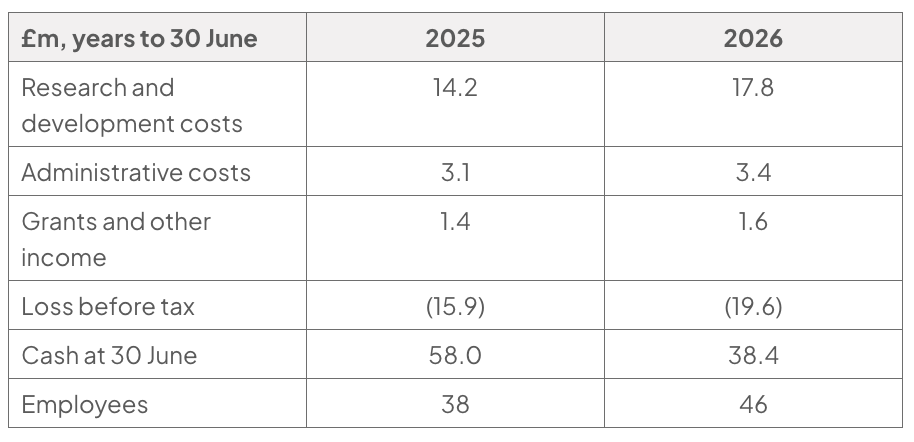
Table of Culverton Biotech’s 2025 and 2026 data (£m, years to 30 June): research and development and administrative costs, grants and income, loss before tax, cash at 30 June, and employee numbers.

In the year to 30 June 2026 the company raised no new funding, so its cash fell by the amount of its loss. The board expects spending to continue at the same rate until the Phase III trial begins.

Source: Culverton Biotech

Appendix E: Strengths, weaknesses, opportunities and threats

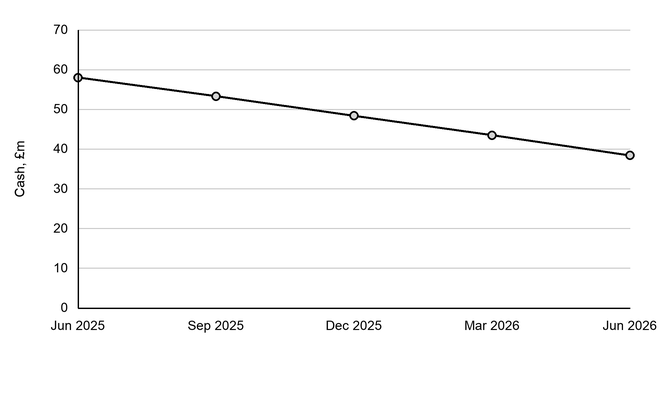
Line chart of Culverton Biotech’s cash, in £m, by quarter, falling steadily from £58.0m in June 2025 to £38.4m in June 2026. The vertical axis ranges from £0m to £70m.
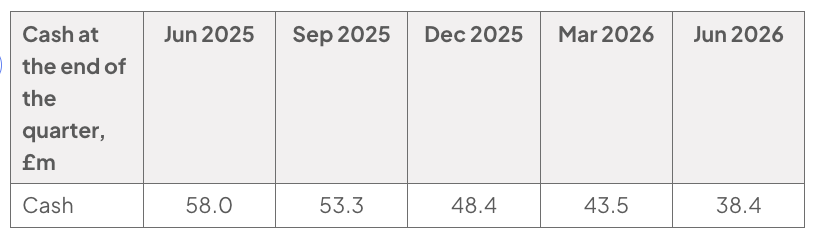
Table of cash at the end of each quarter, in £ millions: June 2025 58.0; September 53.3; December 48.4; March 2026 43.5; June 2026 38.4.
  • Phase II result. CLV-201 reduced the build-up of harmful bile acids by 58% compared with a placebo; there were no serious side effects.

  • Patent. Filed in 2018; patents last 20 years from filing.

  • Team. 31 of the 46 employees are scientists. The company has no sales force and no manufacturing.

  • Phase III. The board estimates a 55% chance that the Phase III trial succeeds.

  • Patients. About 2 700 people in the UK and about 13 500 in the United States have the disease.

  • Investors. The venture capital investors expect to sell their shares within five years.

Source: Culverton Biotech

Appendix F: Two investment decisions

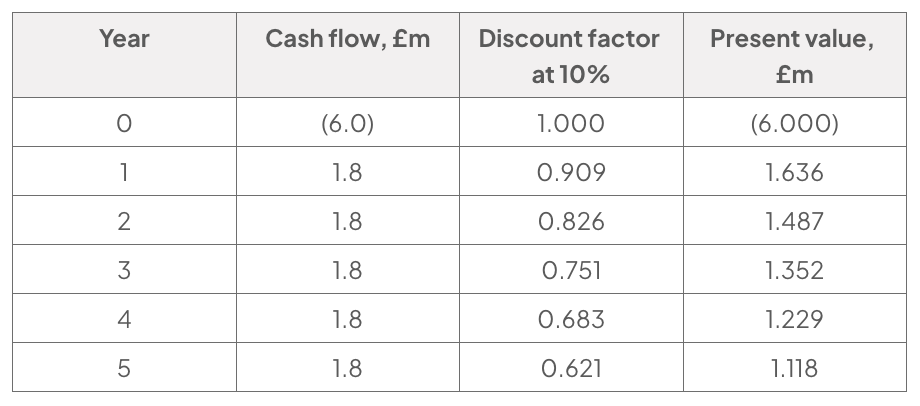
A manufacturing unit. Culverton Biotech could build its own unit to make CLV-201, rather than pay another company to make it. It would cost £6.0m in 2027. If CLV-201 is approved, the unit would save £1.8m a year for five years compared with buying in.

Table for a £6.0m investment: years 0–5; cash flows (£m) −6.0, then 1.8 annually; discount factors at 10% 1.000 to 0.621; present values (£m) −6.000, 1.636, 1.487, 1.352, 1.229, 1.118.

A licence. One of the two large pharmaceutical companies has offered £30m upfront, up to £120m more if CLV-201 reaches agreed milestones, and a royalty of 12% of sales. It would pay for and run the Phase III trial, and would sell CLV-201 outside the UK. Culverton Biotech would keep the UK rights.

Source: Culverton Biotech

Assess whether Culverton Biotech should build its own manufacturing unit for CLV-201.

Calculate the net present value of the manufacturing unit to support your answer.

6
9 marks

Source A: Alexander Dennis

Alexander Dennis Limited (ADL) is a private limited company, owned since 2019 by NFI Group, a Canadian bus and coach maker. It designs and builds single-deck and double-deck buses, including electric buses, and provides spare parts and servicing. It has factories in Scarborough and at Falkirk and Larbert in Scotland, and businesses in Hong Kong, New Zealand, Singapore, Malaysia, Germany and Mexico.

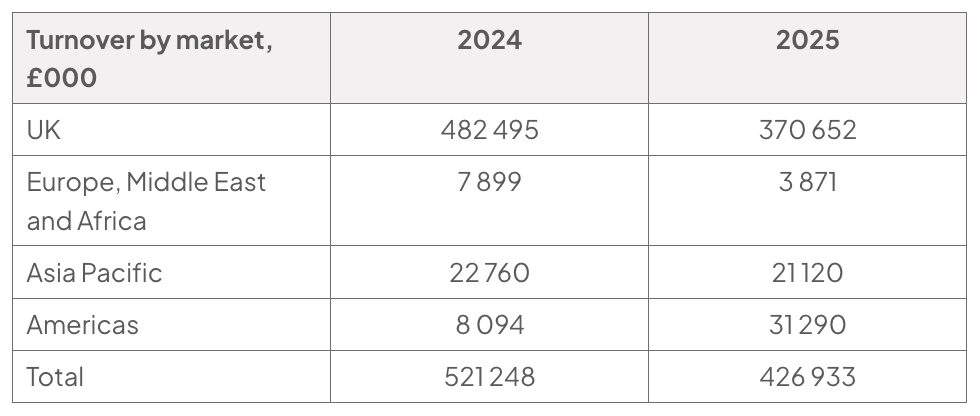
In 2025 ADL's turnover fell by 18.1% to £426.9 million, which it blamed on "increasing Chinese competition for zero-emission vehicles". By market:

  • UK: fell from £482.5 million to £370.7 million

  • Americas: rose from £8.1 million to £31.3 million; firm orders in North America run to 2028

Government grants help bus operators in England and Scotland buy zero-emission buses from any maker. ADL argues that UK rules for buying buses do not reward "local content, job retention and creation". In March 2026 it called the results of Scotland's latest grant scheme "extremely disappointing with the majority of the available funding going overseas".

ADL's Scottish factories have faced two proposals:

  • June 2025: close both, putting 400 jobs at risk, and move all bus-body building to Scarborough. In September 2025, after talks with the UK and Scottish governments and trade unions, ADL kept both.

  • March 2026: close Falkirk and turn Larbert into a site for building chassis, the frame and running gear under a bus body, with up to 115 jobs at risk, about 200 safeguarded and about 350 kept in Scotland. ADL keeps the option of bringing bus-body building back to Larbert if UK volume rises.

Source: Alexander Dennis Limited, annual report and financial statements for the year ended 28 December 2025, and press reports

Appendix A: Alexander Dennis financial data

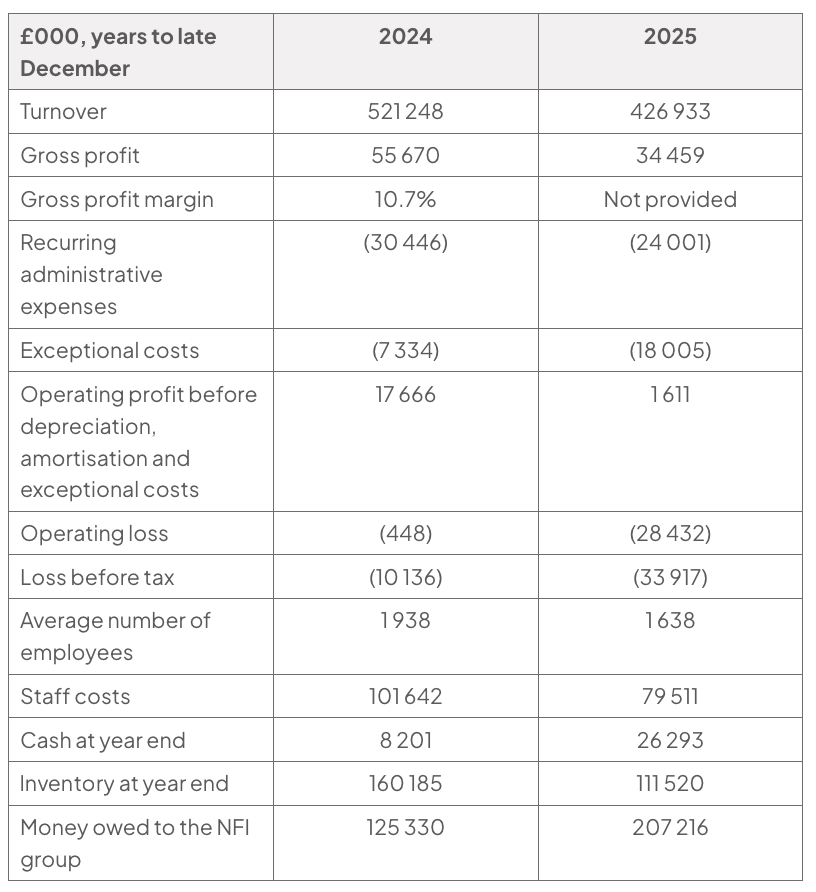
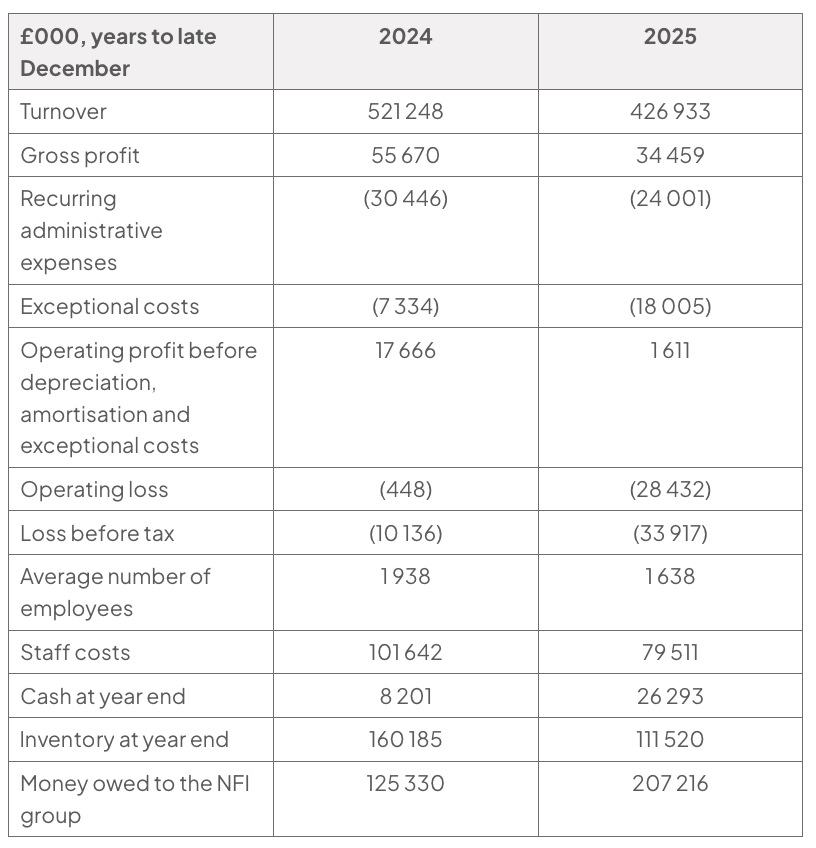
Table of ADL financial data (£000, years to late December): turnover falls from 521 248 in 2024 to 426 933 in 2025; gross profit falls from 55 670 to 34 459. The 2025 margin is not provided.
  • Exceptional costs in 2025: restructuring of UK manufacturing £9.0m; writing down the value of new products developed £7.4m; redundancy £1.6m; closing the Guildford site £0.1m.

  • New product development: £4.5m of development spending in 2025 was recorded as an asset.

Source: Alexander Dennis Limited

Appendix B: Markets and products

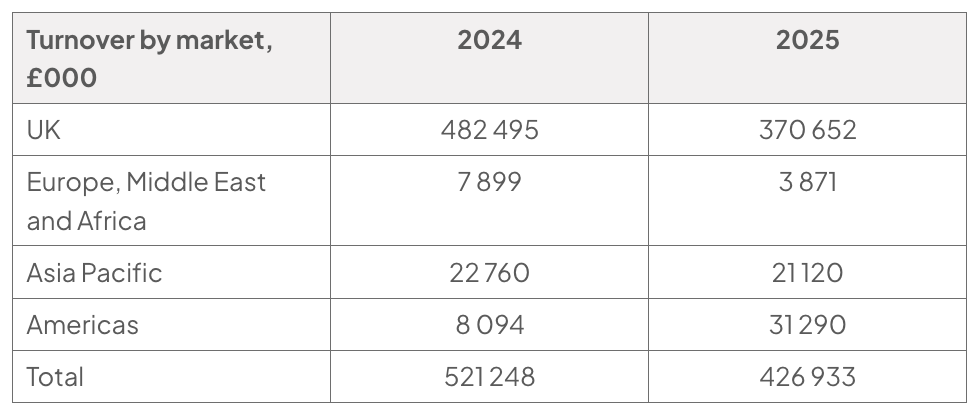
Table of turnover by market (£000), comparing 2024 with 2025: UK 482 495 to 370 652; Europe, Middle East and Africa 7 899 to 3 871; Asia Pacific 22 760 to 21 120; Americas 8 094 to 31 290; total 521 248 to 426 933.
  • North America. Firm orders run to 2028; a new electric bus for North America is expected in late 2027.

  • Electric buses. A new single-deck electric bus had its first sales in March 2026, joining ADL's electric double-deck and midi buses.

  • Scotland's grant scheme, March 2026. Of the vehicles funded in the third round of the Scottish Zero Emission Bus Challenge Fund, about 123 buses were ordered from ADL, while the Chinese maker Yutong won 166 vehicles, 107 of them coaches.

Source: Analyst, using Alexander Dennis Limited and press reports

Assess whether Alexander Dennis should continue to invest in developing new electric buses.

Calculate Alexander Dennis's gross profit margin in 2025 to support your answer. Give your answer to one decimal place.

1
15 marks

Source B: Pukka Pads

Pukka Pads is a stationery business based in Poole, Dorset, owned and controlled by Chris Stott. It sells notebooks, pads, files, packaging and party products to retailers, to other businesses and online. It makes products in its UK factories and buys others from suppliers in China and the Far East, paying them in US dollars. It has companies in the United States, Hong Kong, China and the Netherlands.

In the year to 30 September 2025:

  • turnover fell by 10% to £21.8 million, "primarily as a result of moving away from very low margin product sales in the UK business"

  • gross profit rose, and operating profit rose to £652 055

  • inventory was reduced by £1.57 million

  • the average number of employees fell from 84 to 71

The company faces two main pressures:

  • Currency. No contracts to fix the exchange rate were in place at 30 September 2025, though some were taken out shortly afterwards. Administrative expenses included an exchange loss of £68 483 in 2025, against an exchange gain of £413 141 in 2024.

  • Trade. Since April 2025 the United States has charged a tariff of 10% on most goods imported from the UK, and higher tariffs on many goods from China.

For 2026, Pukka Pads says that "new machines have been acquired to improve manufacturing processes, reduce waste and headcount". In 2024/25, £367 080 of new machinery was financed through hire purchase. It also says that leaving one of its UK warehouses by 30 June 2026 will save more than £700 000 a year.

Source: Pukka Pads UK Limited, group accounts for the year ended 30 September 2025

Appendix D: Pukka Pads financial data

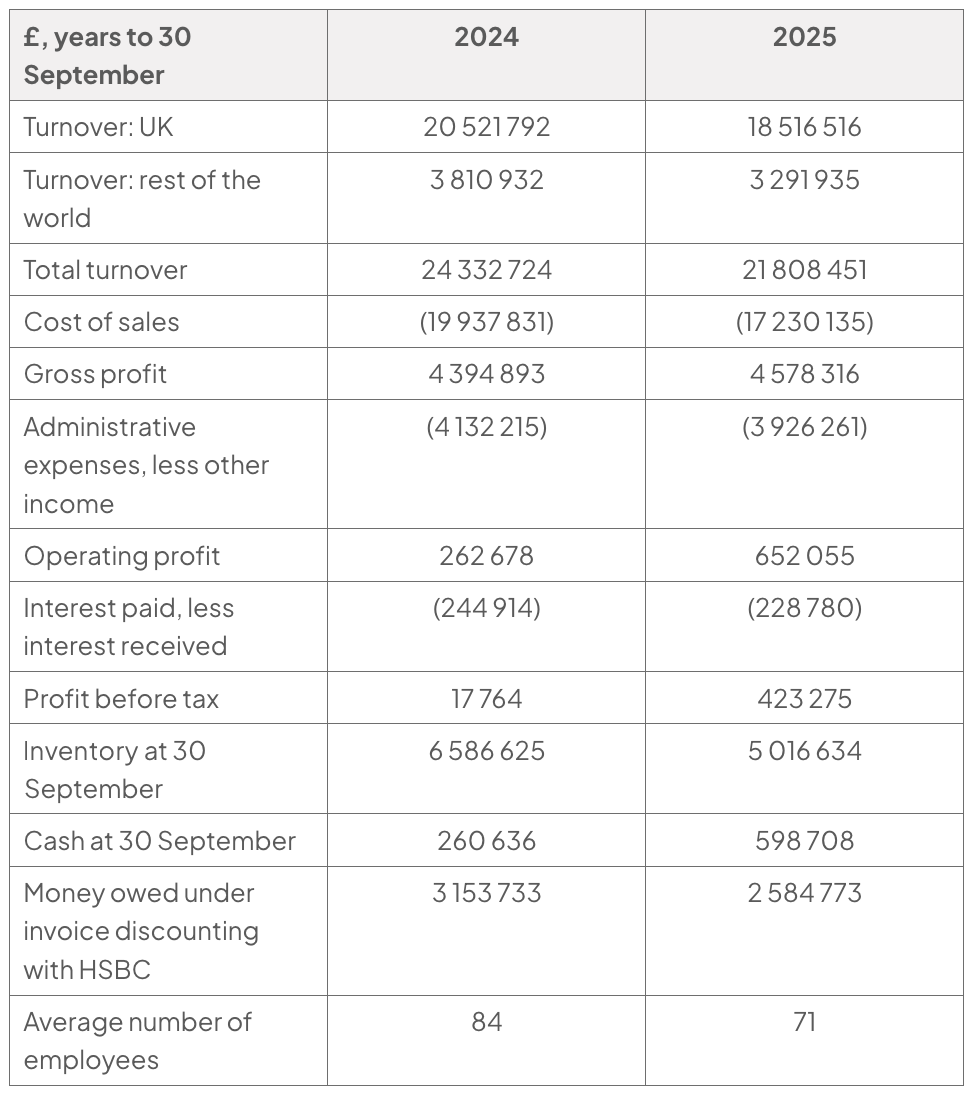
Table of Pukka Pads financial data in pounds for the years to 30 September 2024 and 2025: turnover in the UK 20 521 792 and 18 516 516; turnover in the rest of the world 3 810 932 and 3 291 935; total turnover 24 332 724 and 21 808 451; cost of sales (19 937 831) and (17 230 135); gross profit 4 394 893 and 4 578 316; administrative expenses, less other income (4 132 215) and (3 926 261); operating profit 262 678 and 652 055; interest paid, less interest received (244 914) and (228 780); profit before tax 17 764 and 423 275; inventory at 30 September 6 586 625 and 5 016 634; cash at 30 September 260 636 and 598 708; money owed under invoice discounting with HSBC 3 153 733 and 2 584 773; average number of employees 84 and 71.
  • Invoice discounting is a loan secured on money owed by customers; Pukka Pads pays 2.21 percentage points above Bank Rate.

  • Administrative expenses include an exchange loss of £68 483 in 2025 (2024: an exchange gain of £413 141).

Source: Pukka Pads UK Limited

Appendix E: Markets and group companies

  • Business. "The sale of stationery, packaging and party products worldwide with the primary market being the UK but with significant investment on-going in new territories such as the USA and the Far East."

  • Investment in 2024/25. In "e-commerce channels, more fashionable designs for pad and file products, more sustainable products in terms of recycling and reduction of waste at the factory", and more packaging and party products.

  • China. Pukka Pads Trading Co Ltd, in Ningbo, buys products and manages shipping from the Far East. A new company aims to sell in China's home market; its Chief Executive was given 20% of the shares in the Ningbo business, with the option of 5% more if performance targets are met.

  • Other countries. Pukka Pads USA Corp in the US, Pukka Pads (HK) Ltd in Hong Kong and Pukka Planet BV in the Netherlands.

  • Diversification. Pukka Power Ltd, set up to diversify into green energy, stopped trading after a review of the market; all its creditors were paid in full.

Source: Analyst, using Pukka Pads UK Limited

Appendix F: Risks, costs and the political environment

  • Currency. Purchases from the Far East are made in US dollars. No contracts to fix the exchange rate were in place at 30 September 2025, though some were taken out shortly afterwards; Pukka Pads had committed to buying 1.5 million US dollars.

  • Shipping. Attacks on ships in the Red Sea from late 2023 forced many container ships to sail around Africa, raising shipping costs and delays. Pukka Pads says the impact was "significantly reduced" in 2024/25 and that container costs are now significantly lower.

  • Trade. Since April 2025 the United States has charged a tariff of 10% on most goods imported from the UK, and higher tariffs on many goods from China.

  • Inventory. Pukka Pads holds high levels of inventory, which risks having too much; raw material and container costs are managed through price negotiations with suppliers and customers.

  • Energy. Solar panels on the UK factories and warehouse have reduced energy costs.

Source: Analyst, using Pukka Pads UK Limited and press reports

Appendix G: Investment and finance

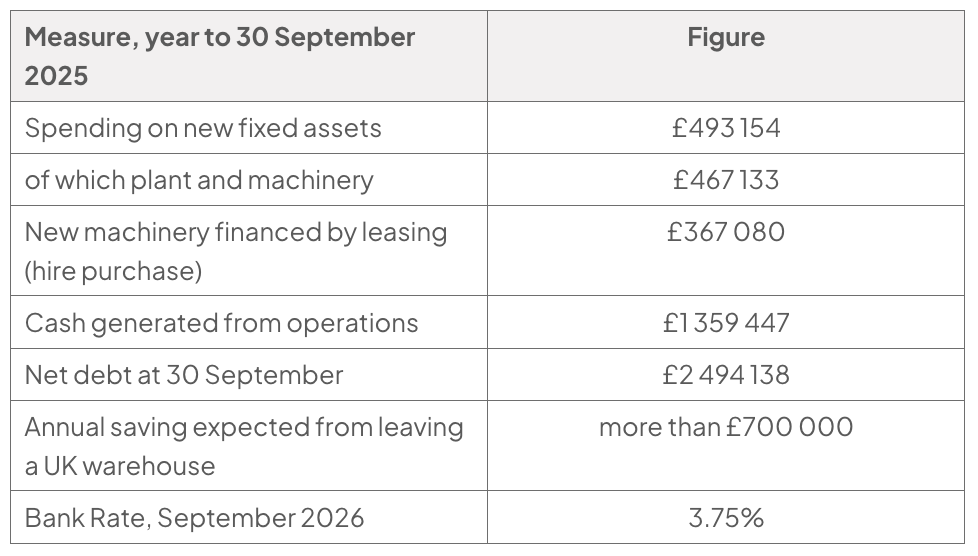
Financial data table for year to 30 September 2025: fixed assets £493 154, plant and machinery £467 133, leased machinery £367 080, operating cash £1 359 447, net debt £2 494 138, warehouse saving over £700 000, Bank Rate 3.75%.

Source: Pukka Pads UK Limited and the Bank of England

Leaving one of its UK warehouses will save Pukka Pads more than £700 000 a year.

Evaluate two ways Pukka Pads could use this saving and recommend which one it should choose.

Use information from Appendices D to G to support your answer.

2
15 marks

Source A: Alexander Dennis

Alexander Dennis Limited (ADL) is a private limited company, owned since 2019 by NFI Group, a Canadian bus and coach maker. It designs and builds single-deck and double-deck buses, including electric buses, and provides spare parts and servicing. It has factories in Scarborough and at Falkirk and Larbert in Scotland, and businesses in Hong Kong, New Zealand, Singapore, Malaysia, Germany and Mexico.

In 2025 ADL's turnover fell by 18.1% to £426.9 million, which it blamed on "increasing Chinese competition for zero-emission vehicles". By market:

  • UK: fell from £482.5 million to £370.7 million

  • Americas: rose from £8.1 million to £31.3 million; firm orders in North America run to 2028

Government grants help bus operators in England and Scotland buy zero-emission buses from any maker. ADL argues that UK rules for buying buses do not reward "local content, job retention and creation". In March 2026 it called the results of Scotland's latest grant scheme "extremely disappointing with the majority of the available funding going overseas".

ADL's Scottish factories have faced two proposals:

  • June 2025: close both, putting 400 jobs at risk, and move all bus-body building to Scarborough. In September 2025, after talks with the UK and Scottish governments and trade unions, ADL kept both.

  • March 2026: close Falkirk and turn Larbert into a site for building chassis, the frame and running gear under a bus body, with up to 115 jobs at risk, about 200 safeguarded and about 350 kept in Scotland. ADL keeps the option of bringing bus-body building back to Larbert if UK volume rises.

Source: Alexander Dennis Limited, annual report and financial statements for the year ended 28 December 2025, and press reports

Appendix A: Alexander Dennis financial data

Table comparing ADL financial data for 2024 and 2025 in £000: turnover fell from 521 248 to 426 933 and gross profit from 55 670 to 34 459; operating loss increased to 28 432 and employees fell to 1 638.
  • Exceptional costs in 2025: restructuring of UK manufacturing £9.0m; writing down the value of new products developed £7.4m; redundancy £1.6m; closing the Guildford site £0.1m.

  • New product development: £4.5m of development spending in 2025 was recorded as an asset.

Source: Alexander Dennis Limited

Appendix B: Markets and products

Table of ADL turnover by market in £000 for 2024 and 2025: UK and total turnover fell, while the Americas rose; Europe, Middle East and Africa and Asia Pacific also declined.
  • North America. Firm orders run to 2028; a new electric bus for North America is expected in late 2027.

  • Electric buses. A new single-deck electric bus had its first sales in March 2026, joining ADL's electric double-deck and midi buses.

  • Scotland's grant scheme, March 2026. Of the vehicles funded in the third round of the Scottish Zero Emission Bus Challenge Fund, about 123 buses were ordered from ADL, while the Chinese maker Yutong won 166 vehicles, 107 of them coaches.

Source: Analyst, using Alexander Dennis Limited and press reports

Appendix C: Restructuring and the parent company

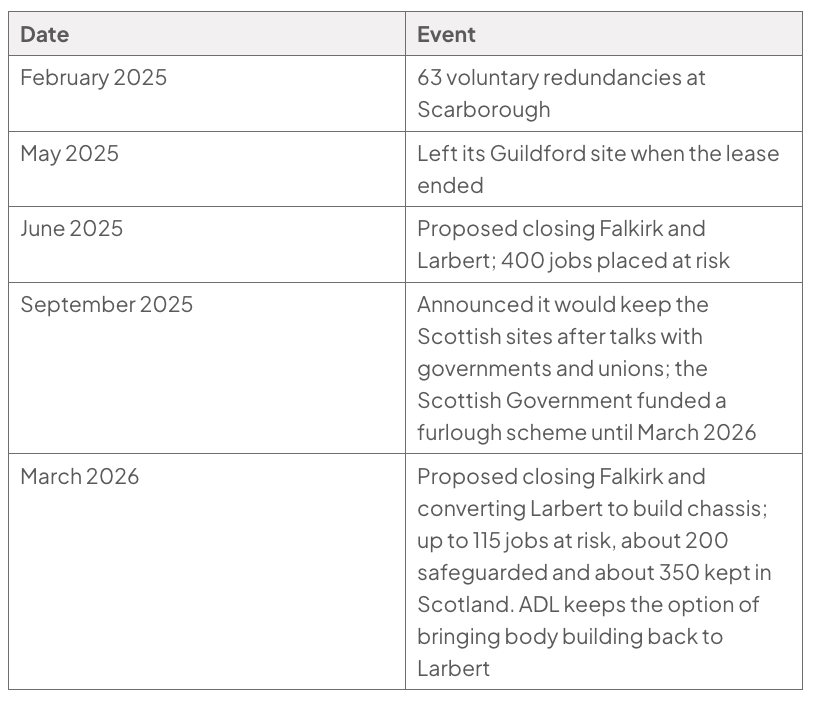
Two-column chronological table of Alexander Dennis restructuring events from February 2025 to March 2026, with dates in the left column and corresponding events in the right.
  • Parent support. "NFI Group Inc continues to provide full support to the company allowing us to make these investments and operate without external financing." Of the £207.2m owed to the NFI group at the end of 2025, £91.6m bore interest at 5.4% to 5.55% a year.

  • Future. ADL has kept "the flexibility to reintroduce bus body manufacturing to its Larbert facility at a later date" and "the ability to scale back up in response to any significant increase in UK volume". It aims to enter 2027 "in a stronger position to return to profitability".

Source: Analyst, using Alexander Dennis Limited and press reports

Alexander Dennis has kept the option of bringing bus-body building back to its Larbert factory if UK orders rise. It also has firm orders in North America that run to 2028.

Evaluate whether Alexander Dennis should invest in bringing bus-body building back to Larbert or in growing its business in North America.

3
15 marks

Source B: Ravenshall Engineering

Ravenshall Engineering Limited is a private limited company, founded in Burnley, Lancashire, in 1978. It makes aluminium body frames, floors and battery housings for buses and coaches, which bus makers use to build complete vehicles. It employs 240 people. Its customers are:

  • three UK bus makers

  • five bus and coach makers in Poland, the Netherlands and Spain, whom it invoices in euros

Its products can be sold to EU customers without tariffs if they meet the rules of origin in the UK-EU trade agreement, but every shipment needs a customs declaration and delivery takes four days.

In 2025 revenue rose to £38.6 million, helped by growing exports to the European Union. The gross profit margin was 21%, compared with 22% in 2024.

The company faces three main pressures:

  • One large customer. 44% of its sales go to one UK bus maker, up from 39% in 2024. That customer has reduced its workforce and sites in the last two years.

  • Government grants. Most of its UK customers' orders are for buses bought with the help of government grants, which do not require buses to be built in the UK.

  • Chinese competition. Chinese bus makers such as Yutong ship complete buses to the UK, built with their own frames and battery housings.

Ravenshall's board is considering two investments:

  • An automated welding line in Burnley. It would reduce labour costs and rework, with 30 fewer welding jobs and 6 new technician roles.

  • A new factory in Poland, close to its EU customers.

Source: Ravenshall Engineering

Appendix D: Ravenshall Engineering selected data

Table of Ravenshall Engineering’s selected data for years ending 31 December 2024 and 2025, comparing UK and EU revenue, total revenue, gross margin, operating profit, employees, cash and bank loan.

Source: Ravenshall Engineering

Appendix E: Customers and risks

Table comparing 2024 and 2025: largest UK bus maker’s share of revenue rose from 39% to 44%; UK revenue from government grant-funded buses rose from 54% to 60%.
  • If the pound rises against the euro, each euro of sales is worth fewer pounds.

  • Chinese bus makers such as Yutong ship complete buses to the UK, built with their own frames and battery housings.

  • Ravenshall's largest customer has reduced its workforce and sites in the last two years.

Source: Ravenshall Engineering

Appendix F: Politics, grants and trade

  • Grants. Bus operators in England and Scotland can apply for government grants towards the cost of zero-emission buses; the grants do not require buses to be built in the UK.

  • Scotland, March 2026. In the third round of the Scottish Zero Emission Bus Challenge Fund, the Chinese maker Yutong won more vehicles, many of them coaches, than the UK maker Alexander Dennis.

  • Local content. UK bus makers have called for buying rules that reward "local content, job retention and creation".

  • Trade. Ravenshall's products can be sold to EU customers without tariffs if they meet the rules of origin in the UK-EU trade agreement, but every shipment needs a customs declaration and delivery takes four days.

Source: Analyst, using UK and Scottish government information and press reports

Appendix G: Two investment options

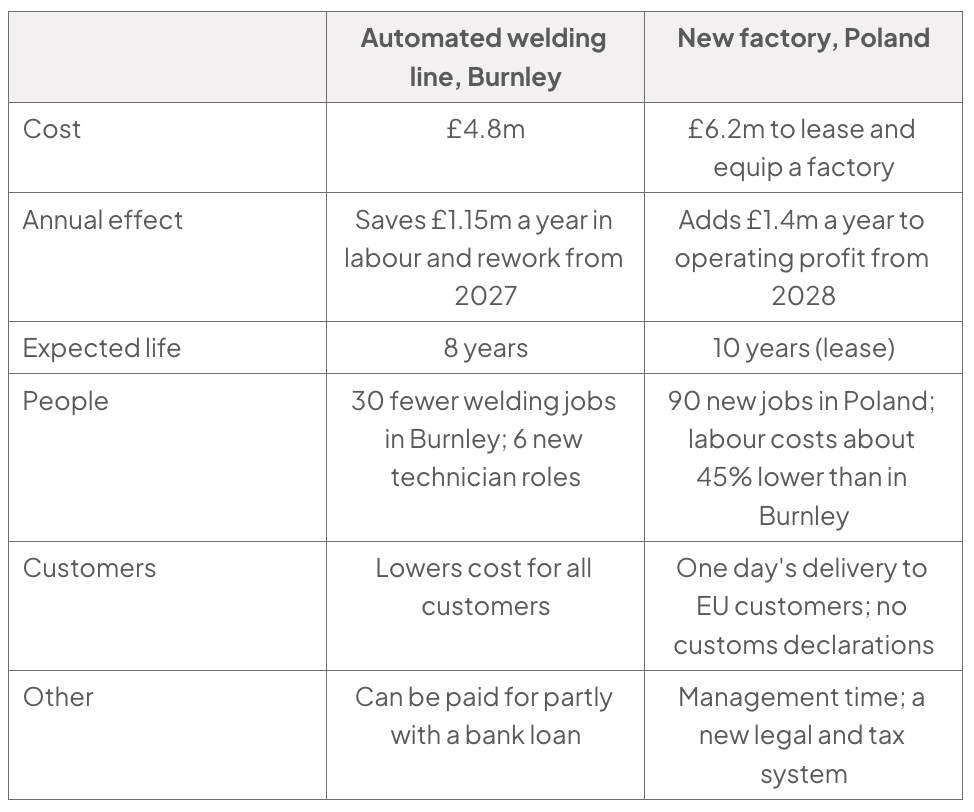
Comparison of investments: Burnley welding line costs £4.8m, saves £1.15m yearly from 2027, lasts 8 years and cuts 30 jobs; Poland factory costs £6.2m, adds £1.4m yearly from 2028, lasts 10 years and creates 90 jobs.

Source: Ravenshall Engineering

Ravenshall Engineering's board is considering an automated welding line in Burnley or a new factory in Poland.

Evaluate whether Ravenshall Engineering should invest in the welding line or the factory in Poland.

Use information from Appendices D to G to support your answer.