Financial Objectives (AQA A Level Business): Exam Questions

Exam code: 7132

Syllabus Edition

First teaching 2026

First exams 2028

2 hours15 questions
1
6 marks

Source A: MJ Gleeson plc

MJ Gleeson plc builds houses. It is a public limited company listed on the London Stock Exchange, and it works in two quite different ways. Gleeson Homes builds and sells houses, mainly in the North of England and the Midlands. Gleeson Land buys options on farmland, obtains planning permission and sells the land on to other housebuilders.

What makes Gleeson unusual is who it sells to. It builds the lowest-priced new homes in Britain and says its average selling price is 34% lower than the average new build price in the regions where it works. In the year to 30 June 2025, 78% of the homes it sold were affordable to a couple both earning the National Living Wage. Many of its buyers are first-time buyers who would otherwise be renting.

The year was a difficult one. Group revenue rose 5.9% to £365.8 million and the company sold 1 793 homes, only 21 more than the year before. The average selling price rose 4.3% to £193 600, but almost all of that came from building a different mix of houses rather than from charging more for the same house: underlying price growth was just 0.6%.

Costs went the other way. The gross margin at Gleeson Homes fell from 24.1% to 20.7%, and its operating profit fell 26.4% to £22.3 million. Gleeson Land had a much better year, completing seven land sales and lifting its operating profit from £2.2 million to £7.0 million, but it is far too small to make up the difference. Group profit before tax fell 17.3% to £20.5 million.

The company built from fewer places. Active build sites fell from 79 to 68, while the land pipeline grew slightly to 19 638 plots. Gleeson holds a medium-term target of building 3 000 homes a year, which is well above the 1 793 it managed this year.

Money left the business. Gleeson began the year with net cash of £12.9 million and ended it with net borrowings of £0.8 million, having held its dividend at 11.0p a share even though earnings per share fell from 33.13p to 27.11p.

Source: MJ Gleeson plc audited results for the year ended 30 June 2025, 16 September 2025

Appendix A: MJ Gleeson plc selected results

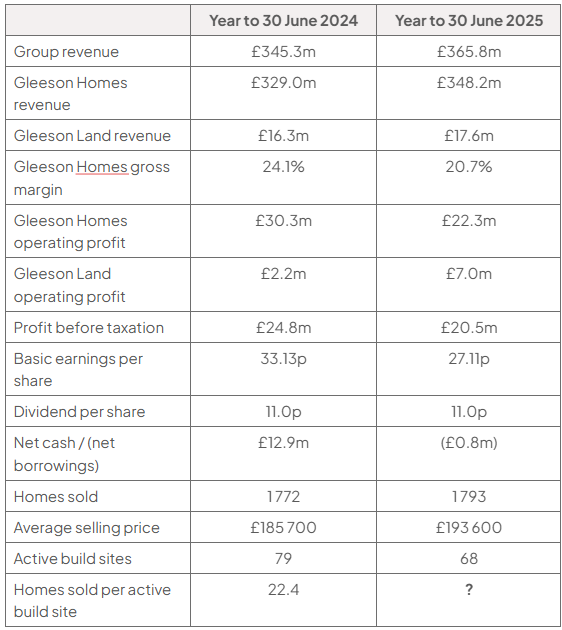
Table comparing MJ Gleeson plc results for years to 30 June 2024 and 2025: earnings per share fell from 33.13p to 27.11p, while dividend per share stayed at 11.0p; net cash of £12.9m became net borrowings of £0.8m.

Source: MJ Gleeson plc

MJ Gleeson plc held its dividend at 11.0p a share in a year when its earnings per share fell from 33.13p to 27.11p.

Analyse one way in which holding the dividend at 11.0p might affect the amount MJ Gleeson plc has available to reinvest.

2
6 marks

Source B: Center Parcs

Center Parcs runs five holiday villages in the United Kingdom: Sherwood Forest in Nottinghamshire, Elveden Forest in Suffolk, Longleat Forest in Wiltshire, Whinfell Forest in Cumbria and Woburn Forest in Bedfordshire. Woburn Forest, which opened in 2014, is the newest. Guests stay in lodges set in woodland and pay separately for activities, restaurants and the spa.

It is a private limited company, so it has no shares traded on any exchange and no share price. During the 53 weeks to 24 April 2025 it paid dividends of £115.5 million to its owner.

The business is close to full. Occupancy for the year was 97.3%, up from 96.8%, and Appendix E shows that it is not full only in summer: in every month of the year the villages run at or above 93%. Revenue rose 4.7% to £649.8 million and adjusted EBITDA rose to £283.8 million from £277.3 million.

The number that stands still is the price. The net average daily rate was £243.10, against £243.17 the year before. Across a year in which costs rose, Center Parcs took seven pence a night less than it had the year before.

That leaves the company in an unusual position. It cannot sell many more nights, because it has almost no empty ones. It has not raised its daily rate for two years. Growth has therefore had to come from somewhere other than filling lodges or charging more for them, and the directors must decide where the next stage of growth is going to come from. Building a sixth village would take years and a great deal of money. Raising the price would work immediately, if guests accepted it.

Source: information sourced from the Center Parcs (Holdings 1) Limited annual report and financial statements for the 53 weeks ended 24 April 2025, which cover the five UK villages only

Appendix D: Center Parcs selected results

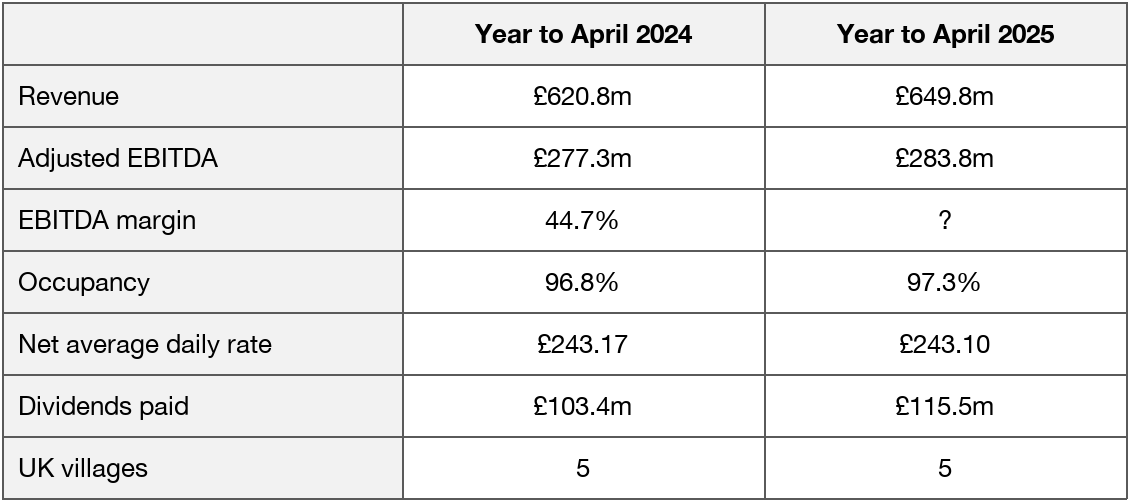
Table of Center Parcs selected results for years to April 2024 and 2025: revenue £620.8m/£649.8m; adjusted EBITDA £277.3m/£283.8m; EBITDA margin 44.7%/?; occupancy 96.8%/97.3%; daily rate £243.17/£243.10; dividends £103.4m/£115.5m; five UK villages both years.

Source: Center Parcs

Center Parcs paid dividends of £115.5 million to its owner during the 53 weeks to 24 April 2025.

Analyse one way in which paying this dividend might affect Center Parcs' ability to build a new village.

3
6 marks

Source B: Fairhurst Linen Ltd

Fairhurst Linen Ltd is a commercial laundry on an industrial estate outside Leeds. It is a private limited company owned by Dev Anand and his sister Rani Anand, and it employs 24 people. It washes, presses and delivers bed linen, towels and table linen for hotels and restaurants across Yorkshire, and it charges by the kilogram.

Last year it processed 3.1 million kilograms at an average of 60p a kilogram, which brought in £1 860 000. Detergent, water, energy and packaging cost 20p for every kilogram put through the machines. Everything else is fixed: wages of £624 000 and premises, machines, maintenance and insurance of £456 000, which together come to £1 080 000 a year and are paid whether the machines run or not. Profit for the year was £160 000.

The machines are not full. They could handle 4.2 million kilograms a year, and last year they did 3.1 million. A new tunnel washer costing £320 000 would raise that ceiling further, and Dev Anand has been talking to the bank about it.

The Anands have set themselves an objective: a profit margin of 15% within three years.

Two things complicate the plan. The first is a contract. A hotel group has offered Fairhurst Linen Ltd 900 000 kilograms a year, which would nearly fill the machines, but only at 44p a kilogram, against the 60p its other customers pay. The second is that Fairhurst Linen Ltd pays its detergent supplier, a small chemicals firm in Rotherham, after 90 days, while its own hotel customers pay it after 45.

Appendix D: Fairhurst Linen Ltd, summary of last year

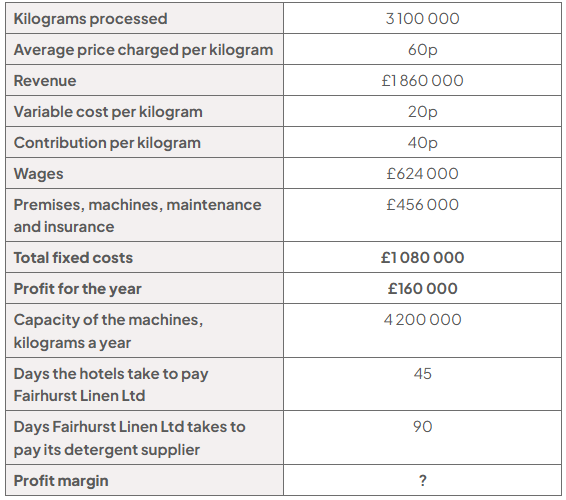
Two-column summary table for Fairhurst Linen Ltd, listing output, prices, revenue, costs, profit, capacity and payment periods; the final row, “Profit margin”, is left blank with a question mark.

Source: Analyst

Dev Anand and Rani Anand have set Fairhurst Linen Ltd an objective of reaching a 15% profit margin within three years.

Analyse one way in which setting a figure and a deadline like this might affect the decisions Dev and Rani Anand make.

4
6 marks

Source B: Galliford Try Holdings plc

Galliford Try Holdings plc builds things: schools, hospitals, water treatment works, roads and defence sites. It is a public limited company listed in London and it works almost entirely in the United Kingdom, mostly for public sector clients and regulated utilities. It does not build houses for sale.

Construction is a low-margin business and Galliford Try Holdings plc says so. In the year to 30 June 2025 revenue was £1.9 billion, 6% up on the year before, and the divisional adjusted operating profit margin was 3.0%. The company had set itself a target of 3.0% and reached it a year earlier than it had planned.

On a job of this size almost nothing is built by Galliford Try Holdings plc's own employees. The work is done by subcontractors: groundworkers, electricians, roofers, most of them small firms. In construction the usual way to hold on to cash is to pay those firms slowly, and the industry has a long record of doing exactly that. In the six months to 31 December 2025 Galliford Try Holdings plc paid its supply chain in an average of 29 days, and it publishes how quickly it pays.

It also holds a great deal of cash. The figure it reports is the average of its cash balance at the end of each month, which was £179 million, up from £155 million. It reports the average rather than the year-end figure because a construction company's cash moves a long way from month to month, and the balance on any single day says very little.

Source: information sourced from Galliford Try Holdings plc results for the year ended 30 June 2025 and the six months ended 31 December 2025

Appendix D: Galliford Try Holdings plc selected results

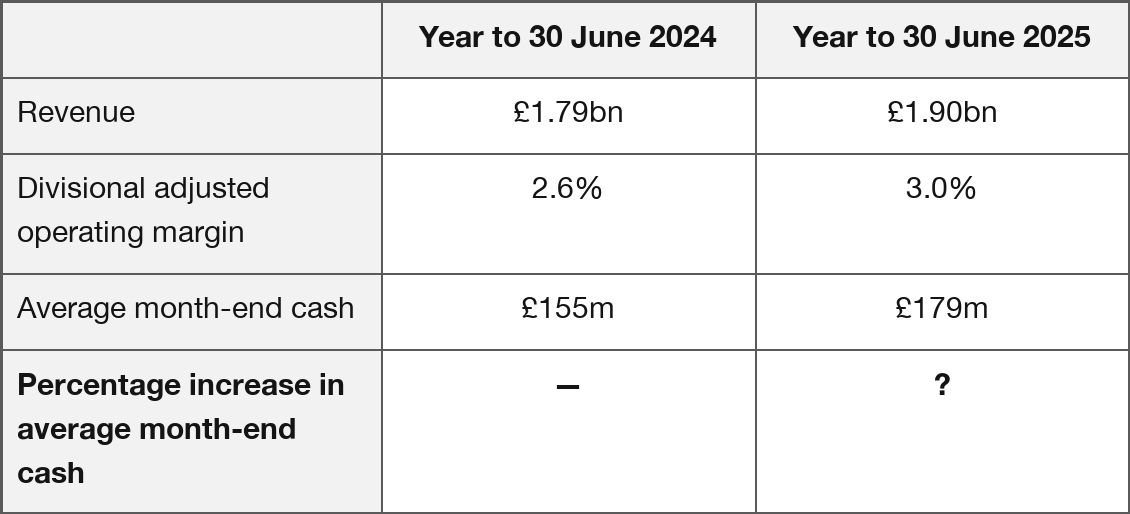
Table of Galliford Try Holdings plc results for years to 30 June 2024 and 2025: revenue £1.79bn and £1.90bn; operating margin 2.6% and 3.0%; average month-end cash £155m and £179m. Cash percentage increase is marked ?.

Source: Galliford Try Holdings plc

Galliford Try Holdings plc set itself a target of a 3.0% divisional adjusted operating margin and reached it a year earlier than planned.

Analyse one way in which having a profit margin target might affect which contracts Galliford Try Holdings plc chooses to bid for.

5
6 marks

Source B: Thorne Valley Orchards Ltd

Thorne Valley Orchards Ltd grows apples on 180 acres in Herefordshire and turns them into juice and chutney in a press and kitchen on the same site. It is a private limited company run by Marianne Vance, whose family has farmed the land since 1954, and it employs 26 people, more in the picking season.

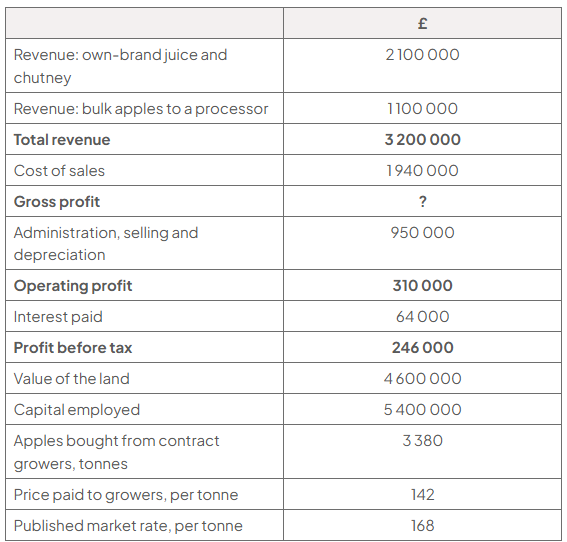
It sells in two ways. Its own-brand juice and chutney go to farm shops, delicatessens and garden centres, and brought in £2.1 million last year. Bulk apples it does not need go to a large juice processor, which brought in £1.1 million. Total revenue was £3.2 million.

Its own orchards do not produce enough. Thorne Valley Orchards Ltd buys a further 3 380 tonnes of apples a year from fourteen contract growers, all of them small farms within thirty miles. It pays them £142 a tonne. The published market rate last year was £168 a tonne, and Appendix E shows how that gap has widened. The growers accept it because Thorne Valley Orchards Ltd takes the whole crop, pays within fourteen days and has done so for years. Its own customers, the farm shops and delicatessens, take about 45 days to settle.

The land is worth £4.6 million. Together with the buildings, press and kitchen, capital employed is £5.4 million. Against that, operating profit last year was £310 000 and profit before tax, after £64 000 of interest, was £246 000.

Marianne Vance has been offered a contract by a supermarket for 900 000 bottles of own-label juice a year at £1.10 a bottle. Her own brand sells at £2.40. The press currently runs at about 40% of what it could do.

Appendix D: Thorne Valley Orchards Ltd, summary of last year

Appendix D summary table: revenue £3.2m (£2.1m own-brand, £1.1m bulk), cost of sales £1.94m, gross profit “?”, operating profit £310 000, profit before tax £246 000, capital employed £5.4m; 3 380 tonnes bought at £142 per tonne versus £168 market rate.

Source: Analyst

Marianne Vance wants Thorne Valley Orchards Ltd to earn more from every acre it farms.

Analyse one way in which setting a financial objective of this kind might affect the decisions Marianne Vance makes about the orchards.

6
6 marks

Source B: Foxhall Creamery Ltd

Foxhall Creamery Ltd makes hard cheese on the Shropshire border. It is a private limited company owned in equal shares by Kate Foxhall, who is 61, and Owen Ridd, who is 58, and it employs 48 people. Revenue last year was £6 800 000, sold to farm shops, delicatessens and independent grocers, none of whom takes more than 4% of output.

The cheese has to sit. The youngest thing Foxhall Creamery Ltd sells has been in the store for nine months, and its best-known cheese comes out at fourteen. Every wheel in the store is money already spent and not yet earned, and there are two rooms of them.

The accounts look reassuring. At the year end the company held £1 240 000 of inventory, was owed £680 000 by customers and had £410 000 in the bank, against £520 000 owed to suppliers, £118 000 in VAT and PAYE, and £194 000 of the bank loan falling due within the year. The loan stands at £1 460 000 in total, and the financial objective for this year is to reduce it by £200 000.

Foxhall Creamery Ltd values the cheese in its store at what the milk, the labour and the power have cost. A wheel that has been maturing for thirteen months appears in the accounts at the same figure as it did on the day it was made, although the price it will fetch has roughly doubled in the meantime.

The company needs a third maturing store, which will cost £900 000. It can pay for it out of the bank balance and this year's retained profit, or it can borrow again.

There is a larger question behind that one. Kate Foxhall wants to retire within five years. A cheese wholesaler has offered £4 900 000 for the company. The alternative the two of them have been reading about is an employee ownership trust, which would buy the business on behalf of the 48 staff and pay Kate Foxhall and Owen Ridd out of future profits over about seven years.

Foxhall Creamery Ltd's financial objective for this year is to reduce its bank loan by £200 000.

Analyse one way in which this objective might affect the decisions Kate Foxhall takes during the year.

7
6 marks

Source A: Good Energy Group plc

Good Energy Group plc sells electricity and gas to homes and businesses, and it installs solar panels, heat pumps and batteries. It is a public limited company and its shares are traded on AIM.

The electricity it sells is bought from a community of more than 2 500 independent renewable generators, many of them small: wind turbines, solar farms and hydro schemes. Good Energy is an accredited B Corp, the only domestic energy supplier in the United Kingdom to hold that certification, with an impact score of 118.5. B Corp certification is awarded to companies that meet standards on social and environmental performance, and it has to be re-earned.

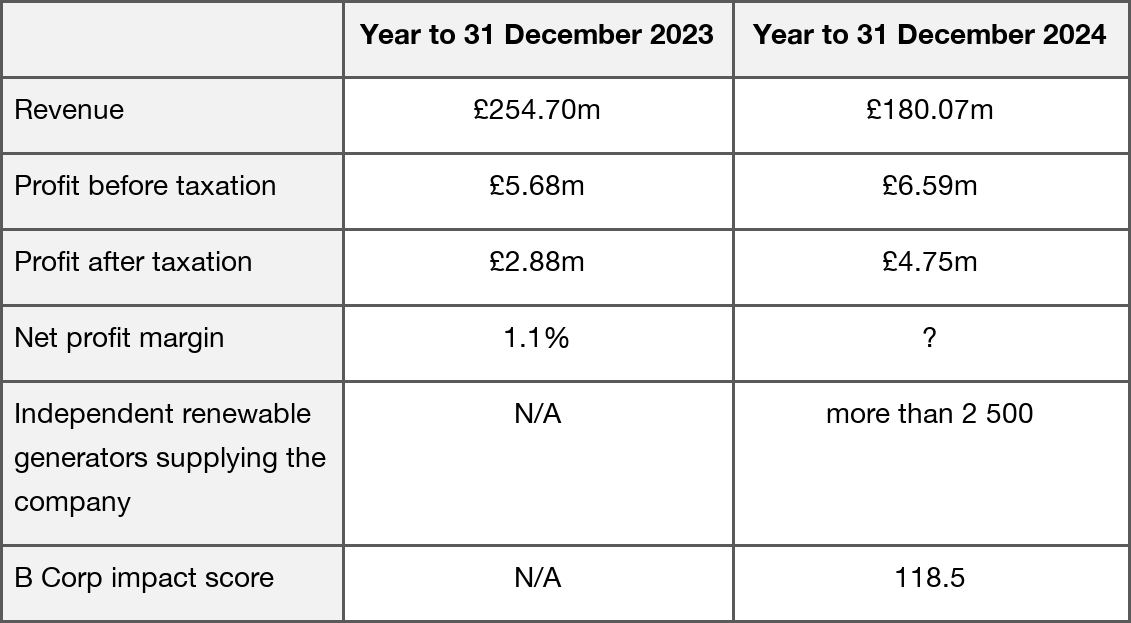
The year to 31 December 2024 looked strange on the face of it. Revenue fell 29.3% to £180.07 million, down from £254.7 million. Profit before tax rose 16.0% to £6.59 million, and profit after tax rose 64.9% to £4.75 million. The company took less money and kept more of it.

The explanation lies outside the business. Wholesale energy prices rose sharply after Russia's invasion of Ukraine and then fell back, and the Ofgem price cap on what a domestic supplier may charge followed them up and down. Appendix B shows the cap. When the price a supplier charges falls, its revenue falls with it, even if it is serving exactly the same customers.

The company is also changing what it does. During the year it bought JPS, which installs heat, solar and storage across southern England, and it completed the acquisition of Amelio Enterprises Limited. Installing equipment is a different business from supplying energy: it is a one-off sale rather than a monthly bill, and it is not capped by Ofgem.

One thing sits awkwardly alongside the B Corp badge. Good Energy also sells gas, which is a fossil fuel, to customers who have gas boilers. It cannot make gas renewable in the way it can make electricity renewable, and every gas customer it keeps is a household it is not selling a heat pump to.

Source: information sourced from Good Energy Group plc results for the year ended 31 December 2024

Appendix A: Good Energy Group plc selected results

Table comparing 2023 and 2024: revenue £254.70m/£180.07m; pre-tax profit £5.68m/£6.59m; post-tax profit £2.88m/£4.75m; net margin 1.1%/?; 2024: over 2,500 generators and B Corp score 118.5.

Source: Good Energy Group plc

Good Energy Group plc's revenue fell 29.3% during the year to 31 December 2024, while its profit after tax rose 64.9%.

Analyse one way in which this might affect the financial objectives Good Energy Group plc sets for the following year.

1
9 marks

Source A: Jet2 plc

Jet2 plc describes itself as the UK's leading provider of package holidays and its third largest airline. It is a public limited company with shares traded on the London Stock Exchange, based at Leeds Bradford Airport, and it employs more than 14 000 people. Steve Heapy is the chief executive.

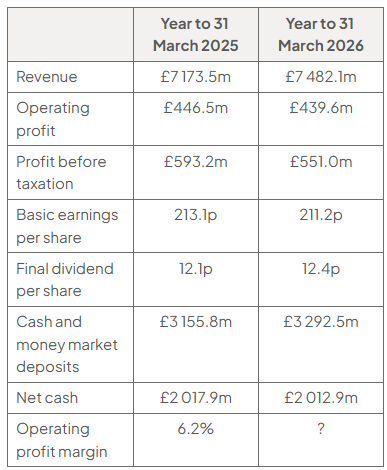
The company sells two different things. A package holiday combines flights, a hotel and transfers in one booking. A flight-only seat is just the flight. In the year to 31 March 2026 Jet2 flew a record 20.83 million passengers, up 5%. Within that total, flight-only passengers rose 15% to 7.64 million while package holiday customers rose 1% to 6.62 million. Jet2 counts each package holiday customer once, while flown passengers are counted on every flight, outbound and return.

Customers pay for a holiday months before they take it, so money arrives long before the flight happens. At the year end the company held £3 292.5 million in cash and money market deposits, and net cash of £2 012.9 million.

The year's results were mixed. Revenue reached a record £7 482.1 million, up 4%. But operating profit fell 2% to £439.6 million, after absorbing £11.0 million of start-up costs for a new base at London Gatwick and £50 million of increased costs from employment taxes and sustainable aviation fuel. Profit before tax fell 7% and earnings per share fell 1% to 211.2p.

Shareholders were rewarded anyway. Jet2 returned £363.0 million to them during the year through share buybacks and dividends, raised the final dividend 2% to 12.4p a share, and announced a further £250 million buyback. The company says this reflects its strong liquidity and its confidence in the medium-term outlook.

Source: Jet2 plc preliminary results, 8 July 2026, and Companies House

Appendix A: Jet2 plc selected financial results

Table comparing Jet2 results for years to March 2025/2026: revenue £7,173.5m/£7,482.1m; operating profit £446.5m/£439.6m; profit before tax £593.2m/£551.0m; earnings per share 213.1p/211.2p. Dividends 12.1p/12.4p; cash £3,155.8m/£3,292.5m; net cash £2,017.9m/£2,012.9m; operating margin 6.2%/unknown.

Source: Jet2 plc

Assess whether returning £363.0 million to shareholders was a sensible use of Jet2 plc's cash in a year when its operating profit fell.

2
9 marks

Source B: Fairhurst Linen Ltd

Fairhurst Linen Ltd is a commercial laundry on an industrial estate outside Leeds. It is a private limited company owned by Dev Anand and his sister Rani Anand, and it employs 24 people. It washes, presses and delivers bed linen, towels and table linen for hotels and restaurants across Yorkshire, and it charges by the kilogram.

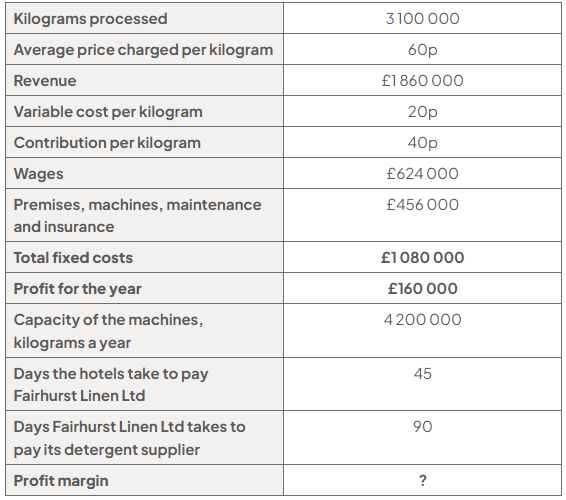
Last year it processed 3.1 million kilograms at an average of 60p a kilogram, which brought in £1 860 000. Detergent, water, energy and packaging cost 20p for every kilogram put through the machines. Everything else is fixed: wages of £624 000 and premises, machines, maintenance and insurance of £456 000, which together come to £1 080 000 a year and are paid whether the machines run or not. Profit for the year was £160 000.

The machines are not full. They could handle 4.2 million kilograms a year, and last year they did 3.1 million. A new tunnel washer costing £320 000 would raise that ceiling further, and Dev Anand has been talking to the bank about it.

The Anands have set themselves an objective: a profit margin of 15% within three years.

Two things complicate the plan. The first is a contract. A hotel group has offered Fairhurst Linen Ltd 900 000 kilograms a year, which would nearly fill the machines, but only at 44p a kilogram, against the 60p its other customers pay. The second is that Fairhurst Linen Ltd pays its detergent supplier, a small chemicals firm in Rotherham, after 90 days, while its own hotel customers pay it after 45.

Appendix D: Fairhurst Linen Ltd, summary of last year

Table of last year’s figures: 3,100,000 kilograms processed, revenue £1,860,000 and profit £160,000; profit margin is shown as “?”. Capacity is 4,200,000 kilograms, with payment terms of 45 and 90 days.

Source: Analyst

Assess whether Fairhurst Linen Ltd is likely to reach its objective of a 15% profit margin within three years.

Calculate Fairhurst Linen Ltd's profit margin for last year to support your answer.

Give your answer to one decimal place.

3
9 marks

Source B: Halvergate Storage Ltd

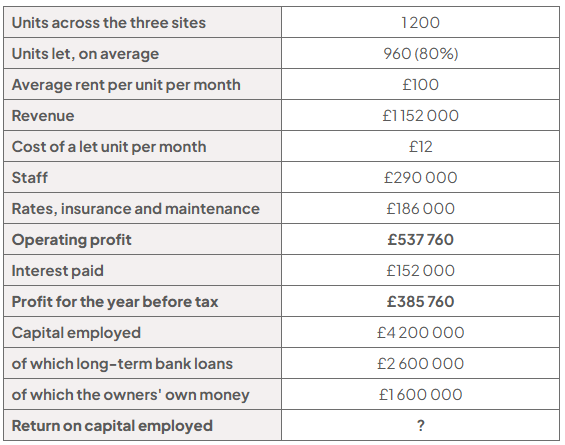
Halvergate Storage Ltd rents storage units by the month. It has three sites in East Anglia, at Norwich, King's Lynn and Lowestoft, with 1 200 units between them. It is a private limited company owned by two brothers, Tom and Michael Ferris, and it employs nine people.

Its customers are households between moves, people who have downsized, and small businesses storing inventory. A unit costs an average of £100 a month. Once a unit is let it costs Halvergate Storage Ltd about £12 a month in electricity, cleaning and administration. Everything else is fixed: staff of £290 000 a year and rates, insurance and maintenance of £186 000, which are paid on the whole building whether the units inside it are full or empty.

Last year 80% of the units were let, which is 960 of the 1 200, and revenue was £1 152 000. Operating profit was £537 760. After £152 000 of interest, profit for the year before tax was £385 760.

The interest is there because the sites were built with borrowed money. The three sites together represent capital employed of £4.2 million, of which £2.6 million is long-term bank loans and £1.6 million is the brothers' own money.

Tom and Michael Ferris have set the company an objective: a return on capital employed of 15% within three years. They are also looking at a fourth site, at Bury St Edmunds, which would cost £1.6 million.

Appendix D: Halvergate Storage Ltd, summary of last year

Summary table for Halvergate Storage Ltd: 1,200 units, 960 let, £1,152,000 revenue, £537,760 operating profit, £4,200,000 capital employed, and return on capital employed shown as ?.

Source: Analyst

Assess whether Halvergate Storage Ltd is likely to reach its objective of a 15% return on capital employed within three years.

Calculate Halvergate Storage Ltd's return on capital employed for last year to support your answer.

Give your answer to one decimal place.

4
9 marks

Source B: Marlowe Joinery Ltd

Marlowe Joinery Ltd makes bespoke staircases in a workshop outside Shrewsbury. It is a private limited company run by Gethin Marlowe, the third generation of his family to run it, and it employs 17 people, nine of them joiners who served apprenticeships there.

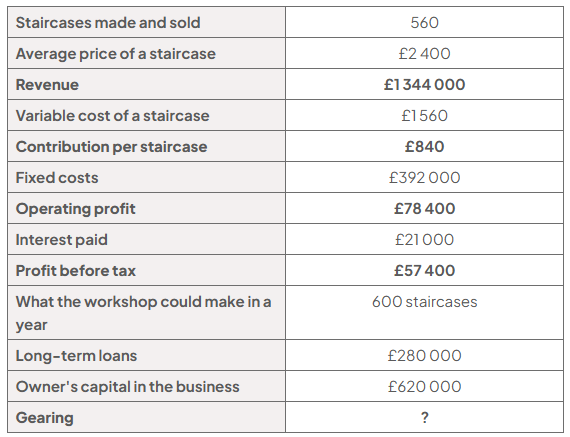
Every staircase is different. An architect or a builder sends drawings, Gethin Marlowe quotes a price, and if the quote is accepted the workshop builds it. Last year it made 560 staircases at an average price of £2 400, which is revenue of £1 344 000. Timber, fittings and the joiners' time on the job come to £1 560 a staircase. Everything else, meaning the workshop, the machinery, insurance, administration and the wages of people not on a job, comes to £392 000 a year.

The quoting is done by eye. Gethin Marlowe has forty years of it and is good at it, but each quote is its own small budget and nobody adds them up until the year end.

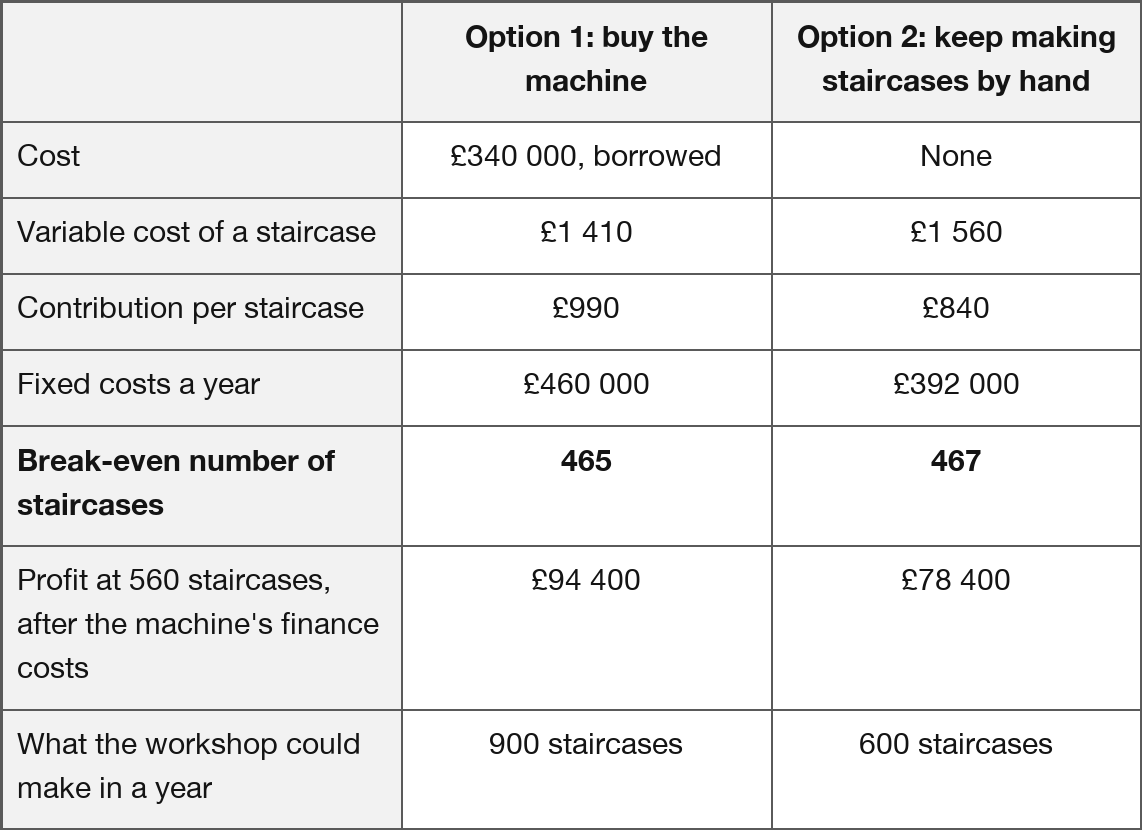
He is considering a computer-controlled cutting machine costing £340 000. It would cut the cost of a staircase to £1 410 and raise the workshop's fixed costs by £68 000 a year once depreciation and finance are counted. It would also lift what the workshop could make in a year from 600 staircases to 900.

The machine would be paid for by borrowing. Marlowe Joinery Ltd already has £280 000 of long-term loans against £620 000 of Gethin Marlowe's own money in the business.

Appendix D: Marlowe Joinery Ltd, summary of last year

Last-year summary table: 560 staircases at £2,400; revenue £1,344,000; costs and profits; capacity 600; loans £280,000; owner’s capital £620,000; gearing is blank.

Source: Analyst

Appendix F: Data for the cutting machine

Comparison table: buying the machine versus making staircases by hand. Machine: £340,000 borrowed; variable cost £1,410; contribution £990; fixed costs £460,000; break-even 465; profit £94,400; capacity 900. Hand: no cost; £1,560; £840; £392,000; 467; £78,400; 600.

Source: Analyst

Assess whether Marlowe Joinery Ltd should set itself the objective of making 900 staircases a year.

5
9 marks

Source B: Ashgrove Print Ltd

Ashgrove Print Ltd is a commercial printer in Dewsbury. Ken Ashgrove started it in 1994 after fifteen years at a firm that lost its only large customer and closed in a fortnight, and he told his daughter Nadia more than once that he built Ashgrove Print Ltd so that nobody would ever again be able to tell him what to charge. Nadia Ashgrove has run it since 2021. It is a private limited company and employs 34 people.

The work comes in two kinds. Long-run work is leaflets and shelf-edge cards for Fenwold Stores, a supermarket group: high volume, printed to a price Fenwold Stores fixes, and paid for in 74 days. It brought in £2 472 000 last year and cost £2 100 000 in paper, ink, plates and press time. Short-run work is menus, packaging, programmes and art prints for about 300 small local customers: low volume, priced job by job, and paid for in 21 days, often on collection. It brought in £1 648 000 and cost £784 000.

Across all its customers, Ashgrove Print Ltd waits an average of 53 days to be paid. It buys paper from two mills on 30-day terms. Its agreed terms with its own smaller suppliers, the plate makers, the bindery, the finishers and the courier, are also 30 days. Last year it paid them on average in 61 days. Its overdraft facility is £150 000 and it was £96 000 into it at the year end.

Fenwold Stores has now offered Ashgrove Print Ltd all of its print work on a three-year contract. It would need a new press costing £340 000, which the bank will lend against. Appendix F sets out that future and the one Nadia Ashgrove has been building towards instead.

Appendix D: Ashgrove Print Ltd, income statement for last year

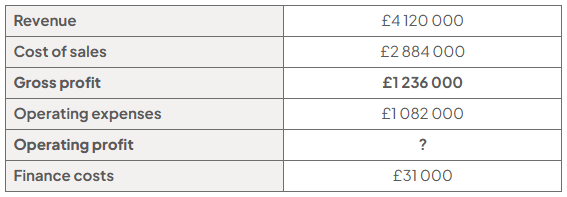
Income statement table: revenue £4,120,000; cost of sales £2,884,000; gross profit £1,236,000; operating expenses £1,082,000; operating profit is shown as “?”; finance costs £31,000.

Source: Analyst

Assess whether Ashgrove Print Ltd should set a financial objective of increasing its operating profit or a financial objective of being paid more quickly.

1
15 marks

Source A: Kids Planet Day Nurseries Ltd

Kids Planet Day Nurseries Limited runs day nurseries for children below school age. Clare Roberts set the business up in Cheshire in 2008 and has been a director since the August of that year. Its registered activity is pre-primary education and its head office is still in Lymm, near Warrington.

The company has grown mainly by buying other nurseries rather than by building new ones. It is now the parent of a group of 152 companies, most of them businesses it has taken over, and it holds 69 properties, 28 of which it owns outright and 41 of which it leases. It employs around 5 000 people. There is a single shareholder.

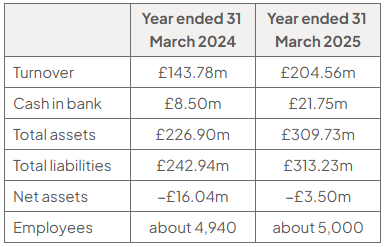
Growth has been fast. Turnover rose by 42.3% in the year to 31 March 2025, reaching £204.56 million, and cash at the bank more than doubled. But buying nurseries has been paid for largely by borrowing. The group's total liabilities are now slightly larger than its total assets, which means its net assets are negative. That figure is moving in the right direction: net assets improved from minus £16.04 million to minus £3.50 million over the year.

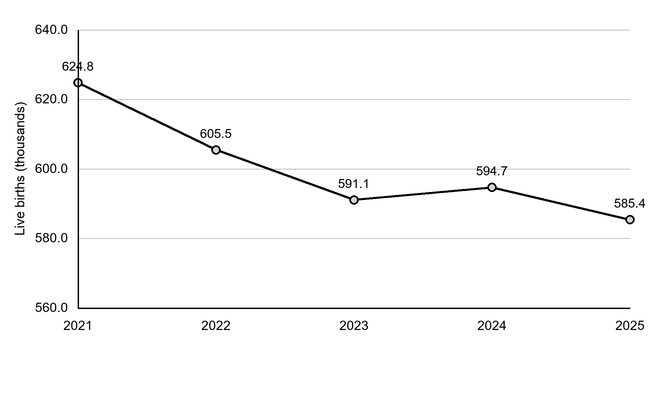
The number of children available to fill nursery places is not fixed. Live births in England and Wales have fallen in three of the past four years, from 624 828 in 2021 to 585 396 in 2025. Appendix B shows the trend. The government also pays for a set number of childcare hours for many families, so a nursery's income comes partly from parents and partly from the state.

The directors must now decide whether to carry on buying nurseries.

Source: information sourced from Companies House and the Office for National Statistics, 2026

Appendix A: Kids Planet Day Nurseries Ltd selected financial data

Selected financial data table (years ended 31 March): 2024 versus 2025—turnover £143.78m/£204.56m; cash £8.50m/£21.75m; assets £226.90m/£309.73m; liabilities £242.94m/£313.23m; net assets negative £16.04m/£3.50m; employees about 4,940/5,000.

Source: Companies House

Appendix B: Live births in England and Wales

Line chart of live births in England and Wales, in thousands, showing an overall fall from 624.8 in 2021 to 585.4 in 2025, with a slight rise from 591.1 in 2023 to 594.7 in 2024.

Source: Office for National Statistics

Appendix C: Kids Planet Day Nurseries Ltd scale

  • Companies in the group = 152

  • Properties held = 69 (28 owned outright, 41 leased)

  • Employees = about 5 000

  • Year the business was set up = 2008

Source: Companies House

Kids Planet Day Nurseries Ltd's directors must decide how the business should grow.

Evaluate whether Kids Planet Day Nurseries Ltd should continue to grow by buying other nurseries or should instead concentrate on filling the places it already has.

2
15 marks

Source A: Games Workshop Group PLC

Games Workshop Group PLC designs, makes and sells fantasy miniatures, and the games and stories that go with them. Its main brand is Warhammer. The company is based at Willow Road in Nottingham, where it makes its models, and it is a public limited company whose shares are traded on the London Stock Exchange. Kevin Rountree is the chief executive. It employs about 3 000 people.

The company earns money in two quite different ways. Most of it comes from the core business: selling miniatures and books through its own shops, through independent retailers it calls trade accounts, and through its own website. The rest comes from licensing, which means letting other companies pay to use Warhammer characters and worlds in their own products, such as video games and television.

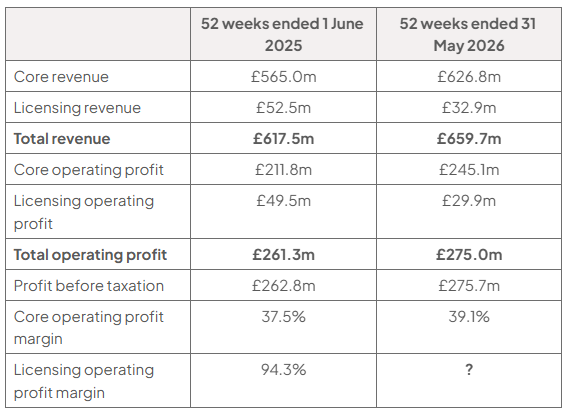
In the 52 weeks to 31 May 2026 the core business had its best year yet. Core revenue rose 10.9% to £626.8 million and core operating profit rose to £245.1 million. Licensing went the other way. Licensing revenue fell from £52.5 million to £32.9 million, and licensing operating profit fell from £49.5 million to £29.9 million.

Licensing matters more than its size suggests. It costs very little to run, because the company is selling permission rather than a product, so almost all of the revenue it brings in becomes profit.

Total revenue still reached a record £659.7 million and profit before tax a record £275.7 million. Earnings per share rose from 594.9p to 624.0p. Even so, the dividend paid during the year fell from 520p a share to 485p.

Games Workshop says its decisions are focused on long-term success rather than short-term gains, and that it intends to carry on making the best fantasy miniatures in the world forever.

Source: Games Workshop Group PLC results, 28 July 2026

Appendix A: Games Workshop Group PLC selected financial results

Selected financial results table for 2025 and 2026: core operating profit £211.8m/£245.1m; total operating profit £261.3m/£275.0m; profit before tax £262.8m/£275.7m; margins: core 37.5%/39.1%, licensing 94.3%/?.

Source: Games Workshop Group PLC

Appendix B: Games Workshop Group PLC earnings, dividends and cash

  • Earnings per share = 624.0p in 2026 (594.9p in 2025)

  • Dividends per share declared and paid during the year = 485p in 2026 (520p in 2025)

  • Net increase in cash before dividends paid = £210.3m in 2026 (£197.5m in 2025)

  • Cash held at the end of the year = £182.9m

Source: Games Workshop Group PLC and Companies House

Appendix C: Extract from Games Workshop Group PLC's stated strategy

"Our ambitions remain clear: to make the best fantasy miniatures in the world, to engage and inspire our customers, and to sell our products globally at a profit. We intend to do this forever. Our decisions are focused on long-term success, not short-term gains."

"We nurture a craft based hobby. We understand that what we make may not appeal to everyone, so to recruit and retain customers we are absolutely focused on making our models the best in the world."

Source: Games Workshop Group PLC annual report, 2026

Games Workshop Group PLC held £182.9 million of cash at the end of the year.

Evaluate whether Games Workshop Group PLC should use this cash to rebuild its licensing business or to open more of its own shops.

3
15 marks

Source A: The Gym Group plc

The Gym Group plc runs low cost gyms. It opened its first in 2008 and is now a public limited company with shares traded on the London Stock Exchange. It describes itself as a leading low cost gym operator and its offer as high value, low cost. Members pay by the month, there is no long contract to sign, and the gyms are open 24 hours a day.

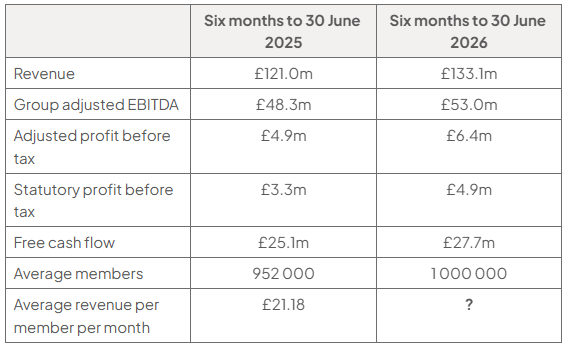
The company calls its approach a labour light business model. Gyms are largely self-service, so a site can run with a small team, and the savings go into the price rather than into staff on the front desk. In the six months to 30 June 2026 The Gym Group had an average of one million members, up 5% on the same period a year earlier, and average revenue per member per month rose 5%.

Growth comes from two places. The company opens new gyms, and it improves the ones it already has. Four new sites opened in the first half of 2026, with eleven more being built, and it expects to open at least 20 during the year as part of a plan to open around 75 over three years, paid for out of its own cash. It also refurbishes older gyms to a newer design. Three were refurbished in the first half of 2026 and eighteen more were planned for the second half. Gyms refurbished during 2025 went on to win 10% more members than before.

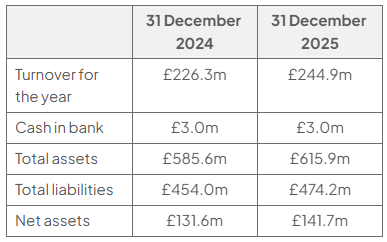
The business is not short of demand, but it is carrying a lot of debt. At the end of 2025 its total liabilities were £474.2 million against total assets of £615.9 million, and it held only £3 million in cash. The company says its aim is a 30% return on the money invested in its mature gyms, and it is buying back some of its own shares.

Source: The Gym Group plc interim results, 9 September 2026, and Companies House

Appendix A: The Gym Group plc results for the six months ended 30 June 2026

Results table for six months to 30 June 2025 and 2026: revenue £121.0m/£133.1m; group adjusted EBITDA £48.3m/£53.0m; adjusted profit before tax £4.9m/£6.4m; statutory profit £3.3m/£4.9m; free cash flow £25.1m/£27.7m; members 952,000/1,000,000; revenue per member £21.18/?.

Source: The Gym Group plc

Appendix B: The Gym Group plc financial position at 31 December 2025

Financial position table comparing 31 December 2024 and 2025: turnover £226.3m/£244.9m, cash £3.0m/£3.0m, assets £585.6m/£615.9m, liabilities £454.0m/£474.2m and net assets £131.6m/£141.7m.

Source: Companies House

The Gym Group plc expects to open at least 20 new gyms during 2026 and to refurbish 21 of its existing gyms during the year, all paid for out of the cash the business generates.

Evaluate whether The Gym Group plc should put more of that cash into opening new gyms or into refurbishing the gyms it already has.