Key Financial Objectives (AQA A Level Business): Revision Note
Syllabus Edition
First teaching 2026
First exams 2028
Exam code: 7132

What are financial objectives?
Financial objectives are the specific financial targets a business sets for itself
They give direction to financial planning and decision-making and are shaped by the business's overall goals and the environment in which it operates
Common financial objectives
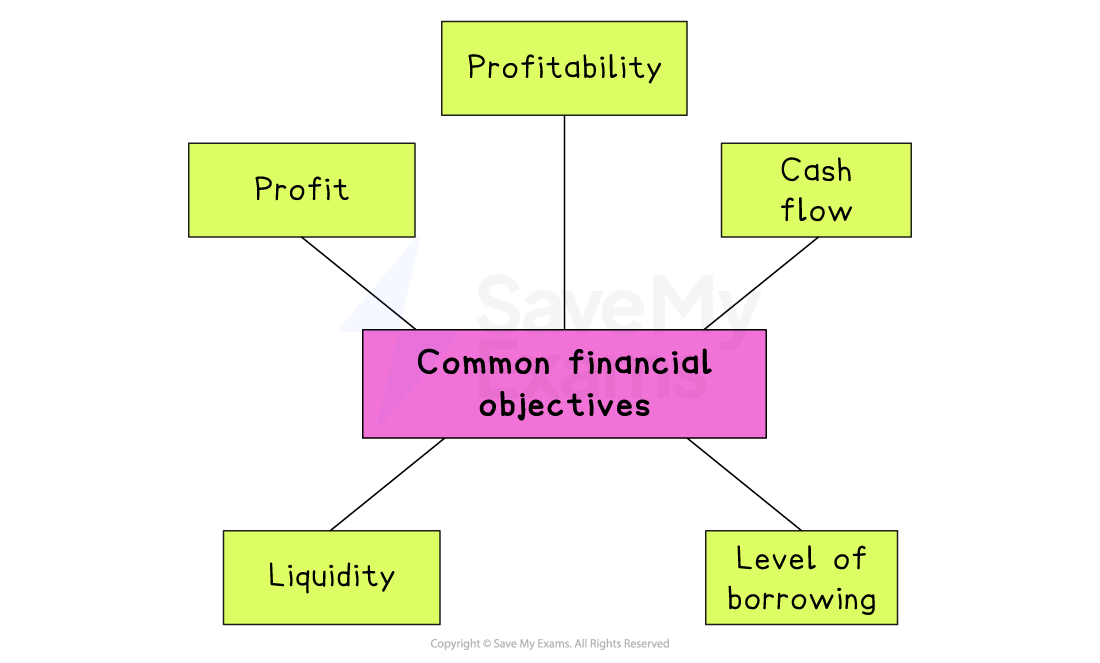
Profit
Profit is the financial surplus left over after costs have been deducted from revenue
There are two types of profit
Gross profit
Revenue minus the direct cost of producing or buying the goods sold
Operating profit
Gross profit minus all other operating expenses, such as rent, wages and marketing
Significance
Profit is the primary reward for the risk taken by business owners and entrepreneurs
It provides funds for reinvestment in the business
Buying new equipment, expanding into new markets or developing new products
It enables businesses to pay dividends to shareholders, which is important for attracting and retaining investors
In the long run, a business that consistently fails to make a profit cannot survive
Profitability
Profitability measures how efficiently a business generates profit relative to its revenue
The gross profit margin shows the proportion of revenue converted to gross profit
The net profit margin shows the proportion of revenue converted to net profit
Significance
A business can make a large profit in absolute terms but have low profitability if its revenues are also very high
Profitability shows how well the business is actually managing its costs
Investors and shareholders use profitability margins to compare businesses of different sizes and to judge how well a business is being run
Improving profitability - by either increasing revenue or reducing costs - is a common strategic objective
Cash flow
Cash flow refers to the movement of money into and out of a business over a given period
Positive cash flow means more money is flowing in than going out
Negative cash flow means more money is flowing out than coming in
Significance
Cash flow is essential for the day-to-day running of the business—paying wages, suppliers, rent and utility bills all require cash
A business can be profitable on paper but still fail if it runs out of cash
For example, a business that sells goods on credit may show a profit in its accounts but struggle to pay its bills while waiting for customers to pay
Many businesses set cash flow objectives, such as maintaining a minimum cash balance or improving the timing at which money is received from customers
Liquidity
Liquidity refers to how easily a business can meet its short-term financial obligations
Simply, how quickly can it get hold of enough cash to pay what it owes in the near future?
A business is described as liquid if it holds enough short-term assets (cash, stock it can sell, money owed by customers) to comfortably cover its short-term debts and bills
A simple measure of liquidity is the current ratio
It compares the amount of short-term assets with short-term liabilities
A current ratio above 1 indicates the business can meet its short-term obligations; a ratio below 1 suggests it may struggle
Significance
Even profitable businesses can become insolvent if they have poor liquidity
Strong liquidity provides financial flexibility and resilience, particularly during periods of uncertainty or unexpected costs
Businesses may set liquidity objectives, such as maintaining a current ratio above a certain level
Levels of borrowing
Levels of borrowing refer to the total amount of debt a business has taken on through loans, bank overdrafts or other forms of credit
This is often described in terms of gearing
This is the proportion of a business's funding that comes from debt rather than from shareholders' equity
Significance
High borrowing increases financial risk
Interest payments must be made regardless of how well the business is performing, and if the business struggles, lenders may demand early repayment
Low borrowing provides greater financial security and flexibility
However, it may limit the business's ability to invest and grow
Businesses often set objectives around keeping borrowing below a specific level, paying down existing debt, or maintaining a target gearing ratio, particularly when interest rates are high
Examiner Tips and Tricks
These five financial objectives are interconnected - improving one can sometimes put pressure on another. For example, investing heavily to grow profit in the future may reduce cash flow in the short term. In evaluation questions, consider how a business should balance its financial objectives given its current situation
Influences on financial objectives
The financial objectives a business sets are shaped by a range of internal and external factors
Factor | Explanation |
|---|---|
Business objectives and overall strategy |
|
Stage of the business life cycle |
|
Economic conditions |
|
Shareholder and investor expectations |
|
Competitive environment |
|
Ethical considerations |
|
Examiner Tips and Tricks
Financial objectives are not set in isolation - they must be realistic given the business's circumstances and consistent with its wider goals. In evaluation questions, always consider whether a business's financial objectives are achievable given its current trading environment, competitive position and resources

Unlock more, it's free!
Join the 100,000+ Students that ❤️ Save My Exams
the (exam) results speak for themselves:

Was this revision note helpful?
