Purpose & Value of Project Management (AQA A Level Business): Revision Note
Syllabus Edition
First teaching 2026
First exams 2028
Exam code: 7132

What is project management?
Project management is the process of planning, organising, coordinating and controlling the resources, tasks and timescales needed to complete a specific, one-off objective, known as a project
A project differs from a business's normal operations in several ways
It has a clearly defined start and end point, rather than being a continuous, repeated activity
It works towards a specific, one-off objective, rather than the routine day-to-day running of the business
It typically has its own fixed budget and timeframe, set in advance and monitored throughout
It often brings together staff, resources or expertise from different departments who would not normally work together
Most projects are led by a project manager
They are responsible for planning the project, allocating resources, monitoring progress, managing risks and ensuring objectives are met on time and within budget
Managing a project effectively usually involves several stages
Setting clear objectives
Breaking the work down into tasks or phases
Allocating staff, finance and equipment to each stage
Agreeing a realistic schedule
Continuously monitoring progress against that plan
Projects can vary in scale and type
Examples of small-scale projects |
|
|---|---|
Examples of large-scale projects |
|
The value of project management
Without effective project management, projects are more likely to run over budget, miss deadlines or fail to meet the quality expected
Benefits of effective project management
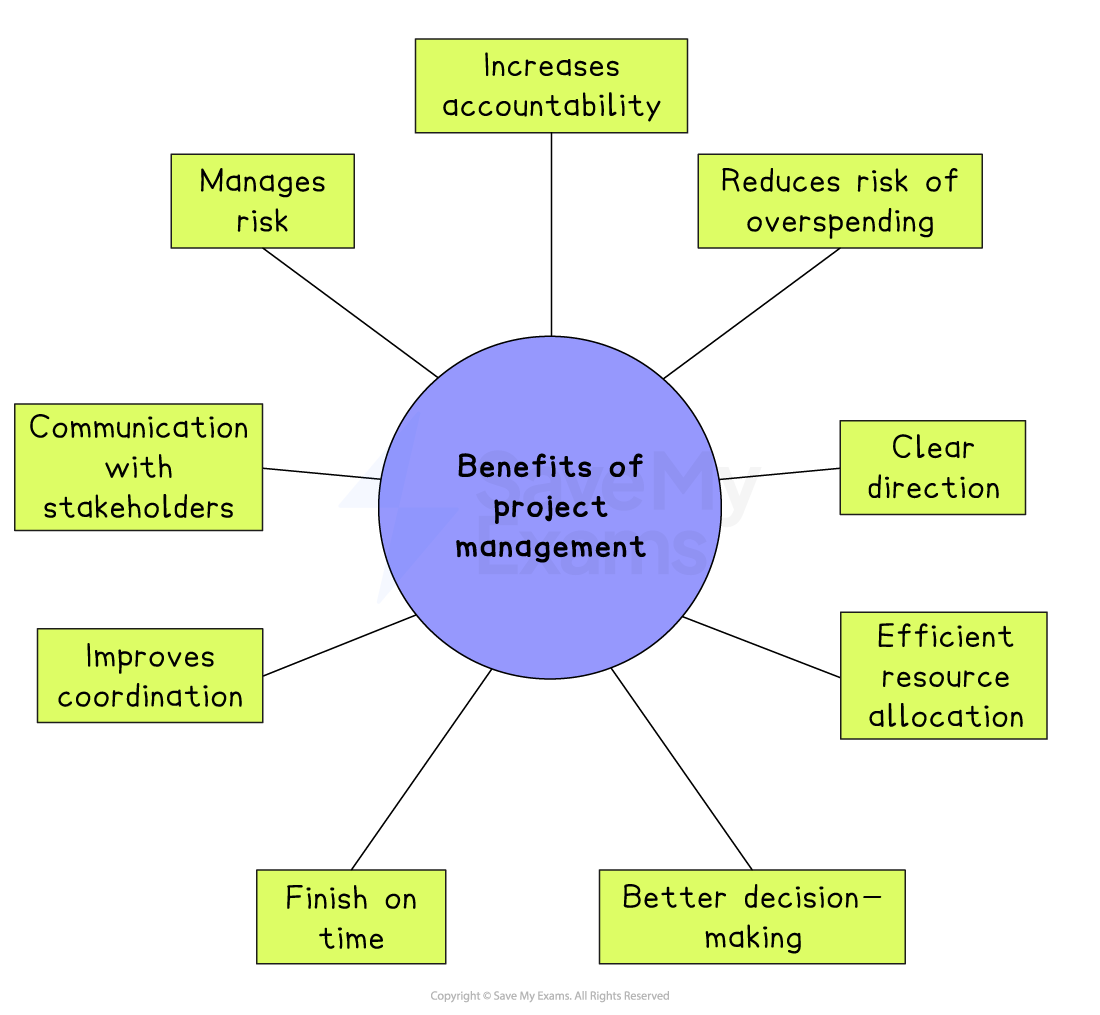
Provides clear direction
Project management ensures everyone involved understands exactly what needs to be achieved and by when
This reduces confusion or wasted effort
Helps allocate resources efficiently
Time, money and materials are directed towards tasks that are genuinely necessary for the project's success
Improves the likelihood of finishing on time
Progress is tracked against a schedule
Delays are more likely to be spotted and addressed early
Reduces the risk of overspending
A project's budget is planned in advance and monitored throughout, rather than costs building up unnoticed
Improves coordination
Between different departments or teams working on the same project
This reduces the risk of duplicated work or conflicting priorities
Helps manage risk
Potential problems can be identified and planned for in advance, rather than dealt with only once they have already caused disruption
Increases accountability
The project manager and team have clearly defined responsibilities and are answerable for meeting agreed milestones
Supports better decision-making
Structured project management tools, such as Gantt charts or critical path analysis, provide clear information on progress and priorities at each stage
Improves communication with stakeholders
Investors, customers or employees can be kept informed of progress against a clear, agreed plan
Case Study
Redcliff Construction

Redcliff Construction is a building firm that specialises in extensions and refurbishments for schools and small businesses.
Two years ago, the company took on a large project to build a new sports hall for a secondary school without appointing a dedicated project manager, relying instead on informal updates between site staff.
The project ran four months over schedule and significantly over budget, as delays in ordering materials were not identified until they had already affected the building schedule.
Having learned from this experience, Redcliff appointed a qualified project manager for its next major project, extending a primary school's classrooms.
The project manager broke the work into clear stages, set a detailed schedule and budget, and held weekly progress meetings with contractors and suppliers. When a delivery of materials was delayed, the project manager identified the problem early and rearranged the following week's tasks to avoid losing time overall.
The project was completed on schedule and within budget, and the school's headteacher praised Redcliff for its clear communication throughout.

Unlock more, it's free!
Join the 100,000+ Students that ❤️ Save My Exams
the (exam) results speak for themselves:

Was this revision note helpful?
