Legal Environment in Practice (AQA A Level Business): Revision Note
Syllabus Edition
First teaching 2026
First exams 2028
Exam code: 7132

Consumer protection
Consumer protection law sets out legal rights for customers and legal obligations for businesses
It covers areas such as product quality, fair trading, accurate information and the right to refunds, repairs or replacements
In the UK, the main rules come from the Consumer Rights Act 2015
This requires goods to be of satisfactory quality, fit for purpose and as described
Separate rules ban misleading or aggressive selling practices
Benefits of consumer protection for business
It builds customer trust and loyalty
Customers are more likely to buy from, and return to, a business they feel confident will treat them fairly
It creates a level playing field
This stops dishonest competitors gaining an unfair advantage by misleading customers or cutting corners
It gives businesses a clear legal benchmark to follow
This reduces the risk of costly disputes or reputational damage from getting it wrong
Some businesses use it as a competitive advantage
For example, offering returns policies that go beyond the legal minimum to stand out from rivals
Drawbacks of consumer protection for business
It increases compliance costs
This includes handling refunds and returns, checking marketing claims are accurate, and training staff properly
It increases legal risk
Even unintentional breaches can lead to fines, legal action or damaging publicity
It restricts certain sales practices
For example, rules against pressure-selling or unclear pricing limit how aggressively a business can market a product
Example
Since May 2025, new rules under the Digital Markets, Competition and Consumers Act 2024 have required businesses selling online, such as event ticket sites and hotel booking platforms, to show the full price a customer will pay upfront, including any fees, rather than adding them at checkout.
Impact on functional areas
Functional area | Explanation | Example |
|---|---|---|
Marketing |
|
|
Finance |
|
|
Human Resources |
|
|
Operations |
|
|
Case Study
Drip pricing
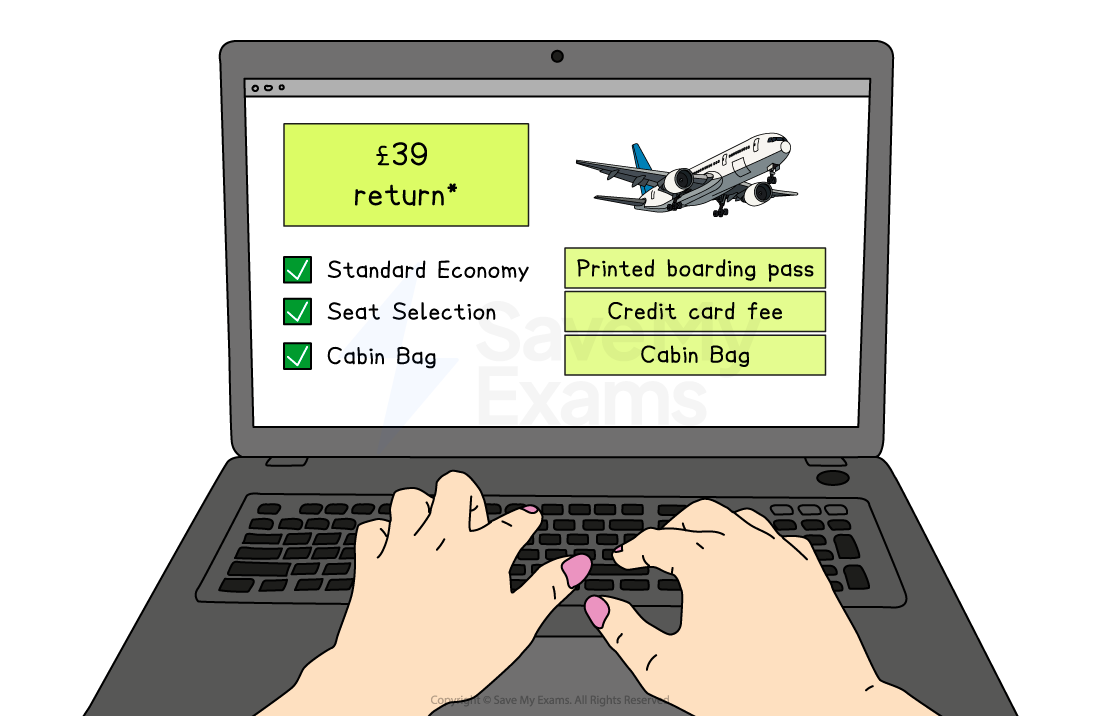
From May 2025, new UK rules banning drip pricing came into force, requiring businesses to display the full price of a product or service upfront, including any fees, rather than revealing extra charges only at the final stage of checkout.
This particularly affected sectors such as live events, hospitality and travel booking, where fees and service charges had often only appeared once a customer was close to completing a purchase.
Businesses in these sectors had to redesign their websites and checkout systems to comply, and some had to rethink pricing strategies that had previously relied on an attractively low headline price to draw customers in.
While this created short-term cost and disruption for affected businesses, it also meant customers could compare prices more fairly across competitors, potentially rewarding businesses with genuinely competitive all-in pricing.
Employee protection
Employee protection law sets out the legal rights employees have at work, and the responsibilities businesses have towards their staff
It covers areas such as pay, working hours, health and safety and protection from unfair treatment
The Equality Act 2010 specifically makes it illegal to discriminate against an employee or job applicant because of a 'protected characteristic'
Protected characteristics include age, disability, sex, race, religion or sexual orientation
The Act requires employers to make reasonable adjustments for disabled employees
Benefits of employee protection for business
It improves staff morale, motivation and retention
Employees who feel fairly treated and protected are more likely to stay and perform well
Example
Timpson, the UK shoe repair and key-cutting chain, employs around 10% of its staff from people with a criminal record and reports a 75% retention rate among them, far higher than the industry average.
It reduces the risk of costly tribunal claims
Following the law properly reduces the risk of expensive legal action or compensation payouts
It supports a more diverse workforce
The Equality Act protections help ensure a wider range of people can access and stay in employment, bringing a broader range of skills and perspectives
It helps attract talent
Job seekers increasingly favour employers with a strong reputation for fair treatment
Drawbacks of employee protection for business
It increases costs
This includes sick pay, holiday pay, minimum wage compliance, and reasonable adjustments for disabled staff
Example
JD Wetherspoon's chairman said the 2025 rise in National Living Wage and employer National Insurance would cost the company an extra £60 million a year, equivalent to around £1,500 per outlet, per week
It can reduce flexibility
For example, it can be harder and slower to dismiss staff without following a proper legal process
Example
In 2024, the UK Supreme Court ruled against Tesco after it tried to dismiss and re-hire warehouse staff on worse terms, to take away a pay agreement it had promised them years earlier
It increases administrative burden
Businesses must keep detailed records and follow correct procedures for grievances, discipline and redundancy
It carries real legal risk if a business gets it wrong
Employment tribunal claims can be lengthy, costly and damaging to reputation, even when unintentional
Impact on functional areas
Functional area | Explanation | Example |
|---|---|---|
Marketing |
|
|
Finance |
|
|
Human Resources |
|
|
Operations |
|
|
Case Study
P&O Ferries and employment law
In March 2022, P&O Ferries dismissed almost 800 crew members with immediate effect, informing them via a pre-recorded video call rather than following the legally required consultation process with staff and trade unions.
The company planned to replace them straight away with cheaper agency crews and, in some cases, had security staff on board to remove employees from ships immediately.
Operations had to scramble to get replacement crews trained and in place quickly enough to keep ferries running, while finance had to budget for an enhanced redundancy package, designed to reduce the risk of costly legal claims over the lack of consultation.
The decision triggered a huge public and political backlash, including calls for a consumer boycott, condemnation from the Transport Secretary, and scrutiny from a parliamentary committee.
It also exposed a legal loophole allowing some seafarers to be paid below the UK minimum wage, which the government later closed with a new law.
Competition policy
Competition policy refers to laws and regulations designed to promote fair competition between businesses and prevent anti-competitive practices
Examples include price-fixing, cartels or one business abusing a dominant market position
In the UK, competition policy is enforced mainly by the Competition and Markets Authority (CMA)
This body can investigate mergers, block deals or fine businesses found to be acting anti-competitively
Benefits of competition policy for business
It stops dominant businesses abusing market power
This protects smaller competitors from unfairly being squeezed out of the market
Example
In 2017, the EU fined Google €2.42 billion for abusing its dominant position as a search engine by placing its own shopping comparison service above rival services, instead of the cheapest or most relevant option
It helps maintain consumer choice and reasonable prices
This supports a healthier market that new or smaller businesses can enter and compete within
It can create opportunities for other businesses
For example, rivals may gain market share if a merger is blocked or a dominant firm's practices are restricted
Example
In 2022, the CMA forced Meta to sell Giphy, the GIF-sharing platform it had already bought, after ruling the deal would let Meta restrict rival social media platforms' access to Giphy's GIFs and reduce competition in UK display advertising
It encourages ongoing innovation and efficiency
Businesses can't rely on anti-competitive shortcuts to protect their position, so must keep improving to succeed
Drawbacks of competition policy for business
It can block or delay mergers and acquisitions
This can prevent a business from expanding or achieving economies of scale as planned
Example
In 2019, the European Commission blocked a planned €17 billion merger between Siemens and Alstom, which would have created a 'European champion' in the rail industry.
It considered it would leave too few suppliers of high-speed trains and signalling systems, likely raising prices for the trains and safety systems used by passengers.
Investigations can be lengthy and costly
This creates uncertainty for a business while a decision is pending
Fines for breaching competition law can be very large
This directly reduces profit and can damage reputation
Example
In 2016, the EU fined five major truck manufacturers, including Daimler and DAF, a combined €2.93 billion for operating a secret price-fixing cartel for 14 years, the largest cartel fine in EU history at the time.
Compliance can require specialist legal advice
This is a significant, ongoing cost, particularly for large or complex businesses
Impact on functional areas
Functional area | Explanation | Example |
|---|---|---|
Marketing |
|
|
Finance |
|
|
Human Resources |
|
|
Operations |
|
|
Case Study
Sainsbury's and Asda merger blocked
In 2018, Sainsbury's and Asda announced plans to merge in a deal worth around £10 billion, which would have created the UK's largest supermarket group, overtaking Tesco.
The two companies argued the merger would let them cut costs and lower prices for customers by combining buying power and sharing store, warehouse and distribution infrastructure.
However, in 2019 the CMA blocked the deal, finding it would likely lead to higher prices, reduced quality or a worse shopping experience at hundreds of stores and petrol stations across the country, with customers unlikely to benefit as the companies had promised.
Sainsbury's share price fell sharply on the day the decision was announced, reflecting investors' disappointment at losing the expected cost savings.
Both companies' finance teams had to abandon merger-related plans in their financial forecasts, while operations continued running as separate, competing supply chains rather than combining infrastructure as planned. Sainsbury's was instead left to pursue growth on its own.
Environmental protection
Environmental protection law sets legal limits and requirements on businesses to reduce environmental harm
It covers areas such as emissions, waste, pollution and resource use
Environmental protection increasingly includes legally binding national targets
E.g. The UK's commitment under the Climate Change Act to reach net zero greenhouse gas emissions by 2050
Benefits of environmental protection law for business
It levels the playing field
This stops competitors gaining an unfair cost advantage by cutting corners on environmental standards
It can encourage innovation
Businesses investing in cleaner technology or processes to comply can sometimes turn this into new products or services to sell
Example
Since 2024, the UK has legally required a rising percentage of new cars sold to be zero-emission, starting at 22% and reaching 80% by 2030
This has encouraged car manufacturers to speed up development of new electric models or face fines of up to £15,000 per non-compliant car sold
It builds trust with increasingly environmentally conscious customers and investors
This can increase sales and improve access to finance
It can help businesses access new funding or contracts
Some grants, contracts or investments are specifically tied to meeting environmental standards
Example
Since 2021, UK government departments have required suppliers bidding for contracts worth over £5 million a year to submit a Carbon Reduction Plan
Businesses with strong environmental practices find it easier to win major public sector work
Drawbacks of environmental protection law for business
It increases compliance costs
This includes new equipment, monitoring and reporting requirements
It can slow down operations or expansion
For example, where environmental permits or assessments are required before a project can proceed
Example
HS2 had to build a one-kilometre-long protective tunnel, nicknamed the 'bat tunnel' to stop trains disturbing a rare, legally protected bat species in a Buckinghamshire woodland.
This added an estimated £100 million or more to the project's cost and timeline.
Penalties for non-compliance can be severe
This can mean large fines alongside serious reputational damage
Example
In 2021, Southern Water was fined a record £90 million after admitting to nearly 7,000 illegal sewage discharges into the sea over several years
This was the largest environmental prosecution in the Environment Agency's history
Smaller businesses can struggle proportionally more
They often have fewer resources to meet the same standards as larger, better-resourced competitors
Impact on functional areas
Functional area | Explanation | Example |
|---|---|---|
Marketing |
|
|
Finance |
|
|
Human Resources |
|
|
Operations |
|
|
Case Study
Coca-Cola and the Plastic Packaging Tax
Ahead of the UK's Plastic Packaging Tax taking effect in April 2022, Coca-Cola Great Britain committed to making all its plastic bottles of 500ml or less from 100% recycled plastic, moving away from using new plastic in these products.
Operations teams had to redesign bottles to work reliably with fully recycled material, while also reducing the overall weight of packaging used, cutting the amount of plastic needed per bottle by more than a quarter.
This change meant Coca-Cola's smaller bottles comfortably exceeded the tax's 30% recycled content threshold, avoiding the £200-per-tonne charge that applies to packaging below that level.
Sourcing enough good-quality recycled plastic reliably was a genuine operational challenge, though, requiring closer relationships with recycling suppliers to secure consistent supply.
Marketing teams used the change as a selling point, highlighting the fully recycled bottles to environmentally conscious customers.
Examiner Tips and Tricks
Across consumer, employee, competition and environmental protection, look for the same underlying pattern - legal protection usually creates both a cost/compliance burden and a trust/reputation benefit at the same time.
Strong answers weigh both sides for the specific business in the case study, rather than treating legal protection as purely a cost or purely a benefit.

Unlock more, it's free!
Join the 100,000+ Students that ❤️ Save My Exams
the (exam) results speak for themselves:

Was this revision note helpful?
