Market Mapping (AQA A Level Business): Revision Note
Syllabus Edition
First teaching 2026
First exams 2028
Exam code: 7132

What is market mapping?
When entering a market or launching a new product, businesses need to understand where they stand relative to their competitors
Market mapping is a tool for identifying the position of a product within a market
A market map is a two-dimensional diagram that shows the attributes or characteristics of a product in comparison to rivals’ products
Only two criteria can be chosen: price and quality, age and income, etc.
An example market map
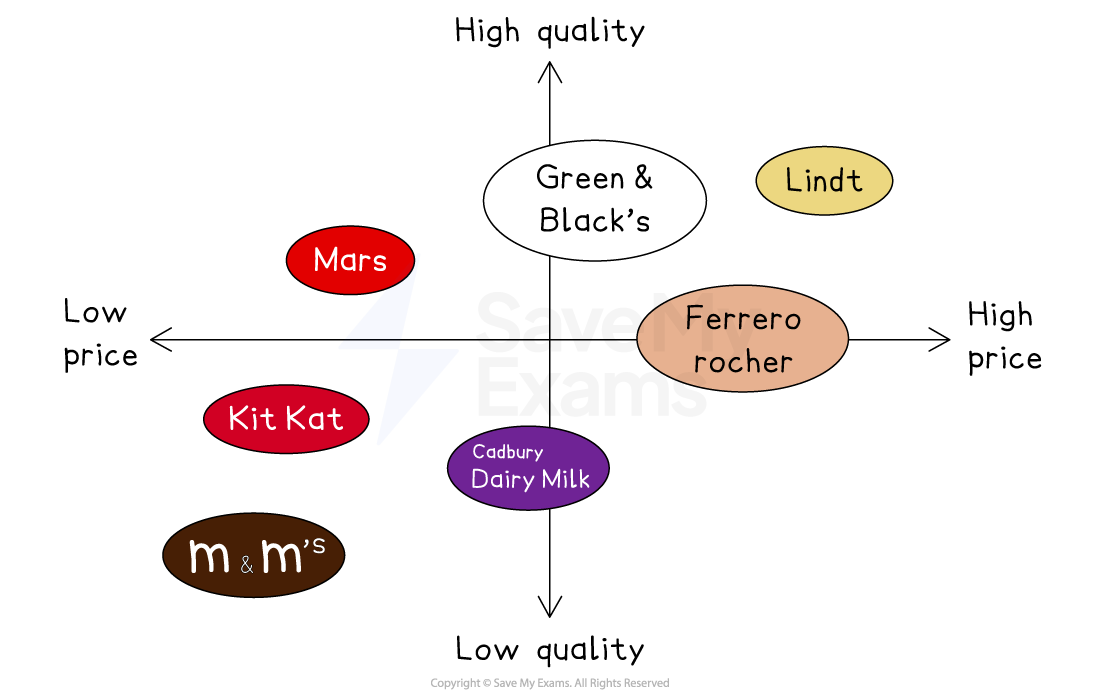
Each competitor's product is plotted on the grid based on its perceived position relative to those two variables
The resulting map gives a visual picture of the competitive landscape
Market map analysis
If there were no spaces left on the market map, it indicates that the market is saturated
This means that there are no opportunities to exploit a market niche in the market
Competition is likely to be high and profits low
However, the existence of a space on the market map may indicate the existence of a market niche
This needs to be researched carefully before the business commits. E.g. it looks like there is a gap in the market in the high price / low quality area in the map above
However, this gap does not represent a worthwhile market, as the business would find it impossible to build and maintain a loyal customer base
How businesses use market mapping
Businesses use market mapping for a range of reasons
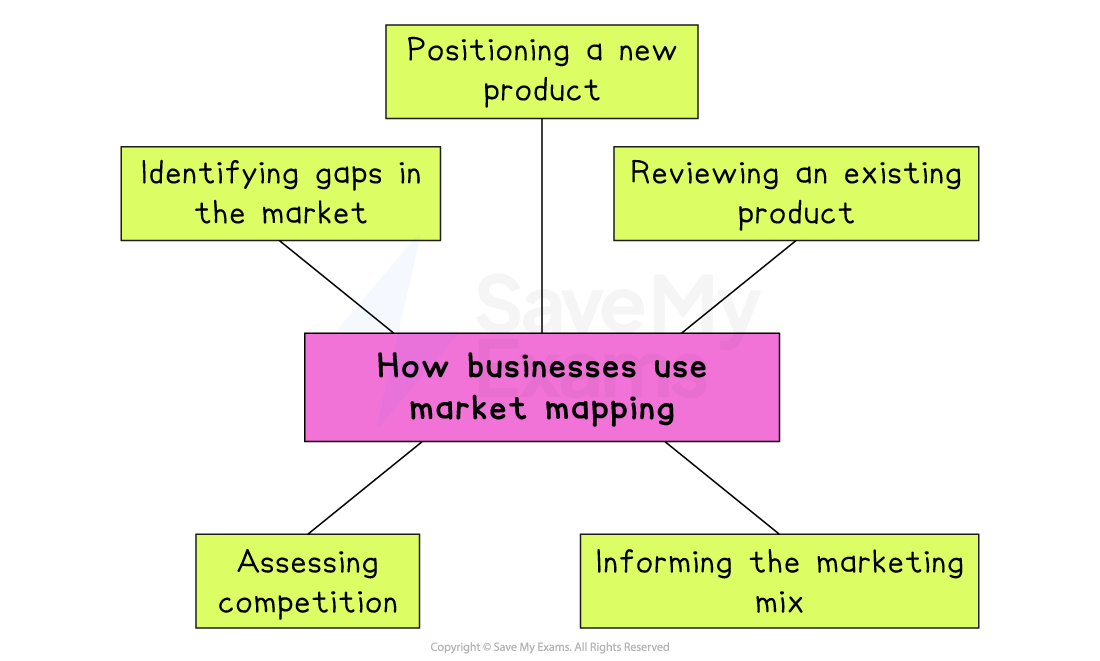
Identifying gaps in the market
Areas of the map with few or no competitors may represent unmet customer needs that a business could target
Positioning a new product
Businesses can decide where to place a new product to differentiate it from rivals or to fill an identified gap
Reviewing an existing product
A business can check whether its product is positioned where it intends, or whether customer perceptions have changed
Informing the marketing mix
Decisions about price, branding and promotion can be guided by where the business wants to sit on the map
Assessing competition
The map highlights which competitors are closest and, therefore, most threatening
Case Study
How Brew & Co used market mapping

Brew & Co is a start-up planning to open a chain of coffee shops in Manchester. Before committing to a brand identity or pricing strategy, founder Yasmin Patel used a market map to analyse the competitive landscape.
She plotted existing coffee shops on a grid using two axes: price (low to high) and quality of experience (basic to premium). The results were revealing:
Budget café chains clustered in the low-price, basic experience area
Premium branded chains and upmarket independents dominated the high-price, premium-experience space
A clear gap existed in the low price, premium experience area - no brand was offering affordable coffee with a genuinely high-quality feel
Yasmin used this insight to position Brew & Co as a stylish, welcoming café with prices well below the premium chains — a deliberate strategy to fill the identified gap and attract quality-conscious customers unwilling to pay premium prices
The usefulness and limitations of market mapping
Usefulness | Limitations |
|---|---|
|
|
Examiner Tips and Tricks
A very common mistake in exam answers is to assume that a gap on a market map automatically represents a good business opportunity. Always question whether there is genuine customer demand in that space — the gap may exist because no profitable market exists there. In higher-mark questions, evaluating the reliability and limitations of market mapping will help you access the top mark bands.

Unlock more, it's free!
Join the 100,000+ Students that ❤️ Save My Exams
the (exam) results speak for themselves:

Was this revision note helpful?
