The Political Environment: Contemporary Issues (AQA A Level Business): Revision Note
Syllabus Edition
First teaching 2026
First exams 2028
Exam code: 7132

Trade agreements
A trade agreement is a formal arrangement between two or more countries that sets out the rules for trading with each other
Agreements usually focus on reducing or removing barriers such as tariffs, quotas or other restrictions
Agreements can be between just two countries (bilateral) or between several countries at once (multilateral)
They can involve joining an existing trade bloc, such as the European Union (EU), or negotiating a new deal directly with another country
Benefits of trade agreements for business
Trade agreements reduce or remove tariffs
This lowers the cost of importing materials or exporting finished goods
They open up new markets
This gives businesses access to a much bigger pool of potential customers
Example
Under the 2025 UK-India trade deal, 99% of UK goods were given duty-free access to India's market of 1.4 billion people.
Both governments hoped it would double trade between the two countries to around $120 billion by 2030.
They can simplify customs procedures
This reduces delays and paperwork when moving goods across borders
They encourage competition
This can drive domestic businesses to become more efficient and innovative
Example
Since Australian beef and lamb gained easier access to the UK market under a 2023 trade deal, UK farmers have faced pressure to compete more on quality rather than relying on lower foreign competition to protect their prices.
Drawbacks of trade agreements for business
Trade agreements often increase competition from foreign businesses
This can be a real threat to domestic firms that struggle to compete on price
Some industries or jobs can be lost if cheaper imports replace goods that used to be made at home
Example
Around 7,000 UK steel jobs were lost in 2016 as a flood of cheap Chinese steel imports pushed down prices.
Tata Steel alone cut 1,200 jobs, blaming foreign competition directly.
Businesses may need to quickly adapt to new rules, standards or paperwork
This takes time and money, which may be especially challenging for smaller businesses
Example
Small UK exporters were hit hardest by new customs paperwork introduced after Brexit.
Unlike larger firms, they often cannot spread the extra compliance costs across a high volume of trade or afford dedicated staff to handle it.
Some businesses may lack the resources to take advantage of new export opportunities
Impact on functional areas
Functional area | Impact |
|---|---|
Marketing |
|
Finance |
|
Human Resources |
|
Operations |
|
Case Study
The UK-Australia Free Trade Agreement
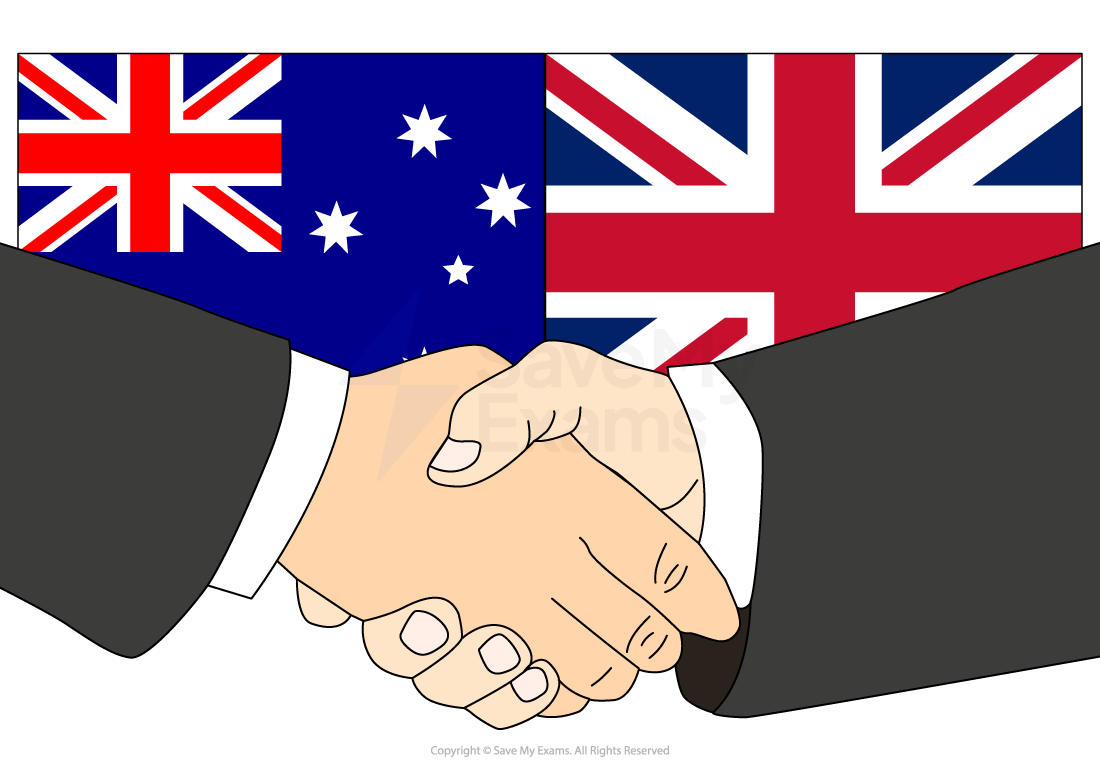
The UK-Australia Free Trade Agreement came into force in May 2023, removing tariffs on most goods traded between the two countries.
While many UK exporters welcomed the wider access to the Australian market, British farmers reacted with real concern.
In the first year of the deal, beef imports from Australia rose by almost 200%, and lamb imports rose 39% in 2023 and a further 42% in 2024.
The National Farmers' Union argued the deal gave Australian producers, who often farm to lower environmental and animal welfare standards, a way to undercut UK farmers who have to meet stricter, more expensive rules.
Some UK livestock farmers warned that rising cheap imports threatened their livelihoods, despite Britain's climate being well suited to sustainable beef and lamb farming.
At the same time, UK consumers benefited from more choice and lower prices, and some other UK export sectors gained easier access to the Australian market in return.
Protectionism
Protectionism means government policies designed to shield domestic businesses from foreign competition, usually by restricting imports
Forms of protectionism
Tariffs
Taxes placed on imported goods, making them more expensive compared with domestically made alternatives
Quotas
Limits on the quantity of a particular good that can be imported into a country over a set period
Trade regulations
Rules and standards placed on imported goods, such as safety or quality standards, which can make it harder or more costly for foreign businesses to sell into a market
Benefits of protectionism for business
Protects domestic businesses and jobs from being undercut by cheaper foreign competition
Can help a new or developing industry grow and establish itself before facing full international competition
Can raise government revenue through tariffs
This tax revenue is sometimes used to support domestic industries
Can protect a country's self-sufficiency in important industries
Such as food, energy or steel
Drawbacks of protectionism for business
Increases costs for businesses that rely on imported materials or components subject to tariffs
Can lead to other countries retaliating with their own tariffs,
This can harm businesses that rely on exporting
Reduces consumer choice
This can push prices up as domestic producers face less competitive pressure
Can reduce a business's access to international markets if trade partners respond with their own restrictions
Impact on functional areas
Functional area | Impact |
|---|---|
Marketing |
|
Finance |
|
Human Resources |
|
Operations |
|
Case Study
US Protectionism
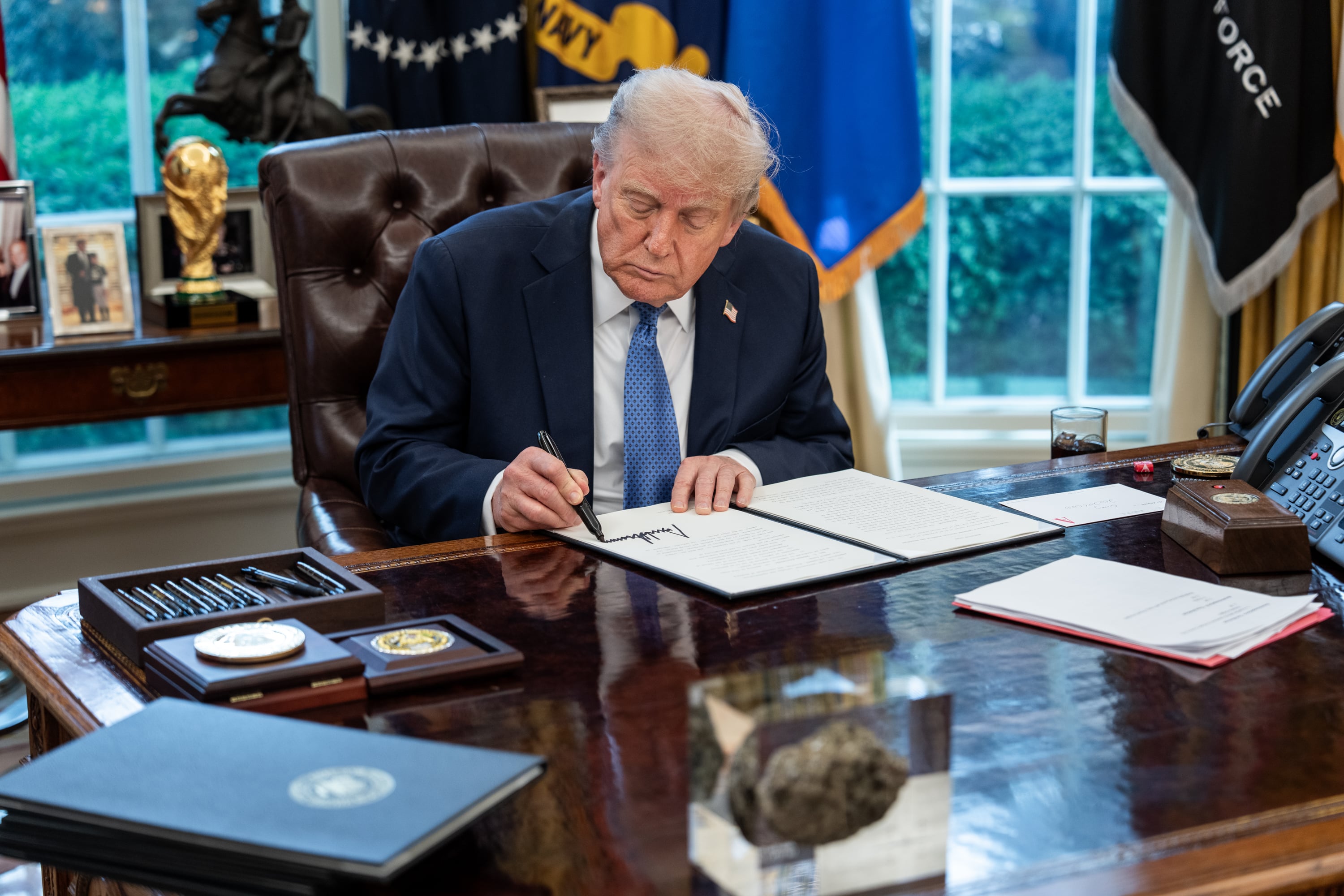
In April 2025, President Trump introduced a 25% tariff on cars and trucks imported into the US.
Jaguar Land Rover, the UK's biggest car manufacturer, paused all shipments to the US for around a month while it worked out how to respond, as exports to the US made up about a quarter of its total sales.
Without any changes, a Range Rover model starting at $107,900 could have cost buyers nearly $135,000 once the tariff was added.
The pause gave Jaguar Land Rover time to explore options such as adjusting prices, shifting production, or negotiating with suppliers, rather than immediately passing the full cost on to customers or absorbing it as lost profit.
Examiner Tips and Tricks
Trade agreements and protectionism often work in opposite directions for the same business - a country signing more trade agreements while also raising tariffs elsewhere can create genuinely mixed effects, so avoid treating government trade policy as a single, one-directional force

Unlock more, it's free!
Join the 100,000+ Students that ❤️ Save My Exams
the (exam) results speak for themselves:

Was this revision note helpful?
