The Nature & Impact of Change (AQA A Level Business): Revision Note
Syllabus Edition
First teaching 2026
First exams 2028
Exam code: 7132

What is change?
Business change is any significant shift in how a business operates, is organised, or competes, moving away from an existing way of working towards a new one
Change can affect almost any part of a business, including its strategy, structure, products, processes, technology or culture
Planned change is where a business deliberately decides to change in advance as part of its strategy
Reactive change is where a business is forced to change quickly in response to an unexpected event or pressure
Benefits of change
Benefit | Explanation |
|---|---|
Adapting to market change |
|
Continuous improvement |
|
Driving innovation and growth |
|
Managing risks |
|
Engaging employees |
|
Incremental change
Incremental change is a series of small, gradual improvements to processes, products or structures rather than a single large overhaul
Value | Explanation |
|---|---|
Low risk |
|
Staff acceptance |
|
Cost-effective |
|
Encourages improvement |
|
Case Study
Incremental change at Toyota

Over decades, Toyota encouraged every employee to suggest tiny process improvements on the production line.
Defect rates fell, waste was cut, unit costs reduced and workers became more engaged in quality
Disruptive change
Disruptive change is a radical shift that transforms an industry or market by introducing a new business model, technology or way of operating
Value | Explanation |
|---|---|
First-mover advantage |
|
Rapid growth potential |
|
Outpacing rivals |
|
Long-term resilience |
|
Case Study
Disruptive change at Netflix

In 2007, Netflix shifted from mailing DVD rentals to offering on-demand streaming online
Subscriber numbers surged, Netflix overtook traditional rental firms, and it built a platform for producing original shows, securing its long-term position
Reasons for change
Internal reasons for change
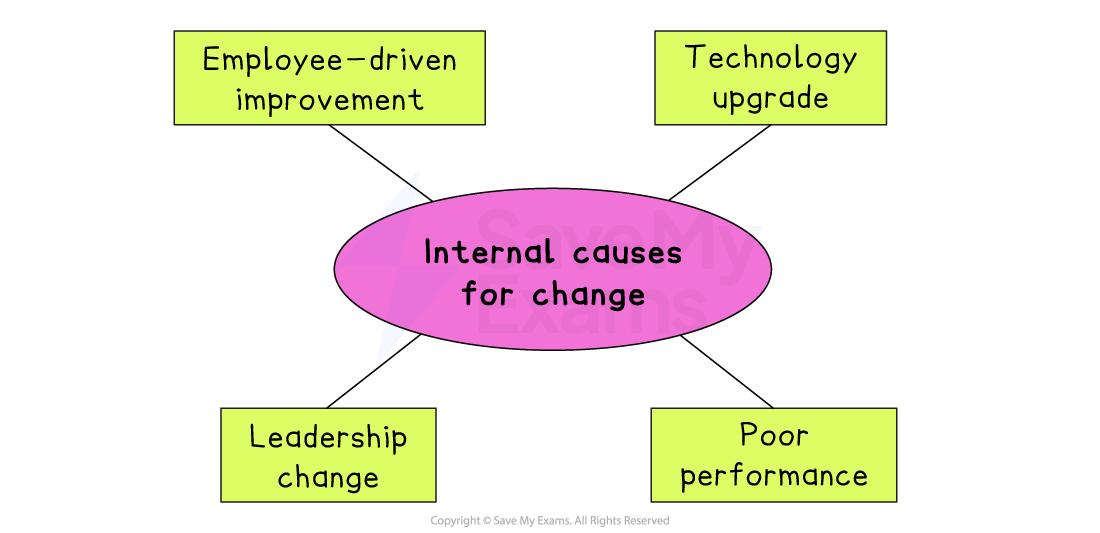
Reason | Explanation | Example |
|---|---|---|
Leadership change |
|
|
Technology upgrade |
|
|
Poor performance |
|
|
Employee-driven improvement |
|
|
External reasons for change
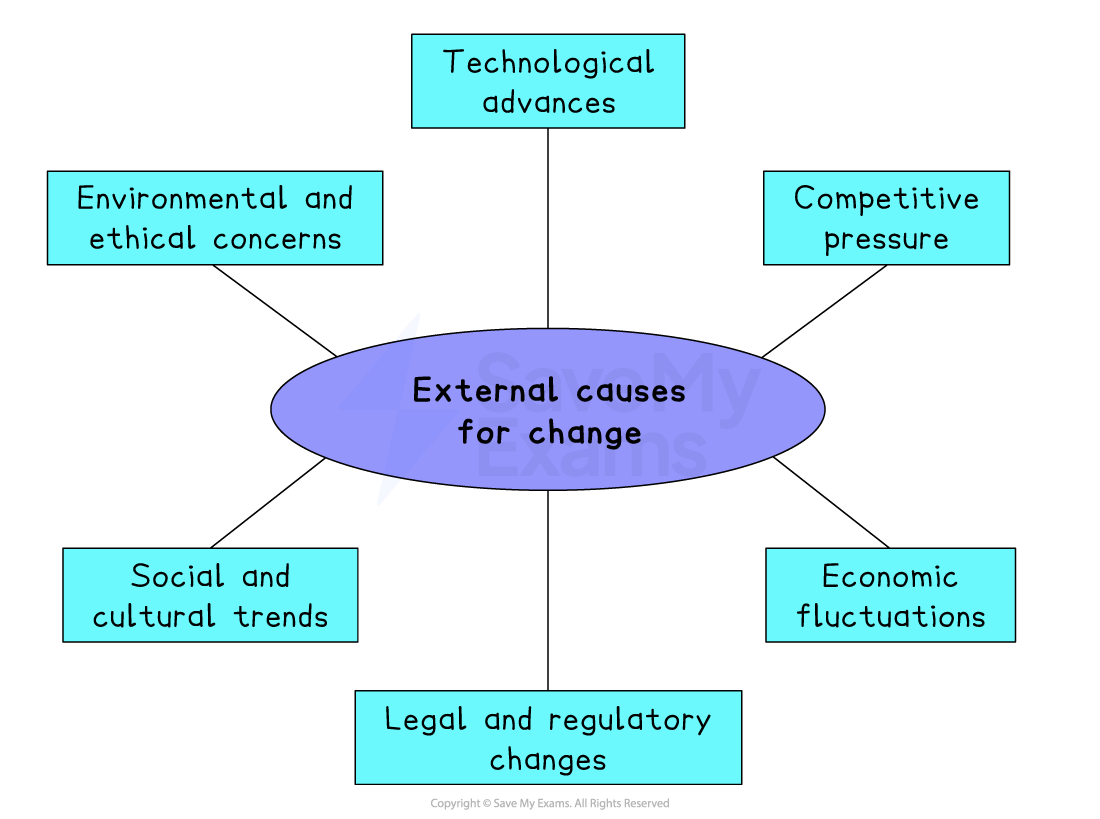
Reason | Explanation | Example |
|---|---|---|
Technological advances |
|
|
Competitive pressure |
|
|
Economic fluctuations |
|
|
Legal and regulatory changes |
|
|
Social and cultural trends |
|
|
Environmental and ethical concerns |
|
|
Change and stakeholders
Change rarely affects every stakeholder group in the same way
What benefits one group can disadvantage another
This is why managing change well requires considering its impact across all of them
Employees
Change can bring a range of advantages for employees
New training opportunities
Career progression in restructured roles
Improved working practices, such as more flexible or hybrid working arrangements
Example
Unilever trialled a four-day working week in some of its markets, including New Zealand, between 2020 and 2022
Employees reported significantly improved wellbeing and work-life balance without any reduction in pay
However, change can also cause problems for employees
Job insecurity due to the risk of redundancy
Increased workload during a transition
Cause stress as a result of having to learn new skills or processes
Example
British Airways' restructuring during the COVID-19 pandemic in 2020 involved significant redundancies and a controversial fire and rehire process for remaining cabin crew, causing considerable anxiety and disputes with trade unions
Shareholders
Well-managed change can improve long-term profitability and share price
This can protect and potentially grow the value of shareholders' investment
Example
Microsoft's strategic shift towards cloud computing under chief executive Satya Nadella from 2014 led to a huge increase in the company's share price over the following decade, rewarding shareholders who had backed the change
However, the short-term costs of change, such as restructuring or redundancy payments, can reduce short-term profit and unsettle investor confidence
Example
BT Group's share price fell when the company announced large-scale job cuts and restructuring costs in 2023, despite the changes being intended to improve long-term profitability
Customers
For customers, change can bring improved products, services or customer experience, particularly where new technology is involved
However, the transition period can create problems
Service quality may be disrupted
Changes to products, pricing or policies can confuse or frustrate existing customers
Example
X's (formerly Twitter's) changes to its features following its change in ownership in 2022 caused significant confusion and disruption for existing users
Suppliers
For suppliers, a business that is growing or changing strategy may offer suppliers increased orders or new opportunities to innovate together
However, a change in strategy can threaten existing suppliers' revenue if orders are reduced, contracts are renegotiated, or the business switches to a different supplier
Example
When Boeing significantly cut its output following the 737 MAX crisis, key suppliers such as Spirit AeroSystems saw a sharp fall in orders and revenue
Local community and government
Positive change, such as new investment or job creation, can benefit the local economy by creating employment and increased tax revenue
Example
Nissan announced a £2 billion investment at its Sunderland plant in 2023, including new electric vehicle models and a battery gigafactory, creating thousands of jobs and significantly boosting the local economy
Negative change, such as site closures or relocation, can seriously damage local employment and economic activity
This can sometimes prompt government intervention
Example
In 2025, the UK government took control of British Steel's Scunthorpe site through emergency legislation to prevent the closure of its blast furnaces, protecting thousands of local jobs and the surrounding community's economy
Examiner Tips and Tricks
When a case study describes a business changing, always identify which stakeholder groups gain and which lose out. Recognising that change is rarely universally positive or negative, drawing a strong conclusion should weigh these competing impacts against each other

Unlock more, it's free!
Join the 100,000+ Students that ❤️ Save My Exams
the (exam) results speak for themselves:

Was this revision note helpful?
