Social Environment in Practice (AQA A Level Business): Revision Note
Syllabus Edition
First teaching 2026
First exams 2028
Exam code: 7132

Demographic factors
Demographic factors are the measurable characteristics of a population, such as its age structure, size, life expectancy and household composition
Recent trends
The UK population is ageing, driven by a combination of falling birth rates and rising life expectancy
It is a long-term, structural shift in the UK population, rather than a short-term trend
Life expectancy at birth is around 83.0 years for females and 79.1 years for males
The number of people of pensionable age is projected to rise to 14.2 million by 2034, an increase of 14.6 per cent since 2014
The number of people aged 85 and over is projected to more than double, from around 1.75 million in 2024 to 3.6 million
Opportunities and threats of an ageing population
Opportunities |
|
|---|---|
Threats |
|
The impact of an ageing population on functional areas
Marketing
Businesses may need to develop new products and services aimed specifically at older consumers, such as in healthcare, leisure and travel
Advertising and communication channels may need to change, as older consumers often respond to different messaging and media than younger age groups
However, there is a risk of losing relevance with younger customers if a business focuses too heavily on an ageing customer base
Example
Saga has built its whole business around marketing travel and insurance products exclusively to people aged 50 and over.
This group made up 38% of the UK population in 2025, and it is forecast to keep growing faster than any other age group.
Finance
Rising demand from older consumers can create new revenue streams in sectors such as healthcare, retirement housing and financial services
Businesses may need to invest more capital to expand into these growing markets
Example
Welltower, a healthcare property investor, spent £5.2 billion buying Barchester's UK care home properties in 2025, as investors look to profit from rising demand for care from an ageing population
Human resources
A shrinking working-age population can make recruitment more difficult in some sectors, increasing competition for staff
Businesses may need to adapt policies, such as flexible working, phased retirement or health support, to recruit and retain older employees
Older workers often bring valuable experience and can have lower employee turnover, but may also require workplace adjustments
Example
BAE Systems was named Menopause Friendly Employer of the Year, having introduced a formal menopause policy covering workplace adjustments, flexible working and manager training, to help retain experienced staff as its workforce ages.
Operations
Products, services and store or branch layouts may need to be redesigned to remain accessible to older customers, who are often less confident with digital technology
Businesses may need to maintain more traditional customer service options, such as telephone or face-to-face support, alongside digital channels
Example
From January 2026, the Post Office began offering cash withdrawal and deposit services on behalf of 30 UK banks and building societies, helping to maintain access for older, cash-reliant customers as many bank branches closed.
Consumer values
Consumer values are the beliefs, attitudes and priorities that influence what people choose to buy and from whom
Examples include views on sustainability, health, ethics and convenience
Consumer values can differ significantly between generations and can shift over time in response to wider social change
Recent trends
Sustainability
Sustainability refers to the capacity of a business to meet its present objectives without compromising the environmental, social, or economic resources needed by future generations
Over 64 per cent of UK Gen Z consumers said they preferred to buy from sustainable and ethical brands in 2025, compared with 55 per cent of millennials
However, cost remains the biggest barrier to sustainable spending, alongside a lack of interest or information
Source: Statista, 2025
Example
Patagonia builds its whole brand around caring for the environment
It has run adverts telling customers not to buy a new jacket if they do not need one, gives money to environmental causes, and repairs old products for free so customers keep them for longer.
Health and wellness
Consumers increasingly prioritise physical and mental well-being when deciding what to buy, not just what is convenient or cheap
One in four UK households named health as their number one spending priority for 2026
Pharmacy, health and beauty sales rose 9.6% and supplement sales were up 18.4% since 2024
Source: McKinsey, 2026
Example
Gymshark started as a small UK company and grew into a billion-pound fitness clothing brand.
It grew by identifying the trend of people caring more about fitness and health, and grew its popularity through fitness influencers rather than traditional adverts.
Convenience and speed
Consumers increasingly expect goods and services to be available quickly and with minimal effort, determining how and where they choose to shop
Example
Tesco's rapid delivery service, Whoosh, grew 51 per cent in 2025 to over £400 million in sales.
Selective, value-conscious spending
Rather than cutting back everywhere, many consumers are now cutting spending on things, especially physical items, that do not feel worthwhile
They are still paying for what does, such as wellness or experiences
This selective demand means a business can grow even in a weak economy, provided it is seen as genuinely worth the money
Example
Many fans cut back on everyday spending but still paid several hundred pounds each for tickets to Oasis's 2025 reunion tour, which sold out within hours.
Diversity and inclusion
Consumers, particularly younger ones, increasingly expect the businesses they buy from to represent and treat all groups in society fairly, in their products, advertising and workforce
Businesses seen as excluding groups, whether through small sizing, contentious imagery or poor service design, risk losing customers to more inclusive competitors
Example
In 2017, Fenty Beauty launched with 40 shades of foundation, far more than most other brands offered at the time.
This gave customers with darker skin tones far more choice, and forced other beauty brands to widen their own ranges to keep up.
Opportunities and threats of shifting consumer values
Opportunities |
|
|---|---|
Threats |
|
The impact of changing consumer values on functional areas
Marketing
Product ranges, branding and advertising need to reflect current consumer priorities, such as sustainability, health or inclusivity
Businesses risk being accused of greenwashing if marketing claims are not backed up by real evidence
Messaging often needs to differ between generations, as values can vary significantly by age group
Finance
Developing products or services that reflect new values, such as sustainable materials or ethical sourcing, can increase costs
Businesses that align well with changing consumer values can see increased revenue and stronger customer loyalty
Failing to adapt can lead to falling sales as customers switch to competitors who better reflect their priorities
Human resources
Employees, particularly younger ones, increasingly expect employers to reflect their own values, affecting recruitment and retention
Businesses may need to invest in training so staff understand and can communicate the business's ethical or sustainability commitments
Operations
Products may need to be reformulated, redesigned or sourced differently to meet new consumer priorities, such as reduced sugar content or ethical sourcing
Supply chains may need to change to use more sustainable or ethically certified materials
Meeting new expectations can require significant changes to production processes, which takes time and investment
Case Study
Vinted and changing consumer values
Vinted, the online marketplace for second-hand clothing, now has more than 17 million users in the UK and is valued at over £8 billion, as the UK secondhand fashion market has grown to be worth more than £7 billion.
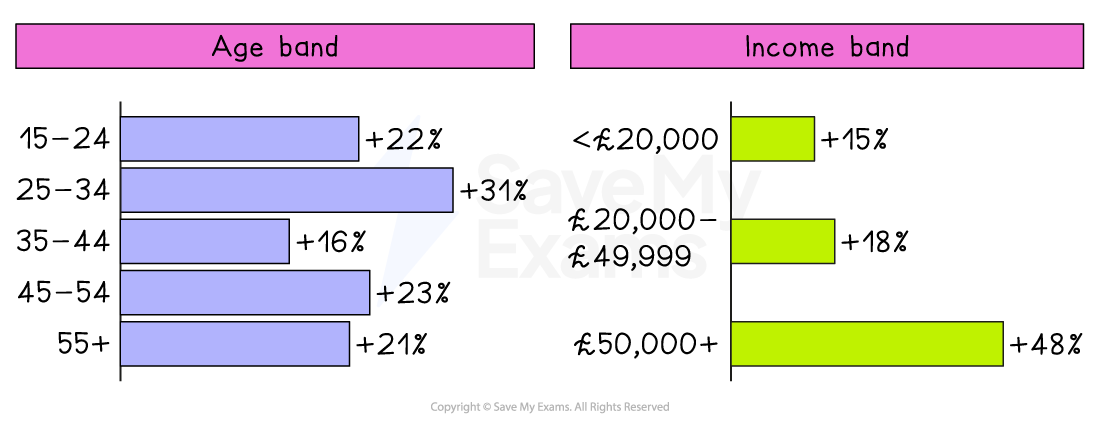
Research suggests that affordability, not sustainability, is the main reason people use resale platforms, with sustainability a secondary motivation for many.
Vinted's growth reflects a genuine shift towards more sustainable consumption and, just as importantly, growing price sensitivity among UK shoppers
Activism
Activism is organised action by individuals or groups, such as campaigners, employees or shareholders, to pressure a business into changing its practices or policies
Forms of activism
Consumer boycotts
This is when a group of customers deliberately stops buying from a business to pressure it into changing a policy or practice
Example
In July 2026, naturalist Chris Packham led a protest outside a Pret A Manger branch after the company missed its 2026 deadline to stop using fast-growing 'Frankenchicken' breeds, a promise it had made back in 2018.
Employee campaigns
This is organised action by a company's own workforce, such as forming a trade union or taking industrial action, to pressure their employer into changing pay, conditions or policies
Example
Workers at Amazon's Coventry warehouse grew their union membership from around 60 in 2022 to over 1,400, campaigning to get their union officially recognised.
They narrowly lost a vote on this in 2024, so in 2025 hundreds of workers took legal action, arguing Amazon had used unfair tactics to influence the result.
Shareholder resolutions at annual general meetings
A shareholder resolution is a formal proposal put forward by shareholders at a company's AGM, asking the business to change its strategy or disclose more information, which all shareholders then vote on
Example
The campaign group Follow This asked both Shell and BP to hold shareholder votes on climate change at their 2026 AGMs.
Shell allowed the vote, but only 13% backed it. BP refused to allow a vote at all, which angered shareholders, many of whom voted against BP's new chair in protest.
Public protest
A public protest is a direct, visible action by campaigners, often in public spaces or at events, designed to draw attention to an issue and pressure businesses or government into change
Example
Between 2022 and 2025, Just Stop Oil activists disrupted major events including Wimbledon, the British Grand Prix and exhibitions at the National Gallery, to pressure businesses and government over fossil fuel use.
Its campaign of direct action ended in 2025 after over 3,300 arrests.
Opportunities and threats created by activism
Opportunities |
|
|---|---|
Threats |
|
Business responses to activism
Businesses may choose to end or change controversial partnerships or sponsorships in response to sustained public pressure
Some businesses set up formal channels, such as advisory panels, to engage with campaign groups before pressure escalates
Businesses may publish clearer, evidenced sustainability or ethics reports to reduce the risk of being accused of greenwashing
Case Study
BP and the British Museum
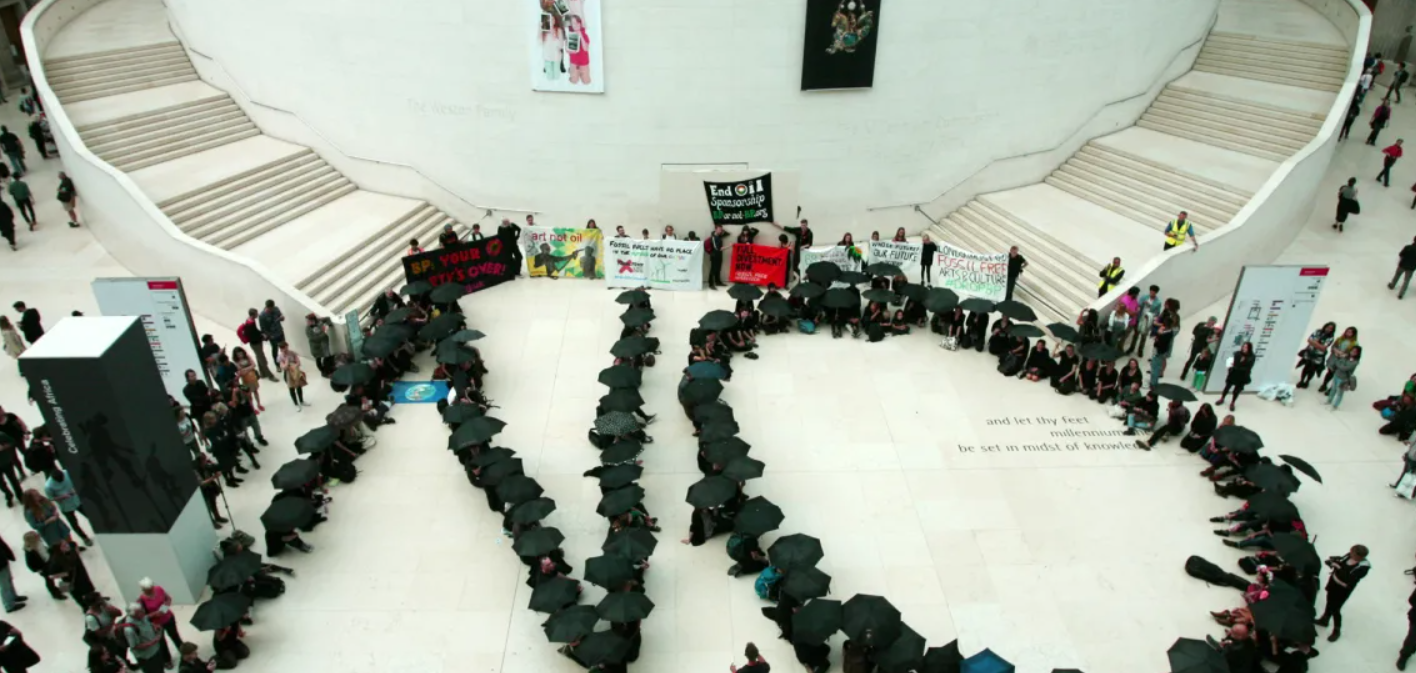
BP sponsored major exhibitions at the British Museum for 27 years, before the partnership ended in 2023. This was as a direct result of a sustained campaign by the group Culture Unstained, which argued that the sponsorship helped BP maintain a positive public image while continuing to invest heavily in fossil fuels.
Culture Unstained's co-director Sarah Waldron described the end of the sponsorship as a 'massive victory' for the campaign'.
Examiner Tips and Tricks
Don't assume activism always works - showing that you understand outcomes vary is worth real credit. Follow This's 2026 climate resolution won only 13% support at Shell, and BP refused to let shareholders vote on it at all.

Unlock more, it's free!
Join the 100,000+ Students that ❤️ Save My Exams
the (exam) results speak for themselves:

Was this revision note helpful?
