Price Elasticity of Demand (AQA A Level Business): Revision Note
Syllabus Edition
First teaching 2026
First exams 2028
Exam code: 7132

The importance of price elasticity of demand
Price elasticity of demand (PED) measures how responsive the quantity demanded of a product is to a change in its price
In general:
When the price rises, demand falls
When the price falls, demand rises
PED answers the question: by how much?
Understanding PED helps businesses predict the effect of a price change on sales volume and revenue, making it a valuable tool for pricing decisions
Calculating and interpreting PED
PED will always be a negative value due to the inverse relationship between price and quantity
If the price goes up, the quantity demanded goes down
If the price goes down, the quantity demanded goes up
Formula
Worked Example
A cinema increases the price of its popcorn by 10%. Following this price change, sales fall by 7.5%.
Calculate the price elasticity of demand for popcorn
Price elasticity of demand for popcorn
Interpretation
For every 1% increase in price, demand for popcorn falls by 0.75%
The numerical value of PED indicates the responsiveness of demand to a change in price
Price elastic demand
PED value lower than -1 (e.g -1.2)
Demand is more responsive to a change in price
For every 1% change in price, demand will change by more than 1%
An increase in price will lead to a fall in revenue, whilst a decrease in price will lead to an increase in revenue
Examples include luxury products such as cars, smartwatches, foreign holidays, cinema visits, jewellery and branded goods
Worked Example
A cinema increases the price of its tickets by 5%. Following this price change, sales of tickets fall by 12%.
Calculate the price elasticity of demand for cinema tickets
Price elasticity of demand for cinema tickets
Interpretation
For every 1% increase in price, demand for cinema tickets falls by 2.4%
Demand for cinema tickets is price elastic
Price inelastic demand
PED value is between 0 and -1 (e.g., -0.7)
Demand is less responsive to a change in price
For every 1% change in price, demand will change by less than 1%
An increase in price will lead to an increase in revenue; a decrease in price will lead to a decrease in revenue
Examples include necessities such as bread, milk, eggs and potatoes, fuel, rent and toothpaste
Also addictive products such as cigarettes and sugary foods
Worked Example
A cinema reduces the price of its hot dogs by 25%. Following this price change, sales of hot dogs increased by 18%.
Calculate the price elasticity of demand for hot dogs
Price elasticity of demand for hot dogs
Interpretation
For every 1% decrease in price, demand for hot dogs increases by 0.72%
Demand for hot dogs is price inelastic
Examiner Tips and Tricks
Focus on the size of the number
−1.2 is price elastic, −0.5 is price inelastic. Always link what that means for revenue when price changes
Factors influencing the PED
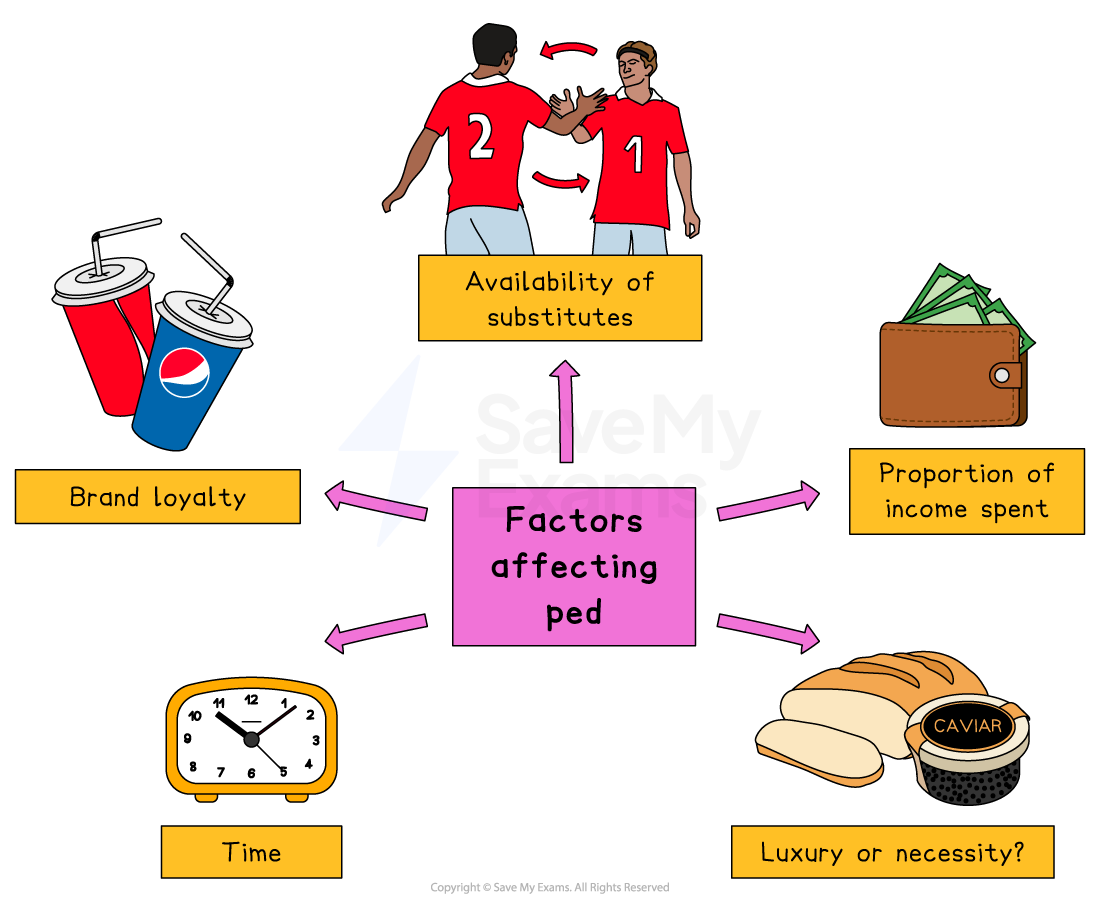
Brand loyalty
The aim of advertising and marketing expenditure by a business is to shift the demand curve to the right and make the demand more price inelastic
For example, Coke consumers are more brand loyal to Coca-Cola and refuse to buy Pepsi, even though their taste is very similar
Availability of substitutes
PED will be more price inelastic for goods that have fewer substitutes
For example, petrol has fewer substitutes and is more price inelastic, whereas chocolate bars have more substitutes and are more price elastic
The proportion of income taken up by the product
The smaller the proportion of income we spend on a product, the more price inelastic the demand will be
For example, a small amount of income is spent on salt, so the demand for salt is more price inelastic. However, buying a new car takes up a bigger proportion of consumer income, so the PED is higher
Luxury or necessity
Necessities are required as part of consumers' daily needs, and therefore, demand for them is more price inelastic
For example, bread, milk, petrol, gas and electricity might be considered necessities
Luxuries are not essential, and therefore, demand for them is more price elastic
For example, smoked salmon, Nike Air Jordans and foreign holidays might be considered luxuries
However, a strong brand reputation will likely make even luxuries less price elastic
Time
The longer the time period under consideration, the more price elastic the demand for a good or service is likely to be (consumers have more time to search for substitutes)
The shorter the time period under consideration, the more price inelastic the demand for a good or service is likely to be
For example, if the price of petrol increases, making driving more expensive, there is little that consumers can do in the short term
However, they may switch to alternatives such as public transport or bicycles in the long term
Price elasticity of demand and revenue
If businesses can determine the PED for their products, they can adjust their pricing strategy to maximise their revenue
Price elastic demand
If demand for a product is price elastic, raising the price will lead to a fall in total revenue
However, lowering the price will lead to a rise in total revenue
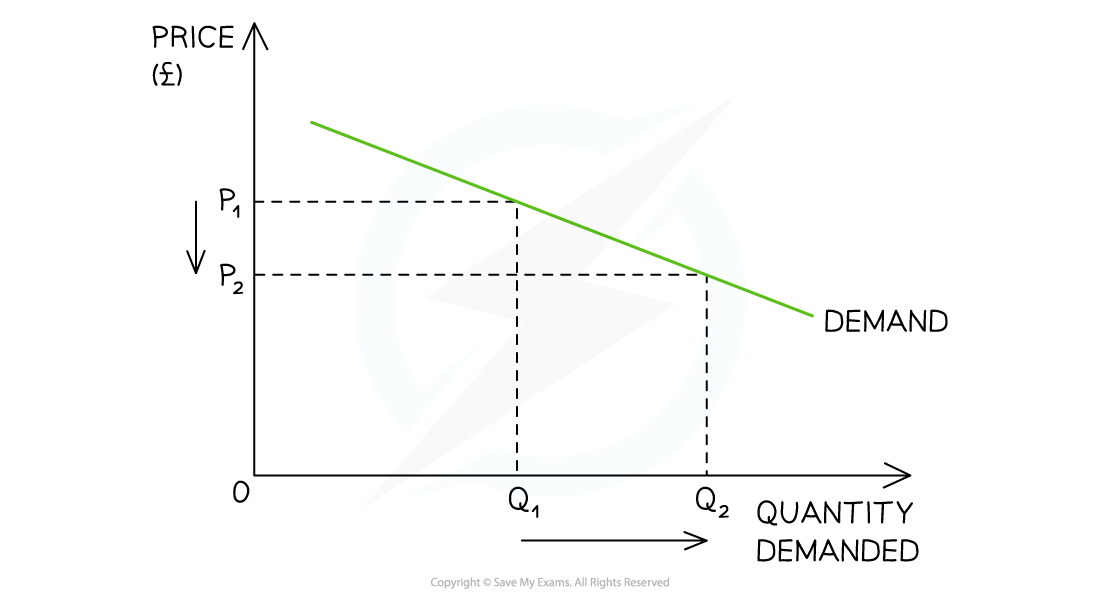
PED is less than -1
An increase in the selling price reduces the total amount of revenue generated from sales
A reduction in the selling price increases the total amount of revenue generated from sales
Worked Example
A cinema increases the price of its tickets by 5%, from £10 to £10.50. Following this price change, sales of tickets fall by 12%, from 1,800 per week to 1,584.
Calculate the change in weekly revenue following the price change
Change in weekly revenue
As a result of the price increase, revenue falls by £1,368 per week
Price inelastic demand
If demand for their products is price inelastic, raising the price will lead to an increase in total revenue
However, lowering the price will lead to a fall in total revenue
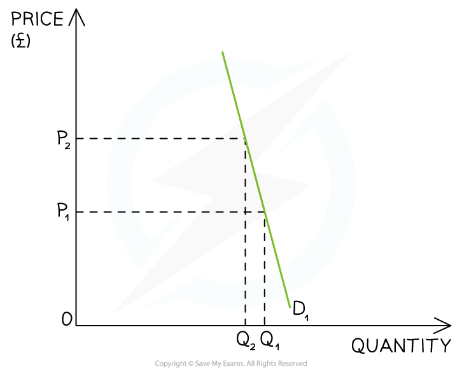
PED is between 0 and -1
An increase in the selling price increases the total amount of revenue generated from sales
A reduction in the selling price reduces the total amount of revenue generated from sales
Worked Example
A cinema increases the price of its popcorn by 10%, from £6 to £6.60. Following this price change, weekly sales fall by 7.5%, from 400 servings to 370 servings.
Calculate the change in weekly revenue following the price change
Change in weekly revenue
Interpretation
As a result of the price increase, revenue increases by £42 per week

Unlock more, it's free!
Join the 100,000+ Students that ❤️ Save My Exams
the (exam) results speak for themselves:

Was this revision note helpful?
