Business Planning (AQA A Level Business): Revision Note
Syllabus Edition
First teaching 2026
First exams 2028
Exam code: 7132

The business plan
A business plan is a written document that sets out a business's objectives, strategies and financial projections
It acts as a roadmap for how the entrepreneur intends to achieve their goals
A typical business plan covers market research, the marketing strategy, operations, staffing and financial forecasts such as cash flow and break-even analysis
Elements of a business plan
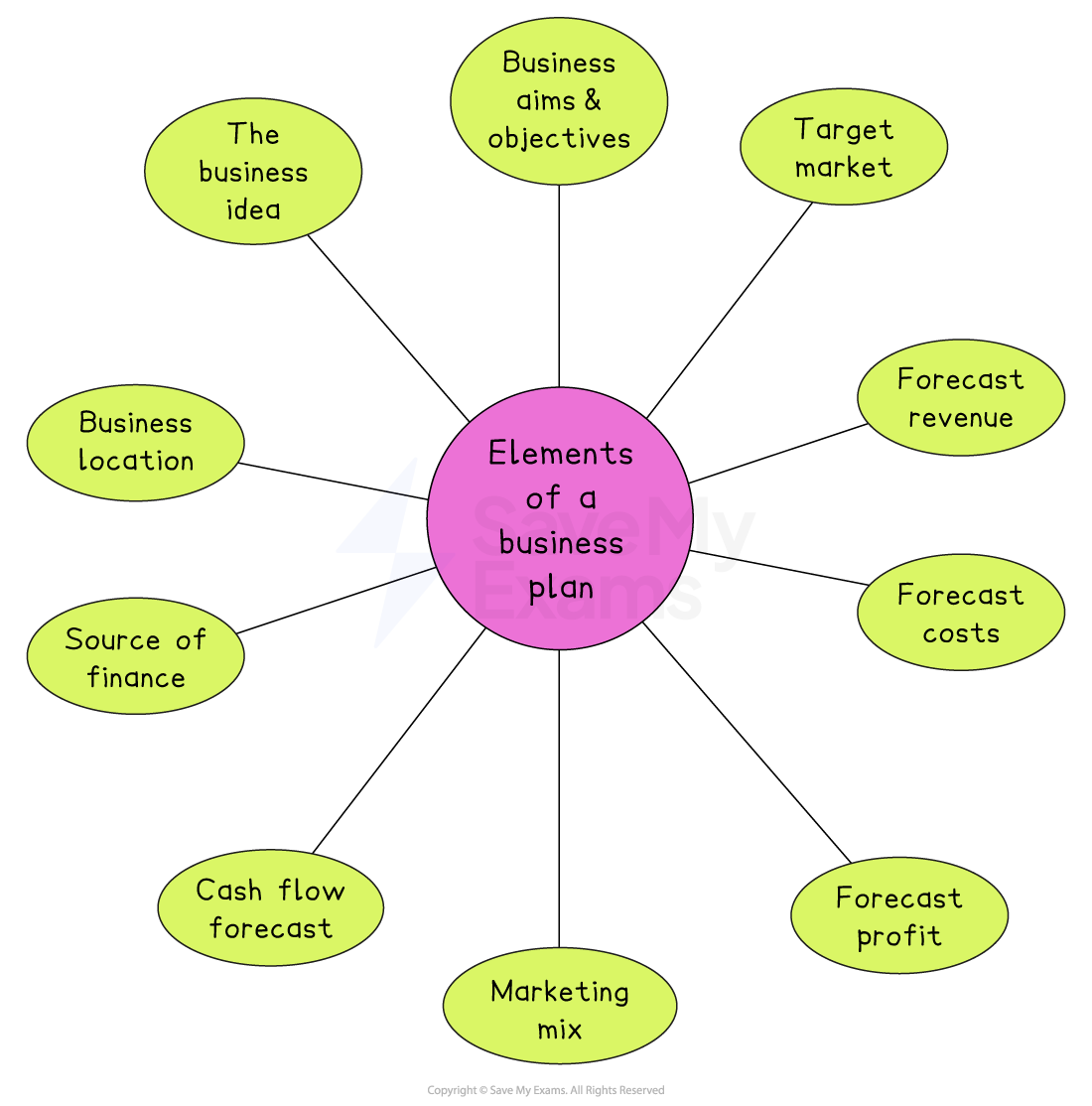
Purpose and value
Helps secure external finance
Lenders and investors typically require a business plan before committing funds
It demonstrates that the entrepreneur has researched the market and assessed the viability of their idea
Tests feasibility
The process of writing a plan forces the entrepreneur to research the market and evaluate whether the business idea has a good chance of success before investing significant time and money
Sets measurable objectives
Establishes clear targets that give the business direction and allow its progress to be monitored over time
Guides decision-making
Provides a framework for strategic and day-to-day decisions, helping the entrepreneur stay focused on their goals
Identifies and manages risk
The planning process can reveal potential problems early, giving the entrepreneur time to develop contingency plans
Coordinates the team
Helps employees and managers understand the business's direction and their individual responsibilities
Provides a performance benchmark
Actual results can be compared against planned targets to assess whether the business is on track and where adjustments may be needed
Case Study
Spice Route Street Food

James Okafor had the recipes, the enthusiasm and the van, but his bank wanted more before lending him £15,000 to launch Spice Route, his Caribbean street food business
Writing a business plan forced James to research his local market properly - he discovered that three similar businesses had failed in the area within two years
His financial projections revealed that his initial pricing would not cover costs. As a result, he adjusted his prices before launch, avoiding what could have been a serious early cash flow problem
The completed plan helped him secure the bank loan he needed, with the lender praising his detailed market research and realistic forecasts as key reasons for approval
Eighteen months later, James reviews his plan quarterly, using it as a performance benchmark to track progress and update his targets
Limitations
Based on estimates and assumptions
Financial projections rely on forecasts that may prove inaccurate, particularly for a new business with no trading history
Can become outdated quickly
In fast-moving markets, a plan written at start-up may no longer reflect current conditions within months
Does not guarantee success
A well-written plan reduces uncertainty but cannot eliminate the risks involved in starting and running a business
Examiner Tips and Tricks
A business plan cannot guarantee success - though it is very unlikely that investors or financial institutions such as banks would consider risking their money on a business without one!
Managers and business owners should keep the business plans up to date, treating them like a curriculum vitae (CV) for the business. It can help focus business activities and identify resources the business needs as well as providing justification to potential investors
Competitiveness
Competitiveness refers to the ability of a business to offer greater value to customers than its rivals, enabling it to attract and retain customers in its market
Sources of competitive advantage
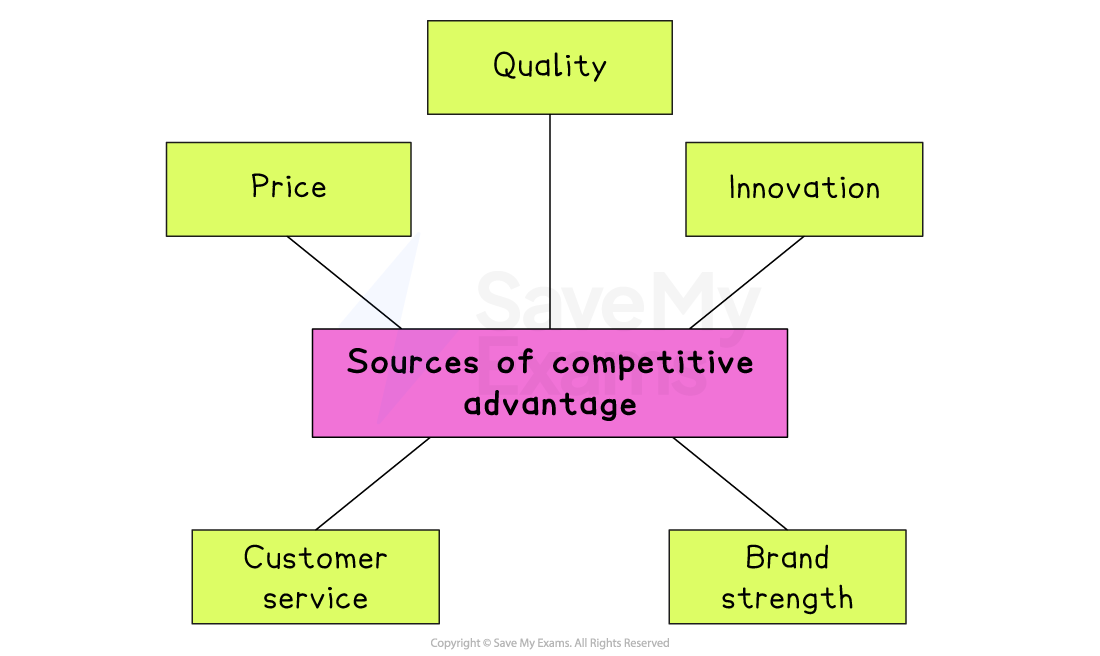
Price
Offering lower prices than rivals while maintaining acceptable profit margins
Quality
Delivering a product or service that is superior to what competitors offer
Innovation
Developing new or improved products that rivals cannot yet match
Customer service
Providing a better overall customer experience than rivals
Brand strength
Building loyalty and trust that keeps customers returning
Why competitiveness matters
Reason | Explanation | Example |
|---|---|---|
Survival |
|
|
Market share |
|
|
Profitability |
|
|
Growth |
|
|
Attracting talent |
|
|
Examiner Tips and Tricks
Competitiveness is not simply about offering the lowest price. In exam answers, consider the source of competitive advantage that best fits the business in the case study - a luxury brand, for example, competes on quality and exclusivity, not price. Matching your answer to the context will always score more highly

Unlock more, it's free!
Join the 100,000+ Students that ❤️ Save My Exams
the (exam) results speak for themselves:

Was this revision note helpful?
