What is the Economic Environment (AQA A Level Business): Revision Note
Syllabus Edition
First teaching 2026
First exams 2028
Exam code: 7132

Introduction to the economic environment
The economic environment refers to the external economic conditions that affect how a business operates
It includes interest rates, exchange rates, inflation, unemployment and the overall growth or contraction of the economy
Unlike the political or legal environment, economic conditions change constantly
They are shaped both by domestic policy decisions, such as interest rate changes, and global events, such as a pandemic or an energy price shock
Businesses can't control the economic environment
However, they must monitor and respond to it, since economic conditions directly affect costs, demand and the availability of finance
Opportunities created by changes in the economic environment
Economic growth
Economic growth is an increase in the total value of goods and services produced by an economy over a period of time
It is measured in terms of Gross Domestic Product growth
Economic growth increases consumer spending power
Demand for goods and services tends to increase
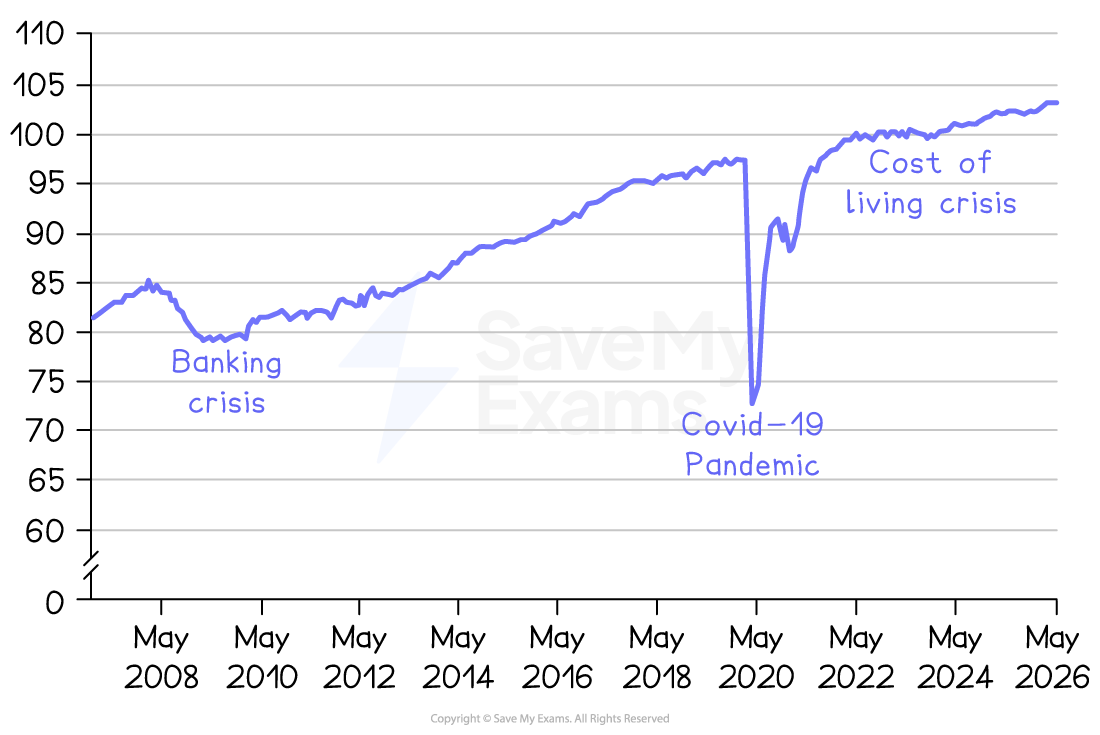
UK economic growth has recovered somewhat after a sluggish period following the 2022 cost of living crisis
This has led to a gradual recovery, particularly in retail and hospitality spending
Falling interest rates
Interest rates are the percentage cost of borrowing money, or the return earned on savings
The interest rate affects how much businesses and individuals choose to borrow, spend and invest
Lower interest rates make borrowing cheaper
This encourages businesses to invest and expand and encourages consumers to spend rather than save
The Bank of England cut its base interest rate from a 15-year high of 5.25% in 2023 to 3.75% by mid-2026
This has reduced the cost of loans and mortgages for both businesses and customers and increased consumer spending
Falling inflation
Inflation is the sustained rise in the general level of prices across an economy over time
It has the effect of reducing the purchasing power of money
Lower inflation reduces pressure on material and wage costs, and helps restore customers' spending power
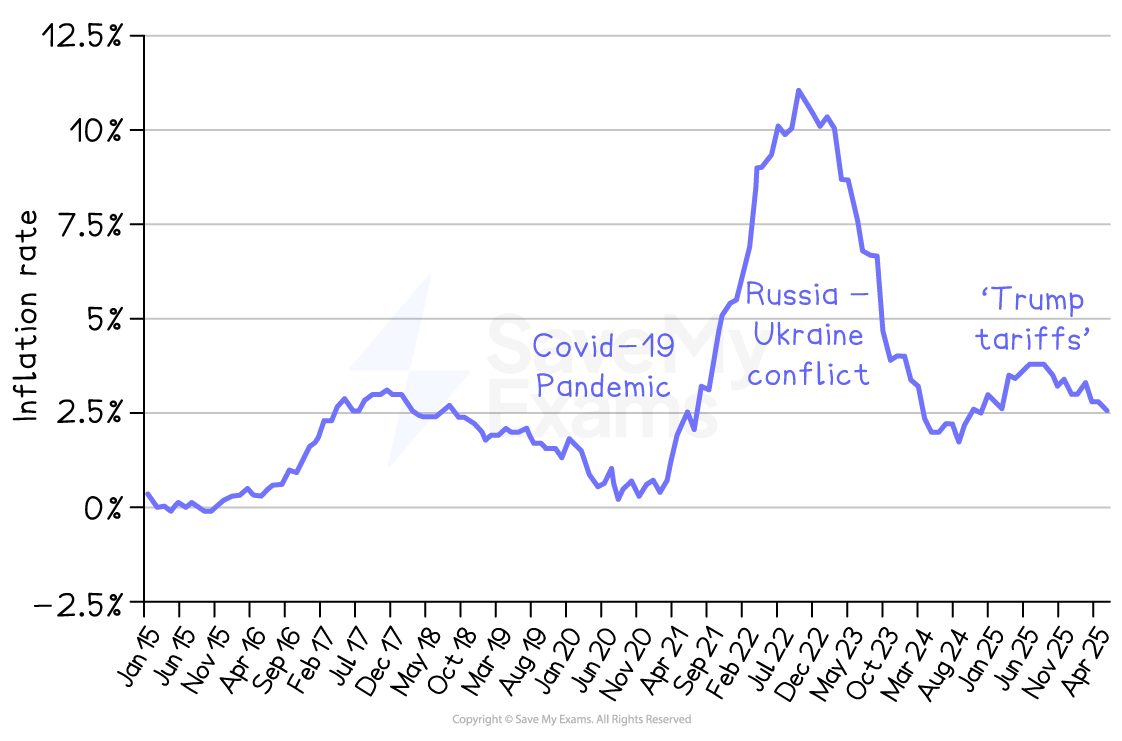
UK inflation fell from a peak of 11.1% in October 2022 to 2.6% by mid-2026
A weaker exchange rate
An exchange rate is the value of one country's currency expressed in terms of another currency
It shows how much of one you would need to exchange for the other
A strong pound is one that can buy more of another currency- or products priced in that currency - than previously
A weak pound is one that can buy less of another currency - or products priced in that currency - than previously
A weaker pound makes UK exports cheaper and more competitive in foreign markets
Overseas customers get more for their own currency
The pound's sharp fall against the dollar in September 2022, to a record low of around $1.03, briefly made UK exports unusually cheap and competitive abroad
However, it also raised the cost of importing materials, components and consumer goods from the US and other countries whose currencies are linked to the dollar
Rising employment
A strong labour market is one in which unemployment is low and jobs are plentiful
It tends to give workers greater bargaining power and pushes wages up
This improves consumer confidence and increases spending
However, it gives businesses a smaller pool of potential jobseekers from which to select new employees
UK employment rose by 148,000 in the three months to May 2026
This was the largest increase in almost a year, supporting stronger consumer spending across the economy
Threats created by changes in the economic environment
Recession or economic downturn
Falling GDP reduces consumer spending
This can reduce sales for many businesses, particularly those selling non-essential goods
The 2020 pandemic-driven recession forced many retail and hospitality businesses to close temporarily or permanently, as consumer spending collapsed almost overnight
Rising interest rates
Higher interest rates increase the cost of borrowing
This adds to costs for businesses with loans and reduces customers' discretionary income after mortgage or loan repayments
In a move to tackle high levels of inflation, the Bank of England raised its base rate to a 15-year high of 5.25% in August 2023
However, this significantly increased mortgage and loan repayments
Households, consequently, reduced their spending on high-value and non-essential items
Rising inflation
Higher inflation increases the cost of materials, wages and other inputs
It also reduces customers' spending power if wages don't rise at the same rate
UK inflation reached 11.1% in October 2022 as a result of rising energy and food prices
This reduced profit margins across many industries that couldn't fully pass on higher costs to customers
A stronger or more volatile exchange rate
A stronger pound makes UK exports more expensive abroad
Sudden currency swings make it harder for businesses to plan the cost of imports or overseas contracts
The pound's dramatic swings following the government's 'mini-budget' in 2022 created serious uncertainty for any UK business trading internationally at the time
Rising unemployment
Higher unemployment reduces overall consumer spending power and confidence, even for businesses whose own staff aren't directly affected
UK unemployment rose to 5.2% in the three months to December 2025, its highest level since early 2021
This had the effect of reducing spending power across the whole economy
The economic environment and functional areas
Functional area | Impact | Example |
|---|---|---|
Marketing |
|
|
Finance |
|
|
Human resources |
|
|
Operations |
|
|
Examiner Tips and Tricks
Many economic factors move together rather than in isolation
For example, a central bank raising interest rates to control inflation often slows growth and can raise unemployment at the same time.
Strong answers explain these knock-on connections rather than treating each factor as a separate, unconnected event

Unlock more, it's free!
Join the 100,000+ Students that ❤️ Save My Exams
the (exam) results speak for themselves:

Was this revision note helpful?
