Marketing Objectives (AQA A Level Business): Revision Note
Syllabus Edition
First teaching 2026
First exams 2028
Exam code: 7132

What are marketing objectives?
Marketing objectives are the specific, measurable goals that a business's marketing team aims to achieve
They translate broader business objectives into clear targets for marketing activity, giving the team direction, focus and a way to measure success
Why marketing objectives matter
Marketing objectives are significant because they;
Give the marketing team clear direction and priorities
Allow the business to measure whether marketing activity is effective
Ensure spending is focused on activities that support wider business goals
Help coordinate efforts across different parts of the marketing team
Key marketing objectives
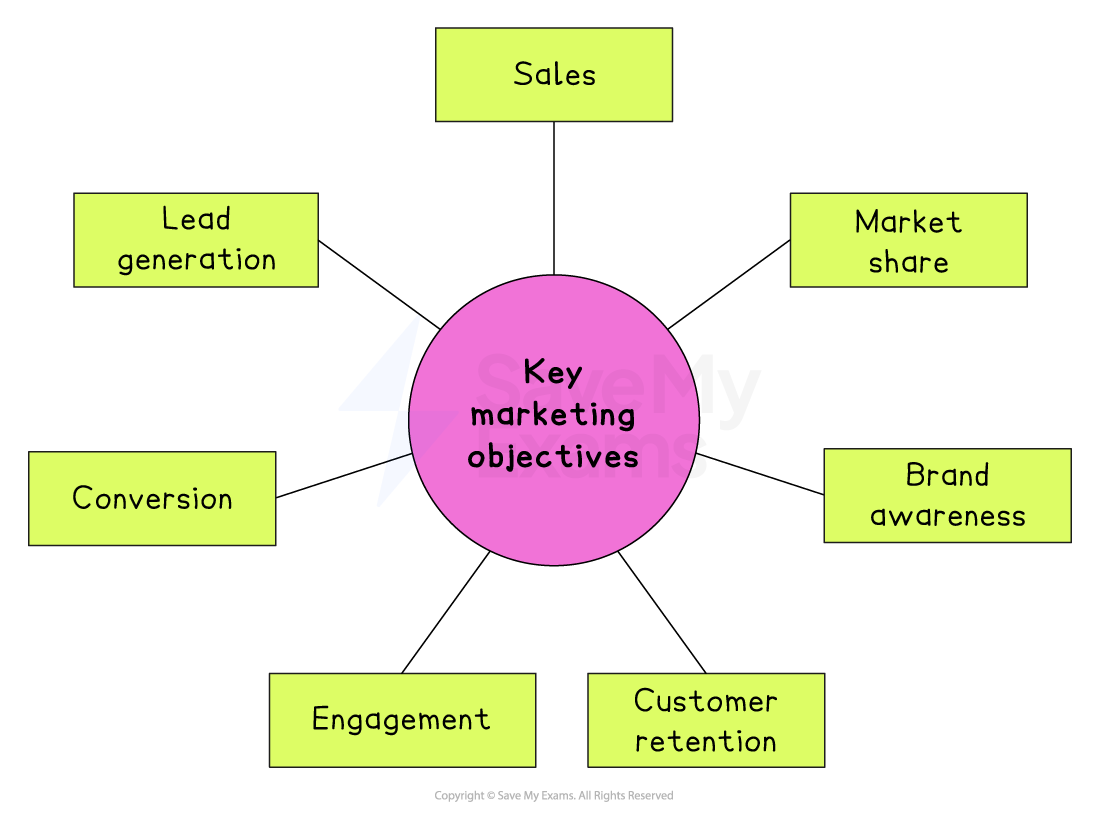
Lead generation
Attracting potential customers (leads) who have shown interest in the product or service
For example, by signing up for a newsletter or completing an enquiry form
Particularly important for businesses selling high-value or complex products, where customers research carefully before buying
Sales
Increasing the volume or value of products sold
Sales is the most direct marketing objective and links closely to revenue growth
Businesses may target a specific increase in units sold, total revenue or average transaction value
Market share
Growing the proportion of total market sales held by the business
Gaining market share often means winning customers from competitors, making this a priority in slow-growing or highly competitive markets
Brand awareness
Increasing the number of people who know about and recognise the brand
A priority for new businesses, product launches or when entering a new market
Higher awareness increases the chance consumers will consider the brand when making a purchase decision
Customer retention
Keeping existing customers loyal and encouraging repeat purchases
Retaining a customer is generally far cheaper than acquiring a new one, making this a cost-effective objective
Businesses may use loyalty schemes, personalised communication, or excellent customer service to achieve it
Engagement
The level of interaction customers have with the brand, particularly on social media (likes, shares, comments, video views)
High engagement suggests customers feel genuinely connected to the brand and are more likely to remain loyal and recommend it to others
Conversion
Turning potential customers into actual paying customers
Often expressed as a conversion rate - the percentage of website visitors or leads who go on to make a purchase
Improving conversion means getting more value from existing marketing without necessarily increasing traffic or spending
Case Study
Northgate Living

Northgate Living is a mid-range homeware retailer with 18 stores across the North of England and a growing e-commerce website. Having built a loyal local customer base, the business is now looking to expand nationally.
With this in mind, Northgate Living has set a range of marketing objectives:
Brand awareness is the immediate priority
Most consumers outside the North have never heard of the brand, so increasing recognition nationally is essential before sales can grow
Alongside this, the business targets lead generation
It encourages website visitors to sign up for email updates and exclusive offers, building a database of potential customers to market to directly
As the website grows, improving conversion will be critical
Currently, only 2% of site visitors make a purchase, and even a small improvement would significantly boost revenue
The business has also set a customer retention objective for its existing stores
It intends to launch a loyalty card scheme to increase repeat visits and average spend
Together, these objectives give Northgate Living's marketing team clear, measurable priorities that directly support the business's goal of national growth
Examiner Tips and Tricks
Marketing objectives should always align with the overall business objectives. A business aiming for rapid growth would likely prioritise market share and lead generation, while a more established business might focus on customer retention and engagement
Influences on marketing objectives
The marketing objectives a business sets are determined by a range of internal and external factors
Factor | Explanation |
|---|---|
Business objectives and corporate strategy |
|
Stage in the product or business life cycle |
|
Market conditions |
|
Marketing budget |
|
Target market characteristics |
|
Availability of data and digital technology |
|
Ethical and legal considerations |
|
Examiner Tips and Tricks
In an 'evaluate' question, consider which objective is most appropriate given the specific business context. A new business with low brand recognition and a limited budget faces very different priorities than an established market leader - always anchor your answer to the case study

Unlock more, it's free!
Join the 100,000+ Students that ❤️ Save My Exams
the (exam) results speak for themselves:

Was this revision note helpful?
