Ethics and the Marketing Mix (AQA A Level Business): Revision Note
Syllabus Edition
First teaching 2026
First exams 2028
Exam code: 7132

Ethics in product decisions
Ethics in marketing refers to the moral principles that guide how a business promotes and sells its products
While businesses are driven by profit, they also have a responsibility towards their customers, wider society and the environment
Unethical marketing decisions can cause real harm
Increasingly, consumers, regulators and the media hold businesses to account when they fall short
The products a business chooses to sell, and how they are designed, sourced and presented, raise significant ethical questions
Product safety
Businesses have an ethical responsibility to ensure their products are safe for consumers to use
Selling products known to carry health risks without adequate warnings or cutting corners on quality control to reduce costs puts customers in danger
In the UK, the Consumer Rights Act and product safety regulations provide a legal framework, but ethical businesses go beyond what the law requires
Case Study
Samsung's Galaxy Note 7
Samsung launched the Galaxy Note 7 smartphone to strong initial reviews. However, reports quickly emerged of devices overheating and catching fire due to a battery defect which, in some cases, caused burns and property damage.
Airlines banned the phone from flights, and Samsung was eventually forced to issue a global recall of millions of devices and permanently discontinue the product.
The episode cost the company an estimated $5 billion and caused significant long-term damage to its reputation
Planned obsolescence
Planned obsolescence is the deliberate design of products to become outdated or stop working after a period of time
It forces consumers to buy replacements sooner than necessary
This is widely considered unethical because it prioritises short-term profit over the interests of the customer and generates unnecessary waste
Apple faced significant criticism and legal action in several countries after it was revealed that software updates were slowing down older iPhones
This was widely interpreted as a strategy to encourage customers to upgrade to newer models
Environmental and sourcing ethics
The way products are made raises questions about the treatment of workers, the sourcing of raw materials and the environmental impact of production
The fast fashion industry, including brands such as Primark and Shein, has faced intense criticism for producing large volumes of low-cost clothing that is worn briefly and discarded
There are concerns that their approach contributes to enormous textile waste and often relies on low-paid labour in developing countries
Greenwashing occurs when a business makes misleading claims about the environmental credentials of its products
For example, labelling a product as 'eco-friendly' or sustainable' without evidence to support this
The UK Competition and Markets Authority (CMA) has increasingly challenged these claims
Case Study
Cocoa sourcing and child labour in the chocolate industry
For decades, major chocolate manufacturers, including Nestlé, Mars and Cadbury, have faced scrutiny over the sourcing of cocoa from West Africa - particularly Ivory Coast and Ghana, which together produce around 60% of the world's cocoa supply.

Investigations have repeatedly found evidence of child labour and poor working conditions on cocoa farms supplying these companies. Despite repeated pledges to eliminate child labour from their supply chains, progress has been widely criticised as too slow.
The issue highlights a core challenge in sourcing ethics - large businesses often lack visibility over the whole of their supply chains, particularly when raw materials pass through multiple hands before reaching the manufacturer.
Several brands have responded by investing in Fairtrade-certified and Rainforest Alliance-certified cocoa, which provides greater guarantees about working conditions and environmental practices. Critics argue these schemes do not go far enough.
Products targeting vulnerable consumers
Ethical concerns arise when products known to cause harm are marketed aggressively, particularly towards children or vulnerable groups
The high sugar and fat content of many foods and drinks aimed at children has prompted ongoing ethical debate
In the UK, there are restrictions on advertising fast food near schools and a 'sugar tax' was applied to soft drinks in 2018 to make diets healthier and tackle obesity
Nestlé's baby formula controversy is one of the most significant examples of unethical product marketing in history
The company was accused of marketing formula milk aggressively in developing countries where safe preparation was difficult, discouraging breastfeeding
Examiner Tips and Tricks
In evaluation questions, consider the difference between what is legal and what is ethical - these are not always the same thing. A business may act within the law while still making product decisions that cause harm or damage its reputation with socially conscious consumers
Ethics in pricing decisions
How a business prices its products can raise serious ethical concerns, particularly when it exploits vulnerable customers or uses its market power unfairly
Price gouging
Price gouging occurs when a business dramatically raises prices during a crisis or emergency, taking advantage of consumers who have no choice but to pay
This is widely considered deeply unethical
During the COVID-19 pandemic, several businesses - particularly online retailers and wholesalers - significantly increased prices for hand sanitiser, face masks, and essential medicines when demand surged
This attracted widespread condemnation and, in some cases, regulatory action
Predatory pricing
Predatory pricing involves a business setting prices deliberately and unsustainably low - often below cost - with the intention of driving competitors out of the market, after which prices are raised
This harms competition, ultimately leaving consumers worse off
Supermarket chains have been accused of pricing their own-label products so cheaply that small independent food producers cannot compete, gradually squeezing them out of the market
Exploiting price-inelastic demand
When consumers have no real alternative - for example, when a drug is the only treatment for a serious illness — demand becomes price inelastic, and a business can charge very high prices with little impact on the quantity sold
In 2015, pharmaceutical businessman Martin Shkreli raised the price of Daraprim, a drug used to treat a life-threatening parasitic infection, by over 5,000% overnight
The decision provoked worldwide outrage and became a well-known example of unethical pricing behaviour
Hidden charges and misleading pricing
Presenting a price that does not reflect the true total cost is considered dishonest, erodes consumer trust and makes it impossible for consumers to make genuinely informed comparisons
Examples include booking fees, mandatory charges revealed only at the final stage of checkout or small print that significantly changes the deal
Several airlines and ticketing platforms have faced criticism and legal scrutiny for adding extra fees to advertised prices only at the point of payment
Shrinkflation
Shrinkflation involves reducing the size or quantity of a product while maintaining the same price - effectively a hidden price increase
While technically legal, many consumers consider this deceptive
Numerous household brand products, including chocolate bars, crisp packets and toilet rolls, have quietly reduced in size in recent years
Consumer groups have argued that businesses should be transparent about these changes rather than hoping customers do not notice

Examiner Tips and Tricks
Ethical pricing is not just about avoiding the most extreme examples. Everyday decisions, such as being transparent about total costs, not exploiting market power and treating all customers fairly, also reflect a business's ethical standards. Businesses with a reputation for fair pricing tend to build stronger long-term customer loyalty
Ethics in promotional decisions
Promotion carries particular ethical responsibility because it directly shapes how consumers think and behave
Misleading advertising
Advertising that makes false, exaggerated, or unsubstantiated claims about a product is both unethical and, in the UK, illegal
The Advertising Standards Authority (ASA) is the independent regulator for UK advertising, and it investigates complaints and can require misleading adverts to be withdrawn
Volkswagen's Dieselgate scandal (2015) involved the company advertising its diesel vehicles as low-emission and environmentally friendly, while installing software designed to cheat emissions tests
The deception affected millions of vehicles globally and resulted in billions of pounds in fines and legal settlements
Targeting vulnerable groups
Directing promotion towards people who are particularly susceptible to influence, such as children, those with addiction issues or people in financial difficulty raises serious ethical questions
Advertising of high-fat, high-sugar food and drinks during children's television programmes has faced significant restrictions in the UK, with the ASA banning campaigns that target under-16s with unhealthy food products
Gambling advertising has been similarly restricted, following concerns about its impact on people with gambling addictions and its visibility to young people
Stereotyping and harmful representation
Advertising that reinforces damaging stereotypes based on gender, race, age, body image or other characteristics is increasingly considered unethical, even where it is not illegal
Protein World's 2015 "Beach Body Ready" advertising campaign attracted over 380 complaints to the ASA and sparked a major public debate about body image and the way women are represented in advertising
The ASA introduced new rules in 2019 explicitly banning adverts that portray harmful gender stereotypes - for example, showing women as primarily responsible for cleaning and childcare, or men as incompetent parents
Influencer transparency
As influencer marketing has grown, so have concerns about transparency
Consumers have a right to know when content is a paid promotion rather than a genuine personal recommendation
The ASA requires that paid promotional content by influencers is clearly labelled - typically with #ad or #sponsored - and has taken action against influencers and brands who fail to disclose commercial relationships
Undisclosed paid promotion is considered deceptive and undermines consumer trust
Greenwashing in promotion
Greenwashing is making exaggerated or false environmental claims in advertising to attract environmentally conscious consumers, without evidence to back those claims up
Several major brands have faced ASA rulings or legal challenges over environmental claims in their advertising
The Green Claims Code requires businesses to ensure that any environmental claims made in marketing are accurate, clear and not misleading
Case Study
HSBC and greenwashing
In 2022, the Advertising Standards Authority (ASA) ruled against two of HSBC's poster campaigns. The adverts promoted the bank's commitments to planting millions of trees and funding clean energy projects, giving the impression that HSBC was taking serious action on climate change.
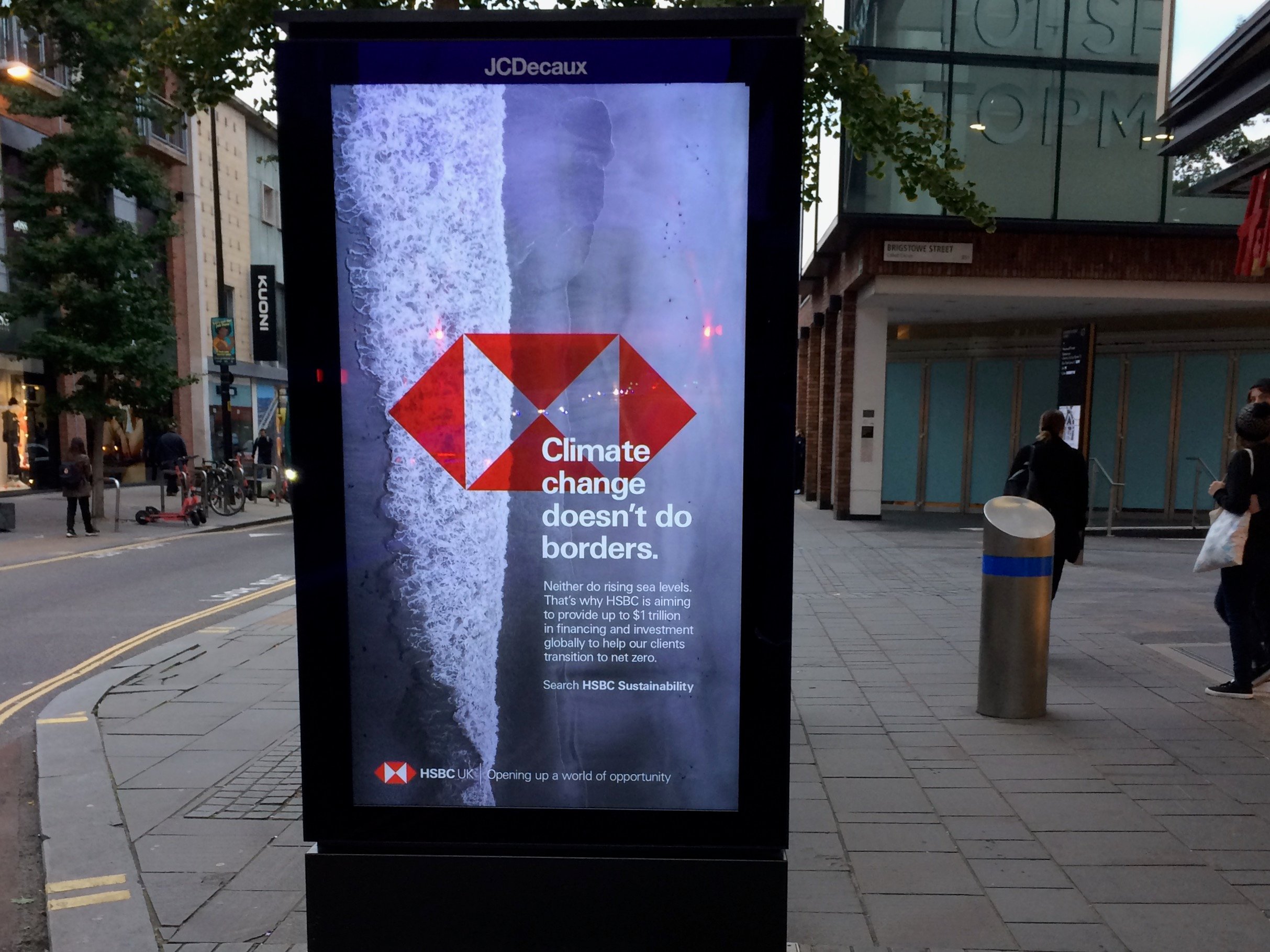
The ASA upheld complaints because the adverts told only part of the story. At the same time as running these campaigns, HSBC was one of the world's biggest funders of fossil fuel companies - businesses whose activities produce large amounts of carbon emissions. By highlighting the positive environmental work while saying nothing about this, the adverts created a misleading picture.
The ASA ruled the campaigns had to be withdrawn.
The case was significant because it was one of the first major rulings specifically targeting greenwashing by a bank, and it sent a clear message to businesses that making environmental claims in advertising - even truthful ones - can still be considered misleading if they leave out important context that would change how consumers view the brand
Data privacy in digital marketing
The use of customer data gathered through cookies, social media platforms and Customer Relationship Management (CRM) systems raises important questions about whether consumers genuinely understand and consent to how their information is being used for promotional purposes
Using personal data to target individuals with highly specific adverts, particularly on sensitive topics such as health, finances or political views, can feel intrusive and raise concerns about manipulation
Case Study
Verdant Skincare
Verdant is a skincare brand that built its reputation on being "100% natural", "eco-friendly" and "cruelty-free" - claims that allowed it to charge premium prices and attract a loyal base of environmentally conscious customers.
When an investigative journalist examined Verdant's supply chain, however, several problems emerged.
Several products contained synthetic preservatives not disclosed prominently on packaging, directly contradicting the "100% natural" claim
The "eco-friendly" labelling on the packaging referred only to the recyclability of the outer box, not to the product formulation, manufacturing process or ingredient sourcing, all of which had significant environmental impacts
The Advertising Standards Authority ruled that two of Verdant's promotional campaigns made misleading environmental claims and ordered them to be withdrawn.
The CMA launched a separate investigation into whether the 'cruelty-free' labelling was accurate, given that some ingredient suppliers had not been independently verified.
Sales fell sharply following the coverage, and several major retailers quietly reduced the shelf space they allocated to the brand.
Examiner Tips and Tricks
Unethical promotion tends to deliver short-term gains but long-term damage. Consumers who feel misled, manipulated or disrespected by a business's advertising are unlikely to remain loyal customers - and in the age of social media, reputational damage spreads faster than ever. Ethical promotional decisions are therefore not just morally right but often commercially sensible too

Unlock more, it's free!
Join the 100,000+ Students that ❤️ Save My Exams
the (exam) results speak for themselves:

Was this revision note helpful?