Changing Business Culture (AQA A Level Business): Revision Note
Syllabus Edition
First teaching 2026
First exams 2028
Exam code: 7132

Reasons for changing business culture
Sometimes businesses must change their culture to stay competitive, relevant, or efficient
Pressures for cultural change
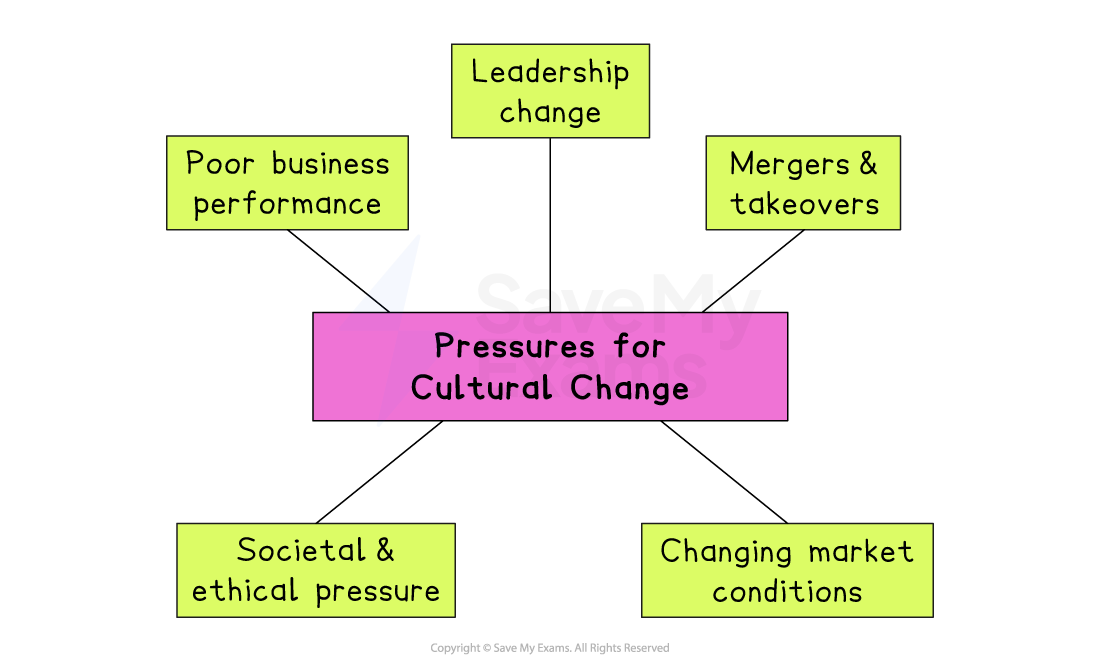
Poor business performance
When profits, sales, or overall productivity start declining, businesses may rethink their existing culture
If current practices are not achieving the desired results, changing culture can improve employee motivation, introduce more efficient ways of working, and help regain competitiveness
New leadership
New leaders often bring their own set of values and ideas, different from those of previous management
They might introduce new attitudes, beliefs, and working practices
Changing the culture allows the business to align with the new leader's vision, ensuring consistent decisions and clear direction for employees
Mergers and takeovers
When two different businesses combine, they often have separate and potentially conflicting cultures
Changing or blending organisational cultures is essential to unite employees, avoid internal conflict, and ensure everyone works effectively towards shared goals
Example
Disney’s acquisition of Pixar involved adopting a more creative and open culture to blend the two businesses effectively
Changing market conditions
Rapid shifts in technology, customer expectations, or competitor behaviour might require businesses to adapt quickly
A more flexible culture might be needed so that employees can innovate, respond quickly to customer needs, and keep the business competitive
Societal and ethical pressures
Businesses must often adjust their cultures in response to changing societal expectations and values, such as environmental sustainability or social responsibility
Failing to respond to these pressures can damage reputation, customer loyalty, and profitability
Adapting positively can enhance the business’s image and attract new customers
Challenges of changing business culture
Changing organisational culture can be crucial for businesses wanting to adapt and improve
However, many businesses face difficulties during the process, as employees, managers and systems may not easily adapt to new ways of working
Difficulties of changing culture
Difficulty | Explanation |
|---|---|
Resistance from employees |
|
High costs and disruption |
|
Time-consuming process |
|
Incompatibility of cultures |
|
Loss of key staff |
|
Case Study
In 2023, UK law firm Allen & Overy agreed a merger with US firm Shearman & Sterling, creating the new firm A&O Shearman
The outcome of merging two different cultures
Incompatibility of cultures
Allen & Overy had a traditional British style, while Shearman & Sterling had a more informal American culture
This difference made it hard for employees from both firms to adjust and work effectively together
Resistance from employees
Changes in company policies led to uncertainty and frustration
Some staff at Allen & Overy felt uncomfortable with the new culture, particularly over changes to policies around diversity and inclusion
Loss of key staff
Due to disagreements about the firm’s new direction, some important employees left the business, including senior partners
Losing experienced people caused disruption and reduced the firm’s ability to perform well
Culture and competitiveness
A business's culture directly affects how well it can compete
Culture shapes staff behaviour, decision-making speed, innovation and customer experience, all of which influence performance
How a positive culture can improve competitiveness
A positive culture encourages staff to make faster, more confident decisions
This helps a business respond more quickly to market changes or new opportunities than competitors with a more rigid or cautious culture
It supports innovation
Employees who feel trusted and empowered are more likely to suggest and develop new ideas
It improves customer service
Motivated, engaged employees are more likely to go beyond the minimum expected of them
It helps attract and retain talented staff
A strong reputation as an employer makes it easier to recruit skilled people than rivals with a poor reputation
It also reduces costs linked to high employee turnover, absenteeism or poor performance
Example
Netflix is widely credited with using its 'Freedom and Responsibility' culture, which gives employees high levels of trust and autonomy, as a competitive advantage.
The culture helps it make faster strategic decisions than rivals, including its early shift from DVDs to streaming and later into original content production.
How a negative culture can damage competitiveness
A negative culture encourages poor decision-making or unethical practices
Particularly where staff feel under pressure to meet targets at any cost
It creates reputational damage that can push customers towards competitors seen as more trustworthy
It increases employee turnover and recruitment costs
Skilled employees leave for businesses with a better working environment
It reduces productivity and quality
Low morale and poor communication make it harder for a business to operate efficiently
Example
Wells Fargo's high-pressure sales culture led staff to open around 3.5 million unauthorised bank accounts in customers' names to meet targets.
When the scandal became public in 2016, the bank was fined $185 million, fired over 5,300 employees, and suffered lasting reputational damage that weakened its position against competitors.
Examiner Tips and Tricks
Structure your answer around a clear chain of reasoning—culture, then employee or customer behaviour, then business performance, then competitive position—rather than jumping straight from "culture" to "competitiveness" without explaining the steps in between

Unlock more, it's free!
Join the 100,000+ Students that ❤️ Save My Exams
the (exam) results speak for themselves:

Was this revision note helpful?
