Marketing and Other Business Functions (AQA A Level Business): Revision Note
Syllabus Edition
First teaching 2026
First exams 2028
Exam code: 7132

Marketing and operations
Marketing does not operate in isolation
Decisions made by the marketing team have direct consequences for other parts of the business
Decisions made elsewhere can enable or constrain what marketing is able to achieve
Understanding these interrelationships is essential for a business to function effectively
How marketing decisions affect operations
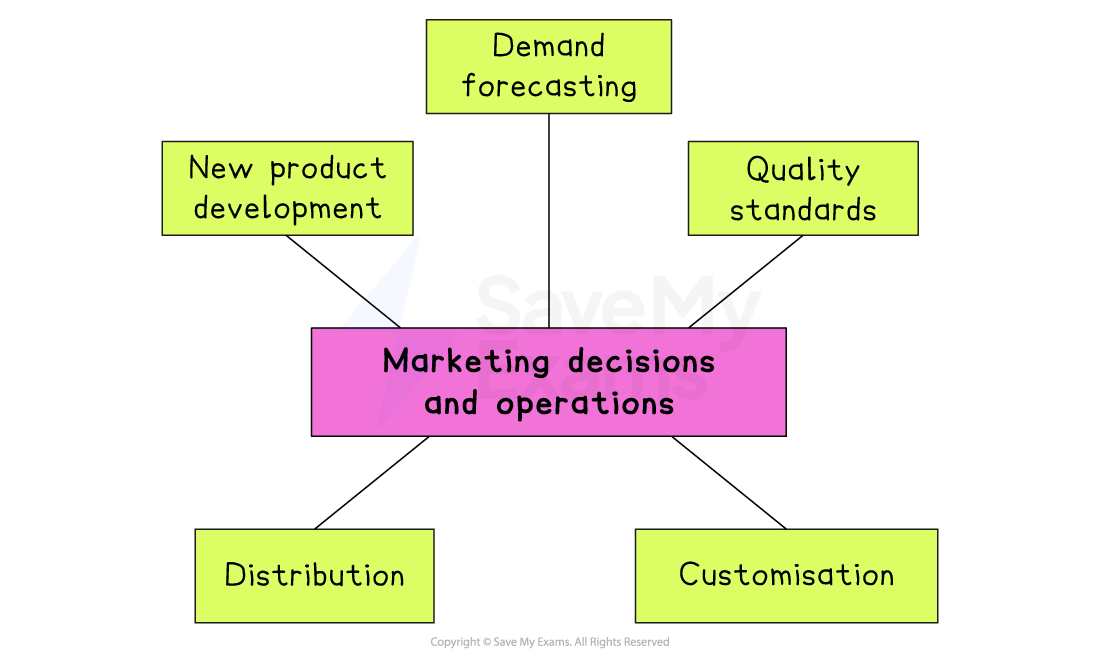
New product development
When marketing identifies a gap in the market or a customer need for a new product, operations must assess whether it can be designed and produced within cost and quality targets
Demand forecasting
Marketing campaigns and promotions create surges in demand that operations must prepare for
A poorly timed promotion can overwhelm production capacity or lead to stock shortages
Quality standards
If marketing positions the product as premium, operations must consistently meet the quality levels that the brand promises customers
Distribution
Marketing decisions about where and how products are delivered place demands on the logistics and supply chain managed by operations
Customisation
Marketing may offer personalised or made-to-order products to attract customers
Operations must have the flexibility to deliver this
How operations decisions affect marketing
Capacity constraints | Production costs |
|---|---|
|
|
Lead times | Innovation capability |
|
|
Examiner Tips and Tricks
A common source of business problems is marketing making promises that operations cannot keep
For example, advertising next-day delivery without the logistics infrastructure to support it. Strong businesses ensure these two functions are closely aligned
Marketing and finance
How marketing decisions affect finance
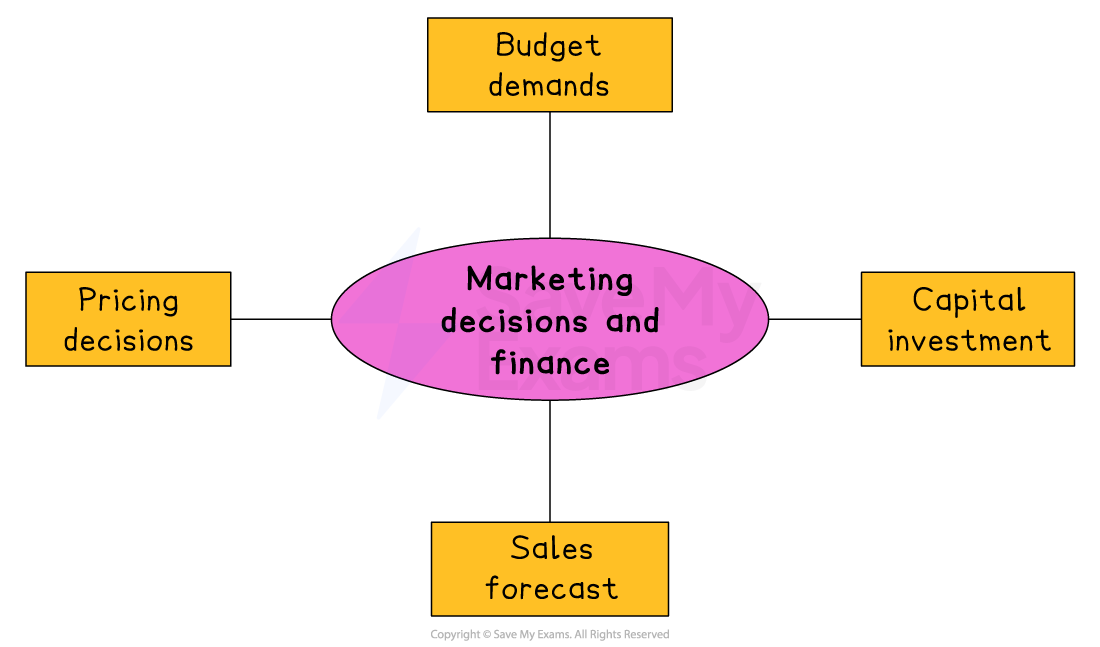
Budget demands
Marketing requires financial resources
Campaigns, market research, promotional events and digital advertising all have costs that must be funded
Sales forecasts
Marketing's predictions about future demand inform financial planning, including cash flow forecasts and profit targets
Pricing decisions
Price is part of the marketing mix, but it directly determines revenue and profit margins
Marketing must set prices that are attractive to customers while remaining financially viable
Capital investment
Entering new markets or launching major campaigns may require significant upfront financial investment before any return is generated
How finance decisions affect marketing
Budget constraints | Profitability targets |
|---|---|
|
|
Return on investment (ROI) | Financial performance |
|
|
Examiner Tips and Tricks
Marketing and finance often pull in opposite directions - marketing wants to spend to grow, while finance wants to control costs. In evaluation questions, consider how a business should balance investment in marketing against the need for financial discipline
Marketing and human resources
How marketing decisions affect human resources
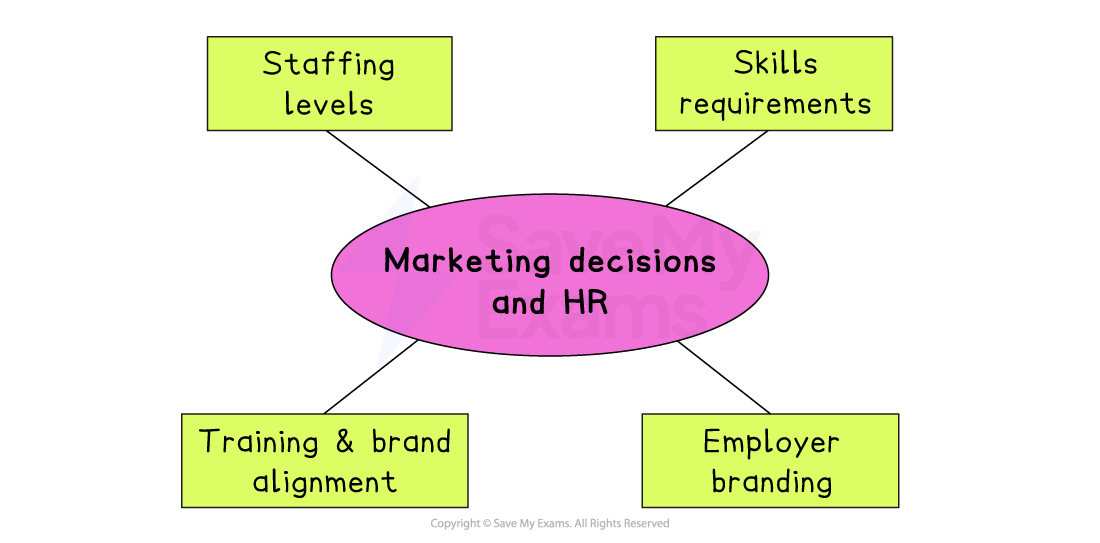
Staffing levels
A successful marketing campaign that drives a significant increase in demand may require additional staff
HR must recruit and onboard quickly enough to meet that demand
Skills requirements
Modern marketing increasingly requires specialist skills (e.g. data analysts, social media managers, content creators) that HR must recruit for or develop through training
Training and brand alignment
Customer-facing staff must understand and deliver the brand experience that marketing has created
HR is responsible for ensuring staff are trained to reflect the brand's values and standards
Employer branding
Marketing techniques are increasingly used to attract talent
How the business presents itself to potential employees is closely linked to its overall brand image
How HR decisions affect marketing
Staff availability | Skills gaps | Labour costs |
|---|---|---|
|
|
|
Case Study
Harvest & Co
Harvest & Co is a UK manufacturer of healthy snack bars, sold through supermarkets and its own website.
The marketing team has decided to launch a major campaign promoting a new protein bar range, including social media advertising and an in-store promotional deal with a national supermarket. The impact of this decision ripples across the business.
Operations must increase production output to meet the higher demand the campaign is expected to generate
The new protein bar requires different ingredients and packaging, meaning the production line needs adapting - a process that takes several weeks
Finance is asked to approve a £120,000 campaign budget, a significant expense for the business
The marketing team must present projected sales figures to justify the spend, and finance sets a clear ROI target before approving the investment
Human resources needs to recruit additional production staff to handle increased output and the marketing team requires a social media specialist, a role the business has never recruited for before
Without close coordination across all three functions, the campaign risks making promises the business simply cannot deliver
Examiner Tips and Tricks
When a business launches a major marketing initiative - a rebrand, a new product, or entry into a new market - the impact on HR is often underestimated. Evaluating whether the business has the people and skills to deliver on its marketing promises is a strong evaluative point

Unlock more, it's free!
Join the 100,000+ Students that ❤️ Save My Exams
the (exam) results speak for themselves:

Was this revision note helpful?
