Technology in Inventory Management (AQA A Level Business): Revision Note
Syllabus Edition
First teaching 2026
First exams 2028
Exam code: 7132

The value of technology in inventory management
Investing in technology to manage inventory offers a business several important benefits beyond simply tracking stock
Benefits of technology in inventory management
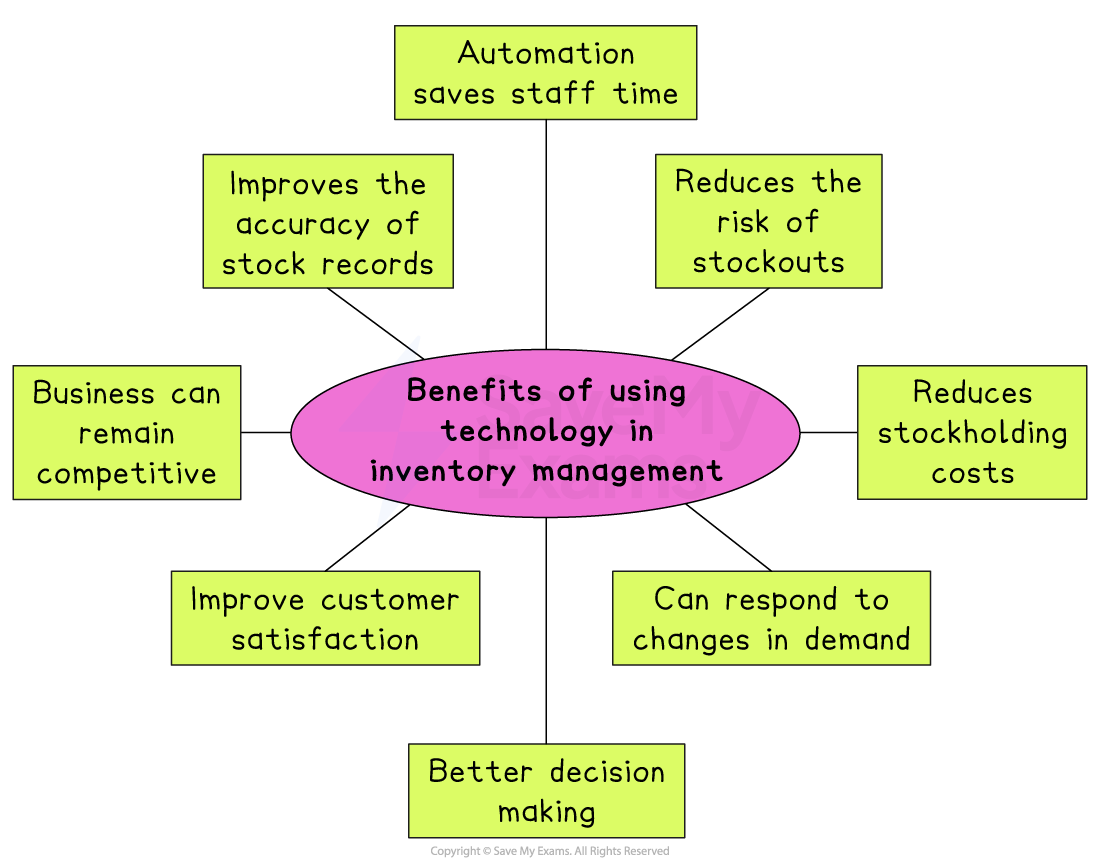
Improves the accuracy of stock records
Reduces the errors that come with manual stocktaking
Gives managers reliable information to base decisions on
Saves staff time
Automating tasks such as stocktaking, reordering and tracking frees up employees to focus on other areas of the business
Reduces the risk of stockouts
Real-time tracking and automated reordering help ensure popular items are reordered before they run out
Reduces the cost of holding excess inventory
More accurate forecasting and monitoring help avoid over-ordering stock that ties up cash and storage space
Improves a business's ability to respond quickly to changes in demand
Technology can flag up unusual sales patterns far faster than manual monitoring
Example
A clothing retailer's inventory system flags a sudden spike in sales of a raincoat range during an unexpected spell of wet weather, alerting managers early enough to reorder extra stock from suppliers before shelves sell out completely
Supports better decision-making
Managers gain access to detailed, real-time data on stock performance across the whole business
Can improve customer satisfaction
Accurate stock levels reduce the chance of customers being unable to buy an item shown as available
Helps a business remain competitive
Rivals using similar technology may be able to operate more efficiently
Failing to adopt it can leave a business at a cost or service disadvantage
Ways technology is used in inventory management
Technology now plays a central role in how businesses, especially large ones, manage their stock
A range of tools can track, control and predict inventory more accurately than manual methods
Barcode and RFID scanning
Using these tools, businesses can track exactly what stock they hold far more quickly and accurately than counting stock manually
Barcode scanning |
|
|---|---|
RFID (radio-frequency identification) |
|
Advantages of barcode and RFID scanning
Speeds up stocktaking significantly, as RFID in particular can scan many items at once rather than one at a time
Reduces human error in recording stock levels, improving the accuracy of inventory records
Provides real-time visibility of stock, helping a business reorder at the right time and avoid running out
Disadvantages of barcode and RFID scanning
RFID tags and scanning equipment are more expensive to install than traditional barcodes, particularly for a large or complex range of products
Systems can fail or give inaccurate readings if tags are damaged, blocked, or not properly attached
Staff need training to use scanning equipment and software correctly, adding to setup costs and time
Example
Fashion retailer Zara fits RFID tags to its clothing, allowing staff to scan entire rails of stock in seconds and giving the business accurate, real-time information on inventory levels across its stores
Inventory management software
Inventory management software is a computer system that records, tracks and reports on stock levels, locations and movements across a business, often in real time
This replaces manual record-keeping, such as spreadsheets or paper logs, with a system that automatically updates as items are sold, received or moved
Advantages of inventory management software
Gives managers an accurate, up-to-date picture of stock levels at any time, supporting better decision-making
Can be linked across multiple sites or stores, allowing a business to see and move stock between them as needed
Reduces the time staff spend manually counting stock, freeing them up for other tasks
Disadvantages of inventory management software
Can be expensive to purchase, install and integrate with a business's other systems
Relies on accurate data entry elsewhere in the business
Errors at the point of sale or delivery can lead to inaccurate stock records
System failures or downtime can disrupt a business's ability to track stock accurately until the issue is fixed
Example
Argos uses inventory management software that gives real-time visibility of stock levels across its stores and online, allowing customers to check whether an item is available at their local store before travelling to collect it
The software also helps Argos manage stock accurately across its whole network of stores and warehouses
Automated stock replenishment
Automated stock replenishment means using software to automatically generate a new order with a supplier once stock of a product falls below a set level
This is often linked to connected cash registers or sales data, so the system can respond quickly to actual changes in demand
Advantages of automated stock replenishment
Reduces the risk of running out of stock, as reordering happens automatically rather than relying on staff noticing low stock
Saves staff time, as orders don't need to be manually checked and placed for every product
Can help smooth ordering processes, avoiding the sudden large orders that can result from stock being checked infrequently
Disadvantages of automated stock replenishment
Can lead to overstocking or a build-up of unwanted inventory if the reorder level or forecasted demand is set incorrectly
Relies on accurate underlying data
Errors elsewhere in the system can lead to poor reordering decisions
Reduces human oversight, meaning unusual situations, such as a sudden trend or a supplier issue, may not be noticed as quickly
Example
Sainsbury's uses automated ordering systems linked to till data, generating a new supplier order automatically once stock of a product falls below a set threshold
Warehouse automation and robotics
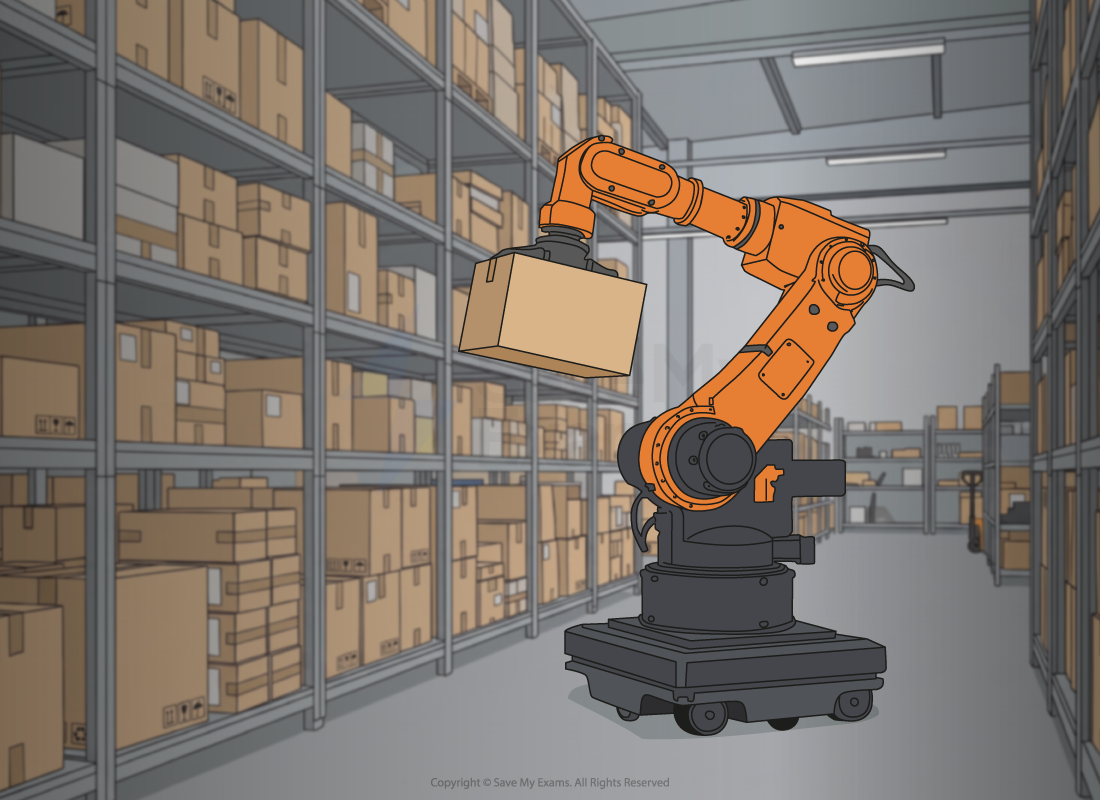
Warehouse automation uses machinery, conveyor systems or robots to move, sort or store stock within a warehouse, reducing the need for manual handling
This can range from automated conveyor belts sorting items, to robots that retrieve and transport stock to human pickers
Advantages of warehouse automation and robotics
Increases the speed and accuracy of picking and moving stock, compared with manual methods
Reduces labour costs over time, as fewer staff are needed to physically move stock around a warehouse
Can operate for longer hours than staff, increasing a warehouse's overall capacity
Disadvantages of warehouse automation and robotics
Requires a large upfront investment in machinery, robotics and the technology to run them
Can be costly and complex to repair or maintain if equipment breaks down
May reduce the number of warehouse jobs available, which can affect staff morale and create negative publicity
Example
Amazon uses thousands of moving robots in its fulfilment centres to carry shelves of stock to human pickers, reducing the time and walking needed to locate and retrieve items
AI-powered demand forecasting
AI-powered demand forecasting uses artificial intelligence to analyse data, such as past sales, seasonal trends or even external factors like weather, to predict future customer demand more accurately
This helps a business decide how much stock to hold and when to reorder, rather than relying on manual estimates or simple historical averages
Advantages of AI-powered demand forecasting
Can improve the accuracy of stock ordering, reducing both stockouts and excess inventory
Learns and improves over time as it processes more data, potentially becoming more accurate than human forecasting
Can process far more data, and more quickly, than a person could manually, including unusual patterns a human might miss
Disadvantages of AI-powered demand forecasting
AI systems can be expensive to develop and install, particularly for smaller businesses, and usually require staff to be trained to use them
Forecasts are only as good as the data used; poor-quality or incomplete data can lead to inaccurate predictions
Sudden, unpredictable events, such as a supply shock or unexpected trend, may not be well anticipated by a system trained mainly on past patterns
Example
Ocado, the online grocery retailer, uses artificial intelligence to predict how much of each product it will sell, generating millions of forecasts every day.
This helps Ocado order the right amount of stock, particularly for perishable fresh food.
Ocado says its AI system is around 40% more accurate than the methods retailers used before, helping it waste far less food while still keeping popular items in stock
Examiner Tips and Tricks
When answering questions on technology in inventory management, be specific about which technology is being used and link it clearly to the business in the case study, rather than referring generally to "using technology" to solve every inventory problem

Unlock more, it's free!
Join the 100,000+ Students that ❤️ Save My Exams
the (exam) results speak for themselves:

Was this revision note helpful?