Product (AQA A Level Business): Revision Note
Syllabus Edition
First teaching 2026
First exams 2028
Exam code: 7132

Introduction to product
In the marketing mix, product refers to the good or service a business offers to meet the needs of its target market
It is the foundation of the entire marketing mix - without a product, there is nothing to price, distribute or promote
A product is more than just the physical item a customer buys
It encompasses;
Core features and design
The functional characteristics that make the product work
Quality
The standard of the product relative to customer expectations and competitor offerings
Branding
The name, logo and identity associated with the product
Packaging
The way the product is presented and protected
After-sales service
Support, warranties and customer care provided once the sale is made
Product decisions are central to marketing because they shape every other element of the mix
The price a business can charge
Distribution channels it uses
The way it promotes the product
The product life cycle
The product life cycle describes the different stages a product goes through from its conception to its eventual decline in sales
There are five stages in the product life cycle: development, introduction, growth, maturity and decline
A typical product life cycle
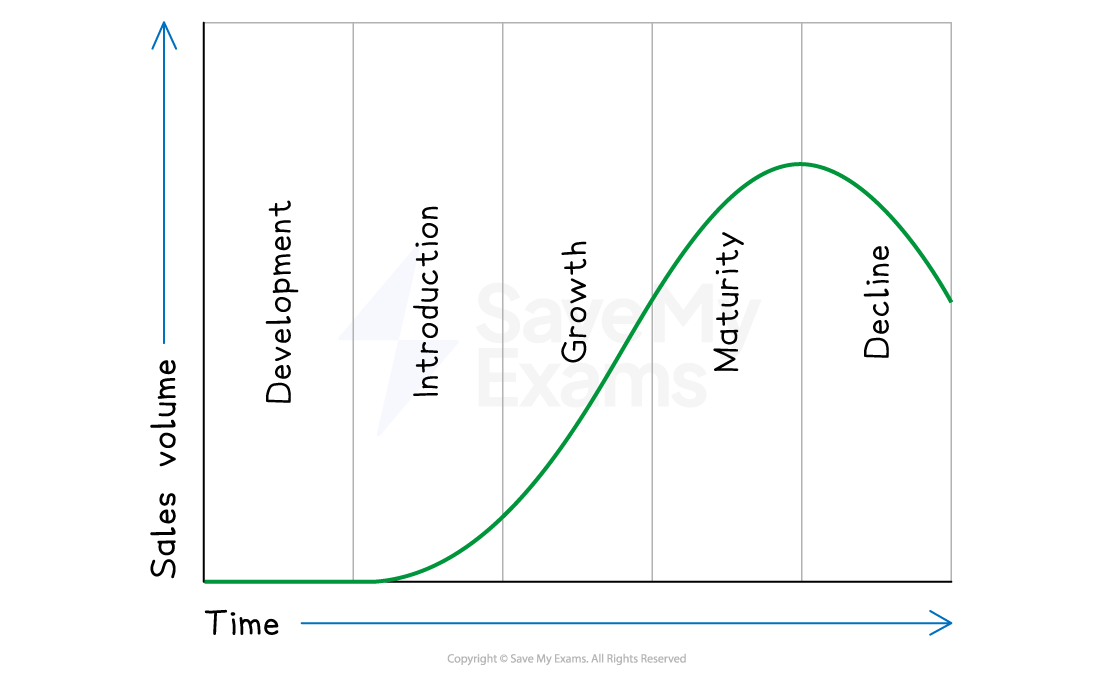
The five stages
Development
The product is being researched, designed, and tested - it has not yet been launched
There are no sales and therefore no revenue, but costs are high due to research and development
The business is investing with no immediate return
Marketing's role at this stage is market research - identifying customer needs and testing product concepts
Introduction
The product launches onto the market - sales grow slowly as awareness is low
High marketing spend is needed to build brand awareness and attract early adopters
The product is typically loss-making due to high costs and low sales volume
Pricing may include;
Price skimming (high initial price targeting early adopters)
Penetration pricing (low price to build market share quickly)
Growth
Sales rise rapidly as the product gains market acceptance
Revenue increases and the product begins to generate profit
Competitors take notice and begin entering the market with rival products
Marketing focus shifts to building brand loyalty and differentiating the product from new rivals
Maturity
Sales reach their peak and begin to level off; the market becomes saturated
Competition is most intense; price competition may begin to erode profit margins
Marketing focuses on maintaining market share through promotional activity and competitive pricing
This is typically the most profitable stage overall, as development costs have been recouped and production is efficient
Decline
Sales fall as the market shrinks, customer tastes change or superior products emerge
Profits fall; some competitors exit the market
The business must decide whether to extend the product's life, reduce investment and harvest remaining profit or withdraw the product entirely
Implications for other functions
Function | Implications |
|---|---|
Operations |
|
Finance |
|
Human resources |
|
Examiner Tips and Tricks
The product life cycle is a model, not a rule - not all products follow this pattern exactly. Some products have very long maturity stages; others fail during introduction and never reach growth. Always evaluate the model's limitations when applying it to a case study
Extension strategies
An extension strategy is an action taken by a business to slow down or reverse a product's decline and extend its profitable life
Rather than withdrawing the product, the business invests in refreshing it
Some key extension strategies
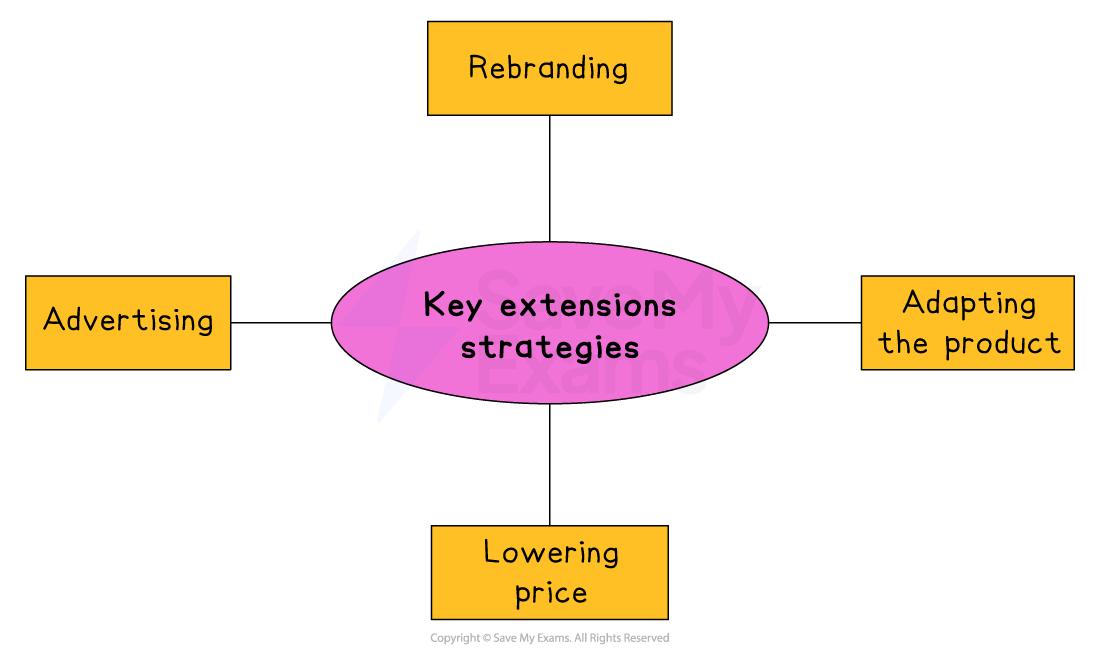
Advertising
Renewed or intensified promotional campaigns can create renewed interest in the product
Advertising may target new customer segments or remind existing customers of the product's benefits
This is often the quickest extension strategy to implement
However, it may only provide a temporary boost if the underlying product has not changed
Case Study
Old Spice
By 2010, Old Spice was seen as an outdated aftershave brand associated with older generations, and sales were declining.
Procter & Gamble launched the now-famous 'The Man Your Man Could Smell Like' campaign, a humorous, fast-paced series of adverts that went viral online.
Without changing the product itself, the campaign attracted a younger male audience and dramatically reversed the brand's decline. Sales doubled within a year of the campaign launching
Rebranding
Updating the product's name, packaging, logo or overall image to appeal to a new generation of customers or to signal a change in values (such as a commitment to sustainability)
Rebranding can breathe new life into a tired product
However, it carries the risk of alienating loyal existing customers
Case Study
Lucozade
Lucozade was originally marketed throughout most of the 20th century as a glucose drink for people recovering from illness. It was sold in chemists' in distinctive orange cellophane wrapping.
By the 1980s, the brand was in decline. Rather than withdraw it, Beecham (now GSK) rebranded it entirely as a sports and energy drink, targeting active young adults.
New packaging, new messaging and sports sponsorships transformed Lucozade into one of the UK's best-selling soft drink brands
Lowering the price
Reducing the price makes the product accessible to a wider, more price-sensitive audience
This can boost sales volume but will reduce profit margins
It also risks repositioning the product as lower quality, which may damage the brand in the long term
Case Study
Sony PlayStation 4
When Sony launched the PlayStation 5 in November 2020, the PS4 entered a period of natural decline.
Rather than withdraw it, Sony significantly reduced the PS4's retail price, making it accessible to more price-sensitive consumers and families who could not afford the new console.
This extended the PS4's commercial life by several years, allowing Sony to continue generating revenue from the older product while PS5 supply remained limited
Adapting the product
Changing the product itself - by adding new features, launching new variants, improving the formula or updating the design
This is the most substantive form of extension strategy and is most likely to provide a lasting boost
It requires investment in product development and may involve significant operational changes
Case Study
Kit Kat
Kit Kat was first launched in 1935 as a standard four-finger chocolate bar.
Rather than allowing it to decline as the confectionery market evolved, Nestlé has repeatedly adapted the product to extend its life - launching the Chunky bar in 1999, introducing minis and sharing bags, and releasing limited-edition and seasonal flavours such as orange, salted caramel and dark chocolate.
These adaptations have kept the brand fresh and relevant across multiple generations of consumers
Examiner Tips and Tricks
Extension strategies involve a trade-off between the cost of extending the product and the revenue it is likely to generate. In evaluation questions, consider whether the product has enough remaining market potential to justify the investment - sometimes, withdrawing a declining product is the right decision
Product portfolio analysis
Product portfolio analysis involves reviewing all the products a business sells to understand how they are performing and how resources should be allocated between them
The most widely used tool for this is the Boston Matrix
The Boston Matrix
The Boston Matrix categorises a business's products into four groups based on two factors
Relative market share - how the product's share compares to its largest competitor (high or low)
Market growth rate - how fast the overall market for the product is growing (high or low)
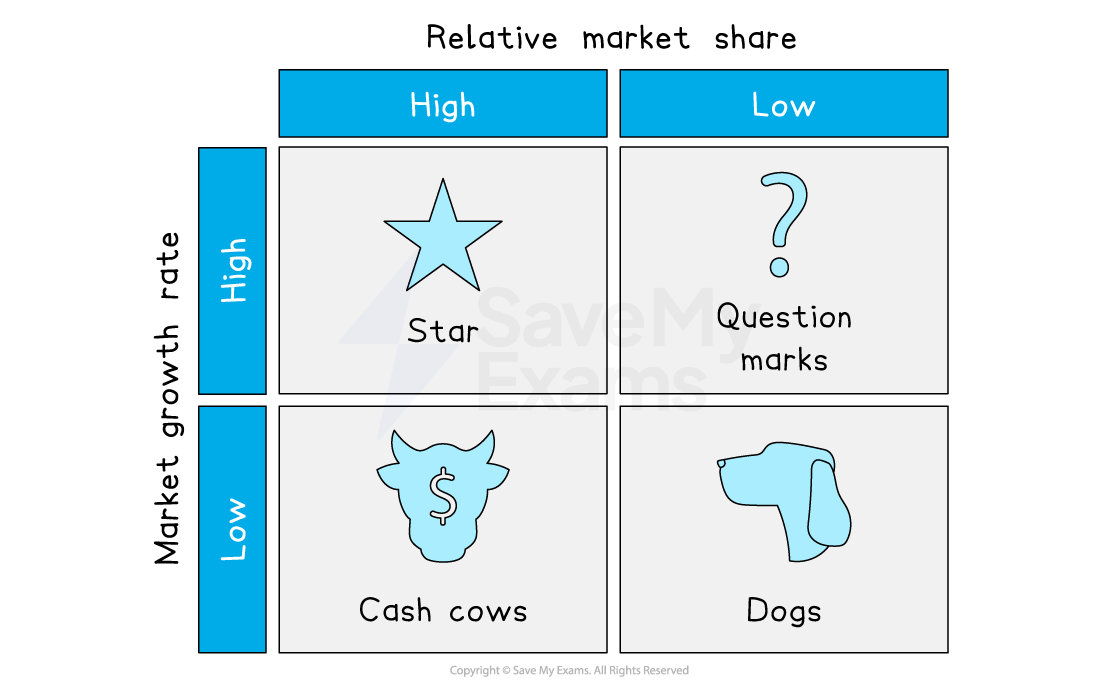
Stars
Stars are successful products in fast-growing markets
They have a high market share in a high-growth market
They generate strong revenue but require continued investment to maintain their position as competition intensifies
With the right support, stars can become cash cows as market growth slows
Cash cows
Cash cows have a high market share in a low-growth market
They are established, profitable products in mature markets
They require relatively little marketing investment, as they already dominate a stable market
They generate surplus cash that can be used to fund stars, question marks or new product development
Question marks
Question marks have a low market share in a high-growth market
They are products in fast-growing markets that may be underperforming
Their future is uncertain - with the right investment, they could become stars; without it, they risk becoming dogs
The business must decide whether to invest heavily or cut its losses
Dogs
Dogs have a low market share in a low-growth market
They are generally poor performers with limited profit potential
The business may choose to withdraw them
Some dogs are retained if they serve a specific niche or complete a product range
Significance for marketing planning
The Boston Matrix helps a business in several ways
Allocate its marketing budget effectively
Directing more resources towards stars and promising question marks
Identify cash-generating products (cash cows)
These can fund investment elsewhere in the portfolio
Make strategic decisions about which products to develop, maintain or withdraw products
Balance its portfolio
A healthy business needs a mix of products at different stages, avoiding over-reliance on any single product
Limitations of the Boston Matrix
Market share and growth rate alone do not capture a product's full value
Profitability, strategic fit and brand association also matter
The model is a snapshot in time - market conditions can change rapidly
Classifying products as simply 'high' or 'low' on each axis oversimplifies a more complex reality
Examiner Tips and Tricks
A business that relies too heavily on cash cows without investing in stars or question marks risks being left with an ageing portfolio. In evaluation questions, consider whether a business's product portfolio is sufficiently balanced for long-term competitiveness
New product development
New product development (NPD) is the process of designing, creating and launching a product that is new to the business or to the market
It is a core part of a long-term marketing strategy
The purpose and value of new product development
Businesses invest in new product development to:
Replace products in decline before revenue falls significantly
Enter new markets or attract new customer segments
Respond to changing customer needs and preferences
Stay ahead of - or catch up with - competitors
Grow revenue and market share over the long term
When successful, new product development delivers significant benefits
Competitive differentiation
A genuinely new product offers customers something rivals cannot match
First-mover advantage
Being first to market with an innovation allows a business to establish brand leadership before competitors can respond
Reduced reliance on existing products
A healthy pipeline of new products makes the business less vulnerable to the decline of any single product
Revenue growth
Successful new products generate new and additional income streams
The challenges of new product development
Challenge | Explanation |
|---|---|
High cost |
|
High failure rate |
|
Time-consuming |
|
Market uncertainty |
|
Cannibalisation |
|
Cross-functional demands |
|
Case Study
Brindlewick Drinks Ltd
Brindlewick Drinks Ltd is a UK manufacturer of fruit squashes and cordials. With squash sales declining as consumers shift towards premium and sparkling drinks, the business decided to invest in new product development with a new range of lightly sparkling fruit drinks made with natural ingredients.
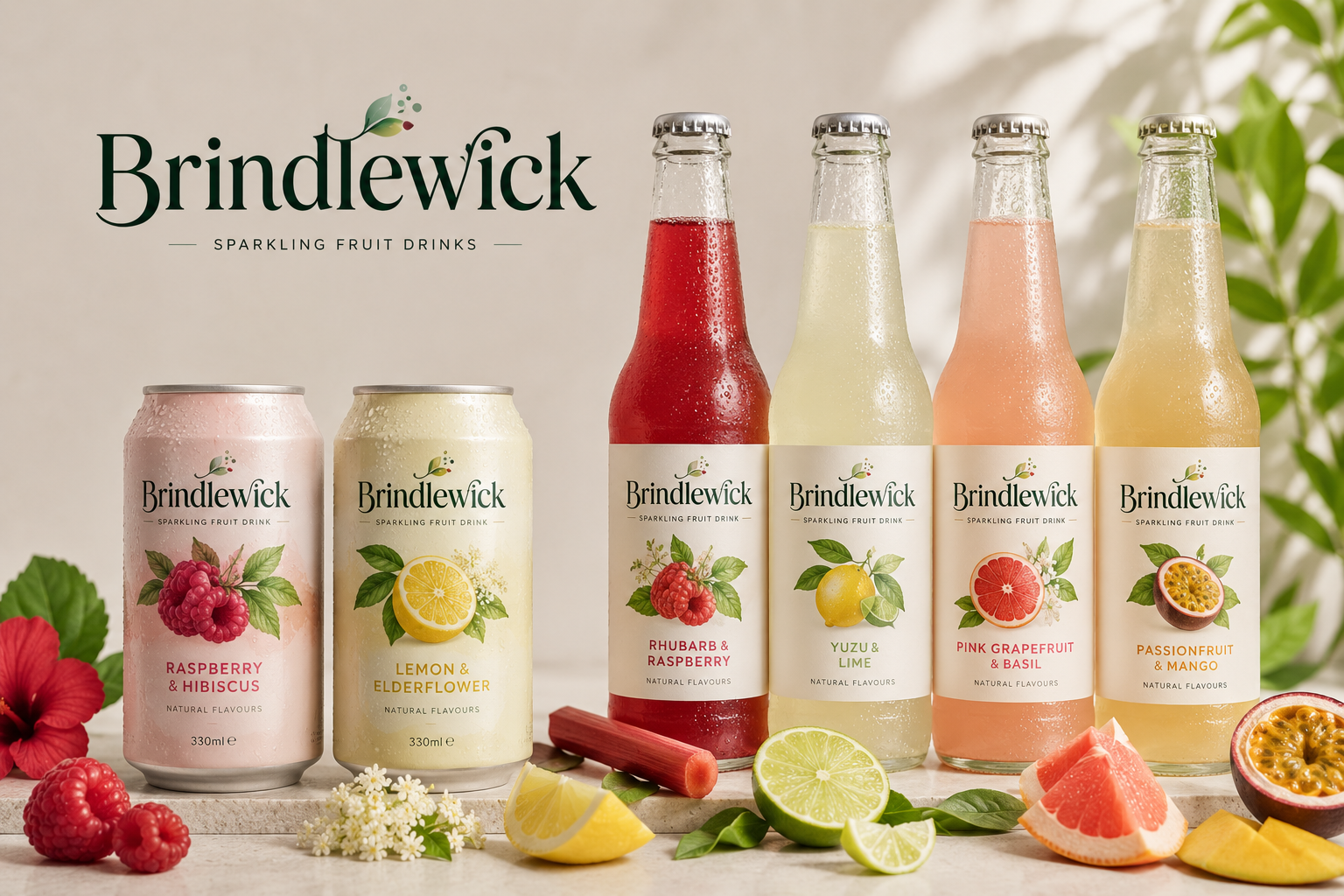
The process proved more demanding than anticipated. Developing the right formula took eight months of testing, and the specialist carbonation equipment needed on the production line required capital investment that finance initially resisted approving.
The marketing and operations teams needed to work closely together to agree launch timescales, while HR identified a gap in the workforce - nobody had the technical skills needed to operate the new equipment.
When the product finally launched, there was also a risk of cannibalisation - early sales data suggested some customers switched from Brindlewick's existing cordials rather than being new buyers altogether.
Despite these challenges, one year on, the new range gives Brindlewick a genuinely differentiated product in a growing market, reducing the business's reliance on its ageing core range.
Examiner Tips and Tricks
The value of NPD must always be weighed against its cost and risk. A business with limited resources may achieve better returns by extending existing products rather than investing in expensive new development - the right choice depends entirely on the specific context of the business

Unlock more, it's free!
Join the 100,000+ Students that ❤️ Save My Exams
the (exam) results speak for themselves:

Was this revision note helpful?
