Source A: Severn Trent
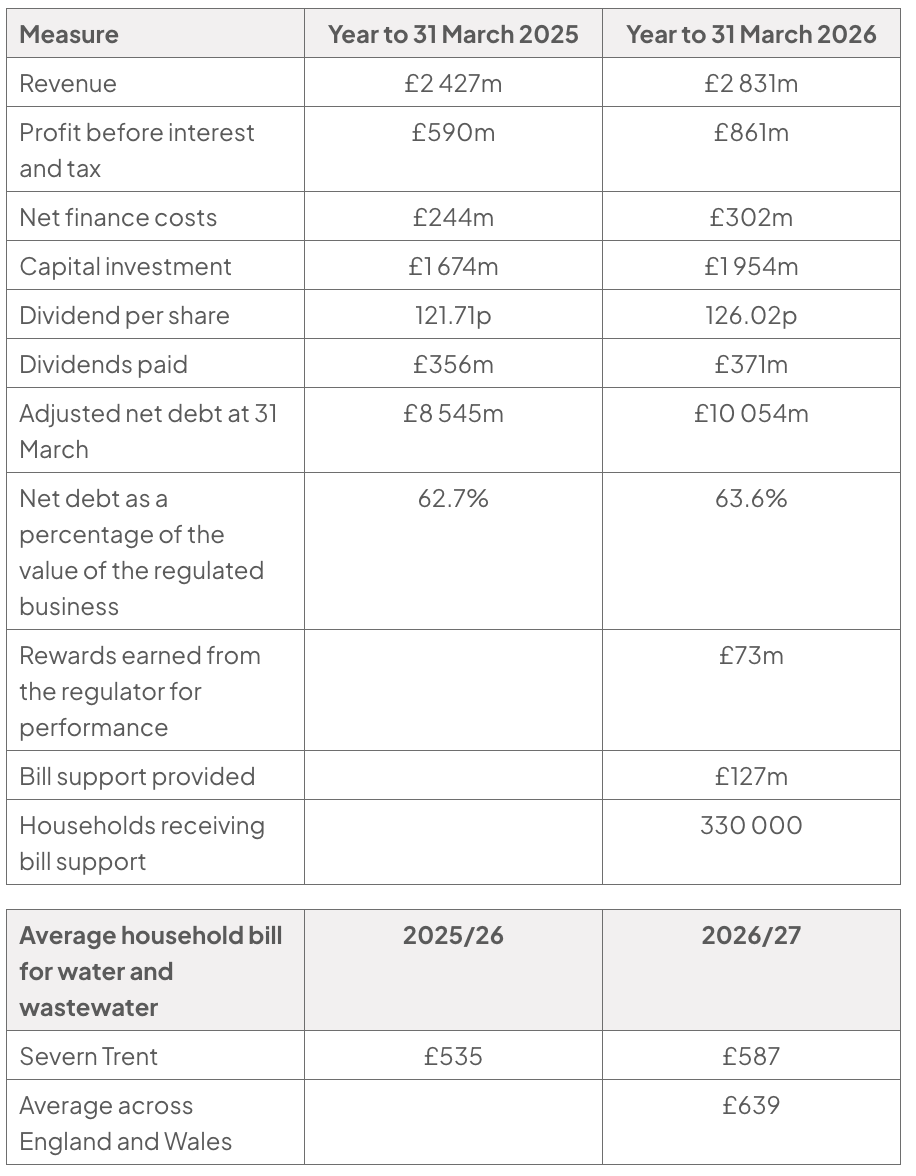
Severn Trent Plc provides water and wastewater services to more than 9 million people across the Midlands and mid-Wales through its regulated business, Severn Trent Water. It is a public limited company listed on the London Stock Exchange and employs more than 11 000 people. In the year to 31 March 2026 its revenue rose 16.6% to £2 831 million and its profit before interest and tax rose 46% to £861 million. It invested £1 954 million in its water and wastewater networks, the largest investment programme in its history. The full-year dividend rose 3.5% to 126.02 pence a share, in line with the company's policy of increasing the dividend by at least the rate of inflation each year.
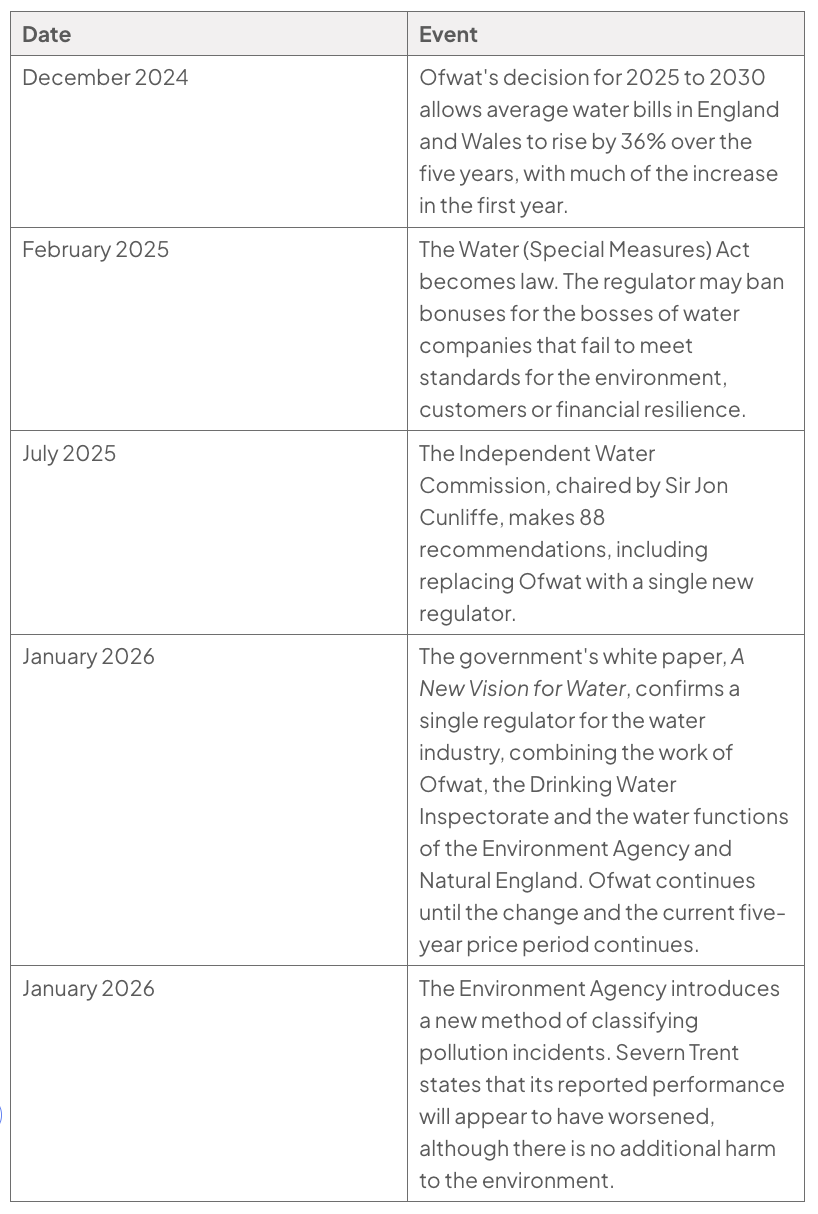
Water companies in England and Wales are the only suppliers of water and wastewater services in their regions. The prices they may charge, and the investment they must deliver, are set by the economic regulator, Ofwat, for five years at a time; the current period runs from 2025 to 2030. Companies receive financial rewards from Ofwat when they beat performance targets and pay penalties when they miss them. From April 2026 the average Severn Trent household bill for water and wastewater rose by £52, or 10%, to £587.
The discharge of sewage into rivers has become a major political issue. Severn Trent reports that:
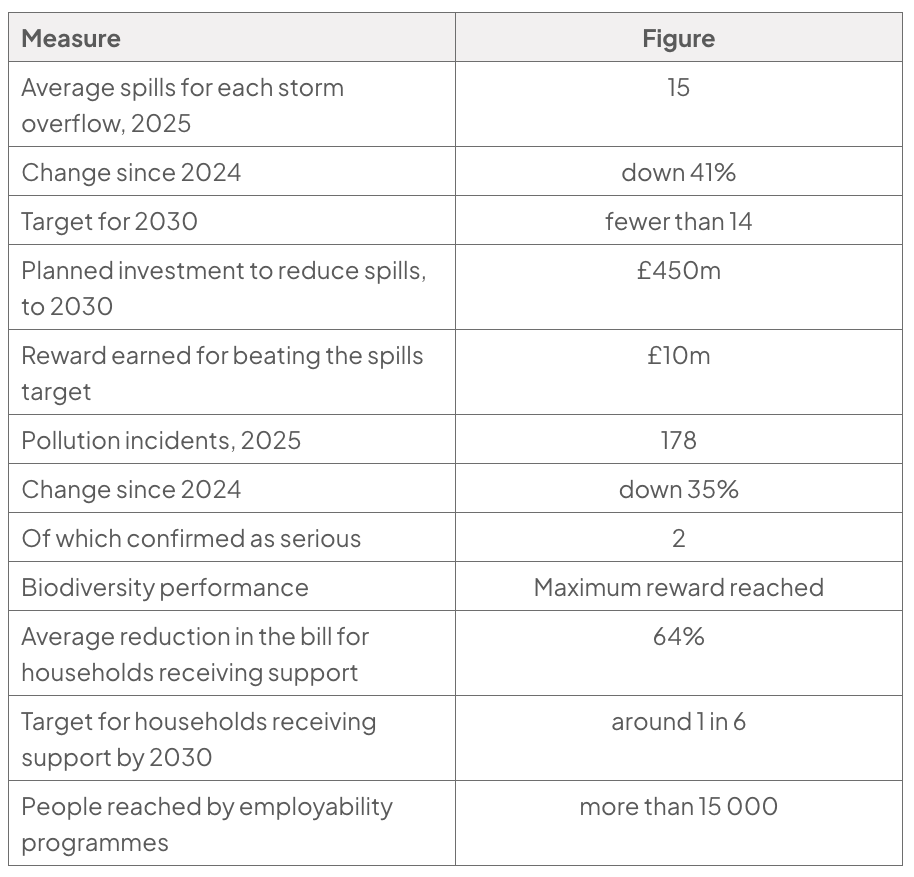
average spills from its storm overflows fell by 41% in 2025, to 15 for each overflow, beating its regulatory target and earning a reward of £10 million;
pollution incidents fell by 35% to 178, two of which were confirmed as serious;
it has committed to invest £450 million by 2030 to reduce spills to an average of fewer than 14 for each overflow.
The company supports customers who struggle to pay. During the year it provided £127 million of bill support to around 330 000 households, an average reduction of 64% on their bills, and it aims to help around 1 in 6 households in its region by 2030. Its employability programmes reached more than 15 000 people.
The company also works to improve the natural environment. During the year it planted almost 100 000 trees and 45 kilometres of hedgerow and restored 207 acres of habitat, and its performance on biodiversity reached the maximum financial reward available from the regulator. It generates renewable energy at its own sites.
Among its principal risks, Severn Trent lists uncertainty over regulatory, legislative and government reforms which could fundamentally change its operating environment.
Source: Severn Trent Plc, Preliminary Announcement of Annual Results, 20 May 2026
During the year Severn Trent provided £127 million of bill support to around 330,000 households, an average reduction of 64% on their bills. From April 2026 its average household bill rose by 10%.
Analyse one way in which this support might affect the amount Severn Trent loses through customers not paying their bills.
Was this exam question helpful?