Ethics in HR (AQA A Level Business): Exam Questions

Exam code: 7132

Syllabus Edition

First teaching 2026

First exams 2028

2 hours15 questions
1
6 marks

Source A: Royal Mail

Royal Mail delivers letters and parcels to every address in the United Kingdom. It is part of International Distribution Services, which also owns the European parcel business GLS and which employed 153 552 people in 2024 and had revenue of £12 679 million. Around 85 000 of Royal Mail's people are postal delivery workers, and the business takes on about 16 000 extra temporary workers each year between late October and January to cope with the Christmas rush.

In June 2025 the company stopped being a public limited company listed on the stock market. EP Group, controlled by the Czech businessman Daniel Křetínský, completed a £3.6 billion takeover that the UK government had approved in December 2024 and that became unconditional on 30 April 2025.

Most of Royal Mail's people belong to the Communication Workers Union, and relations with that union have been difficult. Strikes ran from August to December 2022, and before the two sides returned to talks Royal Mail said it was losing up to £1 million a day. The dispute ended in July 2023 with a three-year deal worth a 10% pay increase and a £500 one-off payment, accepted by 76% of those who voted on a 67% turnout.

A second three-year deal followed on 3 July 2025: 4.2% in 2025, then increases linked to the Consumer Prices Index of at least 2% in 2026 and at least 2% in 2027, worth more than 8% in total and backdated to 1 April 2025. The company also promised no compulsory redundancies for the life of the deal.

Service quality remains a problem. In October 2025 the regulator Ofcom fined Royal Mail £21 million for missing its delivery targets in 2024/25, the third year in a row it had been fined. The fine was reduced from £30 million because the company admitted liability and settled. Royal Mail returned to profit in 2024/25, reporting £12 million.

Source: International Distribution Services, Ofcom and Communication Workers Union announcements, 2022 to 2026

Appendix C: Pay and employee costs at Royal Mail

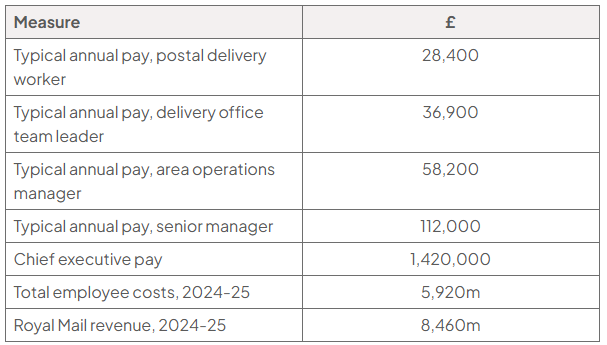
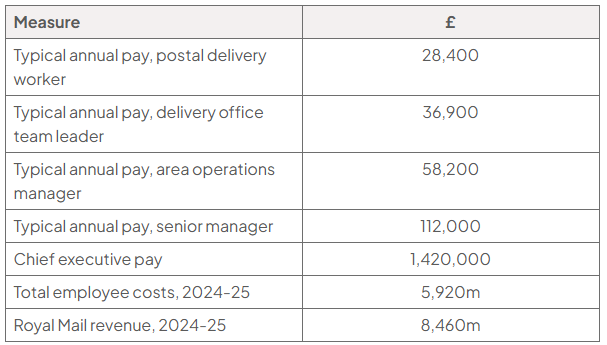
Table of Royal Mail pay and employee costs: postal delivery worker £28 400; team leader £36 900; area operations manager £58 200; senior manager £112 000; chief executive £1 420 000; employee costs £5 920m; revenue £8 460m.

Source: Analyst

Analyse one way in which the gap between the chief executive's pay and a postal delivery worker's pay might affect Royal Mail's reputation with its customers.

2
6 marks

Source A: Pennine Transit Ltd

Pennine Transit Ltd runs local bus services across three Yorkshire towns under contract to the local transport authority. It employs 210 drivers and 38 engineers, cleaners and office staff. In the year to March 2025 it had revenue of £14.6 million and an operating profit of £520 000.

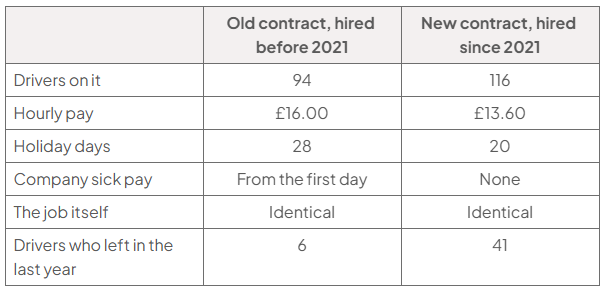
Drivers at Pennine are not all on the same terms. Anyone hired before 2021 is on what everybody calls the old contract: £16.00 an hour, 28 days of holiday and company sick pay from the first day. Anyone hired since is on the new contract: £13.60 an hour, 20 days of holiday and no company sick pay. The two sets of drivers do exactly the same job, often on the same route on the same day, and they know what each other earns.

There are now 94 drivers on the old contract and 116 on the new one. There are also 23 vacancies the company cannot fill, and services are cancelled most weeks because nobody is available to drive them.

In January the drivers asked the company to recognise the union Unite so that pay could be negotiated for everyone at once. The managing director, Gareth Whitcombe, refused, saying Pennine had always dealt with its drivers directly and that a union would make the business slower to respond. The drivers balloted anyway. On a 79% turnout, 71% voted for recognition.

Mr Whitcombe has not changed his position publicly, but he has asked for costings on closing the gap between the two contracts.

Source: Pennine Transit Ltd

Appendix B: The two driver contracts at Pennine Transit Ltd

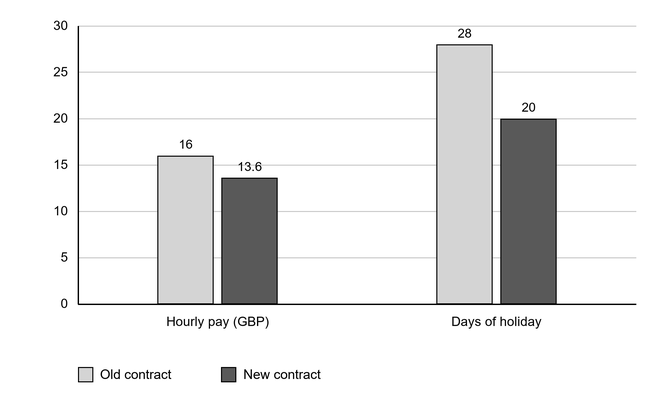
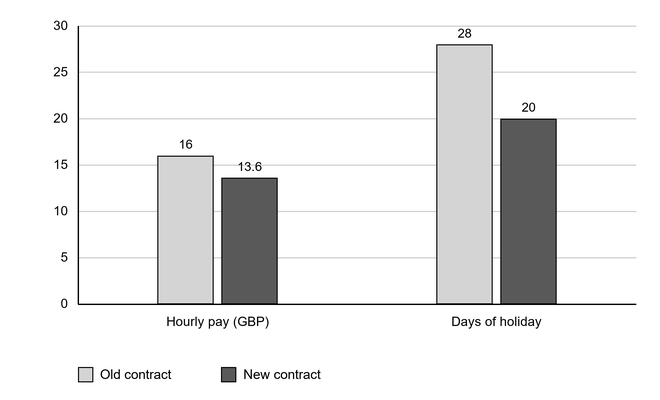
Bar chart comparing contracts: old versus new hourly pay is £16 versus £13.60, and annual holiday is 28 versus 20 days. Vertical scale runs from 0 to 30; old contract is higher for both.
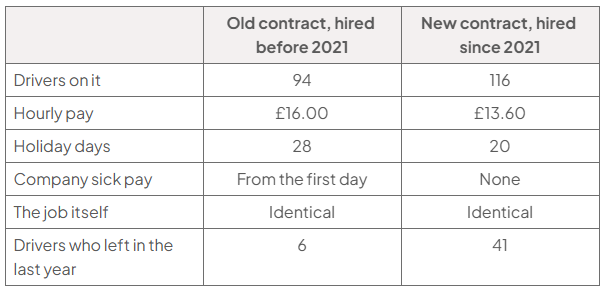
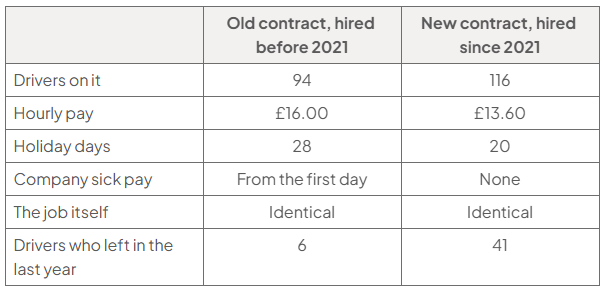
Table comparing old (before 2021) and new (since 2021) contracts: 94 versus 116 drivers; £16 versus £13.60 hourly pay; 28 versus 20 holiday days; sick pay from day one versus none; identical jobs; 6 versus 41 left last year.

Source: Pennine Transit Ltd

Analyse one way in which paying two drivers different rates for the same job might affect Pennine Transit Ltd's ability to keep its drivers.

3
6 marks

Source A: Pennine Transit Ltd

Pennine Transit Ltd runs local bus services across three Yorkshire towns under contract to the local transport authority. It employs 210 drivers and 38 engineers, cleaners and office staff. In the year to March 2025 it had revenue of £14.6 million and an operating profit of £520 000.

Drivers at Pennine are not all on the same terms. Anyone hired before 2021 is on what everybody calls the old contract: £16.00 an hour, 28 days of holiday and company sick pay from the first day. Anyone hired since is on the new contract: £13.60 an hour, 20 days of holiday and no company sick pay. The two sets of drivers do exactly the same job, often on the same route on the same day, and they know what each other earns.

There are now 94 drivers on the old contract and 116 on the new one. There are also 23 vacancies the company cannot fill, and services are cancelled most weeks because nobody is available to drive them.

In January the drivers asked the company to recognise the union Unite so that pay could be negotiated for everyone at once. The managing director, Gareth Whitcombe, refused, saying Pennine had always dealt with its drivers directly and that a union would make the business slower to respond. The drivers balloted anyway. On a 79% turnout, 71% voted for recognition.

Mr Whitcombe has not changed his position publicly, but he has asked for costings on closing the gap between the two contracts.

Source: Pennine Transit Ltd

Appendix A: Pennine Transit Ltd selected data, year to March 2025

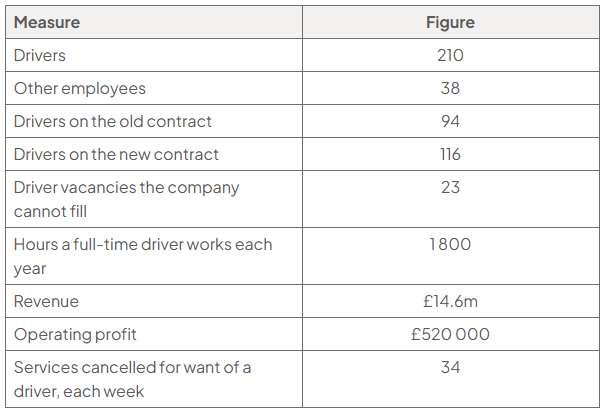
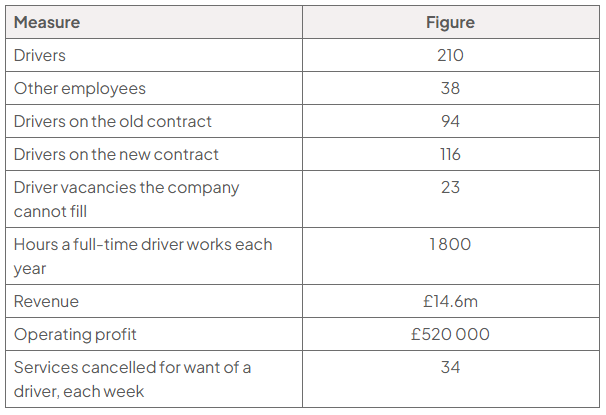
Table of Pennine Transit Ltd selected data: 210 drivers, 23 unfilled driver vacancies, 34 services cancelled each week, revenue of £14.6 million and operating profit of £520 000.

Source: Pennine Transit Ltd

Analyse one way in which paying drivers hired since 2021 less than longer-serving drivers for the same job might affect Pennine Transit Ltd's ability to recruit drivers.

4
6 marks

Source A: Amazon UK

Amazon runs a network of fulfilment centres across the United Kingdom, where orders are picked, packed and despatched. One of the largest is BHX4 in Coventry, which employs about 3 000 people.

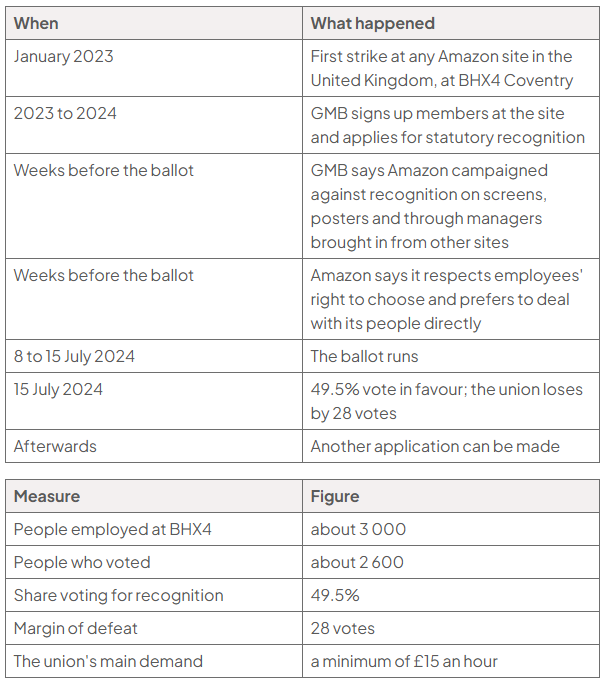
In January 2023 workers at BHX4 held the first strike at any Amazon site in the United Kingdom. Over the following eighteen months the GMB union signed up members there and applied for statutory recognition, which would have obliged Amazon to negotiate pay with the union rather than setting it alone. It would have been the first such agreement at any Amazon site in the country.

The ballot ran from 8 to 15 July 2024. Around 2 600 people voted. 49.5% voted in favour of recognition, and the union lost by 28 votes.

The weeks before the ballot were not quiet. The GMB said Amazon ran a sustained campaign against recognition: messages on screens around the site, posters in the toilets, managers brought in from other sites to talk to staff about what a union would mean, and QR codes in the canteens linking to a page for cancelling GMB membership. Amazon has said it respects employees' right to choose and prefers to deal with its people directly, pointing to its pay rates and the fact that it reviews them each year without being obliged to.

The union's main demand was a minimum of £15 an hour. Amazon's pay at the site at the time of the ballot was below that.

Amazon now has to decide what to do next, knowing that half the people who voted wanted a union and that another application can be made.

Source: GMB and Amazon statements and press reports, 2023 to 2026

Appendix B: Pay at the Coventry site

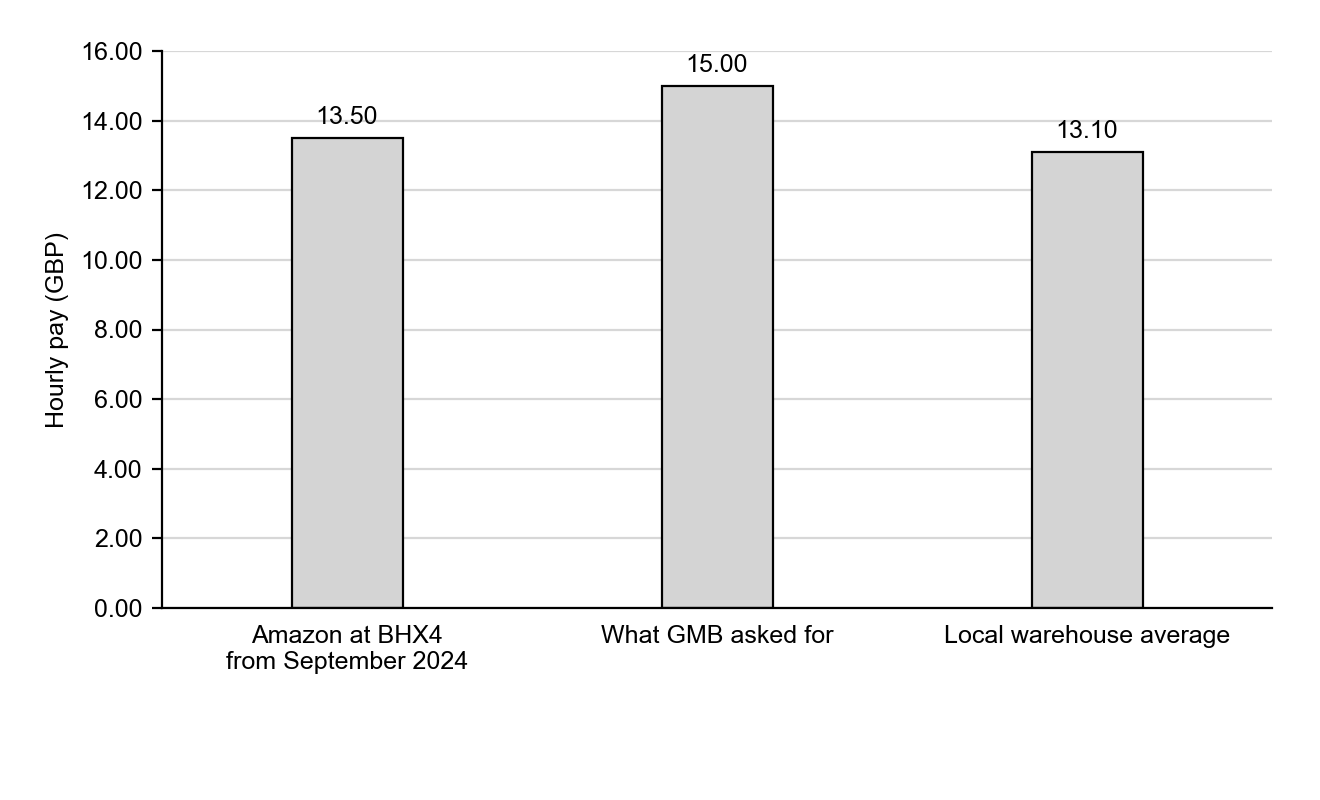
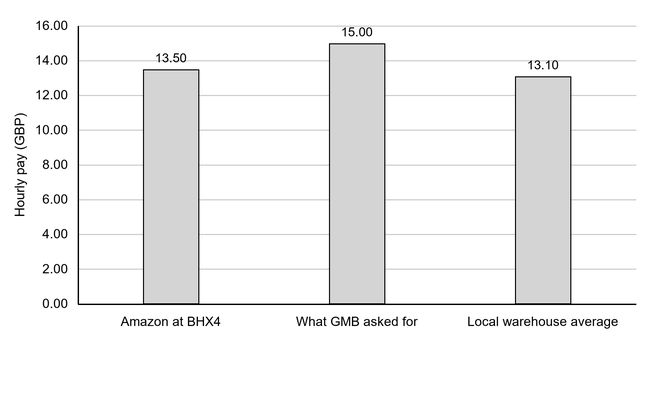
Bar chart of hourly pay in pounds, from zero to £16 per hour: Amazon at BHX4 from September 2024 £13.50, GMB request £15.00, and local warehouse average £13.10.
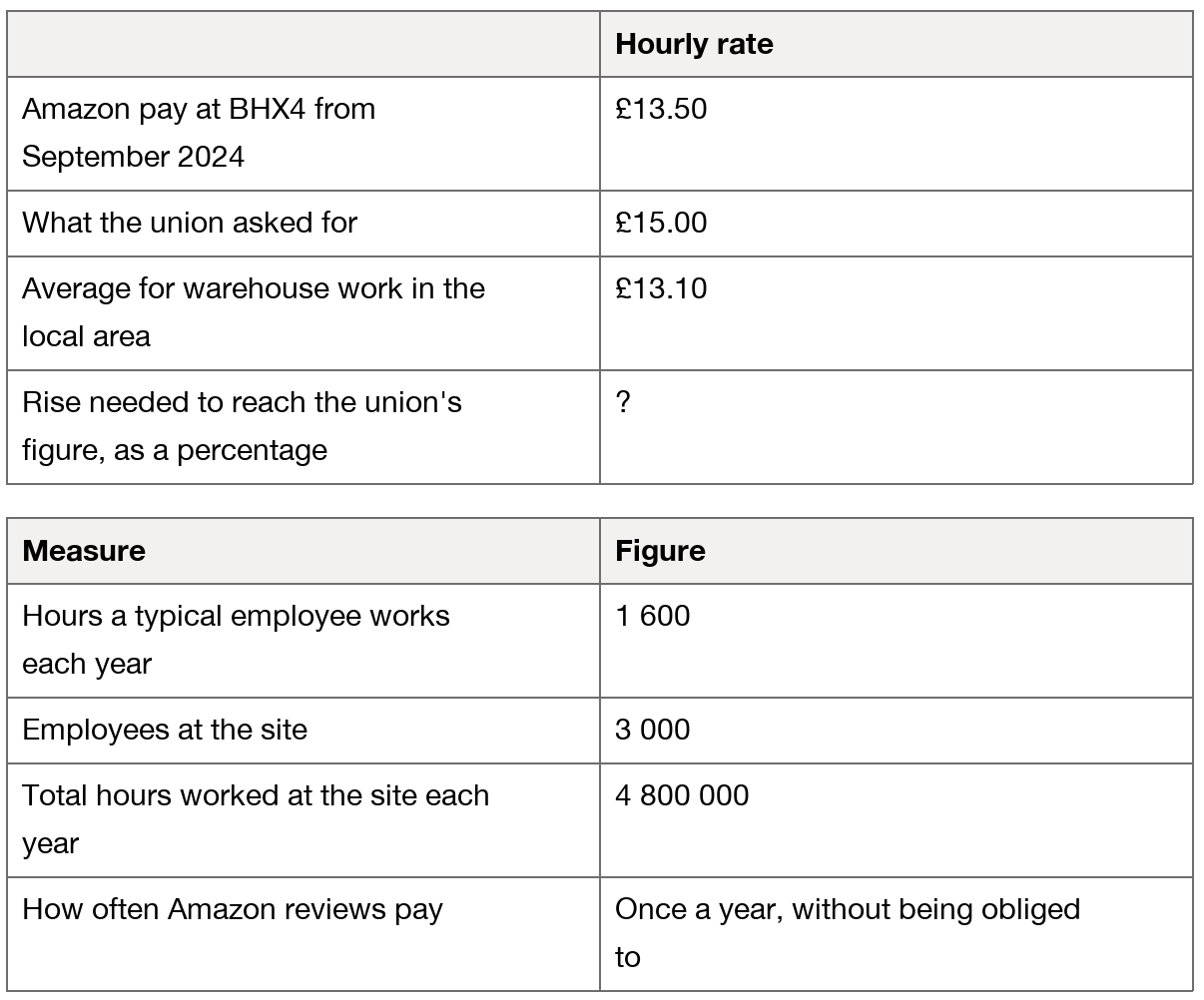
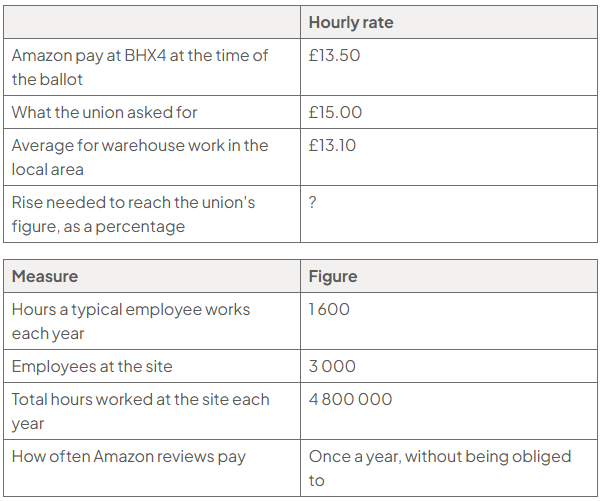
Tables show hourly rates: Amazon BHX4 £13.50, union request £15.00, local average £13.10; percentage rise to the union figure is blank. Annual figures: 1,600 hours per employee, 3,000 employees and 4,800,000 site hours; pay is reviewed yearly.

Source: Analyst

Analyse one way in which paying 40 pence an hour above the local average might affect Amazon's ability to recruit warehouse workers.

5
6 marks

Source A: Caledon Rail Services Ltd

Caledon Rail Services Ltd maintains track, signalling cabling and lineside structures under nine contracts across central Scotland. It employs 260 people, had revenue of £31.4 million in the year to March 2025 and an operating profit of £1.18 million.

Of those 260, 196 work trackside, mostly at night and in all weathers. The other 64 are managers and office staff. The median trackside wage is £34 600 and the median management salary is £52 800, so a manager earns about one and a half times what the people on the track earn.

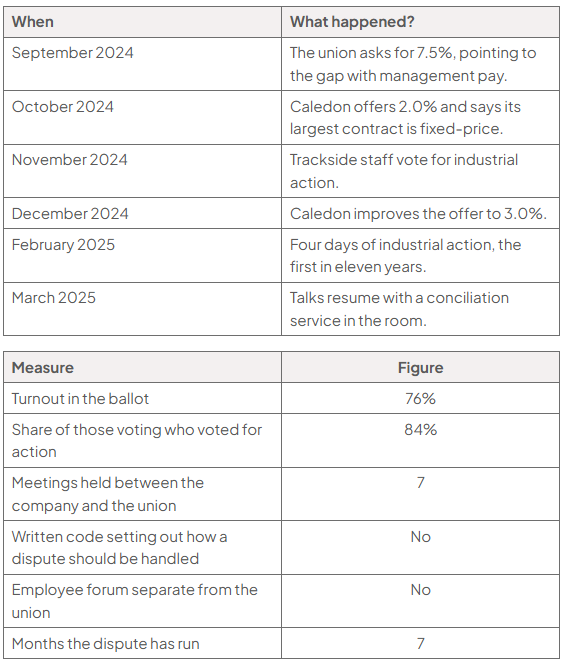
Last September the union asked for 7.5%. Caledon offered 2.0%, explaining that its largest contract is fixed-price and runs for two more years. In November the trackside staff voted for industrial action, and in December the company improved its offer to 3.0%. Neither side moved after that, and in February there were four days of industrial action, the first in eleven years.

What the union keeps returning to is not only the percentage. The trackside rate at Caledon is below the median for the sector while the management rate is above it, and the company has no written code setting out how a dispute should be handled and no employee forum separate from the union. Everything has gone through seven meetings and a ballot.

Talks resumed in March with a conciliation service in the room, and the board has to decide what it is prepared to pay.

Source: Caledon Rail Services Ltd

Appendix B: What Caledon pays, and what the dispute has cost

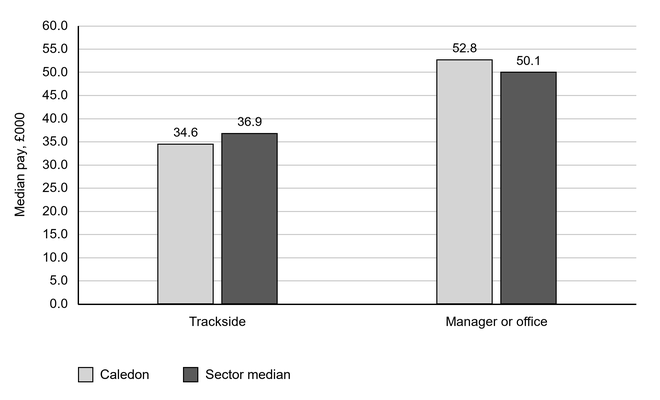
Bar chart of median pay by role, in £000: trackside staff, Caledon 34.6 against a sector median of 36.9; manager or office staff, Caledon 52.8 against a sector median of 50.1. The vertical axis runs from 0 to 60, in £000.
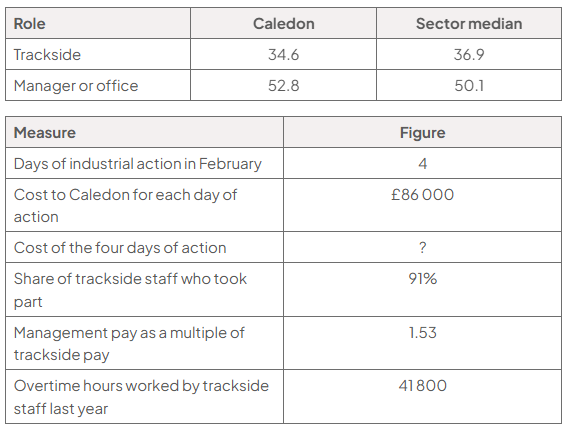
Two tables. Median pay, in £000: trackside staff, Caledon 34.6 and sector 36.9; manager or office staff, Caledon 52.8 and sector 50.1. February industrial action: 4 days; cost £86 000 a day; cost of the four days not provided; 91% of staff took part; pay multiple 1.53; overtime 41 800 hours.

Source: Analyst

Analyse one way in which paying trackside staff below the sector median while paying managers above it might affect Caledon Rail Services Ltd.

6
6 marks

Source A: Dalmuir Shipworks Ltd

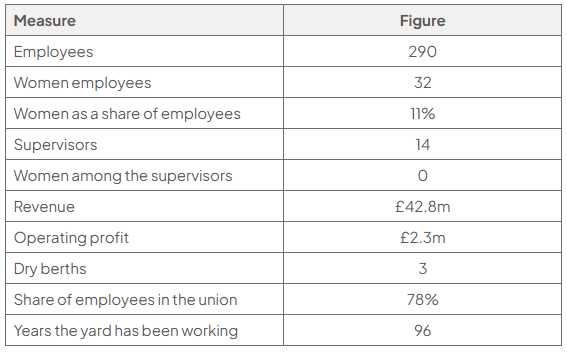
Dalmuir Shipworks Ltd repairs ships and offshore vessels in three dry berths on the Clyde. The yard has been working for ninety-six years, employs 290 people and had revenue of £42.8 million in the year to March 2025, with an operating profit of £2.3 million.

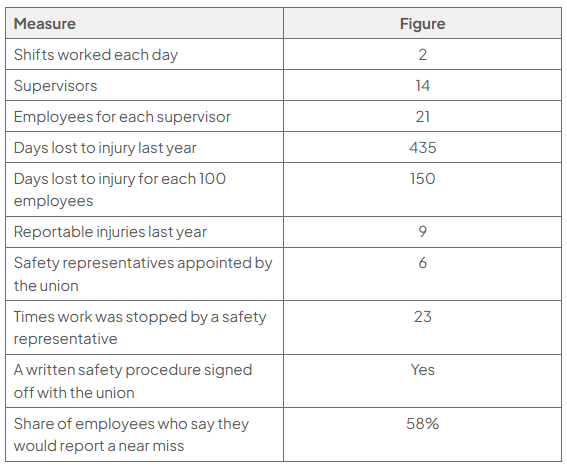
Seventy-eight per cent of the workforce is in the union, which appoints six safety representatives. They stopped work twenty-three times last year. There is a written safety procedure signed off with the union, nine reportable injuries were recorded, and 435 working days were lost to injury.

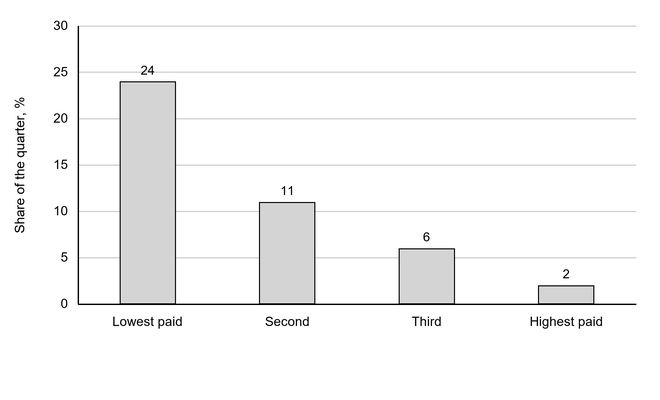
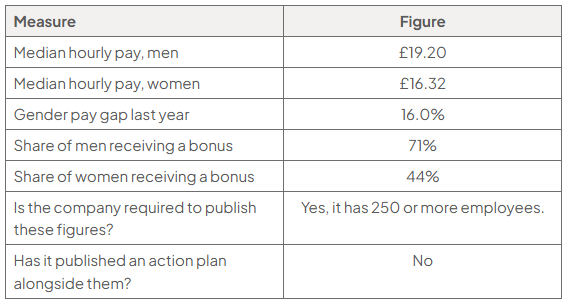
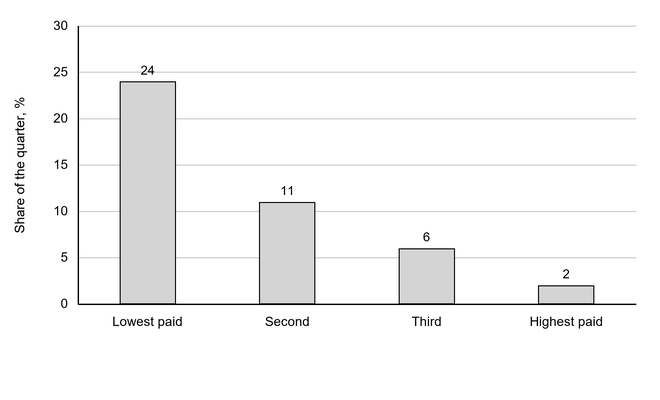
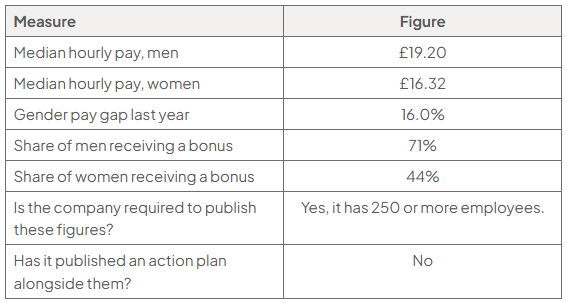
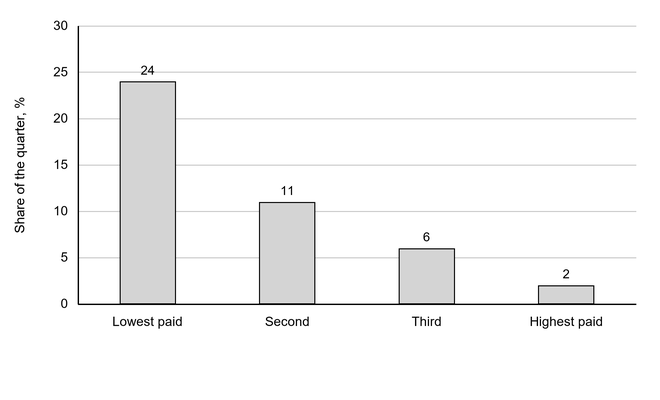
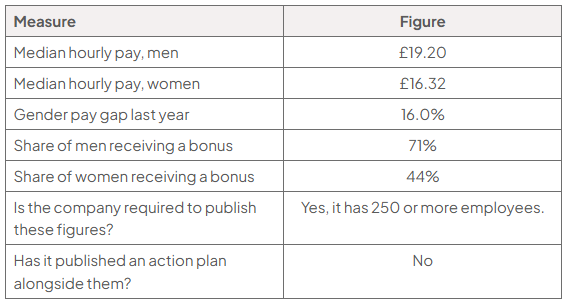
Because the yard employs more than 250 people it has to publish its gender pay gap, and the figures are uncomfortable reading. Thirty-two of the 290 employees are women, which is 11%. The median hourly rate for men is £19.20 and for women £16.32. Women make up 24% of the lowest-paid quarter of employees and 2% of the highest-paid quarter. None of the fourteen supervisors is a woman, and men are far more likely than women to receive a bonus.

The commercial problem is different and just as hard. The three berths are only full three days in four. A third of the yard's revenue comes from work that arrives at short notice, which is exactly the work that needs an empty berth, and the only ways of filling the gaps are to work through the night or to stop taking short-notice jobs at all.

The board is reviewing both the pay figures and the berths this spring.

Source: Dalmuir Shipworks Ltd

Appendix B: What Dalmuir has to publish about pay

Share of each pay quarter who are women, percentages

Bar chart of the percentage of employees who are women in each pay quarter: lowest paid 24%, second 11%, third 6%, and highest paid 2%; vertical axis ranges from 0 to 30%.
Table of Dalmuir’s pay figures: median hourly pay is £19.20 for men and £16.32 for women; last year's gender pay gap was 16.0%; bonuses go to 71% of men and 44% of women. Publication is required, but no action plan was published.

Source: Analyst

Analyse one way in which publishing a gender pay gap without an action plan alongside it might affect Dalmuir Shipworks Ltd.

7
6 marks

Source A: Caledon Rail Services Ltd

Caledon Rail Services Ltd maintains track, signalling cabling and lineside structures under nine contracts across central Scotland. It employs 260 people, had revenue of £31.4 million in the year to March 2025 and an operating profit of £1.18 million.

Of those 260, 196 work trackside, mostly at night and in all weathers. The other 64 are managers and office staff. The median trackside wage is £34 600 and the median management salary is £52 800, so a manager earns about one and a half times what the people on the track earn.

Last September the union asked for 7.5%. Caledon offered 2.0%, explaining that its largest contract is fixed-price and runs for two more years. In November the trackside staff voted for industrial action, and in December the company improved its offer to 3.0%. Neither side moved after that, and in February there were four days of industrial action, the first in eleven years.

What the union keeps returning to is not only the percentage. The trackside rate at Caledon is below the median for the sector while the management rate is above it, and the company has no written code setting out how a dispute should be handled and no employee forum separate from the union. Everything has gone through seven meetings and a ballot.

Talks resumed in March with a conciliation service in the room, and the board has to decide what it is prepared to pay.

Source: Caledon Rail Services Ltd

Appendix C: How the dispute has run

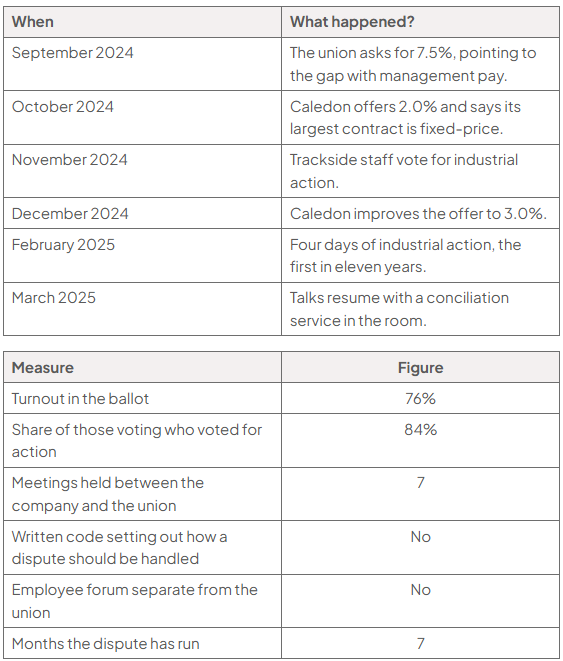
Two tables. A timeline: in September 2024 the union asks for 7.5%, pointing to the gap with management pay; in October 2024 Caledon offers 2.0% and says its largest contract is fixed-price; in November 2024 trackside staff vote for industrial action; in December 2024 Caledon improves the offer to 3.0%; in February 2025 there are four days of industrial action, the first in eleven years; in March 2025 talks resume with a conciliation service in the room. A table of measures: turnout in the ballot 76%; 84% of those voting voted for action; 7 meetings held between the company and the union; no written code setting out how a dispute should be handled; no employee forum separate from the union; the dispute has run for 7 months.

Source: Caledon Rail Services Ltd

Analyse one way in which having no written code setting out how a dispute should be handled might affect how fairly Caledon Rail Services Ltd treats its trackside staff.

1
9 marks

Source A: Royal Mail

Royal Mail delivers letters and parcels to every address in the United Kingdom. It is part of International Distribution Services, which also owns the European parcel business GLS and which employed 153 552 people in 2024 and had revenue of £12 679 million. Around 85 000 of Royal Mail's people are postal delivery workers, and the business takes on about 16 000 extra temporary workers each year between late October and January to cope with the Christmas rush.

In June 2025 the company stopped being a public limited company listed on the stock market. EP Group, controlled by the Czech businessman Daniel Křetínský, completed a £3.6 billion takeover that the UK government had approved in December 2024 and that became unconditional on 30 April 2025.

Most of Royal Mail's people belong to the Communication Workers Union, and relations with that union have been difficult. Strikes ran from August to December 2022, and before the two sides returned to talks Royal Mail said it was losing up to £1 million a day. The dispute ended in July 2023 with a three-year deal worth a 10% pay increase and a £500 one-off payment, accepted by 76% of those who voted on a 67% turnout.

A second three-year deal followed on 3 July 2025: 4.2% in 2025, then increases linked to the Consumer Prices Index of at least 2% in 2026 and at least 2% in 2027, worth more than 8% in total and backdated to 1 April 2025. The company also promised no compulsory redundancies for the life of the deal.

Service quality remains a problem. In October 2025 the regulator Ofcom fined Royal Mail £21 million for missing its delivery targets in 2024/25, the third year in a row it had been fined. The fine was reduced from £30 million because the company admitted liability and settled. Royal Mail returned to profit in 2024/25, reporting £12 million.

Source: International Distribution Services, Ofcom and Communication Workers Union announcements, 2022 to 2026

Appendix C: Pay and employee costs at Royal Mail

Table headed “Measure” and “£”: postal delivery worker £28 400; delivery office team leader £36 900; area operations manager £58 200; senior manager £112 000; chief executive £1 420 000; employee costs £5 920m; revenue £8 460m.

Source: Analyst

Appendix D: Royal Mail's delivery workforce

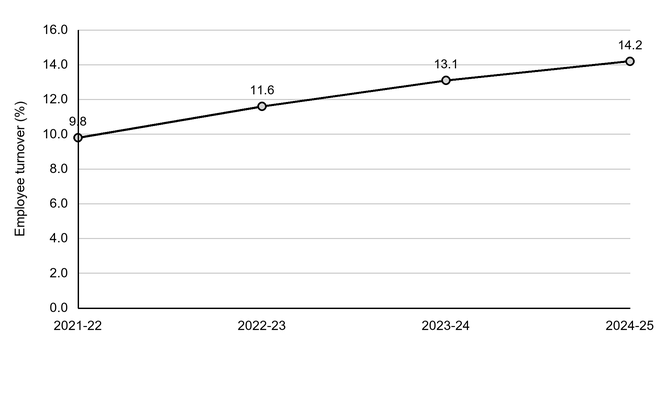
Line chart of Royal Mail delivery-worker employee turnover, rising from 9.8% in 2021/22 to 11.6% in 2022/23, 13.1% in 2023/24 and 14.2% in 2024/25.
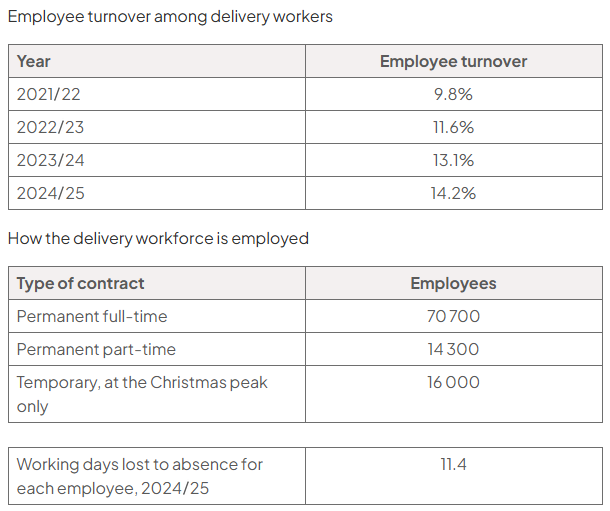
Two tables, followed by a single measure. Employee turnover among delivery workers: 2021/22 9.8%; 2022/23 11.6%; 2023/24 13.1%; 2024/25 14.2%. How the delivery workforce is employed: permanent full-time 70 700 employees; permanent part-time 14 300 employees; temporary, at the Christmas peak only, 16 000 employees. Working days lost to absence for each employee in 2024/25: 11.4.

Source: Analyst

Assess whether Royal Mail should publish the ratio between its chief executive's pay and the pay of a typical postal delivery worker.

Calculate Royal Mail's employee costs as a percentage of revenue to support your answer.

2
9 marks

Source A: Pennine Transit Ltd

Pennine Transit Ltd runs local bus services across three Yorkshire towns under contract to the local transport authority. It employs 210 drivers and 38 engineers, cleaners and office staff. In the year to March 2025 it had revenue of £14.6 million and an operating profit of £520 000.

Drivers at Pennine are not all on the same terms. Anyone hired before 2021 is on what everybody calls the old contract: £16.00 an hour, 28 days of holiday and company sick pay from the first day. Anyone hired since is on the new contract: £13.60 an hour, 20 days of holiday and no company sick pay. The two sets of drivers do exactly the same job, often on the same route on the same day, and they know what each other earns.

There are now 94 drivers on the old contract and 116 on the new one. There are also 23 vacancies the company cannot fill, and services are cancelled most weeks because nobody is available to drive them.

In January the drivers asked the company to recognise the union Unite so that pay could be negotiated for everyone at once. The managing director, Gareth Whitcombe, refused, saying Pennine had always dealt with its drivers directly and that a union would make the business slower to respond. The drivers balloted anyway. On a 79% turnout, 71% voted for recognition.

Mr Whitcombe has not changed his position publicly, but he has asked for costings on closing the gap between the two contracts.

Source: Pennine Transit Ltd

Appendix A: Pennine Transit Ltd selected data, year to March 2025

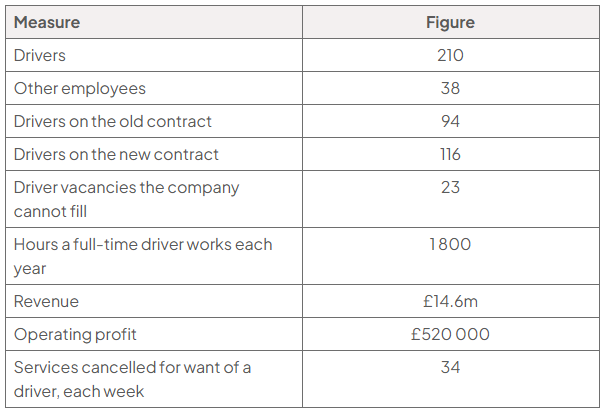
Selected data table for Pennine Transit Ltd: 210 drivers, 38 other employees; 94 old-contract and 116 new-contract drivers; 23 unfilled vacancies; 1,800 annual hours; revenue £14.6m; operating profit £520,000; 34 weekly cancellations from driver shortages.

Source: Pennine Transit Ltd

Appendix B: The two driver contracts at Pennine Transit Ltd

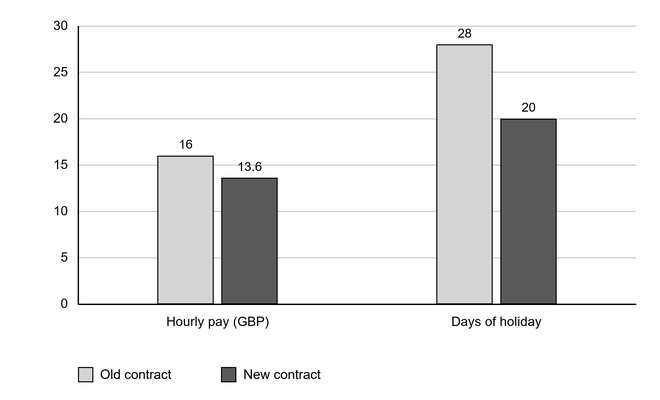
Bar chart comparing Pennine Transit’s contracts: hourly pay is £16.00 for the old contract and £13.60 for the new; annual holiday is 28 days versus 20 days. Y-axis ranges from 0 to 30.
Table comparing old and new contracts: 94 versus 116 drivers; £16.00 versus £13.60 hourly pay; 28 versus 20 holiday days; sick pay from day one versus none; identical jobs; 6 versus 41 leavers last year.

Source: Pennine Transit Ltd

Assess whether having two different contracts for the same job is fair to Pennine Transit Ltd's drivers.

Calculate the employee turnover of drivers on each of the two contracts to support your answer.

3
9 marks

Source A: Amazon UK

Amazon runs a network of fulfilment centres across the United Kingdom, where orders are picked, packed and despatched. One of the largest is BHX4 in Coventry, which employs about 3 000 people.

In January 2023 workers at BHX4 held the first strike at any Amazon site in the United Kingdom. Over the following eighteen months the GMB union signed up members there and applied for statutory recognition, which would have obliged Amazon to negotiate pay with the union rather than setting it alone. It would have been the first such agreement at any Amazon site in the country.

The ballot ran from 8 to 15 July 2024. Around 2 600 people voted. 49.5% voted in favour of recognition, and the union lost by 28 votes.

The weeks before the ballot were not quiet. The GMB said Amazon ran a sustained campaign against recognition: messages on screens around the site, posters in the toilets, managers brought in from other sites to talk to staff about what a union would mean, and QR codes in the canteens linking to a page for cancelling GMB membership. Amazon has said it respects employees' right to choose and prefers to deal with its people directly, pointing to its pay rates and the fact that it reviews them each year without being obliged to.

The union's main demand was a minimum of £15 an hour. Amazon's pay at the site at the time of the ballot was below that.

Amazon now has to decide what to do next, knowing that half the people who voted wanted a union and that another application can be made.

Source: GMB and Amazon statements and press reports, 2023 to 2026

Appendix A: The Coventry recognition ballot

Two tables. A timeline: in January 2023 came the first strike at any Amazon site in the United Kingdom, at BHX4 Coventry; in 2023 to 2024 GMB signed up members at the site and applied for statutory recognition; in the weeks before the ballot GMB says Amazon campaigned against recognition on screens, posters and through managers brought in from other sites, while Amazon says it respects employees' right to choose and prefers to deal with its people directly; the ballot ran from 8 to 15 July 2024; on 15 July 2024 49.5% voted in favour and the union lost by 28 votes; afterwards another application can be made. A table of figures: about 3 000 people employed at BHX4; about 2 600 people voted; 49.5% voted for recognition; the margin of defeat was 28 votes; the union's main demand was a minimum of £15 an hour.

Source: GMB and Amazon statements and press reports

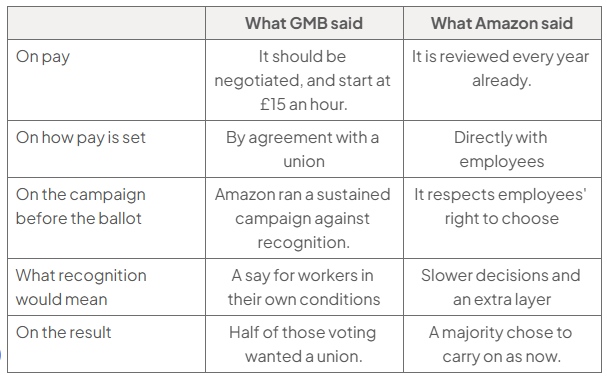
Appendix C: What each side said

Table of what GMB and Amazon said. On pay, GMB said it should be negotiated and start at £15 an hour; Amazon said it is already reviewed every year. On how pay is set, GMB said by agreement with a union; Amazon said directly with employees. On the campaign before the ballot, GMB said Amazon ran a sustained campaign against recognition; Amazon said it respects employees' right to choose. On what recognition would mean, GMB said a say for workers in their own conditions; Amazon said slower decisions and an extra layer. On the result, GMB said half of those voting wanted a union; Amazon said a majority chose to carry on as now.

Source: GMB and Amazon statements

Assess whether Amazon acted ethically in the weeks before the Coventry ballot.

4
9 marks

Source A: Caledon Rail Services Ltd

Caledon Rail Services Ltd maintains track, signalling cabling and lineside structures under nine contracts across central Scotland. It employs 260 people, had revenue of £31.4 million in the year to March 2025 and an operating profit of £1.18 million.

Of those 260, 196 work trackside, mostly at night and in all weathers. The other 64 are managers and office staff. The median trackside wage is £34 600 and the median management salary is £52 800, so a manager earns about one and a half times what the people on the track earn.

Last September the union asked for 7.5%. Caledon offered 2.0%, explaining that its largest contract is fixed-price and runs for two more years. In November the trackside staff voted for industrial action, and in December the company improved its offer to 3.0%. Neither side moved after that, and in February there were four days of industrial action, the first in eleven years.

What the union keeps returning to is not only the percentage. The trackside rate at Caledon is below the median for the sector while the management rate is above it, and the company has no written code setting out how a dispute should be handled and no employee forum separate from the union. Everything has gone through seven meetings and a ballot.

Talks resumed in March with a conciliation service in the room, and the board has to decide what it is prepared to pay.

Source: Caledon Rail Services Ltd

Appendix A: Caledon Rail Services Ltd selected data, year to March 2025

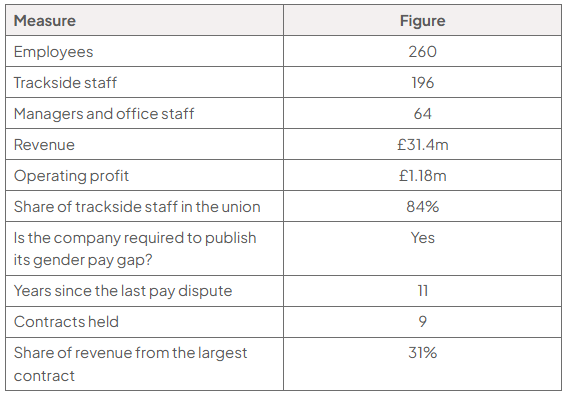
Table of Caledon Rail Services Ltd selected data: 260 employees; 196 trackside staff; 64 managers and office staff; revenue £31.4m; operating profit £1.18m; 84% of trackside staff in the union; the company is required to publish its gender pay gap; 11 years since the last pay dispute; 9 contracts held; 31% of revenue from the largest contract.

Source: Caledon Rail Services Ltd

Appendix C: How the dispute has run

Two tables show the dispute timeline and measures: September 2024, union asks for 7.5%; October, Caledon offers 2.0%; November, staff vote for action; December, offer rises to 3.0%; February 2025, four days’ action; March, talks resume with conciliation. Measures: ballot turnout 76%; action vote 84%; seven meetings; no written code; no separate employee forum; dispute seven months.

Source: Caledon Rail Services Ltd

Assess whether Caledon Rail Services Ltd has handled its pay dispute ethically.

5
9 marks

Source A: Dalmuir Shipworks Ltd

Dalmuir Shipworks Ltd repairs ships and offshore vessels in three dry berths on the Clyde. The yard has been working for ninety-six years, employs 290 people and had revenue of £42.8 million in the year to March 2025, with an operating profit of £2.3 million.

Seventy-eight per cent of the workforce is in the union, which appoints six safety representatives. They stopped work twenty-three times last year. There is a written safety procedure signed off with the union, nine reportable injuries were recorded, and 435 working days were lost to injury.

Because the yard employs more than 250 people it has to publish its gender pay gap, and the figures are uncomfortable reading. Thirty-two of the 290 employees are women, which is 11%. The median hourly rate for men is £19.20 and for women £16.32. Women make up 24% of the lowest-paid quarter of employees and 2% of the highest-paid quarter. None of the fourteen supervisors is a woman, and men are far more likely than women to receive a bonus.

The commercial problem is different and just as hard. The three berths are only full three days in four. A third of the yard's revenue comes from work that arrives at short notice, which is exactly the work that needs an empty berth, and the only ways of filling the gaps are to work through the night or to stop taking short-notice jobs at all.

The board is reviewing both the pay figures and the berths this spring.

Source: Dalmuir Shipworks Ltd

Appendix A: Dalmuir Shipworks Ltd selected data, year to March 2025

Table of selected Dalmuir data for the year to March 2025: 290 employees, 32 women (11%), 14 supervisors (none women), revenue £42.8 million, operating profit £2.3 million, three dry berths, 78% union membership and 96 years operating.

Source: Dalmuir Shipworks Ltd

Appendix B: What Dalmuir has to publish about pay

Share of each pay quarter who are women, percentages

Bar chart of women’s share by pay quarter, falling from 24% in the lowest-paid quarter to 2% in the highest; second and third quarters are 11% and 6%. Y-axis: 0 to 30%.
Table of gender pay measures: median hourly pay is £19.20 for men and £16.32 for women; last year’s pay gap was 16.0%, with bonuses for 71% of men and 44% of women. Publication is required, but there is no action plan.

Source: Analyst

Assess how well Dalmuir Shipworks Ltd is managing equality in its workforce.

1
15 marks

Source A: Pennine Transit Ltd

Pennine Transit Ltd runs local bus services across three Yorkshire towns under contract to the local transport authority. It employs 210 drivers and 38 engineers, cleaners and office staff. In the year to March 2025 it had revenue of £14.6 million and an operating profit of £520 000.

Drivers at Pennine are not all on the same terms. Anyone hired before 2021 is on what everybody calls the old contract: £16.00 an hour, 28 days of holiday and company sick pay from the first day. Anyone hired since is on the new contract: £13.60 an hour, 20 days of holiday and no company sick pay. The two sets of drivers do exactly the same job, often on the same route on the same day, and they know what each other earns.

There are now 94 drivers on the old contract and 116 on the new one. There are also 23 vacancies the company cannot fill, and services are cancelled most weeks because nobody is available to drive them.

In January the drivers asked the company to recognise the union Unite so that pay could be negotiated for everyone at once. The managing director, Gareth Whitcombe, refused, saying Pennine had always dealt with its drivers directly and that a union would make the business slower to respond. The drivers balloted anyway. On a 79% turnout, 71% voted for recognition.

Mr Whitcombe has not changed his position publicly, but he has asked for costings on closing the gap between the two contracts.

Source: Pennine Transit Ltd

Appendix A: Pennine Transit Ltd selected data, year to March 2025

Table of Pennine Transit Ltd data: 210 drivers, 38 other staff; 94 old-contract and 116 new-contract drivers; 23 vacancies; 1,800 annual hours per driver; £14.6m revenue; £520,000 operating profit; 34 weekly cancellations.

Source: Pennine Transit Ltd

Appendix B: The two driver contracts at Pennine Transit Ltd

Bar chart comparing Pennine Transit’s old and new contracts: hourly pay is £16 versus £13.60, and annual holiday is 28 days versus 20. Vertical axis ranges from 0 to 30.
Table comparing old and new driver contracts: old (hired before 2021), 94 drivers, £16 hourly pay, 28 holiday days, sick pay from day one, 6 left; new (since 2021), 116, £13.60, 20 days, none, 41 left.

Source: Pennine Transit Ltd

Appendix D: Two ways of closing the gap between the contracts

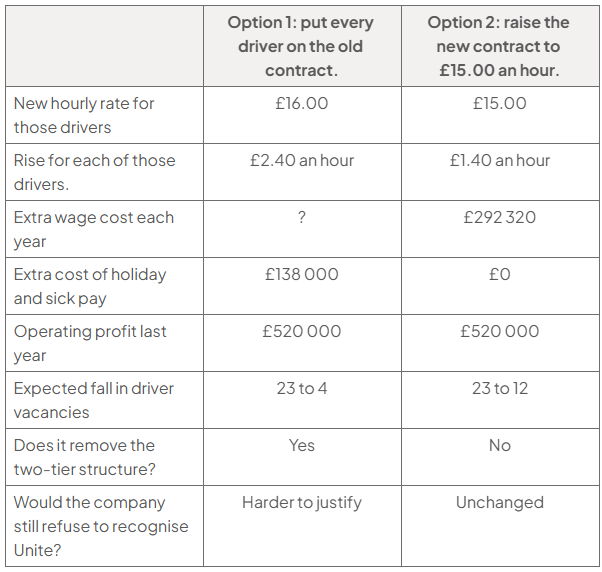
Comparison table of two options: all drivers on £16 an hour, or new-contract drivers on £15. Hourly rises are £2.40 and £1.40; extra annual wage cost is unknown or £292,320; holiday and sick-pay cost £138,000 or £0; vacancies fall 23 to 4 or 12.
  • 116 drivers are on the new contract, each working 1 800 hours a year

Source: Analyst

Pennine Transit Ltd is considering two ways of closing the gap between its two driver contracts:

Option 1: put every driver on the old contract

Option 2: raise the new contract to £15.00 an hour

Evaluate both options and recommend which one Pennine Transit Ltd should choose.

Calculate the extra wage cost each year under Option 1 to support your answer.

2
15 marks

Source A: Amazon UK

Amazon runs a network of fulfilment centres across the United Kingdom, where orders are picked, packed and despatched. One of the largest is BHX4 in Coventry, which employs about 3 000 people.

In January 2023 workers at BHX4 held the first strike at any Amazon site in the United Kingdom. Over the following eighteen months the GMB union signed up members there and applied for statutory recognition, which would have obliged Amazon to negotiate pay with the union rather than setting it alone. It would have been the first such agreement at any Amazon site in the country.

The ballot ran from 8 to 15 July 2024. Around 2 600 people voted. 49.5% voted in favour of recognition, and the union lost by 28 votes.

The weeks before the ballot were not quiet. The GMB said Amazon ran a sustained campaign against recognition: messages on screens around the site, posters in the toilets, managers brought in from other sites to talk to staff about what a union would mean, and QR codes in the canteens linking to a page for cancelling GMB membership. Amazon has said it respects employees' right to choose and prefers to deal with its people directly, pointing to its pay rates and the fact that it reviews them each year without being obliged to.

The union's main demand was a minimum of £15 an hour. Amazon's pay at the site at the time of the ballot was below that.

Amazon now has to decide what to do next, knowing that half the people who voted wanted a union and that another application can be made.

Source: GMB and Amazon statements and press reports, 2023 to 2026

Appendix B: Pay at the Coventry site

Bar chart of hourly pay in pounds: Amazon at BHX4 £13.50, the GMB request £15.00, and the local warehouse average £13.10; vertical axis ranges from £0 to £16 in £2 intervals.
Two tables show pay and site measures: Amazon BHX4 £13.50/hour, union request £15.00, local average £13.10, percentage rise ?. Typical hours 1,600/year; 3,000 employees; 4,800,000 total hours; annual voluntary pay reviews.

Source: Analyst

Appendix D: Two ways Amazon could respond

  • 4.8 million hours are worked at the site each year, at £13.50 an hour after the September 2024 pay review

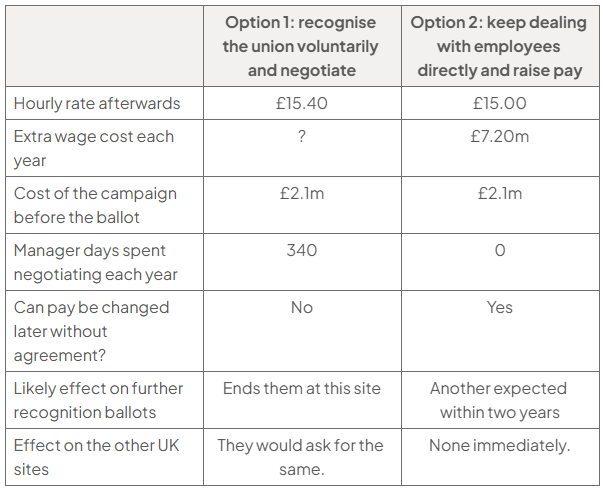
Comparison table of Option 1, union recognition, and Option 2, direct dealing: rates £15.40/£15; extra annual wages ?/£7.20m; campaign £2.1m each; manager days 340/0; later changes no/yes; ballot and other-site effects shown.

Source: Analyst

Amazon is considering two ways of responding to the Coventry ballot:

Option 1: recognise the union voluntarily and negotiate pay

Option 2: keep dealing with employees directly and raise pay

Evaluate both options and recommend which one Amazon should choose.

Calculate the extra wage cost each year under Option 1 to support your answer.

3
15 marks

Source A: Dalmuir Shipworks Ltd

Dalmuir Shipworks Ltd repairs ships and offshore vessels in three dry berths on the Clyde. The yard has been working for ninety-six years, employs 290 people and had revenue of £42.8 million in the year to March 2025, with an operating profit of £2.3 million.

Seventy-eight per cent of the workforce is in the union, which appoints six safety representatives. They stopped work twenty-three times last year. There is a written safety procedure signed off with the union, nine reportable injuries were recorded, and 435 working days were lost to injury.

Because the yard employs more than 250 people it has to publish its gender pay gap, and the figures are uncomfortable reading. Thirty-two of the 290 employees are women, which is 11%. The median hourly rate for men is £19.20 and for women £16.32. Women make up 24% of the lowest-paid quarter of employees and 2% of the highest-paid quarter. None of the fourteen supervisors is a woman, and men are far more likely than women to receive a bonus.

The commercial problem is different and just as hard. The three berths are only full three days in four. A third of the yard's revenue comes from work that arrives at short notice, which is exactly the work that needs an empty berth, and the only ways of filling the gaps are to work through the night or to stop taking short-notice jobs at all.

The board is reviewing both the pay figures and the berths this spring.

Source: Dalmuir Shipworks Ltd

Appendix A: Dalmuir Shipworks Ltd selected data, year to March 2025

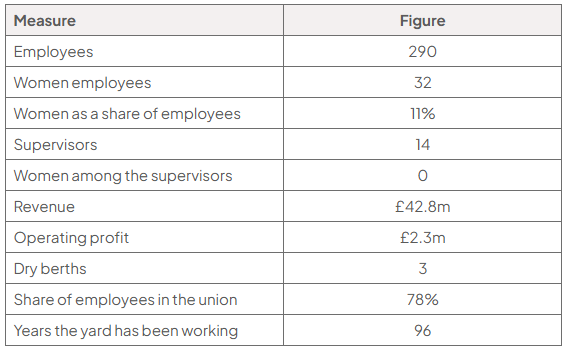
Table of Dalmuir Shipworks Ltd selected data: 290 employees, 32 women (11%); 14 supervisors, none women; revenue £42.8m; operating profit £2.3m; 3 dry berths; 78% union membership; yard operating for 96 years.

Source: Dalmuir Shipworks Ltd

Appendix B: What Dalmuir has to publish about pay

Share of each pay quarter who are women, percentages

Bar chart of the share of each pay quarter who are women, declining from 24% in the lowest-paid quarter to 11% in the second, 6% in the third and 2% in the highest-paid quarter; vertical scale 0 to 30%.
Table of pay-gap figures: gender pay gap last year 16.0%; bonuses received by 71% of men and 44% of women. Dalmuir must publish these figures but has not published an accompanying action plan.

Source: Analyst

Appendix C: How the yard works, and what lost time costs

Table of safety data: 2 daily shifts; 14 supervisors, 21 employees each; 435 injury days (150 per 100 employees); 9 reportable injuries; 6 union safety representatives; 23 stoppages; signed-off written procedure: yes; 58% would report a near miss.

Source: Analyst

Evaluate two things Dalmuir Shipworks Ltd could do to narrow its gender pay gap, and recommend which one it should do first.