Legal Environment (AQA A Level Business): Exam Questions

Exam code: 7132

Syllabus Edition

First teaching 2026

First exams 2028

2 hours16 questions
1
6 marks

Source A: Finlay's Farm Ltd

Finlay's Farm Ltd is a small family-owned farm in Scotland. It has a herd of 130 cows, and their milk is used to make:

  • Cheese. This is sold both online and through various retail stores.

  • Ice cream. This is sold through retailers.

The company's founders are David and Wilma Finlay. They have built strong long-term relationships with its customers. There are two other employees. The dairy industry has been restructuring in recent years with bigger farms buying up smaller ones.

The company:

  • has high gearing but has also used crowdfunding to raise finance

  • receives government agricultural grants and subsidies

  • exports some of its products; although since the UK left the European Union exporting regulations have been complex.

The farm is organic. Organic farming aims to ensure that it uses processes that do not harm the environment, plant health or animal welfare. This is important to David and Wilma and its other employees. For example, the cows are fed an organic and natural diet as opposed to animal feed which has been genetically modified. The company aims to reduce energy use and greenhouse emissions and reduce the use of chemicals in farming as much as it can, even if this impacts on productivity. David and Wilma have been asked to speak at a number of environmental events and have been awarded an Outstanding Achievement award for their environmentally friendly practices.

The company has a good brand image and charges a premium price for its products. Its customers value its niche position in the market. It is said to be operating close to capacity. To increase scale, it would need to buy more cows and invest in new production facilities.

The farm has a small visitor centre which:

  • sells its products

  • offers food workshops such as ice cream making

  • organises visits for people who want to know more about organic farming and look around the farm.

Analysts say the key risks facing the company are:

  • changes in market conditions if customers become more price sensitive

  • the retirement of the founders

  • IT issues with its online sales business such as data theft.

One possible growth option for the business is to open a glamping campsite.

Source: Information sourced from Finlay's Farm Ltd

Analyse one way in which a change in the legal environment might affect the profits of Finlay's Farm Ltd.

2
6 marks

Source B: Wrenbury Castings

Wrenbury Castings Limited makes iron castings at a foundry near Crewe, Cheshire. It was founded in 1921 and is owned by the Fairclough family; its Managing Director is Tom Fairclough. It employs 118 people. It melts scrap iron and steel in two electric induction furnaces and pours the metal into sand moulds to make castings weighing between 2 and 8 tonnes, such as counterweights for excavators, pump housings and parts for agricultural machinery. Its largest customer, a UK manufacturer of construction machinery, buys 41% of its output, and customers in the EU buy 18%.

When the moulds are broken open and the castings are cleaned by grinding, a process called fettling, fine silica dust is released. The law sets a limit on the amount of this dust that workers may breathe, and the Health and Safety Executive inspects foundries to check that employers control it.

Electricity is the company's second-largest cost, after scrap metal. Wrenbury Castings competes with imported castings, many of them made in foundries which melt iron using coke, a process that emits more carbon dioxide.

Several changes in government policy affect the business:

  • The EU carbon border charge. From 2026, businesses in the EU which import iron and steel goods, including castings, must pay a charge for the carbon dioxide emitted in making them, unless a similar carbon price has already been paid. In May 2025 the UK and the EU agreed to work towards linking their carbon markets, which would remove the charge on UK goods.

  • The UK carbon border charge. From 1 January 2027 the UK will charge a similar levy on imports of iron and steel and some other goods.

  • Electricity costs. In June 2025 the government's Industrial Strategy promised to cut electricity costs by up to 25% from 2027 for manufacturers which use large amounts of electricity.

Wrenbury Castings has been offered the chance to buy Lyme Foundry, a smaller rival in Staffordshire whose owner is retiring. Its largest customer has asked it to supply 3 000 more tonnes of castings a year from 2028.

Source: Wrenbury Castings

Fettling releases fine silica dust. The law sets a limit on the amount of this dust that workers may breathe, and the Health and Safety Executive inspects foundries to check that it is controlled.

Analyse one way in which this law might affect Wrenbury Castings' costs.

3
6 marks

Source B: Thornbury Mills

Thornbury Mills Limited is a private limited company which mills wheat into flour at a single site on the edge of Thornbury, South Gloucestershire. The business was founded in 1887 and is owned by the fourth generation of the Hale family. Its Managing Director is Clare Hale, and it employs 86 people. In the year to 31 July 2026 the mill processed 118 000 tonnes of wheat into 92 000 tonnes of flour and 25 000 tonnes of wheatfeed, the bran and other parts of the grain which are sold for animal feed. Most of the wheat is bought from farms in Gloucestershire, Wiltshire and Herefordshire.

The company sells flour to three types of customer:

  • Two large plant bakeries, which make sliced bread for supermarkets. Together they bought 58% of its flour in the year.

  • Biscuit and cake manufacturers.

  • Craft bakeries, which buy flour in 16 kilogram bags.

Flour for each plant bakery is milled to that bakery's own specification, and a bakery wishing to change supplier must first run baking trials with flour from the new mill. The price the plant bakeries pay is agreed every three months with reference to the market price of wheat.

Thornbury Mills buys about 70% of the wheat it needs on forward contracts, which fix the price up to twelve months before the wheat is delivered. It buys the remainder at the market price at the time of delivery.

From 13 December 2026 the law requires every miller producing more than 500 tonnes of flour a year to add folic acid to non-wholemeal wheat flour, at 250 micrograms for every 100 grams. Flour must already contain added calcium, iron, niacin and thiamin. Thornbury Mills has installed dosing equipment costing £85 000, and estimates that the folic acid and the additional testing will cost £0.55 for each tonne of flour.

In 2023 a fire in the mill's dust extraction system stopped production for nine days. During that time the company's customers were supplied by another flour miller, under an agreement by which each mill supplies the other's customers if either stops production. The agreement remains in place.

The mill operates 24 hours a day and uses large amounts of electricity. In 2024 the company installed solar panels on the roofs of the mill and its warehouse. It delivers flour in its own fleet of 14 diesel lorries. Since 2023 it has bought 8% of its wheat from farms using regenerative methods, such as reduced ploughing and the planting of cover crops, and pays those farmers a premium of £15 a tonne. In 2026 the larger of its two plant bakery customers asked each of its suppliers to cut the emissions linked to the products they supply by 30% by 2030.

Source: Thornbury Mills

From 13 December 2026 every miller producing more than 500 tonnes of flour a year must add folic acid to non-wholemeal wheat flour. Thornbury Mills agrees the price of its flour with its two largest customers every three months.

Analyse one way in which this law might affect the price Thornbury Mills can charge for its flour.

4
6 marks

Source A: Premier Foods

Premier Foods plc is one of the UK's largest food manufacturers. Its brands include Ambrosia, Batchelors, Bisto, Loyd Grossman, Mr Kipling, Oxo and Sharwood's, and it makes Cadbury cakes under licence. It has bought three newer brands: The Spice Tailor, FUEL10K and, in 2025, Merchant Gourmet, for £46.1 million. It is listed on the London Stock Exchange.

In the 52 weeks to 28 March 2026 Premier Foods' headline revenue rose by 2.5% to £1 175.2 million and its trading profit rose by 6.7% to £200.4 million. Sales of its branded products grew by 3.4%. Mr Kipling had its biggest ever year, helped by new products such as cake bites tubs, and the company gained market share in both of its divisions, Grocery and Sweet Treats.

The company's strategy has five pillars:

  • Grow the UK core through brand investment and new products.

  • Enter new categories, such as FUEL10K yogurt and granola pots.

  • Build international businesses in Australia and New Zealand, North America and Europe.

  • Acquire brands with strong growth potential.

  • Invest in its factories to increase efficiency and automation.

During the year capital investment rose by 25% to £51.9 million. It included a solar farm at its cake factory near Barnsley, which can supply up to 70% of the site's electricity, and an investment that made the pot filling and packing line at its Ambrosia site in Devon faster and more efficient.

Many of the company's products, including most cakes, are classed by law as less healthy because they are high in fat, sugar or salt. From 5 January 2026 such products may not be advertised on television or on-demand services between 5.30am and 9pm, or in paid-for online adverts at any time. Adverts which show a brand without showing a less healthy product are still allowed.

Source: Premier Foods plc, Full Year Results for the 52 weeks ending 28 March 2026

From 5 January 2026 less healthy products, including most Mr Kipling cakes, may not be advertised on television between 5.30am and 9pm, or in paid-for online adverts. Adverts which show only the brand are still allowed.

Analyse one way in which these restrictions might affect sales of Mr Kipling cakes.

5
6 marks

Source B: Oakhanger Lettings

Oakhanger Lettings Limited is a letting agent with branches in Alton and Farnham, Hampshire and Surrey. It was founded in 2004 by Rachel Dunn, who owns it and is its Managing Director, and it employs 28 people. At 30 June 2026 it managed 1 120 rented homes for 640 landlords. It advertises every home on Rightmove.

The company offers landlords two main services:

  • Full management. Oakhanger Lettings finds a tenant, collects the rent, arranges repairs and inspections and makes sure the landlord meets the law. It charges 12% of the rent.

  • Let-only. Oakhanger Lettings finds a tenant and the landlord manages the home. It charges a fee equal to one month's rent.

It also charges landlords for arranging the safety checks and certificates the law requires. By law, letting agents in England may not charge tenants fees.

Most of its landlords own one or two homes, and many have buy-to-let mortgages. Bank Rate was 3.75% at the start of 2026, and financial markets expected further cuts during the year. Rents in its area rose by 1.5% in the year to 30 June 2026.

The law on renting has changed. From 1 May 2026 the Renters' Rights Act ended "no-fault" evictions, under which a landlord could end a tenancy without giving a reason. A landlord must now prove one of the grounds set out in law. All tenancies became periodic, with no fixed end date, and rents may be raised only once a year. In the November 2025 Budget the government announced that, from April 2027, the income tax rates on rental income will be 2 percentage points higher than on other income.

Source: Oakhanger Lettings

From 1 May 2026 the Renters' Rights Act ended no-fault evictions. A landlord must now prove one of the grounds set out in law to regain a home.

Analyse one way in which ending no-fault evictions might affect Oakhanger Lettings' costs.

6
6 marks

Source B: Fenwick Vale Homes

Fenwick Vale Homes Limited builds houses on small sites, usually of 10 to 60 homes, across Northumberland. It was founded in 1988 by Peter Robson and is owned by the Robson family; his daughter, Kate Robson, is Managing Director. It employs 64 people and uses local subcontractors for most building work. In the year to 31 March 2026 it completed 115 homes at an average price of £315 000.

Fenwick Vale Homes buys land with planning potential and applies for permission to build. It borrows to buy the land and build the homes, from a bank which charges interest at 4 percentage points above Bank Rate; Bank Rate was 3.75% at the start of 2026. The loan is repaid as homes are sold.

Since 2024 the law has required most new developments in England to deliver biodiversity net gain: the habitat for wildlife after development must be at least 10% better than before. A builder that cannot achieve this on the site itself must buy units of habitat elsewhere. The local council also requires 15% of the homes on larger sites to be affordable homes, sold to a housing association at about 55% of their open-market value.

The government has set a target of 1.5 million new homes in England during this Parliament, and the Planning and Infrastructure Act became law in December 2025. Fenwick Vale Homes says that the time it waits for a planning decision has continued to grow.

Source: Fenwick Vale Homes

Most new developments in England must now deliver biodiversity net gain of at least 10%. A builder that cannot achieve this on the site must buy units of habitat elsewhere.

Analyse one way in which the law on biodiversity net gain might affect the profit Fenwick Vale Homes makes on a site.

7
6 marks

Source B: Linbury Preserves

Linbury Preserves Limited makes jam and marmalade near Leominster, Herefordshire. It was founded in 1952 by Joan Ashby in her farmhouse kitchen and is still owned by the Ashby family; its Managing Director is Tom Ashby, her grandson. It employs 58 people and in the year to 31 March 2026 sold 3.02 million jars, mainly to farm shops, delicatessens and independent food shops, and through its own website.

The company's mission is to make "proper preserves, the slow way": every batch is boiled in open copper pans, and the fruit comes from farms within 30 miles. It buys its fruit from 14 Herefordshire growers on five-year contracts, at prices above the market price, so that the growers can plan and invest. In 2025 the family set an objective of doubling the company's revenue by 2030.

To be sold as "jam", a product must meet the legal standards for fruit and sugar content. In 2024 Linbury Preserves launched a range with less sugar; because its sugar content is below the legal standard, it must be sold as a "fruit spread" rather than as jam.

Many of its customers say they are trying to eat less sugar. At the same time, the company's costs have risen. The National Living Wage rose by 4.1% to £12.71 an hour from April 2026, employers have paid more National Insurance since April 2025, and since 2025 the company has paid fees on the glass jars and lids it uses, under new rules which make businesses pay towards the cost of recycling packaging.

Source: Linbury Preserves

To be sold as "jam", a product must meet the legal standards for fruit and sugar content. Linbury Preserves' reduced-sugar range must therefore be sold as a "fruit spread".

Analyse one way in which these legal standards might affect sales of Linbury Preserves' reduced-sugar range.

1
9 marks

Source B: Wrenbury Castings

Wrenbury Castings Limited makes iron castings at a foundry near Crewe, Cheshire. It was founded in 1921 and is owned by the Fairclough family; its Managing Director is Tom Fairclough. It employs 118 people. It melts scrap iron and steel in two electric induction furnaces and pours the metal into sand moulds to make castings weighing between 2 and 8 tonnes, such as counterweights for excavators, pump housings and parts for agricultural machinery. Its largest customer, a UK manufacturer of construction machinery, buys 41% of its output, and customers in the EU buy 18%.

When the moulds are broken open and the castings are cleaned by grinding, a process called fettling, fine silica dust is released. The law sets a limit on the amount of this dust that workers may breathe, and the Health and Safety Executive inspects foundries to check that employers control it.

Electricity is the company's second-largest cost, after scrap metal. Wrenbury Castings competes with imported castings, many of them made in foundries which melt iron using coke, a process that emits more carbon dioxide.

Several changes in government policy affect the business:

  • The EU carbon border charge. From 2026, businesses in the EU which import iron and steel goods, including castings, must pay a charge for the carbon dioxide emitted in making them, unless a similar carbon price has already been paid. In May 2025 the UK and the EU agreed to work towards linking their carbon markets, which would remove the charge on UK goods.

  • The UK carbon border charge. From 1 January 2027 the UK will charge a similar levy on imports of iron and steel and some other goods.

  • Electricity costs. In June 2025 the government's Industrial Strategy promised to cut electricity costs by up to 25% from 2027 for manufacturers which use large amounts of electricity.

Wrenbury Castings has been offered the chance to buy Lyme Foundry, a smaller rival in Staffordshire whose owner is retiring. Its largest customer has asked it to supply 3 000 more tonnes of castings a year from 2028.

Source: Wrenbury Castings

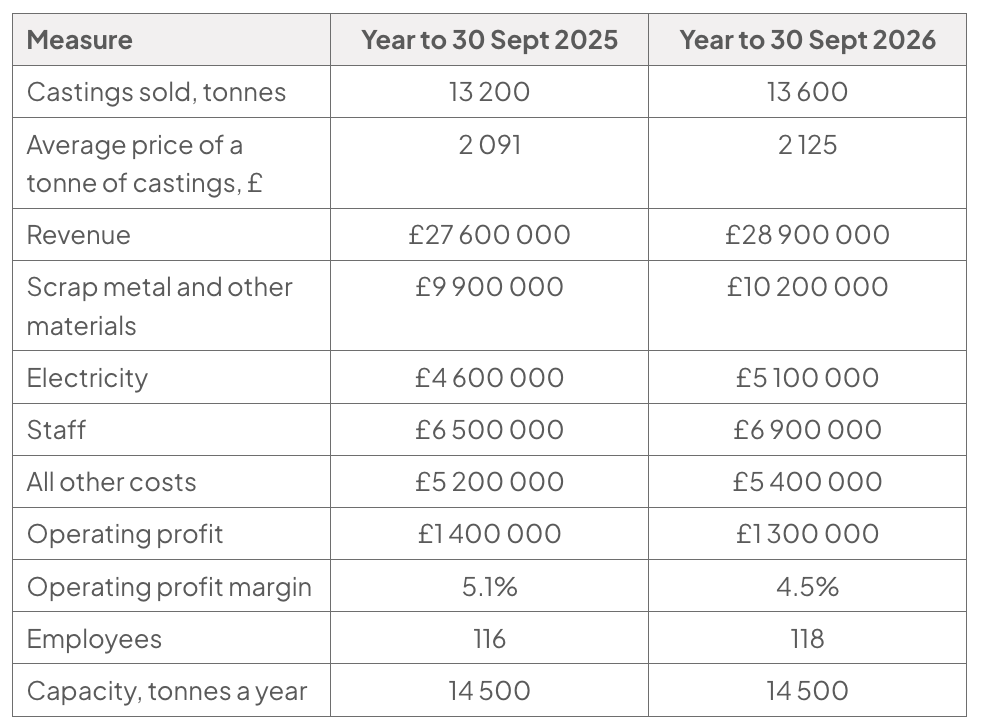
Appendix D: Wrenbury Castings selected data

A two-column table comparing Wrenbury Castings’ output, prices, revenue, costs, profit, employees and capacity for the years to 30 September 2025 and 2026.

Source: Wrenbury Castings

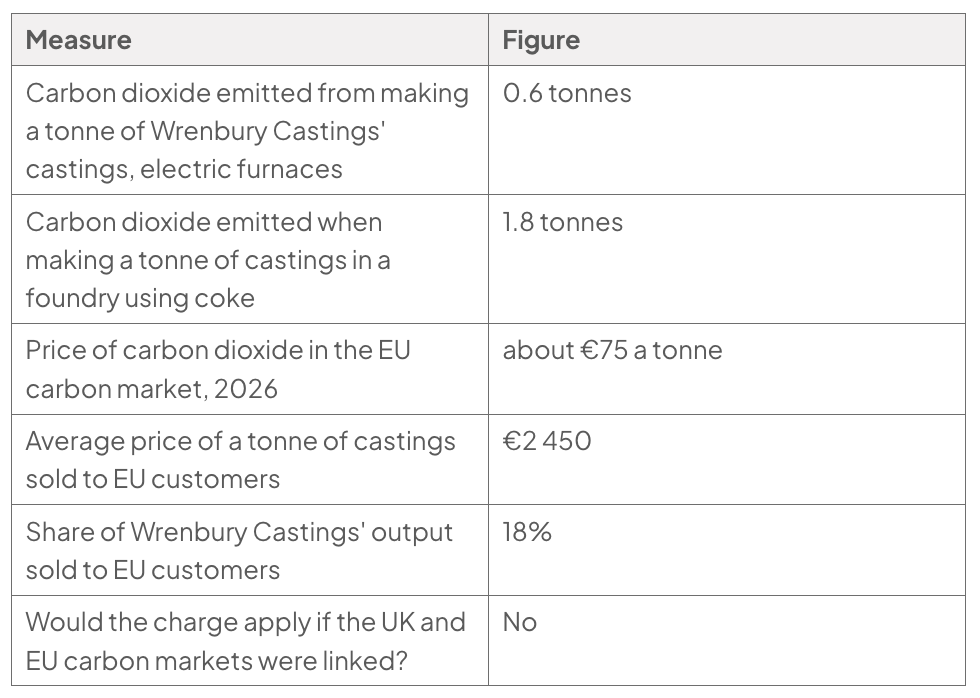
Appendix F: The carbon in a tonne of castings

Table of carbon data: per-tonne emissions are 0.6 tonnes for Wrenbury’s electric furnaces and 1.8 tonnes for coke; EU carbon price is about €75; EU sale price €2 450; EU output share 18%; linked markets: no charge.

Source: Analyst

Assess whether the EU's carbon border charge is likely to reduce Wrenbury Castings' sales to customers in the EU.

2
9 marks

Source A: Premier Foods

Premier Foods plc is one of the UK's largest food manufacturers. Its brands include Ambrosia, Batchelors, Bisto, Loyd Grossman, Mr Kipling, Oxo and Sharwood's, and it makes Cadbury cakes under licence. It has bought three newer brands: The Spice Tailor, FUEL10K and, in 2025, Merchant Gourmet, for £46.1 million. It is listed on the London Stock Exchange.

In the 52 weeks to 28 March 2026 Premier Foods' headline revenue rose by 2.5% to £1 175.2 million and its trading profit rose by 6.7% to £200.4 million. Sales of its branded products grew by 3.4%. Mr Kipling had its biggest ever year, helped by new products such as cake bites tubs, and the company gained market share in both of its divisions, Grocery and Sweet Treats.

The company's strategy has five pillars:

  • Grow the UK core through brand investment and new products.

  • Enter new categories, such as FUEL10K yogurt and granola pots.

  • Build international businesses in Australia and New Zealand, North America and Europe.

  • Acquire brands with strong growth potential.

  • Invest in its factories to increase efficiency and automation.

During the year capital investment rose by 25% to £51.9 million. It included a solar farm at its cake factory near Barnsley, which can supply up to 70% of the site's electricity, and an investment that made the pot filling and packing line at its Ambrosia site in Devon faster and more efficient.

Many of the company's products, including most cakes, are classed by law as less healthy because they are high in fat, sugar or salt. From 5 January 2026 such products may not be advertised on television or on-demand services between 5.30am and 9pm, or in paid-for online adverts at any time. Adverts which show a brand without showing a less healthy product are still allowed.

Source: Premier Foods plc, Full Year Results for the 52 weeks ending 28 March 2026

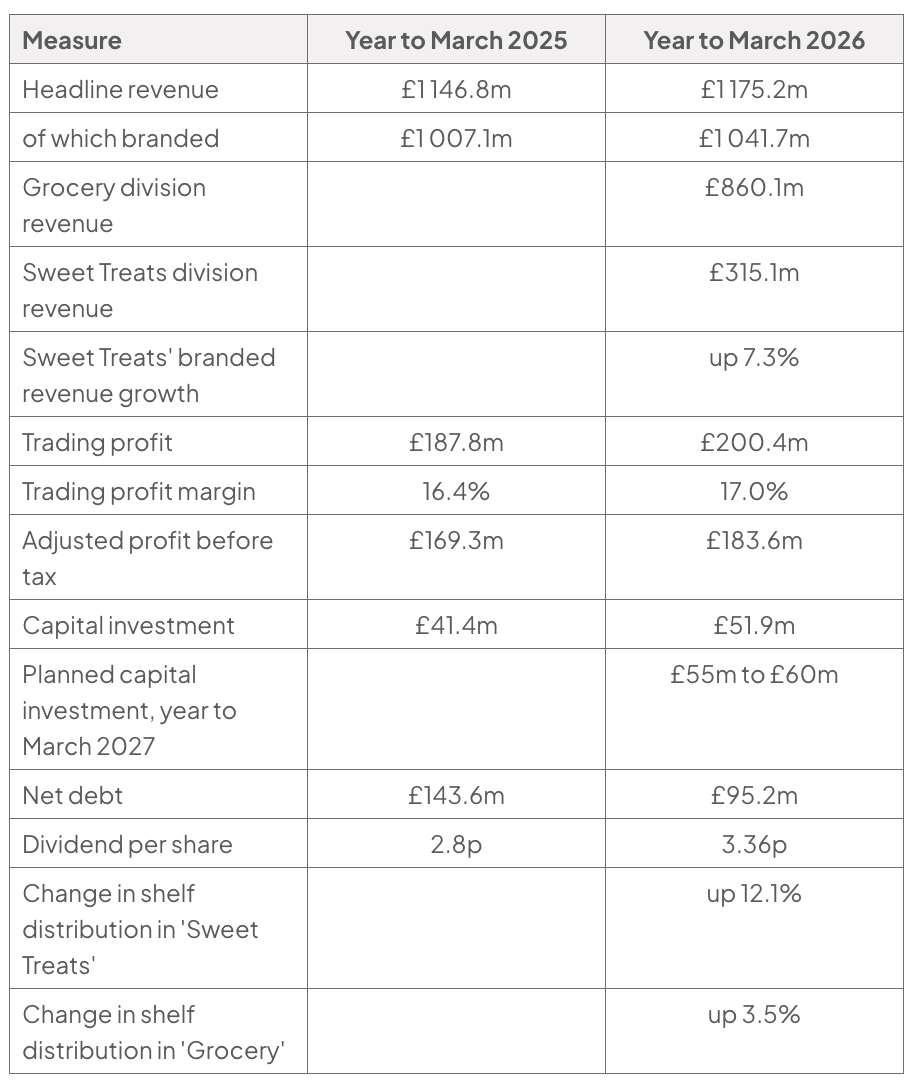
Appendix A: Premier Foods selected data

Table of Premier Foods’ selected data for the years to March 2025 and March 2026: headline revenue £1 146.8m and £1 175.2m, of which branded £1 007.1m and £1 041.7m; in 2026, Grocery division revenue £860.1m and Sweet Treats division revenue £315.1m, with Sweet Treats’ branded revenue up 7.3%; trading profit £187.8m and £200.4m; trading profit margin 16.4% and 17.0%; adjusted profit before tax £169.3m and £183.6m; capital investment £41.4m and £51.9m; planned capital investment for the year to March 2027 £55m to £60m; net debt £143.6m and £95.2m; dividend per share 2.8p and 3.36p; in 2026, shelf distribution up 12.1% in Sweet Treats and up 3.5% in Grocery.

Source: Premier Foods plc

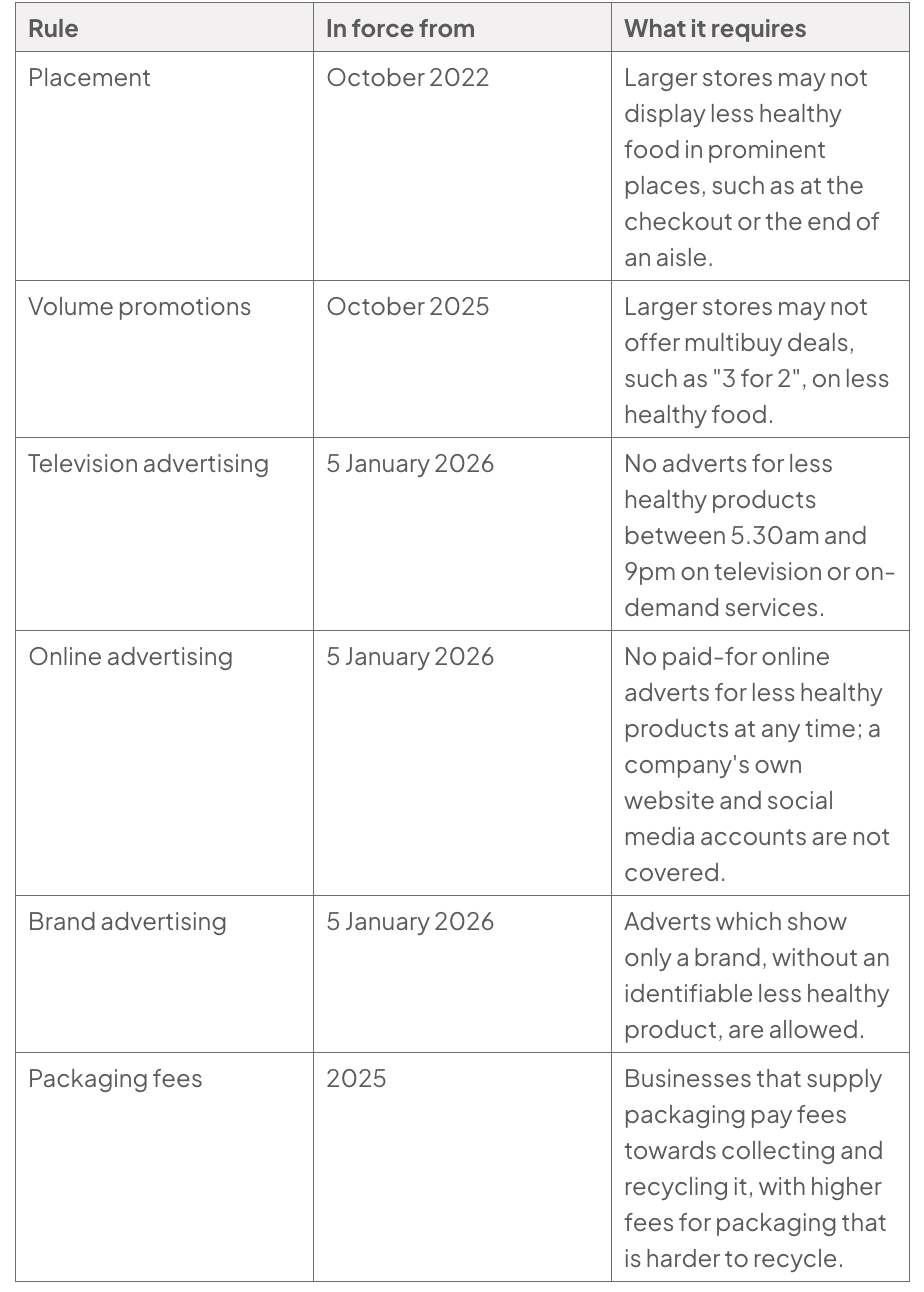
Appendix B: Rules on less healthy food and packaging

Table of rules: October 2022, no prominent placement in larger stores; October 2025, no multibuys. From 5 January 2026, no TV or paid online adverts for less healthy food; brand-only adverts remain allowed. Packaging fees began 2025.
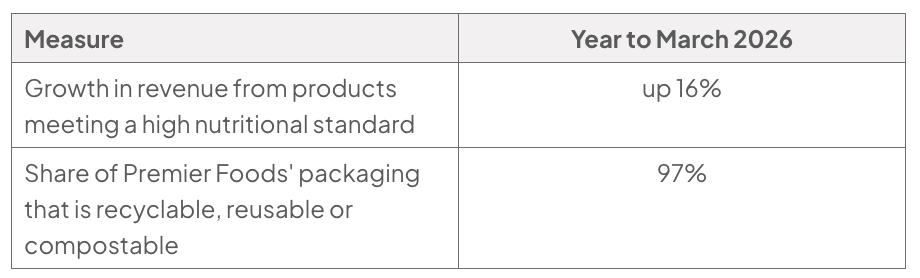
Table for the year to March 2026: revenue from products meeting a high nutritional standard grew by 16%; 97% of Premier Foods’ packaging was recyclable, reusable or compostable.

Source: Analyst, using Premier Foods plc and government guidance

Assess whether restrictions on the advertising and promotion of less healthy food are likely to reduce Premier Foods' profit.

3
9 marks

Source A: Barratt Redrow

Barratt Redrow plc, listed on the London Stock Exchange, is the UK's largest housebuilder by number of homes. Formed when Barratt Developments bought Redrow in October 2024, it builds under three brands: Barratt Homes, David Wilson Homes and Redrow.

In the 52 weeks to 28 June 2026:

  • homes completed rose by 5.0% to 17 667

  • revenue rose by 6.6% to £6 055.0 million

  • adjusted profit before tax fell by 7.1% to £572.8 million

To keep sales moving while mortgages were expensive, the company increased incentives for buyers, such as help with a deposit and part-exchange, and sold more homes to housing associations and to investors building up homes to rent.

The company faces three main pressures:

  • Planning. It describes planning as a constraint on output. Delays in gaining planning permission meant it expected to open fewer new sales sites, and in September 2026 it reduced its forecast of completions for the following year. The Planning and Infrastructure Act, intended to speed up decisions, became law in December 2025.

  • Past building work. Under the Building Safety Act it must pay to put right fire-safety defects in buildings it developed, and continues to find and repair problems at older developments.

  • Competition law. A claim filed in June 2026 against seven housebuilders, including Barratt Redrow, alleges that their sharing of information raised prices for buyers.

The company says the government must do more to support demand from first-time buyers, and that regulatory and tax burdens make many sites uneconomic. It plans to return £400 million to shareholders in the year to June 2027.

Source: Barratt Redrow plc, Results for the 52 weeks ended 28 June 2026

Appendix A: Barratt Redrow selected data

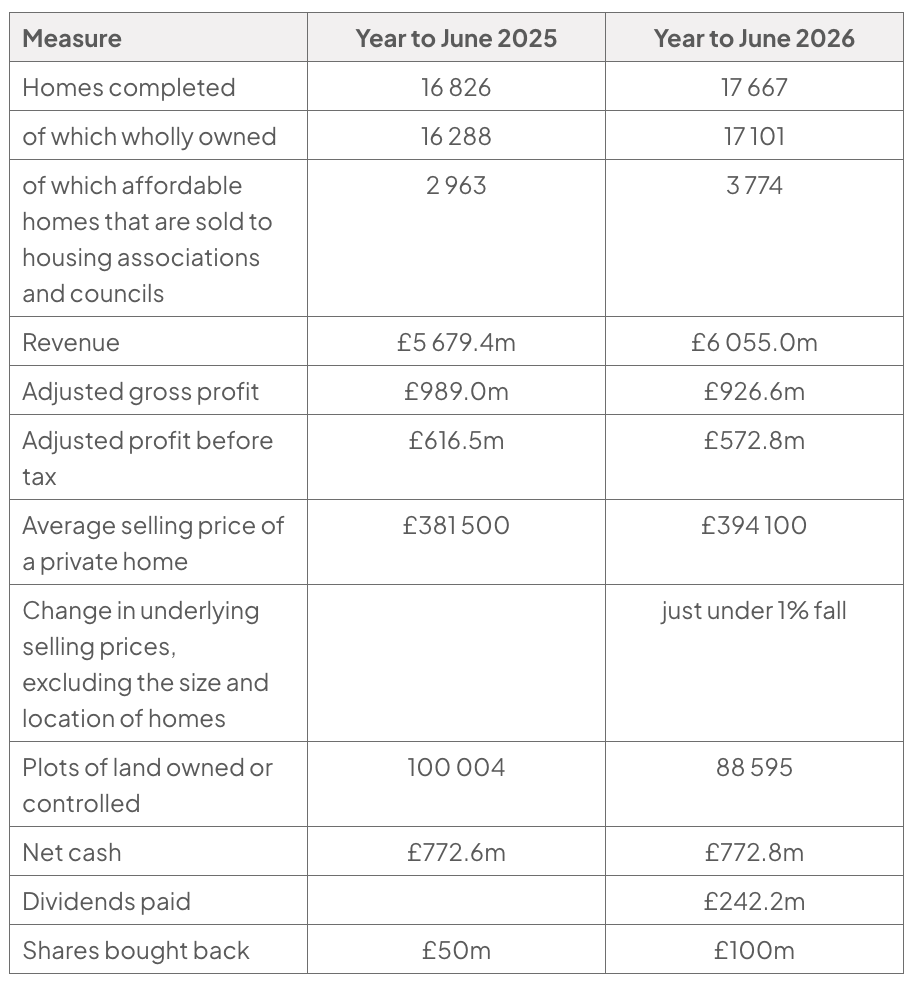
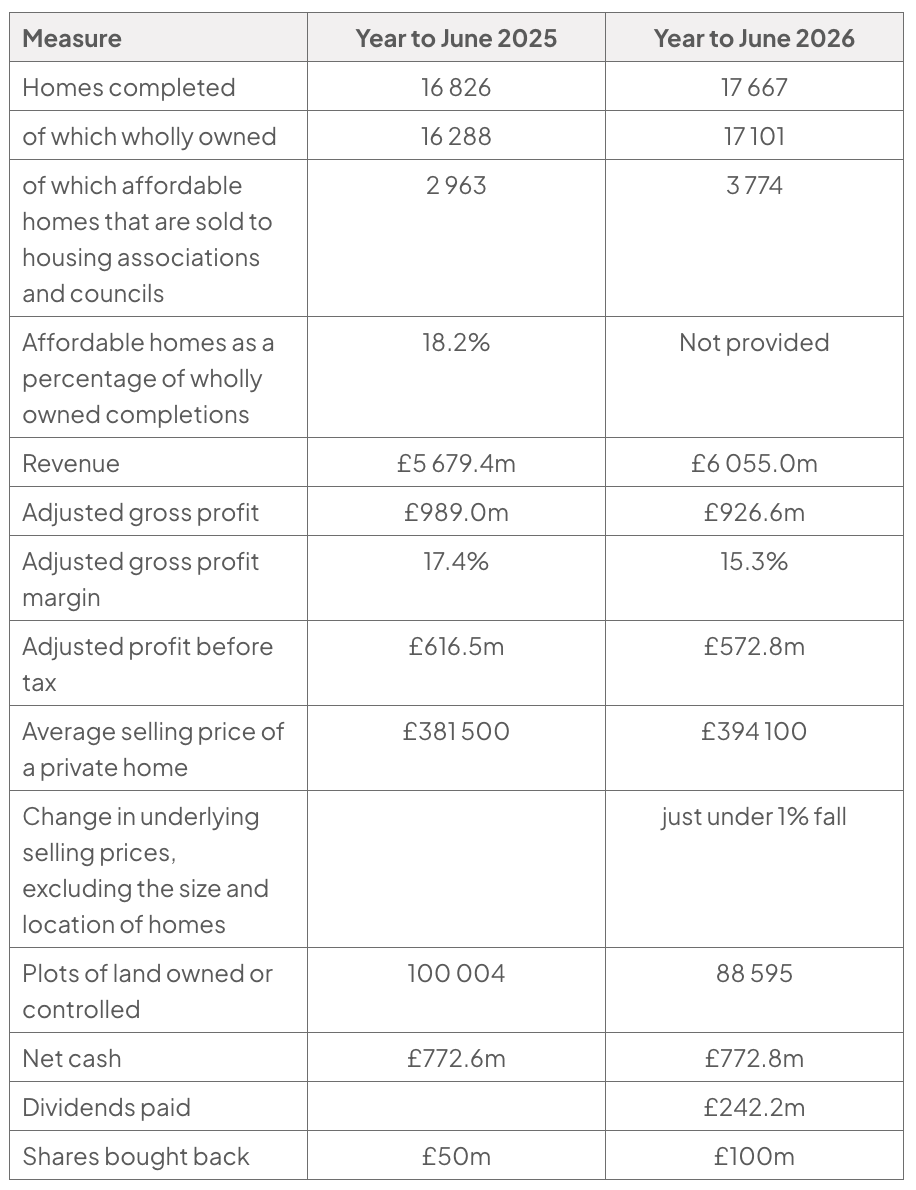
Table of Barratt Redrow selected data comparing years to June 2025 and June 2026, including homes completed, affordable homes, revenue, adjusted gross profit, adjusted profit before tax, selling prices, plots of land, net cash, dividends and share buy-backs.

Figures for the year to June 2025 combine Barratt and Redrow for the whole year.

Source: Barratt Redrow plc

Appendix B: Legal liabilities

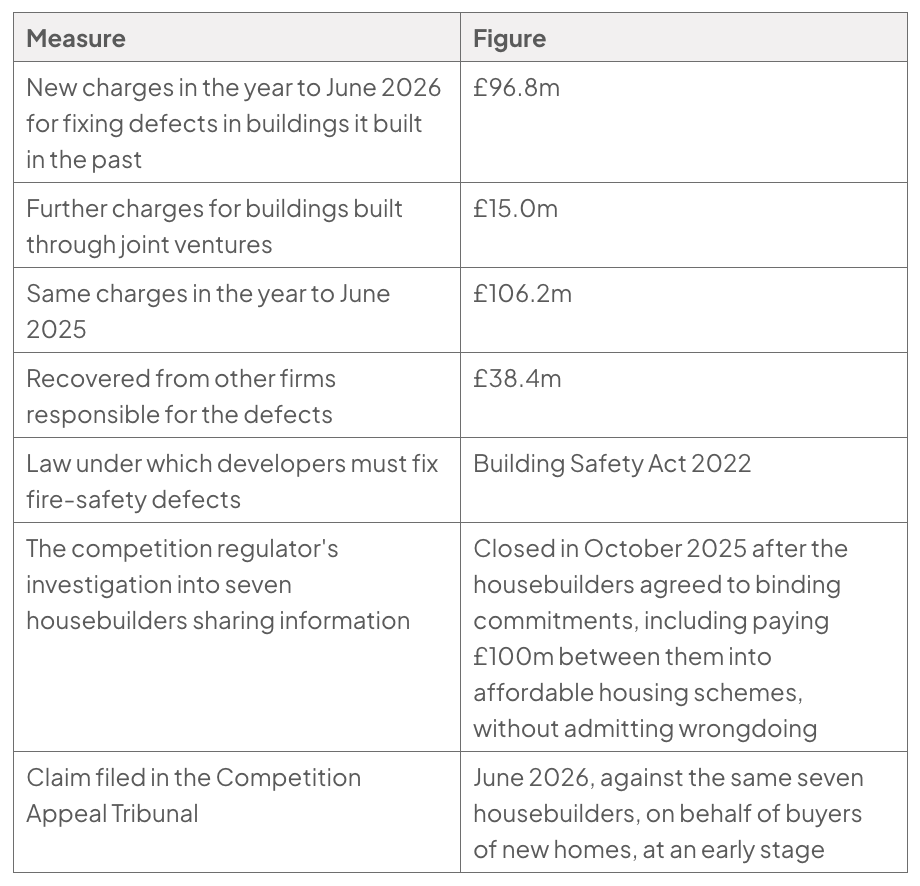
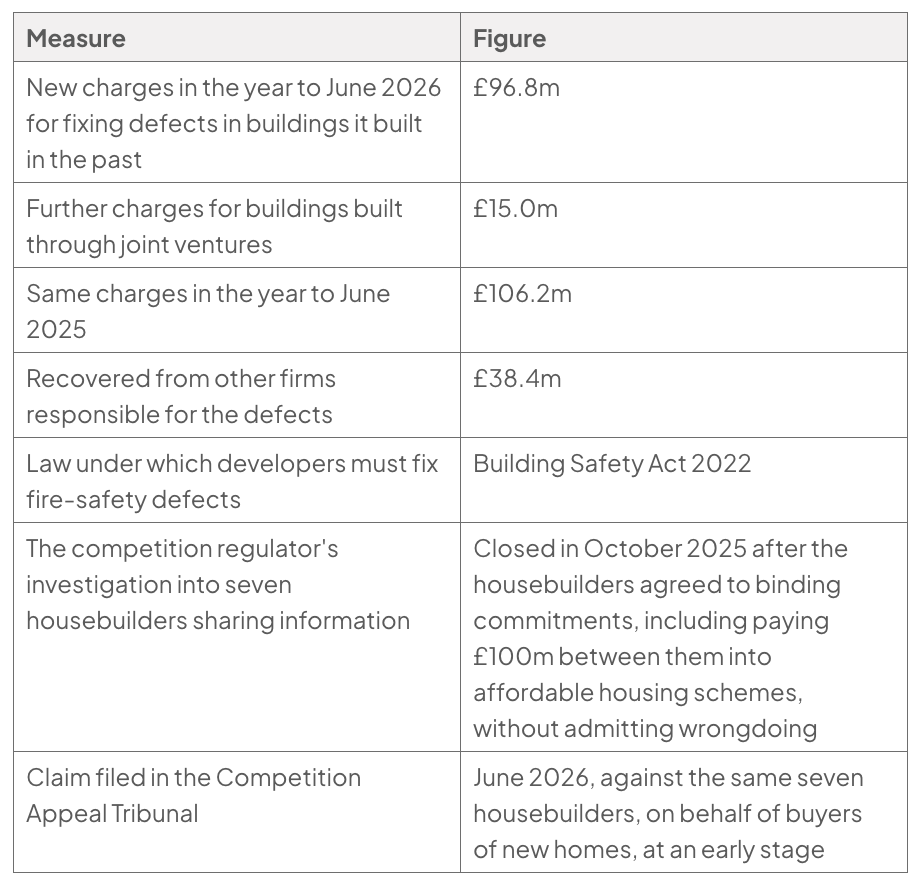
Table of legal liabilities: 2026 defect charges £96.8m, plus £15.0m for joint ventures, versus £106.2m in 2025; £38.4m recovered. Building Safety Act 2022 applies; a seven-housebuilder investigation closed in October 2025 and a claim was filed in June 2026.

Source: Analyst, using Barratt Redrow plc

Assess whether the cost of fixing defects in buildings it built in the past is likely to reduce Barratt Redrow's ability to reward its shareholders.

4
9 marks

Source B: Fenwick Vale Homes

Fenwick Vale Homes Limited builds houses on small sites, usually of 10 to 60 homes, across Northumberland. It was founded in 1988 by Peter Robson and is owned by the Robson family; his daughter, Kate Robson, is Managing Director. It employs 64 people and uses local subcontractors for most building work. In the year to 31 March 2026 it completed 115 homes at an average price of £315 000.

Fenwick Vale Homes buys land with planning potential and applies for permission to build. It borrows to buy the land and build the homes, from a bank which charges interest at 4 percentage points above Bank Rate; Bank Rate was 3.75% at the start of 2026. The loan is repaid as homes are sold.

Since 2024 the law has required most new developments in England to deliver biodiversity net gain: the habitat for wildlife after development must be at least 10% better than before. A builder that cannot achieve this on the site itself must buy units of habitat elsewhere. The local council also requires 15% of the homes on larger sites to be affordable homes, sold to a housing association at about 55% of their open-market value.

The government has set a target of 1.5 million new homes in England during this Parliament, and the Planning and Infrastructure Act became law in December 2025. Fenwick Vale Homes says that the time it waits for a planning decision has continued to grow.

Source: Fenwick Vale Homes

Appendix D: Fenwick Vale Homes selected data

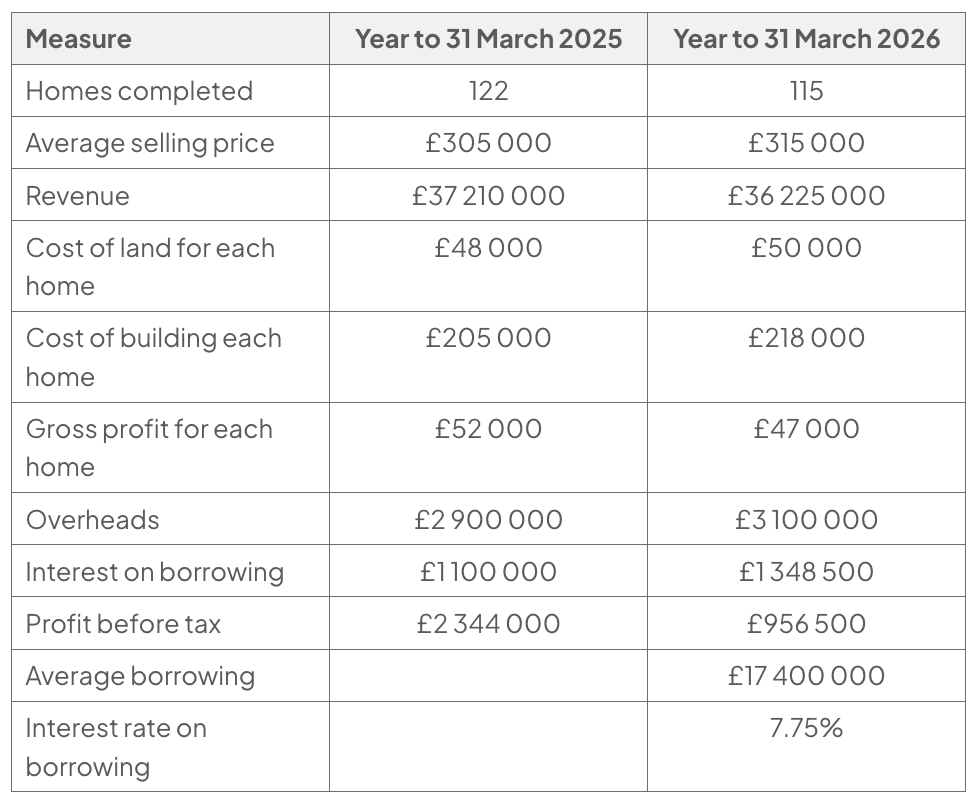
Table comparing Fenwick Vale Homes’ operating and financial measures for years ending 31 March 2025 and 2026; 2026 also lists average borrowing and interest rate, with 2025 entries blank.

Source: Fenwick Vale Homes

Appendix F: The Corbridge Road site

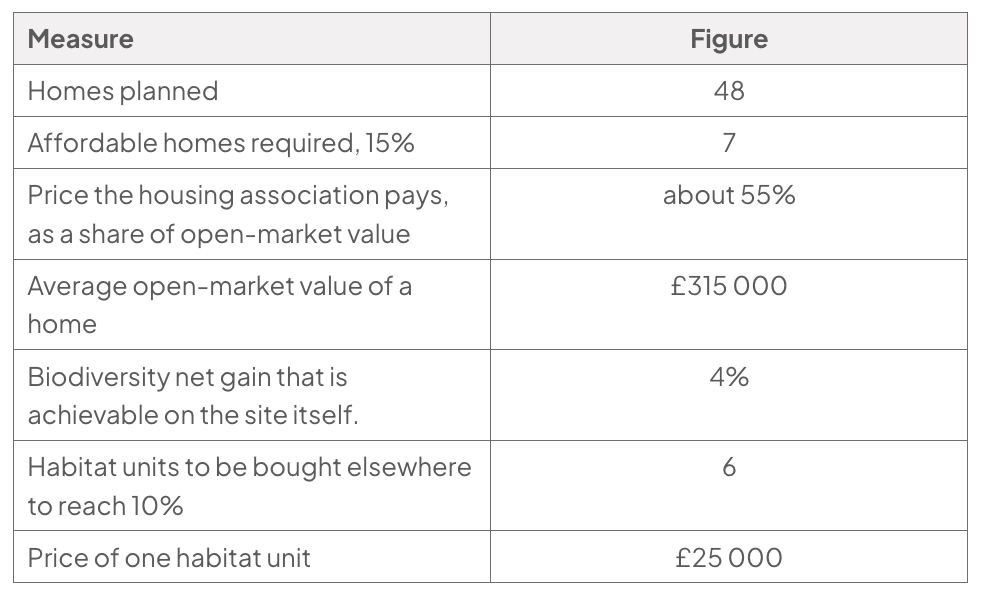
A site for 48 homes, bought in 2025 and awaiting planning permission.

Table of Corbridge Road site figures: 48 homes, 7 affordable at about 55% of £315,000, 4% biodiversity gain on site, 6 habitat units needed elsewhere at £25,000 each.

Source: Fenwick Vale Homes

Assess whether the requirements of planning and environmental law make the Corbridge Road site unprofitable for Fenwick Vale Homes.

Calculate the cost of biodiversity net gain for each home on the Corbridge Road site to support your answer.

5
9 marks

Source B: Linbury Preserves

Linbury Preserves Limited makes jam and marmalade near Leominster, Herefordshire. It was founded in 1952 by Joan Ashby in her farmhouse kitchen and is still owned by the Ashby family; its Managing Director is Tom Ashby, her grandson. It employs 58 people and in the year to 31 March 2026 sold 3.02 million jars, mainly to farm shops, delicatessens and independent food shops, and through its own website.

The company's mission is to make "proper preserves, the slow way": every batch is boiled in open copper pans, and the fruit comes from farms within 30 miles. It buys its fruit from 14 Herefordshire growers on five-year contracts, at prices above the market price, so that the growers can plan and invest. In 2025 the family set an objective of doubling the company's revenue by 2030.

To be sold as "jam", a product must meet the legal standards for fruit and sugar content. In 2024 Linbury Preserves launched a range with less sugar; because its sugar content is below the legal standard, it must be sold as a "fruit spread" rather than as jam.

Many of its customers say they are trying to eat less sugar. At the same time, the company's costs have risen. The National Living Wage rose by 4.1% to £12.71 an hour from April 2026, employers have paid more National Insurance since April 2025, and since 2025 the company has paid fees on the glass jars and lids it uses, under new rules which make businesses pay towards the cost of recycling packaging.

Source: Linbury Preserves

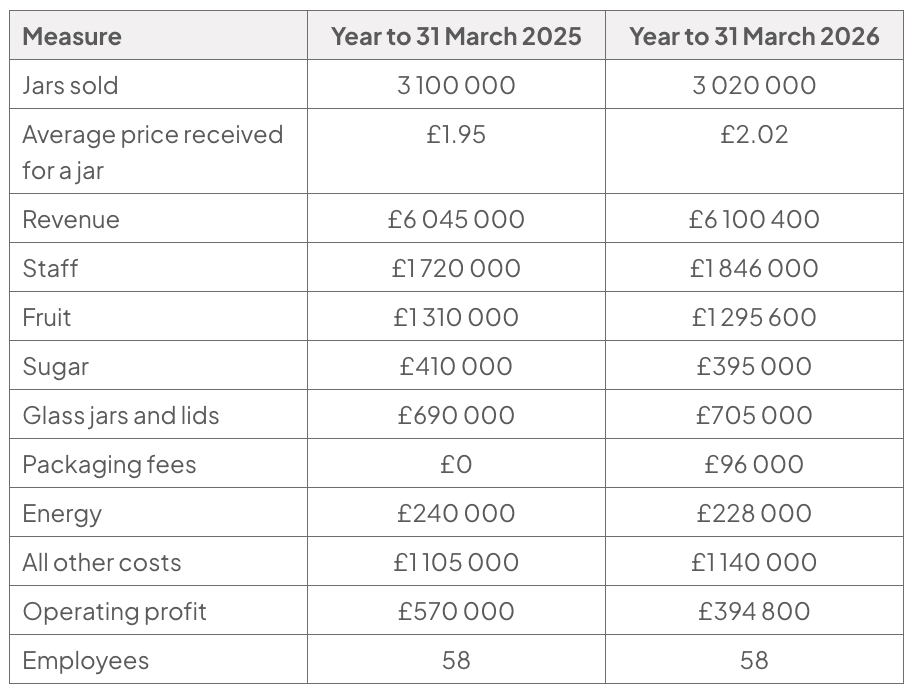
Appendix D: Linbury Preserves selected data

Table comparing 2025 and 2026: staff costs rose from £1 720 000 to £1 846 000, packaging fees from £0 to £96 000, while operating profit fell from £570 000 to £394 800.

Source: Linbury Preserves

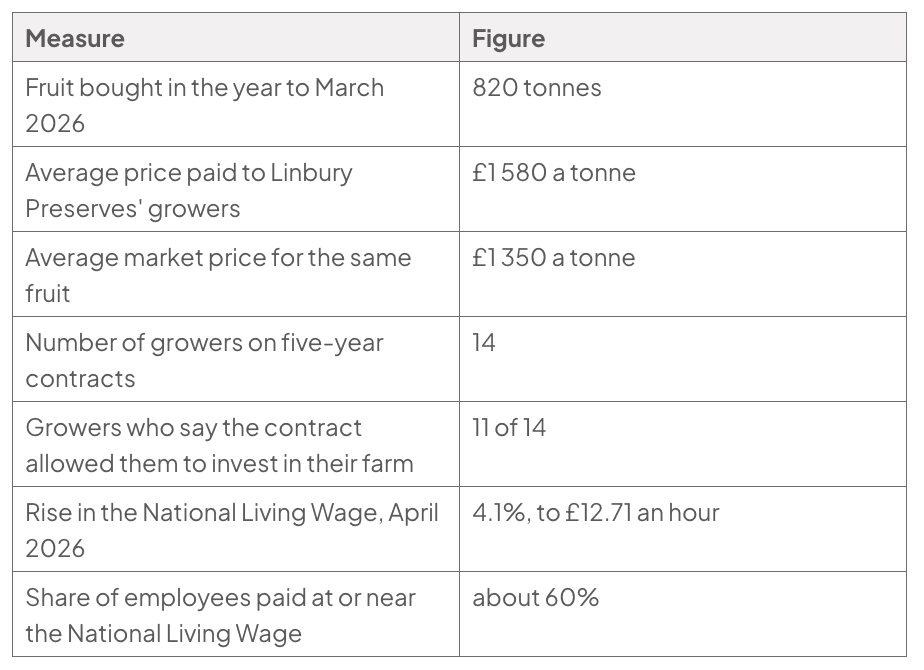
Appendix F: Fruit, growers and costs

Table: 820 tonnes of fruit bought; growers paid £1 580 per tonne versus £1 350 market price; 14 on five-year contracts, 11 reporting investment; National Living Wage up 4.1% to £12.71 an hour, affecting about 60% of employees.

Source: Linbury Preserves

Assess whether changes in employment law and packaging rules are likely to make Linbury Preserves unprofitable.

Calculate Linbury Preserves' employee costs as a percentage of revenue for the year to 31 March 2026 to support your answer. Give your answer to one decimal place.

6
9 marks

Source B: Oakhanger Lettings

Oakhanger Lettings Limited is a letting agent with branches in Alton and Farnham, Hampshire and Surrey. It was founded in 2004 by Rachel Dunn, who owns it and is its Managing Director, and it employs 28 people. At 30 June 2026 it managed 1 120 rented homes for 640 landlords. It advertises every home on Rightmove.

The company offers landlords two main services:

  • Full management. Oakhanger Lettings finds a tenant, collects the rent, arranges repairs and inspections and makes sure the landlord meets the law. It charges 12% of the rent.

  • Let-only. Oakhanger Lettings finds a tenant and the landlord manages the home. It charges a fee equal to one month's rent.

It also charges landlords for arranging the safety checks and certificates the law requires. By law, letting agents in England may not charge tenants fees.

Most of its landlords own one or two homes, and many have buy-to-let mortgages. Bank Rate was 3.75% at the start of 2026, and financial markets expected further cuts during the year. Rents in its area rose by 1.5% in the year to 30 June 2026.

The law on renting has changed. From 1 May 2026 the Renters' Rights Act ended "no-fault" evictions, under which a landlord could end a tenancy without giving a reason. A landlord must now prove one of the grounds set out in law. All tenancies became periodic, with no fixed end date, and rents may be raised only once a year. In the November 2025 Budget the government announced that, from April 2027, the income tax rates on rental income will be 2 percentage points higher than on other income.

Source: Oakhanger Lettings

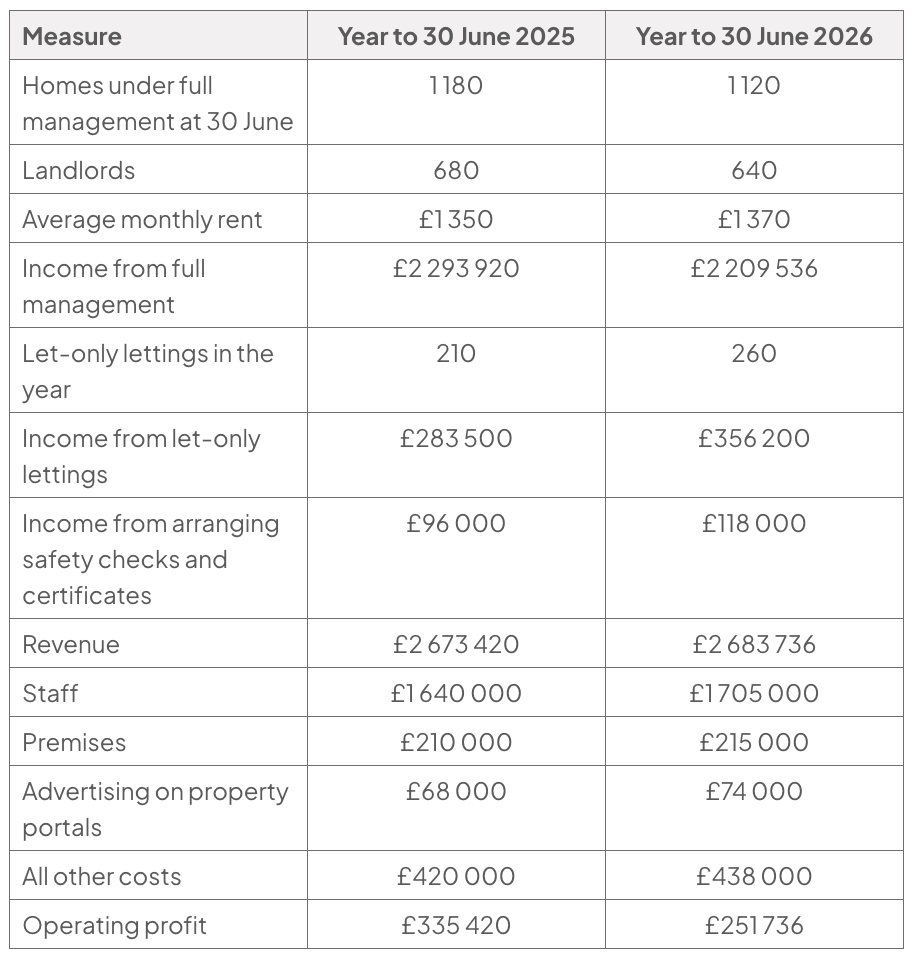
Appendix D: Oakhanger Lettings selected data

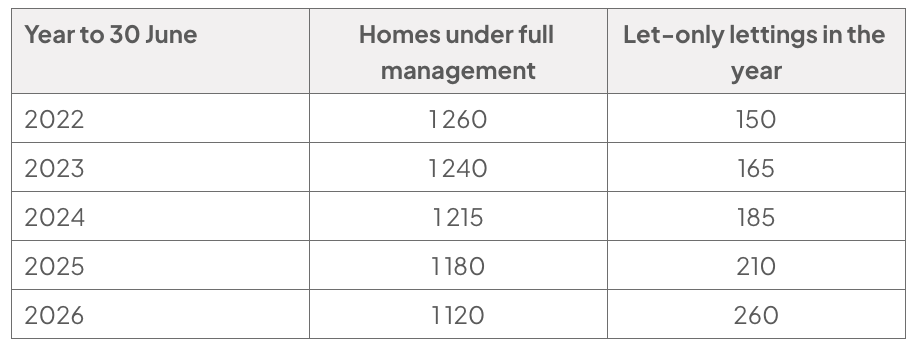
Table comparing Oakhanger Lettings’ 2025 and 2026 data: let-only lettings rose from 210 to 260, while full-management homes fell from 1 180 to 1 120.

Source: Oakhanger Lettings

Appendix E: Full management and let-only

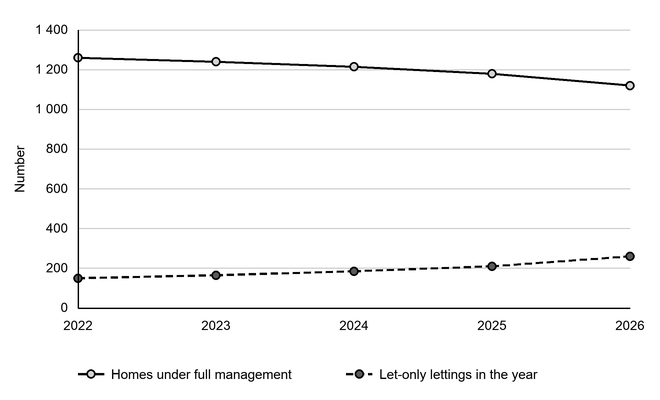
Line chart of Oakhanger Lettings data from 2022 to 2026: full-management homes fell from 1 260 to 1 120, while let-only lettings rose from 150 to 260, including 210 in 2025 and 260 in 2026.
Table of Oakhanger Lettings data for years to 30 June: in 2025, full-management homes were 1 180 and let-only lettings 210; in 2026, they were 1 120 and 260 respectively.

Survey of Oakhanger Lettings' landlords, June 2026

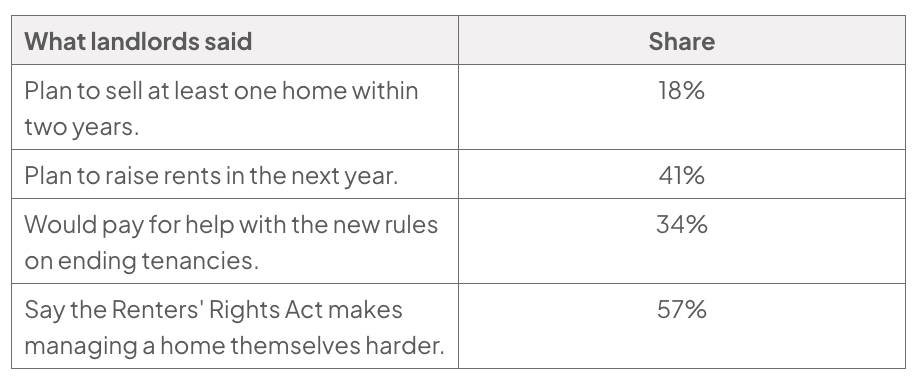
Survey table of landlords’ views: 18% plan to sell at least one home within two years; 41% plan to raise rents next year; 34% would pay for help with new tenancy-ending rules; 57% say the Act makes self-management harder.

Source: Oakhanger Lettings

Appendix F: Renting, the law and tax

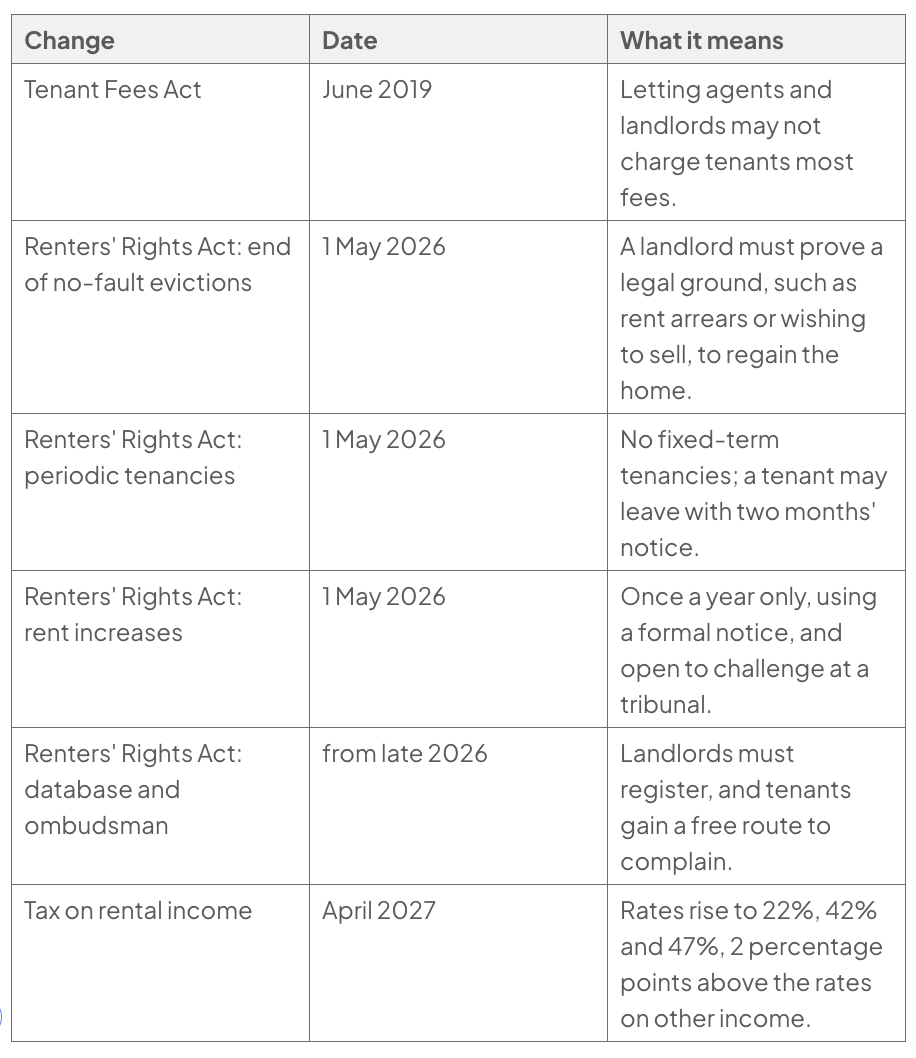
Table of renting-law and tax changes: Tenant Fees Act (June 2019); Renters’ Rights Act changes from May 2026 covering evictions, tenancies, rent rises, registration and complaints; rental-tax rates rise in April 2027.

Source: Analyst

Assess whether the Renters' Rights Act is likely to increase demand for Oakhanger Lettings' full management service.

Calculate Oakhanger Lettings' operating profit margin for the year to 30 June 2026 to support your answer. Give your answer to one decimal place.

1
15 marks

Source A: Barratt Redrow

Barratt Redrow plc, listed on the London Stock Exchange, is the UK's largest housebuilder by number of homes. Formed when Barratt Developments bought Redrow in October 2024, it builds under three brands: Barratt Homes, David Wilson Homes and Redrow.

In the 52 weeks to 28 June 2026:

  • homes completed rose by 5.0% to 17 667

  • revenue rose by 6.6% to £6 055.0 million

  • adjusted profit before tax fell by 7.1% to £572.8 million

To keep sales moving while mortgages were expensive, the company increased incentives for buyers, such as help with a deposit and part-exchange, and sold more homes to housing associations and to investors building up homes to rent.

The company faces three main pressures:

  • Planning. It describes planning as a constraint on output. Delays in gaining planning permission meant it expected to open fewer new sales sites, and in September 2026 it reduced its forecast of completions for the following year. The Planning and Infrastructure Act, intended to speed up decisions, became law in December 2025.

  • Past building work. Under the Building Safety Act it must pay to put right fire-safety defects in buildings it developed, and continues to find and repair problems at older developments.

  • Competition law. A claim filed in June 2026 against seven housebuilders, including Barratt Redrow, alleges that their sharing of information raised prices for buyers.

The company says the government must do more to support demand from first-time buyers, and that regulatory and tax burdens make many sites uneconomic. It plans to return £400 million to shareholders in the year to June 2027.

Source: Barratt Redrow plc, Results for the 52 weeks ended 28 June 2026

Appendix A: Barratt Redrow selected data

Table of Barratt Redrow selected data for the years to June 2025 and June 2026: homes completed 16 826 and 17 667; of which wholly owned 16 288 and 17 101; of which affordable homes sold to housing associations and councils 2 963 and 3 774; affordable homes as a percentage of wholly owned completions 18.2% in 2025 and not provided for 2026; revenue £5 679.4m and £6 055.0m; adjusted gross profit £989.0m and £926.6m; adjusted gross profit margin 17.4% and 15.3%; adjusted profit before tax £616.5m and £572.8m; average selling price of a private home £381 500 and £394 100; change in underlying selling prices, excluding the size and location of homes, just under 1% fall in 2026; plots of land owned or controlled 100 004 and 88 595; net cash £772.6m and £772.8m; dividends paid £242.2m in 2026; shares bought back £50m and £100m. No 2025 figure is given for the change in underlying selling prices or for dividends paid.

Figures for the year to June 2025 combine Barratt and Redrow for the whole year.

Source: Barratt Redrow plc

Appendix B: Legal liabilities

Table of Barratt Redrow legal liabilities. New charges in the year to June 2026 for fixing defects in buildings it built in the past: £96.8m. Further charges for buildings built through joint ventures: £15.0m. Same charges in the year to June 2025: £106.2m. Recovered from other firms responsible for the defects: £38.4m. Law under which developers must fix fire-safety defects: Building Safety Act 2022. The competition regulator's investigation into seven housebuilders sharing information: closed in October 2025 after the housebuilders agreed to binding commitments, including paying £100m between them into affordable housing schemes, without admitting wrongdoing. Claim filed in the Competition Appeal Tribunal: June 2026, against the same seven housebuilders, on behalf of buyers of new homes, at an early stage.

Source: Analyst, using Barratt Redrow plc

Appendix C: The market and the government

  • Buyers. The company reports that higher mortgage rates and pressure on what buyers can afford continue to affect confidence, but that demand from committed buyers remains resilient. It offers schemes including part-exchange, a deposit contribution for key workers and Deposit Unlock, aimed at first-time buyers.

  • Planning. The Planning and Infrastructure Act became law in December 2025, and a revised National Planning Policy Framework was published in August 2026. The company says these should boost housing delivery "in time". It reduced its forecast for completions in the year to June 2027 to 17 500 to 17 900, from 17 700 to 18 200, because of planning delays.

  • Land. The company approved the purchase of fewer plots than planned because of uncertainty about build cost inflation. The estimated gross margin on the land it owns fell from 19.2% to 17.3%.

  • New homes standards. The Future Homes Standard will require new homes to produce far lower carbon emissions when in use.

  • Shareholders. The company plans to return £400m to shareholders in the year to June 2027.

Source: Analyst, using Barratt Redrow plc

Barratt Redrow faces legal costs and risks from fire-safety law, competition law and new standards for the homes it builds.

Evaluate two ways Barratt Redrow could reduce the effect of changes in the legal environment on its profit and recommend which one it should do first.

2
15 marks

Source A: Wise

Wise Group plc is a public limited company, founded in London in 2011, as TransferWise, by Kristo Käärmann and Taavet Hinrikus. It describes its mission as "building the best way to move and manage the world's money". Its services allow people and businesses to:

  • send money between countries

  • hold more than 40 currencies in one account

  • spend abroad with a Wise card

Banks and other companies also use Wise's technology through Wise Platform to offer international payments to their own customers. Wise Platform partners include UniCredit, Raiffeisen Bank, MBSB Bank and, from April 2026, Capitec.

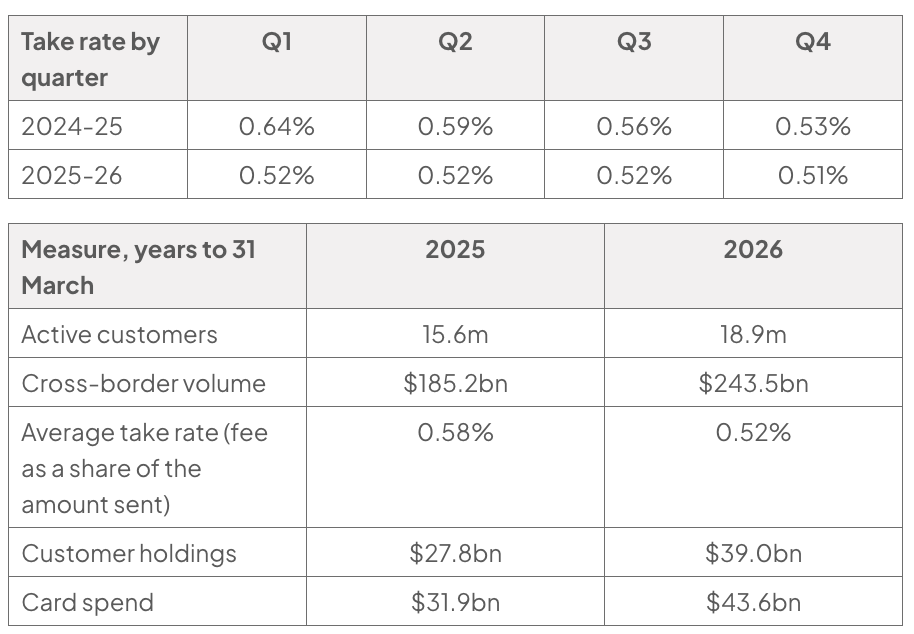
Wise keeps its prices low. In the year to 31 March 2026 the average fee it charged on a cross-border transfer fell to 0.52% of the amount sent. Its 19 million active customers moved $243 billion across borders, 31% more than in the previous year, and its net revenue rose by 19% to $2.5 billion. In the fourth quarter of the year, 75% of payments arrived in under 20 seconds.

Wise must hold a licence from regulators in each country where it offers its services. In 2025-26 it won licences in South Africa, the UAE and Thailand and connected directly to the domestic payment systems of Brazil and Japan, which Wise says reduces its costs and increases speed.

On 11 May 2026 Wise moved its primary share listing to the Nasdaq stock exchange in New York, keeping a secondary listing in London.

Source: Wise Group plc, Full Year 2026 results

Appendix A: Wise financial data

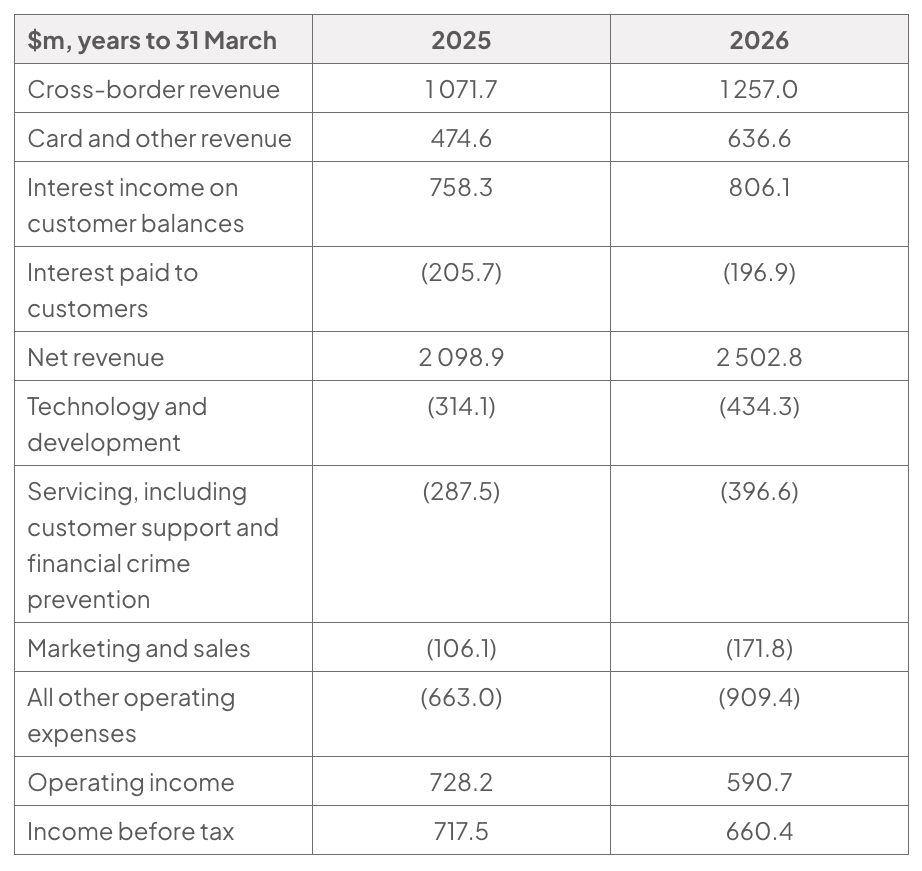
Wise income statement, $m for years to 31 March: net revenue rises from 2 098.9 in 2025 to 2 502.8 in 2026; servicing, including customer support and financial crime prevention, rises from (287.5) to (396.6); operating income falls from 728.2 to 590.7 and income before tax from 717.5 to 660.4.
  • Targets. Net revenue growth of 15-20% a year. Wise expects its income before tax margin to be 20-25% while interest rates stay high, and aims for 15-20% in the medium term.

  • Shareholders. In 2025-26 Wise spent $470m buying its own shares for its employee share scheme, and plans to buy more than $500m of shares in 2026-27.

Source: Wise Group plc

Appendix B: Customers, prices and countries

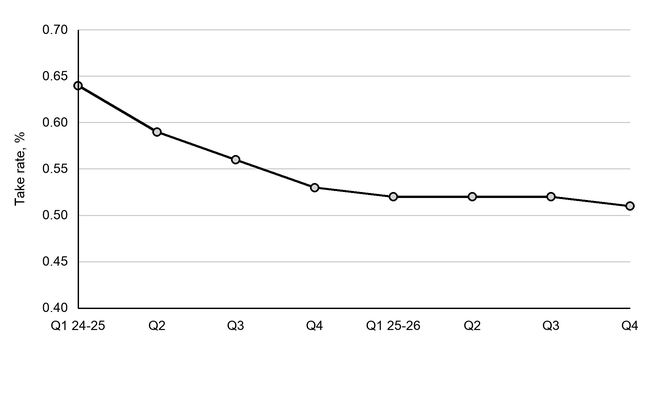
Line graph of Wise’s take rate by quarter, falling from 0.64% in Q1 2024-25 to 0.53% in Q4 2024-25, then levelling at 0.52% in Q1 to Q3 2025-26 before reaching 0.51% in Q4 2025-26.
Tables compare Wise’s take rate by quarter: 2024-25, 0.64%, 0.59%, 0.56%, 0.53%; 2025-26, 0.52%, 0.52%, 0.52%, 0.51%. 2025 versus 2026: customers 15.6m/18.9m, volume $185.2bn/$243.5bn, take rate 0.58%/0.52%, holdings $27.8bn/$39.0bn, card spend $31.9bn/$43.6bn.
  • Countries. New licences in South Africa, the UAE and Thailand; direct connections to domestic payment systems in Brazil and Japan, which Wise says reduce costs and increase speed.

  • Wise Platform. New partners include UniCredit, Raiffeisen Bank, MBSB Bank and, in April 2026, Capitec, which use Wise's technology to offer international payments to their own customers.

  • Market. People and businesses move about $43 trillion across borders each year.

Source: Wise Group plc

Appendix C: Regulators and listing

  • Listing. Shareholders approved the move of Wise's primary listing to the US in July 2025; the High Court approved it in April 2026, and Nasdaq trading began on 11 May 2026. Wise's US operations are based in New York.

  • UK safeguarding rules, from 7 May 2026. Payment firms regulated by the Financial Conduct Authority must check every business day that customers' money is fully protected, and most must have an annual safeguarding audit. At 31 March 2026 Wise held $14.8bn of customer funds in protected accounts.

  • US penalties. In July 2025 regulators in six US states fined Wise $4.2m for weaknesses in its anti-money-laundering controls; it must also use an independent firm to check its improvements and report every quarter for two years. In January 2025 the US Consumer Financial Protection Bureau ordered Wise to pay about $2.5m over its money-transfer practices; in May 2025 the penalty was cut to $45 000, with about $450 000 still to be repaid to customers.

Source: Analyst, using Wise Group plc and press reports

Wise must hold a licence from regulators in each country where it offers its services.

Evaluate whether Wise should respond to changes in the legal environment by expanding into more licensed markets or by concentrating on compliance in its existing markets.

3
15 marks

Source B: Culverton Biotech

Culverton Biotech Limited was founded in 2017 by two scientists from the University of Oxford and is based at a science park near Abingdon, Oxfordshire. It has 46 employees. It is developing one medicine, CLV-201, for a rare inherited liver disease that affects about 1 in 25 000 people and for which there is no approved treatment in the UK.

Culverton Biotech's mission is "to turn rare-disease science into medicines that patients can actually get". Its objective is to have CLV-201 approved in the UK by 2029.

In 2025 CLV-201 completed a Phase II clinical trial. To be approved, it must now pass a larger Phase III trial, expected to cost £45 million over three years. The company has no revenue: it is funded by venture capital investors, who own most of its shares, and by research grants. It made a loss of £19.6 million in the year to 30 June 2026.

Two large pharmaceutical companies have approached Culverton Biotech about licensing CLV-201.

Source: Culverton Biotech

Appendix D: Culverton Biotech selected data

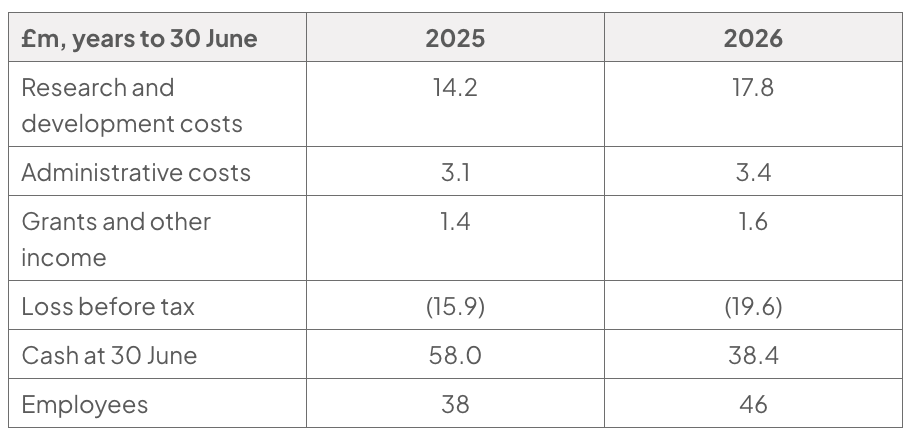
Table of Culverton Biotech data for years to 30 June 2025 and 2026: £m except employees. R&D costs 14.2/17.8, administration 3.1/3.4, grants 1.4/1.6, loss (15.9)/(19.6), cash 58.0/38.4, employees 38/46.

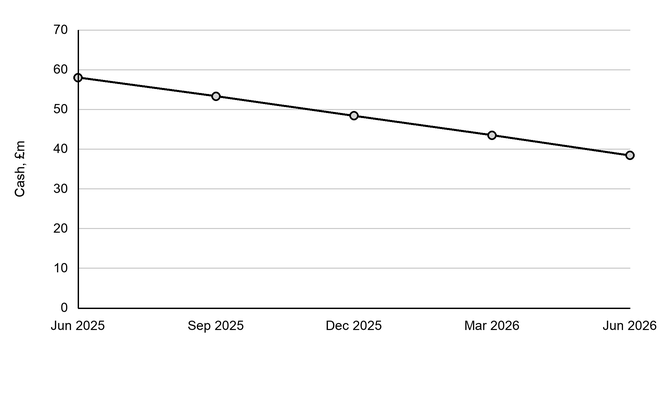
In the year to 30 June 2026 the company raised no new funding, so its cash fell by the amount of its loss. The board expects spending to continue at the same rate until the Phase III trial begins.

Source: Culverton Biotech

Appendix E: Strengths, weaknesses, opportunities and threats

Line chart of Culverton Biotech’s cash, in £m, falling each quarter from 58.0 in June 2025 to 38.4 in June 2026; the y-axis ranges from 0 to 70.
  • Phase II result. CLV-201 reduced the build-up of harmful bile acids by 58% compared with a placebo; there were no serious side effects.

  • Patent. Filed in 2018; patents last 20 years from filing.

  • Team. 31 of the 46 employees are scientists. The company has no sales force and no manufacturing.

  • Phase III. The board estimates a 55% chance that the Phase III trial succeeds.

  • Patients. About 2 700 people in the UK and about 13 500 in the United States have the disease.

  • Investors. The venture capital investors expect to sell their shares within five years.

Source: Culverton Biotech

Appendix F: Two investment decisions

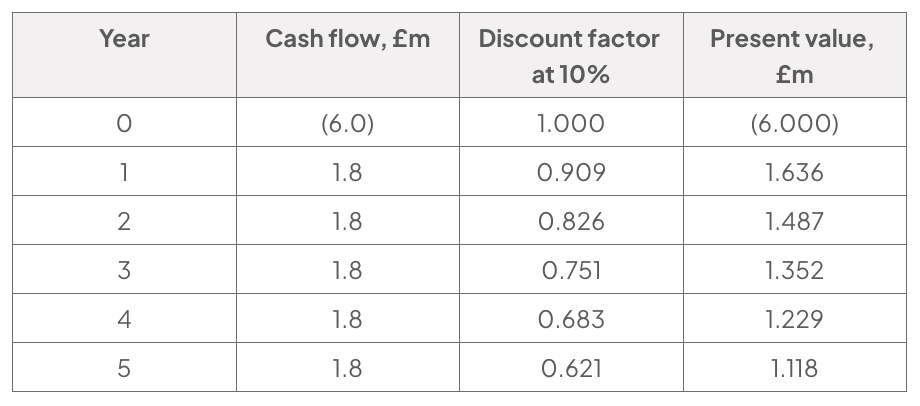
A manufacturing unit. Culverton Biotech could build its own unit to make CLV-201, rather than pay another company to make it. It would cost £6.0m in 2027. If CLV-201 is approved, the unit would save £1.8m a year for five years compared with buying in.

Completed table calculating the manufacturing unit’s present value at 10%: £6.0m cost at year 0 and £1.8m annual savings in years 1 to 5, discounted to £1.636m, £1.487m, £1.352m, £1.229m and £1.118m.

A licence. One of the two large pharmaceutical companies has offered £30m upfront, up to £120m more if CLV-201 reaches agreed milestones, and a royalty of 12% of sales. It would pay for and run the Phase III trial, and would sell CLV-201 outside the UK. Culverton Biotech would keep the UK rights.

Source: Culverton Biotech

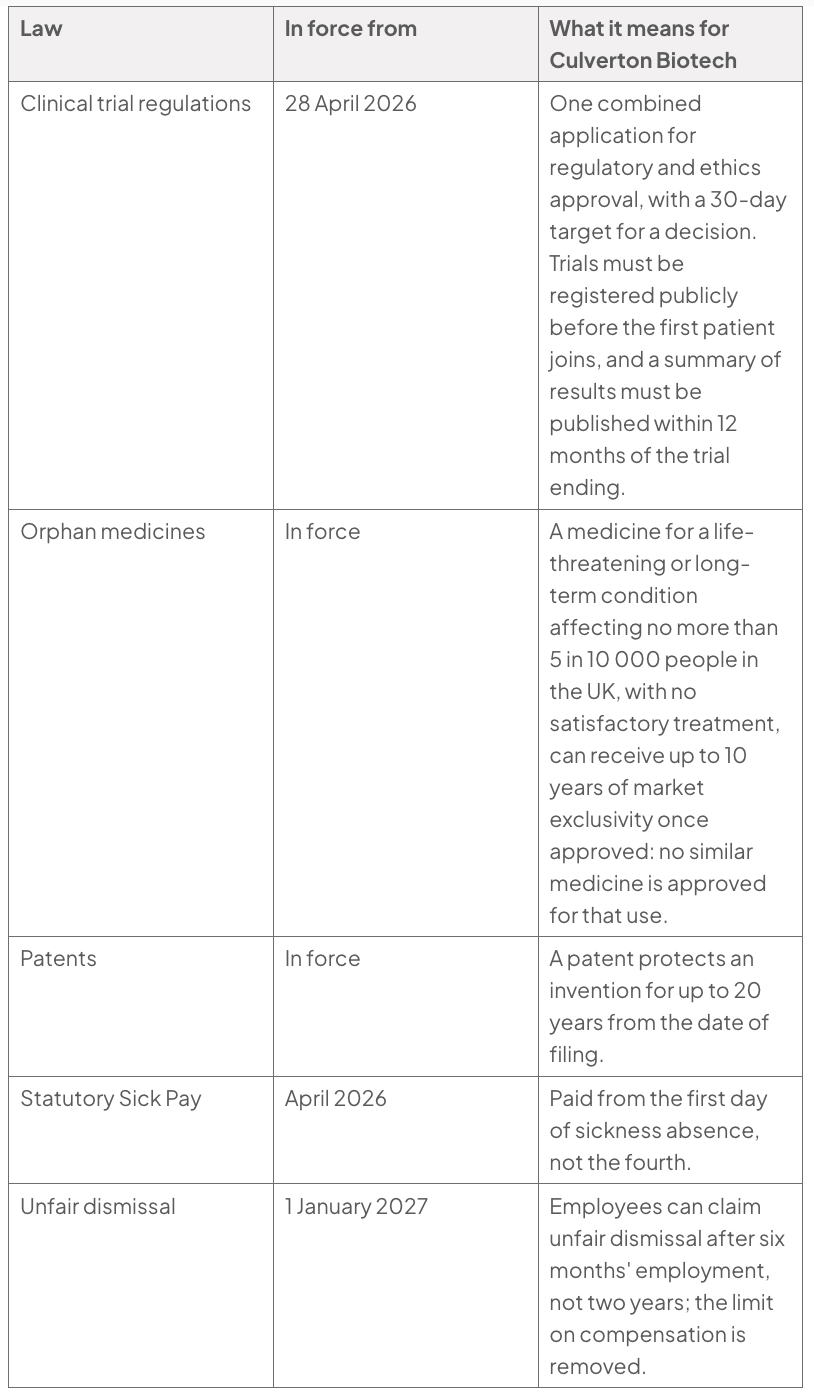
Appendix G: The legal environment

Table of laws affecting Culverton: clinical-trial rules from 28 April 2026; orphan-medicine exclusivity up to 10 years; patents 20 years; sick pay from day one; unfair-dismissal claims after six months from 1 January 2027.
  • A Phase III trial of a medicine for a rare disease usually recruits patients in several countries, each with its own approval process.

  • 9 of Culverton Biotech's 46 employees have worked for it for less than two years but more than six months.

Source: Analyst, using UK government guidance

Culverton Biotech's objective is to have CLV-201 approved in the UK by 2029.

Evaluate whether Culverton Biotech should run the Phase III trial itself or accept the licence offer, and recommend which it should choose.

Use information from Appendices D to G to support your answer.