Assessing Financial Position & Performance (AQA A Level Business): Exam Questions

Exam code: 7132

Syllabus Edition

First teaching 2026

First exams 2028

2 hours16 questions
1
6 marks

Source A: Kids Planet Day Nurseries Ltd

Kids Planet Day Nurseries Limited runs day nurseries for children below school age. Clare Roberts set the business up in Cheshire in 2008 and has been a director since the August of that year. Its registered activity is pre-primary education and its head office is still in Lymm, near Warrington.

The company has grown mainly by buying other nurseries rather than by building new ones. It is now the parent of a group of 152 companies, most of them businesses it has taken over, and it holds 69 properties, 28 of which it owns outright and 41 of which it leases. It employs around 5 000 people. There is a single shareholder.

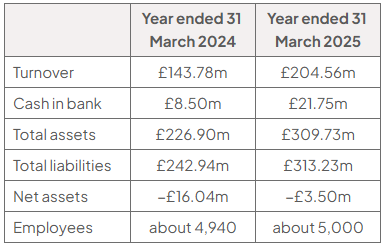
Growth has been fast. Turnover rose by 42.3% in the year to 31 March 2025, reaching £204.56 million, and cash at the bank more than doubled. But buying nurseries has been paid for largely by borrowing. The group's total liabilities are now slightly larger than its total assets, which means its net assets are negative. That figure is moving in the right direction: net assets improved from minus £16.04 million to minus £3.50 million over the year.

The number of children available to fill nursery places is not fixed. Live births in England and Wales have fallen in three of the past four years, from 624 828 in 2021 to 585 396 in 2025. Appendix B shows the trend. The government also pays for a set number of childcare hours for many families, so a nursery's income comes partly from parents and partly from the state.

The directors must now decide whether to carry on buying nurseries.

Source: information sourced from Companies House and the Office for National Statistics, 2026

Appendix A: Kids Planet Day Nurseries Ltd selected financial data

Table of selected financial data for years ended 31 March 2024 and 2025: assets £226.90m and £309.73m; liabilities £242.94m and £313.23m; net assets minus £16.04m and minus £3.50m.

Source: Companies House

Kids Planet Day Nurseries Ltd's total liabilities are larger than its total assets (Appendix A).

Analyse one way in which this might affect Kids Planet Day Nurseries Ltd's ability to borrow money to buy more nurseries.

2
6 marks

Source B: Mishcon de Reya LLP

Mishcon de Reya LLP is a law firm. It advises businesses and wealthy individuals on disputes, property, corporate deals and private matters, and it is led by managing partner James Libson. It has offices in London, Cambridge and Oxford, and overseas in Hong Kong, Singapore and the United Arab Emirates. About 1 250 people work there, including more than 650 lawyers.

It is not a company. It is a limited liability partnership, which means it is owned by its members, the partners, rather than by shareholders. Members put capital into the firm when they join and take a share of the profit rather than a salary. Nobody outside the partnership owns any part of it.

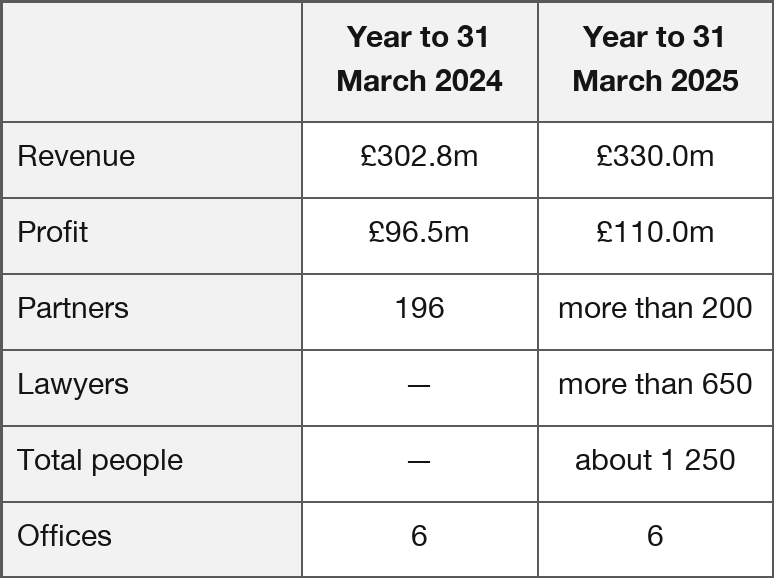
The year to 31 March 2025 was the firm's best. Revenue rose 9% to £330 million and profit rose 14% to £110 million, the first time it has passed £100 million. The firm says it has tripled in size over the past decade. Its work during the year included advising Wayve on what it describes as Europe's largest artificial intelligence investment and defending O2 in a collusion claim.

Growing has meant admitting people. Sixteen new partners joined during the year and a further 27 people were promoted to partner from inside the firm, alongside 13 promotions to legal director. There are now more than 200 partners. As in any partnership, some members retire or leave each year, so membership grows by less than the number admitted.

That is the tension the firm is sitting with. In a partnership the profit is divided between the members, so every partner admitted is another share of the same pool. The firm now has to decide where its next stage of growth should come from: more partners in the United Kingdom, where it already has three offices and knows the market, or a bigger presence in Hong Kong, Singapore and the United Arab Emirates, where the offices exist but are small. Appendix F sets out the two options.

Source: information sourced from Mishcon de Reya LLP, results for 2024/25

Appendix D: Mishcon de Reya LLP selected results

Selected results for years to 31 March 2024/2025: revenue £302.8m/£330.0m; profit £96.5m/£110.0m; partners 196/over 200; lawyers —/over 650; total people —/about 1,250; offices 6/6.

Source: Mishcon de Reya LLP; 2024 partner number from analyst estimates

Mishcon de Reya LLP's revenue rose 9% while its profit rose 14%.

Analyse one reason why Mishcon de Reya LLP's profit could grow faster than its revenue.

3
6 marks

Source B: Cranswick plc

Cranswick plc makes food. It is a public limited company listed on the London Stock Exchange and it supplies fresh pork, poultry, cooked meats, pastry, sandwiches and pet food to supermarkets, to foodservice customers such as restaurant chains, and to export markets.

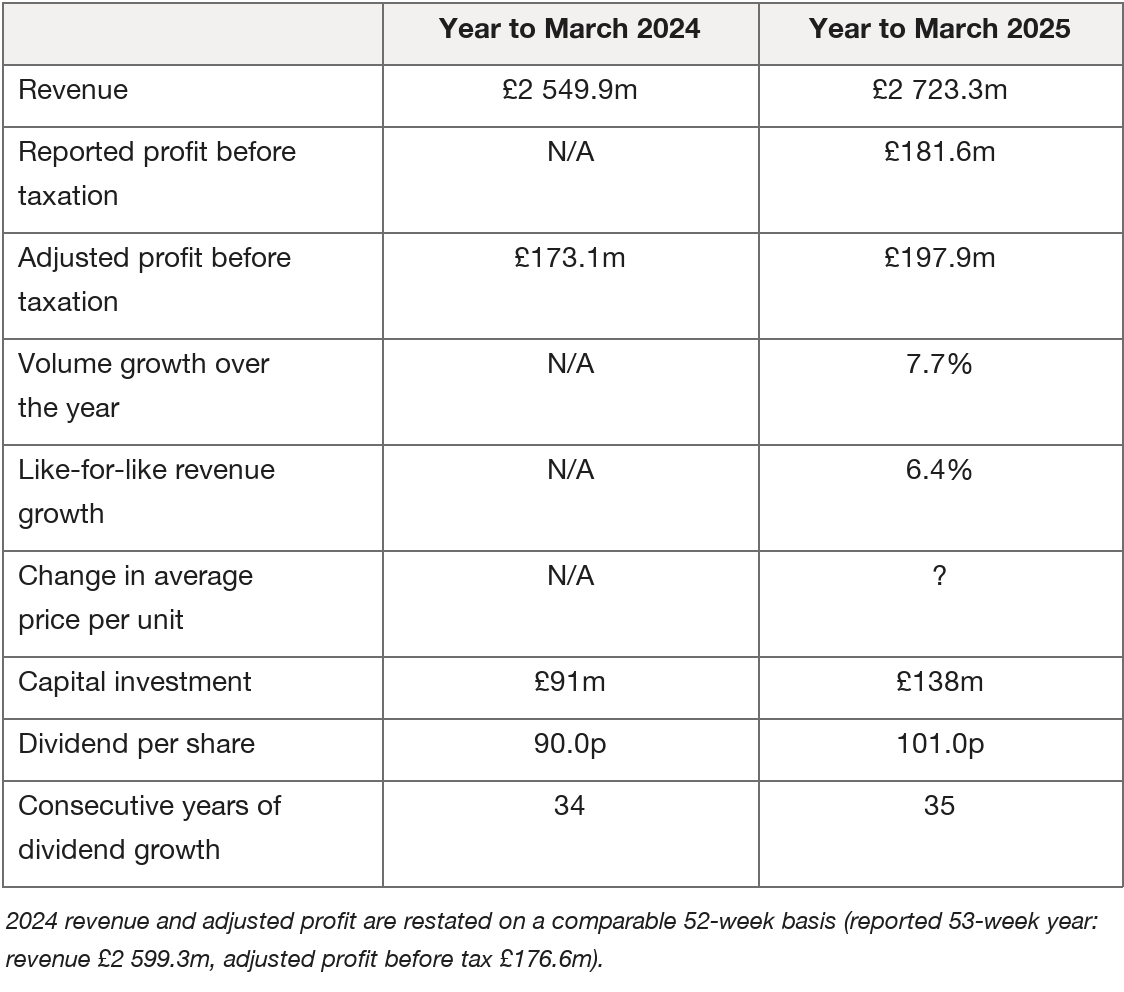
The year to March 2025 was a strong one. The previous financial year was 53 weeks long, so the company compares the two years on a 52-week basis. On that basis, revenue rose 6.8% to £2 723.3 million and adjusted profit before tax rose 14.3% to £197.9 million. Reported profit before tax was £181.6 million. Like-for-like revenue, which strips out the effect of businesses bought or sold, rose 6.4%.

The volume figure is the interesting one. Cranswick sold 7.7% more food than the year before, which is more than its revenue grew. Appendix E shows what has been happening to volumes and to the average price of a unit over five years: prices rose steeply through the inflation of 2022 and 2023, and have now started to come back down while volumes keep climbing.

The company has been spending. Capital investment reached a record £138 million, up from £91 million, going into extra capacity and into making its existing factories more efficient. Its largest customers are a small number of supermarkets, each of which buys in enormous quantities and negotiates hard.

Cranswick has raised its dividend every year for 35 years, and raised it again this year by 12.2% to 101.0p a share.

Source: information sourced from Cranswick plc preliminary results for the year ended March 2025

Appendix D: Cranswick plc selected results

Results table for years to March 2024 and 2025: reported profit before tax is N/A and £181.6m; volume growth is N/A and 7.7%; like-for-like revenue growth is N/A and 6.4%; average price change is “?”.

Source: Cranswick plc

Cranswick plc has raised its dividend in each of the last 35 years.

Analyse one way in which this record might affect how investors judge Cranswick plc's performance.

4
6 marks

Source B: Fairhurst Linen Ltd

Fairhurst Linen Ltd is a commercial laundry on an industrial estate outside Leeds. It is a private limited company owned by Dev Anand and his sister Rani Anand, and it employs 24 people. It washes, presses and delivers bed linen, towels and table linen for hotels and restaurants across Yorkshire, and it charges by the kilogram.

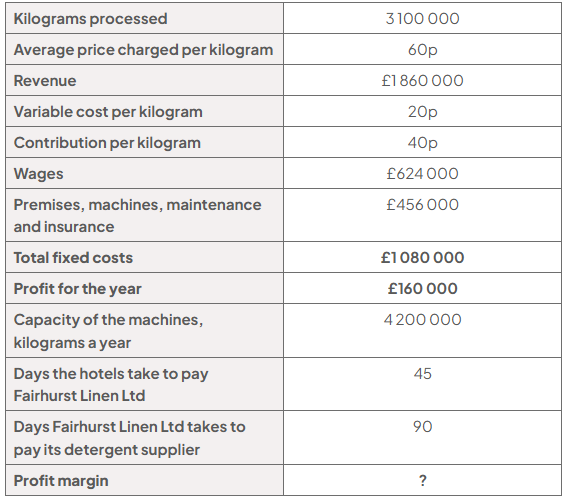
Last year it processed 3.1 million kilograms at an average of 60p a kilogram, which brought in £1 860 000. Detergent, water, energy and packaging cost 20p for every kilogram put through the machines. Everything else is fixed: wages of £624 000 and premises, machines, maintenance and insurance of £456 000, which together come to £1 080 000 a year and are paid whether the machines run or not. Profit for the year was £160 000.

The machines are not full. They could handle 4.2 million kilograms a year, and last year they did 3.1 million. A new tunnel washer costing £320 000 would raise that ceiling further, and Dev Anand has been talking to the bank about it.

The Anands have set themselves an objective: a profit margin of 15% within three years.

Two things stand between them and it. The first is a contract. A hotel group has offered Fairhurst Linen Ltd 900 000 kilograms a year, which would nearly fill the machines, but only at 44p a kilogram. The second is that Fairhurst Linen Ltd pays its detergent supplier, a small chemicals firm in Rotherham, after 90 days, while its own hotel customers pay it after 45.

Appendix D: Fairhurst Linen Ltd, summary of last year

Appendix D table: 3.1m kg processed at 60p per kg; revenue £1.86m, variable cost 20p, contribution 40p, fixed costs £1.08m and profit £160,000. Capacity is 4.2m kg; payment terms are 45 and 90 days; profit margin is ?.

Source: Analyst

Fairhurst Linen Ltd made a profit of £160,000 last year on revenue of £1,860,000.

Analyse one way in which knowing the profit alone might give Dev Anand and Rani Anand an incomplete picture of how their business is doing.

5
6 marks

Source B: Halvergate Storage Ltd

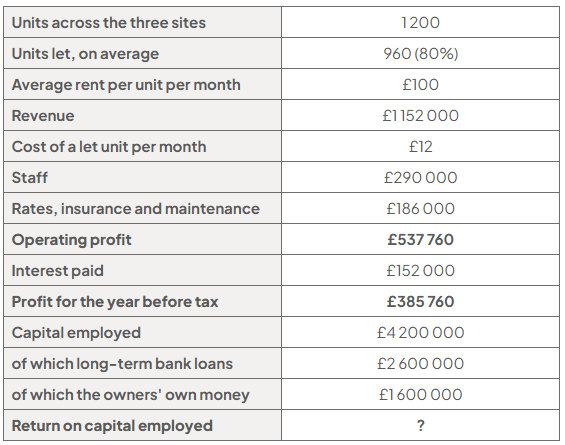
Halvergate Storage Ltd rents storage units by the month. It has three sites in East Anglia, at Norwich, King's Lynn and Lowestoft, with 1 200 units between them. It is a private limited company owned by two brothers, Tom and Michael Ferris, and it employs nine people.

Its customers are households between moves, people who have downsized, and small businesses storing inventory. A unit costs an average of £100 a month. Once a unit is let it costs Halvergate Storage Ltd about £12 a month in electricity, cleaning and administration. Everything else is fixed: staff of £290 000 a year and rates, insurance and maintenance of £186 000, which are paid on the whole building whether the units inside it are full or empty.

Last year 80% of the units were let, which is 960 of the 1 200, and revenue was £1 152 000. Operating profit was £537 760. After £152 000 of interest, profit for the year before tax was £385 760.

The interest is there because the sites were built with borrowed money. The three sites together represent capital employed of £4.2 million, of which £2.6 million is long-term bank loans and £1.6 million is the brothers' own money.

Tom and Michael Ferris have set the company an objective: a return on capital employed of 15% within three years. They are also looking at a fourth site, at Bury St Edmunds, which would cost £1.6 million.

Appendix D: Halvergate Storage Ltd, summary of last year

Appendix D table: operating profit £537,760, interest £152,000, profit before tax £385,760, capital employed £4.2m (£2.6m loans; £1.6m owners’ money), and ROCE shown as “?”.

Source: Analyst

Halvergate Storage Ltd made a profit before tax of £385 760 last year on capital employed of £4 200 000.

Analyse one way in which knowing the profit alone might give Tom and Michael Ferris an incomplete picture of how well their money is working.

6
6 marks

Source B: Kettleby Plant Hire Ltd

Kettleby Plant Hire Ltd hires excavators, dumpers and telehandlers to builders across the East Midlands. It is a private limited company owned by Sean Kettleby and it employs 22 people, including four fitters who service the machines and two drivers who deliver them.

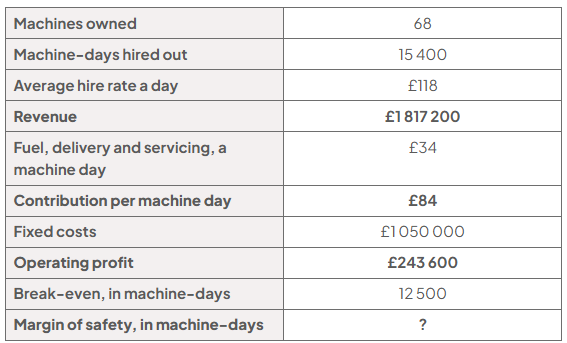
It owns 68 machines. Last year they were out on hire for 15 400 machine-days in total, at an average of £118 a day, which is revenue of £1 817 200. Fuel, delivery and servicing cost £34 for every day a machine is out. Everything else costs £1 050 000 a year and is paid whether the machines are out or standing in the yard.

Its customers are not alike. National housebuilders take more than half the revenue and are given sixty days to pay, which in practice becomes seventy-one. Small builders and sole traders are given seven days, or asked for a card when they collect. Sean Kettleby set it up that way and is candid about why: the housebuilders would go elsewhere if he pushed them, and the sole traders would not.

The machines are wearing out. Three excavators need replacing this year at £74 000 each. Sean Kettleby can buy them, which is what he has always done, or he can hire them in from a larger national firm when a customer needs one and hand the margin over. The bank has offered him a five-year loan for the £222 000, and he has enough in the company to pay cash if he chooses to.

Appendix D: Kettleby Plant Hire Ltd, summary of last year

Figures: 68 machines; 15,400 machine-days hired; £118 average daily rate; £1,817,200 revenue; £34 variable cost and £84 contribution per day; £1,050,000 fixed costs; £243,600 profit; break-even 12,500 days; margin of safety unknown.

Source: Analyst

Kettleby Plant Hire Ltd made an operating profit of £243 600 last year and owns 68 machines.

Analyse one way in which the number of machines it owns might affect how a lender reads Kettleby Plant Hire Ltd's accounts.

7
6 marks

Source A: Bunzl plc

Bunzl plc is a distribution and services group. It does not make much: it buys products from manufacturers, holds them, and delivers them to businesses that need them regularly but do not want to manage the supply themselves. Its customers are in cleaning and hygiene, safety, healthcare, foodservice and grocery, and they are spread across more than 30 countries.

A hospital does not want to negotiate with forty suppliers for gloves, wipes and aprons. Bunzl sells it one relationship. That is the business.

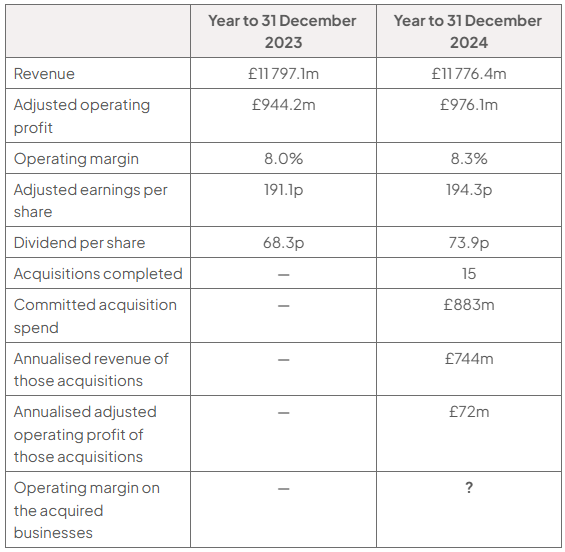
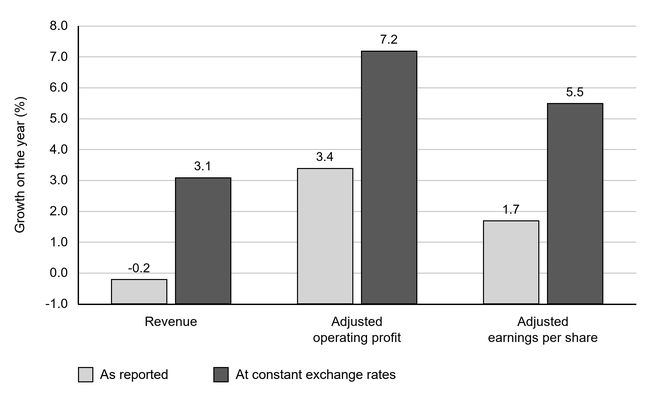
The year to 31 December 2024 produced an odd set of numbers. Revenue was £11 776.4 million against £11 797.1 million, which is a fall of 0.2%. But at constant exchange rates, which strips out the effect of the pound moving against other currencies, revenue rose 3.1%. Adjusted operating profit rose 3.4% as reported and 7.2% at constant rates. Appendix B shows the two measures side by side.

The margin improved, from 8.0% to 8.3%. Bunzl puts that down partly to selling more of its own brand products, which it sources itself rather than buying from a manufacturer whose name is on the box, and partly to the businesses it has bought.

Buying businesses is how Bunzl grows. During 2024 it completed 15 acquisitions, 13 of them announced, and committed a record £883 million to them. Those businesses are expected to add £744 million of revenue and £72 million of adjusted operating profit in a full year.

Adjusted earnings per share reached 194.3p and the dividend rose 8.2% to 73.9p. Cash conversion was 93%.

Source: information sourced from Bunzl plc annual results for the year ended 31 December 2024

Appendix A: Bunzl plc selected results

Table comparing Bunzl results for 2023 and 2024: revenue £11,797.1m/£11,776.4m, adjusted operating profit £944.2m/£976.1m, and margin 8.0%/8.3%. It also shows 15 acquisitions, £883m spend, £744m revenue and £72m profit in 2024.

Source: Bunzl plc

Appendix B: Bunzl plc growth, as reported and at constant exchange rates

Bar chart of Bunzl’s 2024 growth: revenue fell 0.2% as reported but rose 3.1% at constant exchange rates; adjusted operating profit rose 3.4% and 7.2%, and earnings per share 1.7% and 5.5%.

Source: Bunzl plc

Bunzl plc's revenue fell 0.2% during the year to 31 December 2024, while its operating margin rose from 8.0% to 8.3%.

Analyse one way in which a rising operating profit margin on falling revenue might affect what Bunzl plc concludes about the year.

1
9 marks

Source A: Greggs plc

Greggs plc is the UK's largest food-to-go retailer. It began as a single bakery in Newcastle upon Tyne and floated on the London Stock Exchange in 1984. It is now part of the FTSE 250 and is led by chief executive Roisin Currie.

Greggs sells sausage rolls, bakes, sandwiches, hot drinks and sweet items at prices deliberately set below those of most high street rivals. It calls itself a value retailer, but says that value comes from quality as well as price, and points to freshly prepared food, hot options and the ability for customers to customise their order. In December 2025 it held 8.6% of all visits in the UK food-to-go market and was rated the country's leading food-to-go brand.

The business has grown by making itself easier to reach. It opened 121 net new shops in 2025, ending the year with 2 739, and says there is a clear opportunity for significantly more than 3 000 UK shops in the longer term. Alongside the shops it has pushed three other ways to reach the customer. Delivery now accounts for 6.8% of sales in company-managed shops. Evening trade is the fastest growing part of the day. The Greggs App was scanned in 26.7% of transactions in 2025, up from 20.1% in 2024, and customers who use the App shop at Greggs more often. The company has also started selling through grocers, launching a Bake-at-Home range with Tesco and widening its range in Iceland.

That growth has been expensive. Capital spending peaked at £287.5 million in 2025 as Greggs built two new national distribution centres, at Derby and Kettering, lifting its logistics capacity to 3 500 shops. Capital spending is expected to fall to around £200 million in 2026. Greggs also made £13.0 million of structural cost savings during 2025 and holds a net cash position of £45.8 million.

The company says its key focus is restoring its return on capital employed to a target of around 20%.

Source: Greggs plc preliminary results, 3 March 2026

Appendix A: Greggs plc selected financial results

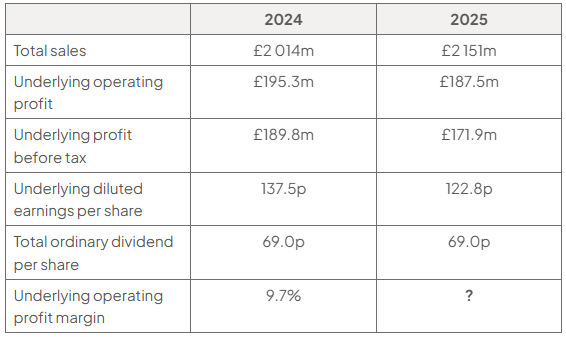
Table of Greggs plc results for 2024 and 2025: total sales £2,014m and £2,151m; underlying operating profit £195.3m and £187.5m; operating profit margin 9.7% in 2024 and missing for 2025.

Source: Greggs plc

Assess whether Greggs plc's operating profit margin indicates that 2025 was a more successful year than 2024.

Calculate Greggs plc's underlying operating profit margin in 2025 to support your answer.

Give your answer to one decimal place.

2
9 marks

Source A: Games Workshop Group PLC

Games Workshop Group PLC designs, makes and sells fantasy miniatures, and the games and stories that go with them. Its main brand is Warhammer. The company is based at Willow Road in Nottingham, where it makes its models, and it is a public limited company whose shares are traded on the London Stock Exchange. Kevin Rountree is the chief executive. It employs about 3 000 people.

The company earns money in two quite different ways. Most of it comes from the core business: selling miniatures and books through its own shops, through independent retailers it calls trade accounts, and through its own website. The rest comes from licensing, which means letting other companies pay to use Warhammer characters and worlds in their own products, such as video games and television.

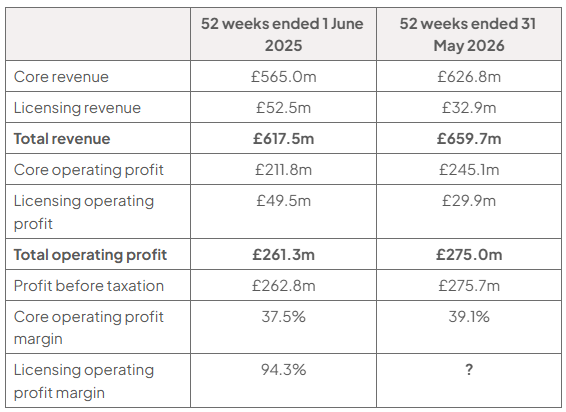
In the 52 weeks to 31 May 2026 the core business had its best year yet. Core revenue rose 10.9% to £626.8 million and core operating profit rose to £245.1 million. Licensing went the other way. Licensing revenue fell from £52.5 million to £32.9 million, and licensing operating profit fell from £49.5 million to £29.9 million.

Licensing matters more than its size suggests. It costs very little to run, because the company is selling permission rather than a product, so almost all of the revenue it brings in becomes profit.

Total revenue still reached a record £659.7 million and profit before tax a record £275.7 million. Earnings per share rose from 594.9p to 624.0p. Even so, the dividend paid during the year fell from 520p a share to 485p.

Games Workshop says its decisions are focused on long-term success rather than short-term gains, and that it intends to carry on making the best fantasy miniatures in the world forever.

Source: Games Workshop Group PLC results, 28 July 2026

Appendix A: Games Workshop Group PLC selected financial results

Table comparing 2025 and 2026 results: revenue, operating profit, profit before tax and margins. Values are £565.0m/£626.8m, £52.5m/£32.9m, £617.5m/£659.7m, £211.8m/£245.1m, £49.5m/£29.9m, £261.3m/£275.0m, £262.8m/£275.7m; margins 37.5%/39.1% and 94.3%/?.

Source: Games Workshop Group PLC

Appendix B: Games Workshop Group PLC earnings, dividends and cash

  • Earnings per share = 624.0p in 2026 (594.9p in 2025)

  • Dividends per share declared and paid during the year = 485p in 2026 (520p in 2025)

  • Net increase in cash before dividends paid = £210.3m in 2026 (£197.5m in 2025)

  • Cash held at the end of the year = £182.9m

Source: Games Workshop Group PLC and Companies House

Assess whether Games Workshop Group PLC was right to cut its dividend from 520p to 485p a share in a year when its earnings per share rose.

3
9 marks

Source B: Big Issue Media Ltd

Big Issue Media Limited publishes The Big Issue, a weekly magazine sold on the street by people who are homeless or at risk of becoming homeless. The company was set up in 1991 and is part of a group of 16 companies known as the Big Issue Group. It is a social enterprise: it trades like any other business, but it exists to create work for its vendors rather than to pay outside shareholders.

The selling model is unusual. Vendors buy copies of the magazine from Big Issue Media Limited at half the cover price, then sell them at the full price and keep the difference. A vendor is not an employee. What they earn depends entirely on how many copies they sell, so the number of magazines moving through the business is also the number that decides whether a vendor can pay their rent.

That number has been falling. Fewer people carry cash, fewer people buy print magazines, and the streets are quieter than they were. In the year to 31 March 2025 turnover fell by 37.1% to £3.92 million. The company cut its workforce from 74 people to 56. Cash at the bank fell to £297 000 and net assets fell by 43.6% to £630 000. Appendix D shows how the business changed.

The directors are considering two ways forward. They could raise the cover price, which would give each vendor more money for every copy sold. Or they could push more sales through the Big Issue app and website, which costs less to run but cuts the vendors out of the sale. Appendix F sets out the two options.

Source: information sourced from Companies House, 2026

Appendix E: Information on the economics of the magazine

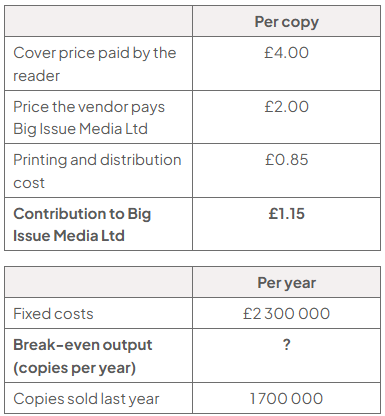
Two tables: per-copy data shows cover price £4, vendor payment £2, printing and distribution cost £0.85, and contribution to Big Issue Media Ltd £1.15; annual fixed costs are £2.3 million and last year’s sales were 1.7 million copies.

Source: Analyst

Assess whether Big Issue Media Ltd can cover its costs by selling the magazine alone.

Calculate the break-even output in copies per year to support your answer.

4
9 marks

Source A: MJ Gleeson plc

MJ Gleeson plc builds houses. It is a public limited company listed on the London Stock Exchange and it works in two quite different ways. Gleeson Homes builds and sells houses, mainly in the North of England and the Midlands. Gleeson Land buys options on farmland, obtains planning permission and sells the land on to other housebuilders.

What makes Gleeson unusual is who it sells to. It builds the lowest-priced new homes in Britain and says its average selling price is 34% lower than the average new build price in the regions where it works. In the year to 30 June 2025, 78% of the homes it sold were affordable to a couple both earning the National Living Wage. Many of its buyers are first-time buyers who would otherwise be renting.

The year was a difficult one. Group revenue rose 5.9% to £365.8 million and the company sold 1 793 homes, only 21 more than the year before. The average selling price rose 4.3% to £193 600, but almost all of that came from building a different mix of houses rather than from charging more for the same house: underlying price growth was just 0.6%.

Costs went the other way. The gross margin at Gleeson Homes fell from 24.1% to 20.7%, and its operating profit fell 26.4% to £22.3 million. Gleeson Land had a much better year, completing seven land sales and lifting its operating profit from £2.2 million to £7.0 million, but it is far too small to make up the difference. Group profit before tax fell 17.3% to £20.5 million.

The company built from fewer places. Active build sites fell from 79 to 68, while the land pipeline grew slightly to 19 638 plots. Gleeson holds a medium-term target of building 3 000 homes a year, which is well above the 1 793 it managed this year.

Money left the business. Gleeson began the year with net cash of £12.9 million and ended it with net borrowings of £0.8 million, having held its dividend at 11.0p a share even though earnings per share fell from 33.13p to 27.11p.

Source: MJ Gleeson plc audited results for the year ended 30 June 2025, 16 September 2025

Appendix A: MJ Gleeson plc selected results

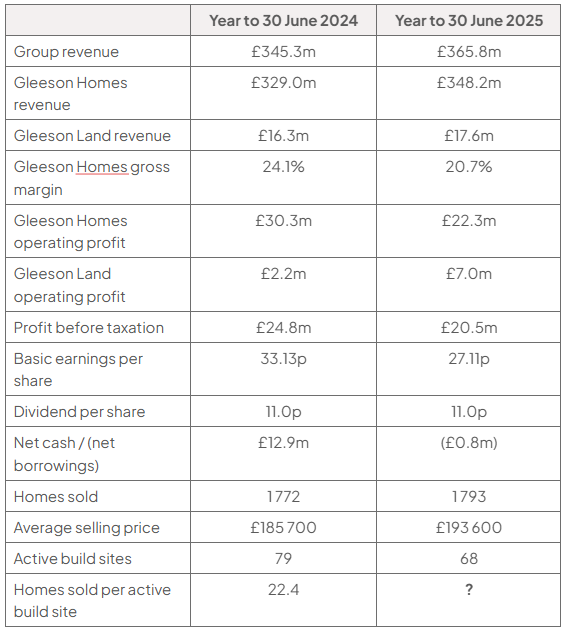
Table comparing 2024 and 2025 results: homes sold rose from 1,772 to 1,793, while active build sites fell from 79 to 68; homes sold per active build site was 22.4 in 2024 and blank for 2025.

Source: MJ Gleeson plc

Assess whether MJ Gleeson plc's sales performance improved in 2025.

Calculate the number of homes sold per active build site in 2025 to support your answer.

Give your answer to one decimal place.

5
9 marks

Source A: Good Energy Group plc

Good Energy Group plc sells electricity and gas to homes and businesses, and it installs solar panels, heat pumps and batteries. It is a public limited company and its shares are traded on AIM.

The electricity it sells is bought from a community of more than 2 500 independent renewable generators, many of them small: wind turbines, solar farms and hydro schemes. Good Energy is an accredited B Corp, the only domestic energy supplier in the United Kingdom to hold that certification, with an impact score of 118.5. B Corp certification is awarded to companies that meet standards on social and environmental performance, and it has to be re-earned.

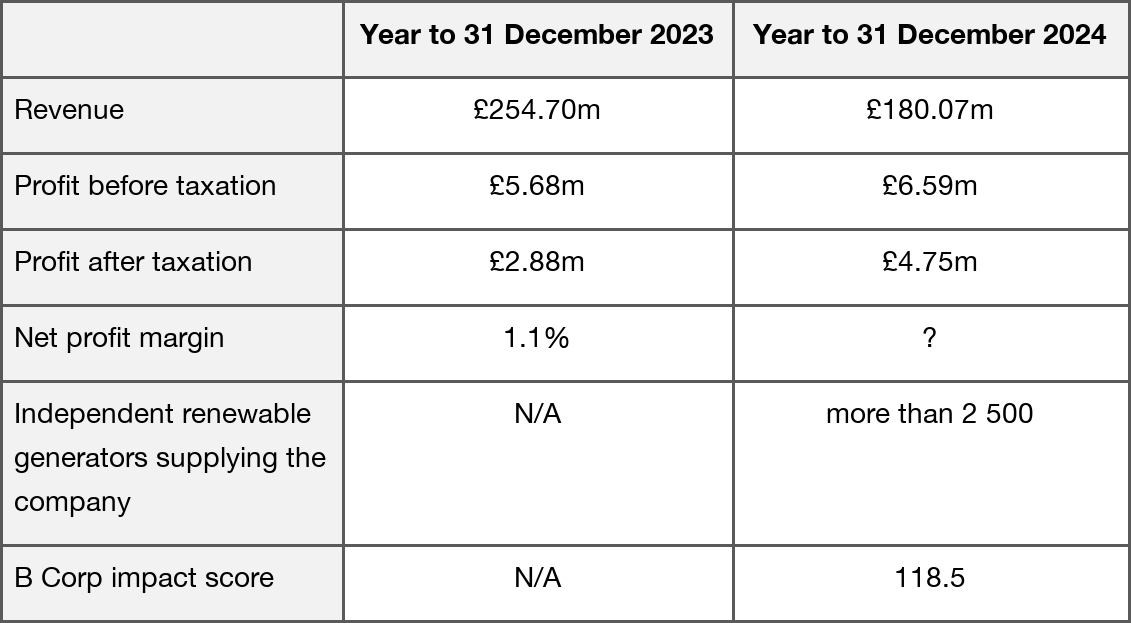
The year to 31 December 2024 looked strange on the face of it. Revenue fell 29.3% to £180.07 million, down from £254.7 million. Profit before tax rose 16.0% to £6.59 million, and profit after tax rose 64.9% to £4.75 million. The company took less money and kept more of it.

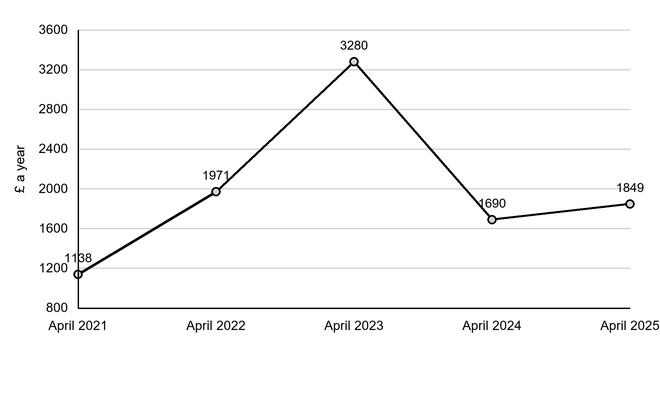
The explanation lies outside the business. Wholesale energy prices rose sharply after Russia's invasion of Ukraine and then fell back, and the Ofgem price cap on what a domestic supplier may charge followed them up and down. Appendix B shows the cap. When the price a supplier charges falls, its revenue falls with it, even if it is serving exactly the same customers.

The company is also changing what it does. During the year it bought JPS, which installs heat, solar and storage across southern England, and it completed the acquisition of Amelio Enterprises Limited. Installing equipment is a different business from supplying energy: it is a one-off sale rather than a monthly bill, and it is not capped by Ofgem.

One thing sits awkwardly alongside the B Corp badge. Good Energy also sells gas, which is a fossil fuel, to customers who have gas boilers. It cannot make gas renewable in the way it can make electricity renewable, and every gas customer it keeps is a household it is not selling a heat pump to.

Source: information sourced from Good Energy Group plc results for the year ended 31 December 2024

Appendix A: Good Energy Group plc selected results

Table comparing 2023 and 2024 results: revenue £254.70m and £180.07m; profit before tax £5.68m and £6.59m; profit after tax £2.88m and £4.75m. Net profit margin is 1.1% for 2023 and blank for 2024.

Source: Good Energy Group plc

Appendix B: The Ofgem energy price cap

Line chart of the Ofgem energy price cap, which rises from £1,138 a year in April 2021 to £3,280 in April 2023, then falls to £1,690 in April 2024 and £1,849 in April 2025.
  • The figures are the cap that applied in April of each year for a typical household paying by direct debit. In April 2023 the government's Energy Price Guarantee meant most households actually paid about £2 500 rather than the capped £3 280.

  • Ofgem reduced its assumption of typical household consumption in late 2023, so figures either side of that point are not perfectly comparable.

Source: Ofgem

Assess whether 2024 was a more successful year for Good Energy Group plc than 2023.

Calculate Good Energy Group plc's profit for the year margin in 2024 to support your answer.

Give your answer to one decimal place.

6
9 marks

Source A: Nationwide Building Society

Nationwide is the world's largest building society and the second largest mortgage lender in the United Kingdom. It is a mutual, which means it has no shareholders. It is owned by its members, who are the people who bank, save or hold a mortgage with it, and in principle every member is an owner. Nobody outside the membership has a claim on its profit.

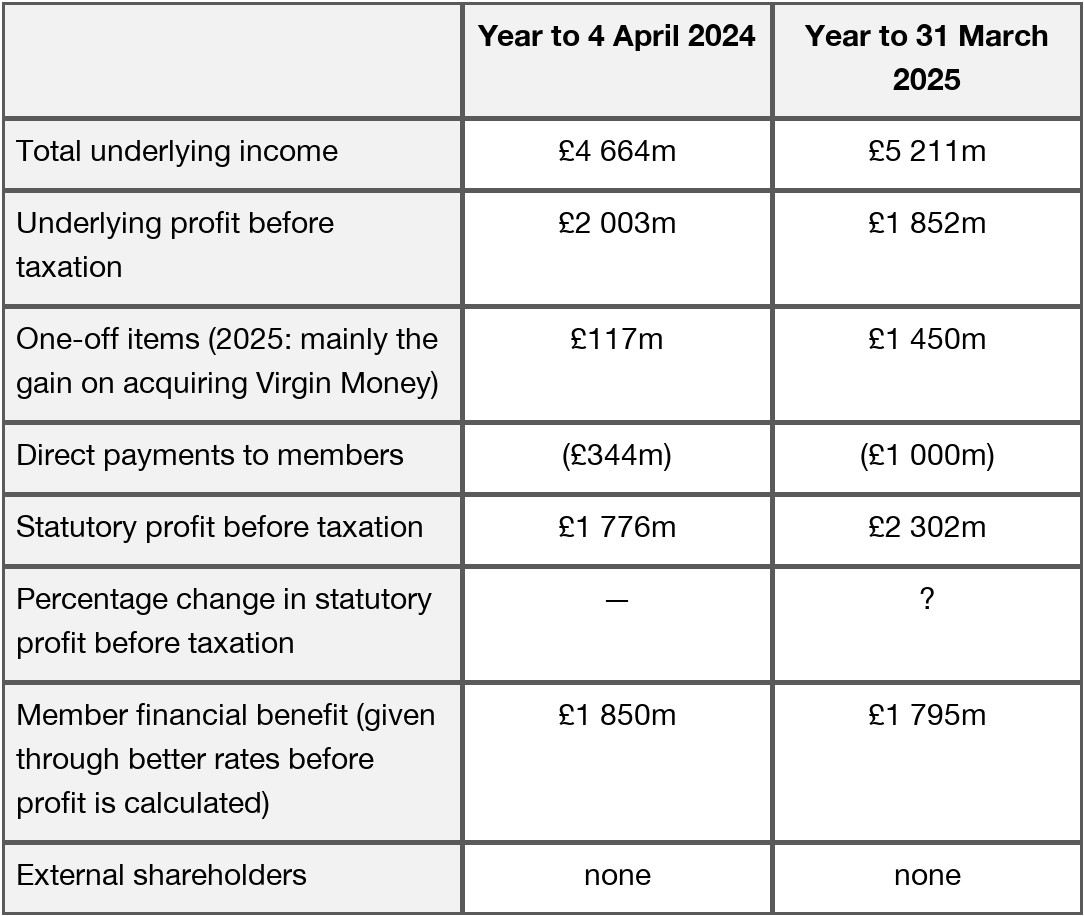
That changes what profit is for. A listed bank divides its profit between dividends to shareholders and money kept in the business. Nationwide has no shareholders to pay, so it keeps almost all of its profit in the business to build its financial strength, and gives value to members in two other ways. The first is pricing, through better savings rates and lower mortgage rates. In the year to 31 March 2025 it put this at £1 795 million of member financial benefit, which is its estimate of how much better off its members were than they would have been with a typical high street bank. The second is direct payments: £1 000 million paid to eligible members through the Fairer Share Payment and a one-off reward called The Big Nationwide Thank You. Both reach members before profit is calculated, so neither is paid out of profit.

The year was a large one. On 1 October 2024 Nationwide completed the acquisition of Virgin Money, a bank with its own customers, brand and business lending arm. Statutory profit before tax rose to £2 302 million from £1 776 million, even after the direct payments to members. The rise was mainly due to a one-off accounting gain of £2.3 billion on buying Virgin Money, which arose because the assets acquired were valued at more than the £2.8 billion price. Underlying profit before tax, which leaves out one-off items and the direct payments, fell to £1 852 million from £2 003 million, which the society put down to its decision to pay members better rates. Total underlying income reached £5.2 billion, and Pay.UK switching data for the nine months to December 2024 showed more current account switchers moving to Nationwide than to any other brand.

Buying a bank is an unusual thing for a mutual to do. Virgin Money's customers did not choose a mutual, and integrating it will take years and a great deal of money. Every pound spent on that integration is a pound not returned to members this year, which is the tension the society is now living with.

Source: information sourced from Nationwide Building Society preliminary results for the year ended 31 March 2025

Appendix A: Nationwide Building Society selected results

Table comparing Nationwide results for 2024 and 2025: underlying income £4,664m/£5,211m; underlying profit £2,003m/£1,852m; one-off items £117m/£1,450m; member payments £344m/£1,000m; statutory profit £1,776m/£2,302m; member benefit £1,850m/£1,795m; no external shareholders.

Source: Nationwide Building Society

Assess whether a rise in profit before tax is a sign of success for an organisation that has no shareholders.

Calculate the percentage change in Nationwide Building Society's statutory profit before tax to support your answer.

Give your answer to one decimal place.

1
15 marks

Source A: Greggs plc

Greggs plc is the UK's largest food-to-go retailer. It began as a single bakery in Newcastle upon Tyne and floated on the London Stock Exchange in 1984. It is now part of the FTSE 250 and is led by chief executive Roisin Currie.

Greggs sells sausage rolls, bakes, sandwiches, hot drinks and sweet items at prices deliberately set below those of most high street rivals. It calls itself a value retailer, but says that value comes from quality as well as price, and points to freshly prepared food, hot options and the ability for customers to customise their order. In December 2025 it held 8.6% of all visits in the UK food-to-go market and was rated the country's leading food-to-go brand.

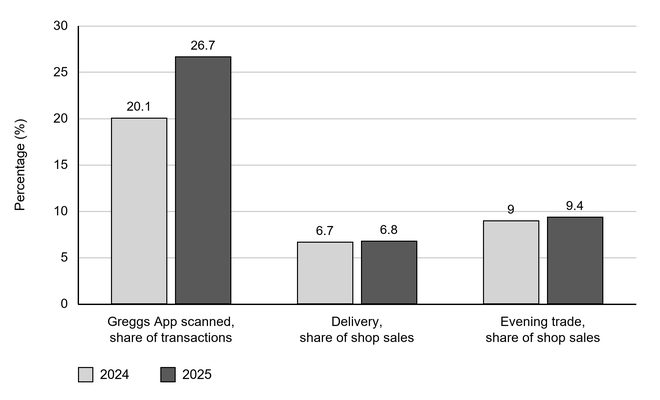
The business has grown by making itself easier to reach. It opened 121 net new shops in 2025, ending the year with 2 739, and says there is a clear opportunity for significantly more than 3 000 UK shops in the longer term. Alongside the shops it has pushed three other ways to reach the customer. Delivery now accounts for 6.8% of sales in company-managed shops. Evening trade is the fastest growing part of the day. The Greggs App was scanned in 26.7% of transactions in 2025, up from 20.1% in 2024, and customers who use the App shop at Greggs more often. The company has also started selling through grocers, launching a Bake-at-Home range with Tesco and widening its range in Iceland.

That growth has been expensive. Capital spending peaked at £287.5 million in 2025 as Greggs built two new national distribution centres, at Derby and Kettering, lifting its logistics capacity to 3 500 shops. Capital spending is expected to fall to around £200 million in 2026. Greggs also made £13.0 million of structural cost savings during 2025 and holds a net cash position of £45.8 million.

The company says its key focus is restoring its return on capital employed to a target of around 20%.

Source: Greggs plc preliminary results, 3 March 2026

Appendix A: Greggs plc selected financial results

Table of Greggs plc results for 2024 and 2025: total sales £2 014m and £2 151m; underlying operating profit £195.3m and £187.5m; operating profit margin 9.7% in 2024 and missing for 2025.

Source: Greggs plc

Appendix B: Greggs plc shops and sales channels

Bar chart of Greggs channels in 2024 and 2025, with percentage axis from 0 to 30: App scans rise from 20.1% to 26.7%, delivery from 6.7% to 6.8%, and evening trade from 9% to 9.4%.
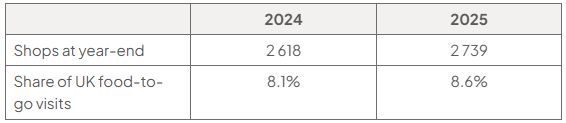
Table comparing Greggs’ shops and UK food-to-go visit share in 2024 and 2025: shops rose from 2 618 to 2 739, while visit share increased from 8.1% to 8.6%.

Source: Greggs plc, Circana

Appendix C: Greggs plc share price

Table of the Greggs plc share price: 1 872 pence on 28 September 2026.

Source: Greggs plc

Greggs plc aims to restore its return on capital employed to around 20%.

Evaluate two actions Greggs plc could take to reach this target and recommend which one it should take first.

2
15 marks

Source B: Calder Vale Ceramics Ltd

Calder Vale Ceramics Ltd makes tableware: plates, bowls and serving dishes, thrown and glazed at a single factory in Lancashire. It is a private limited company owned by its two directors, Nadia Okonjo and Rob Hartley, and it employs 19 people.

It does not sell to the public. Its customers are restaurant groups, hotels and independent homeware shops, who order in batches and expect the same glaze to be available again in two years' time. Last year it fired and sold 77 500 pieces at an average price of £16.00, which brought in £1 240 000.

Two kilns do all the work. They cost £14 200 a month to run, staff, maintain and insure, and that is paid whether or not a single piece is fired. A third kiln would cost £180 000 and would let the company take the larger restaurant contracts it currently turns down.

The difficulty is not profit. The difficulty is when the money arrives. Calder Vale Ceramics Ltd's largest customers are restaurant groups, and they take 62 days to pay. Its own clay and glaze come from two small family firms, and Calder Vale Ceramics Ltd pays them within 30 days, because it always has. Finished inventory sits in the warehouse for about seven weeks before a customer calls it off.

Last year it made a gross profit of £558 000 on its £1 240 000 of revenue, once the £682 000 of clay, glaze, packaging and firing was paid for. Wages came to £298 000 and the kiln, factory, insurance and other fixed costs to £170 400, leaving a profit for the year of £89 600. It ended the year with £18 300 in the bank.

Appendix D: Calder Vale Ceramics Ltd cash flow forecast, April to June

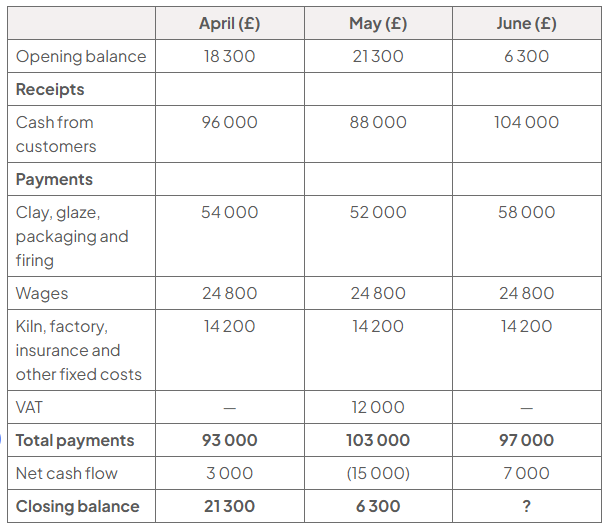
Appendix D cash-flow forecast (£), April/May/June: opening 18,300/21,300/6,300; receipts 96,000/88,000/104,000; payments 93,000/103,000/97,000; net flow 3,000/(15,000)/7,000; closing 21,300/6,300/?.

Source: Analyst

Appendix E: Calder Vale Ceramics Ltd break-even chart

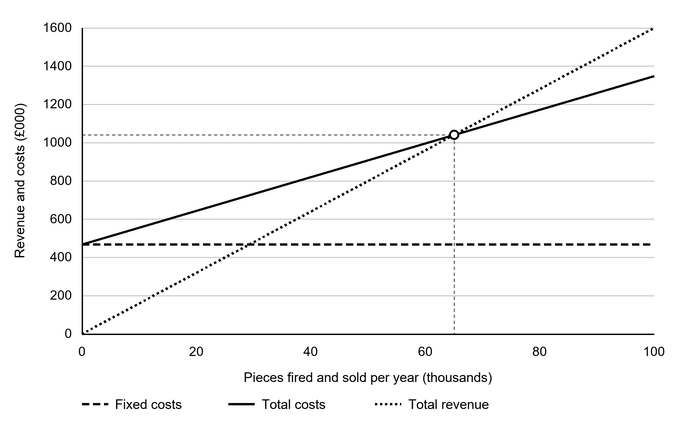
Break-even chart of revenue and costs against pieces fired and sold per year (thousands): fixed costs are about £468 400; total revenue and total costs intersect at about 65 000 pieces and £1.04 million.

Source: Analyst

Appendix F: Data for two ways of paying for a third kiln

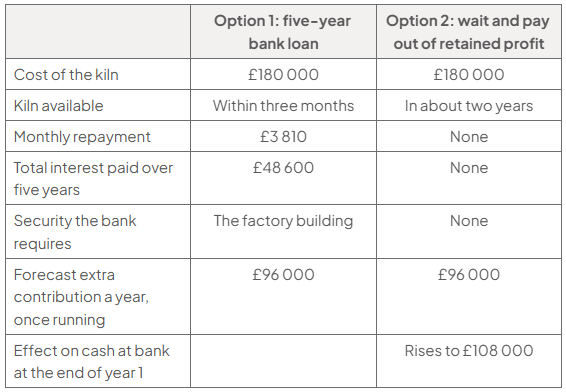
Table comparing two ways to fund a £180 000 kiln. Option 1, a five-year bank loan: kiln available within three months, monthly repayment £3 810, total interest over five years £48 600, security required is the factory building, forecast extra contribution £96 000 a year once running, and the effect on cash at bank at the end of year 1 is not given. Option 2, wait and pay out of retained profit: kiln available in about two years, no repayments, no interest and no security, forecast extra contribution £96 000 a year once running, and cash at bank at the end of year 1 rises to £108 000.

Source: Analyst

Calder Vale Ceramics Ltd made a profit of £89 600 last year and ended it with £18 300 in the bank.

Evaluate whether Calder Vale Ceramics Ltd should judge how well it is doing on its profit or on its cash position.

3
15 marks

Source B: Thorne Valley Orchards Ltd

Thorne Valley Orchards Ltd grows apples on 180 acres in Herefordshire and turns them into juice and chutney in a press and kitchen on the same site. It is a private limited company run by Marianne Vance, whose family has farmed the land since 1954, and it employs 26 people, more in the picking season.

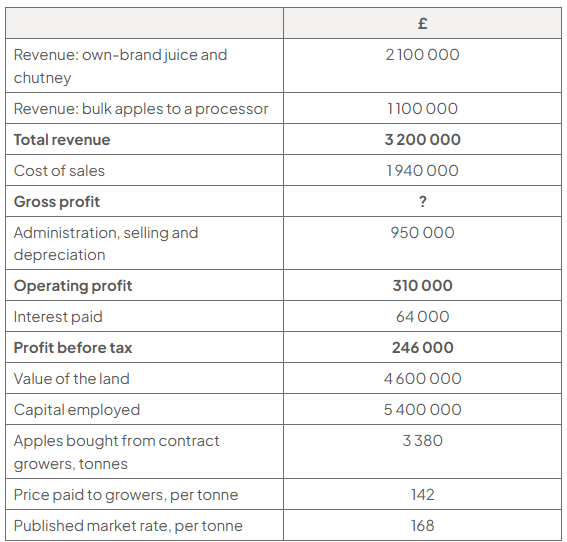
It sells in two ways. Its own-brand juice and chutney go to farm shops, delicatessens and garden centres, and brought in £2.1 million last year. Bulk apples it does not need go to a large juice processor, which brought in £1.1 million. Total revenue was £3.2 million.

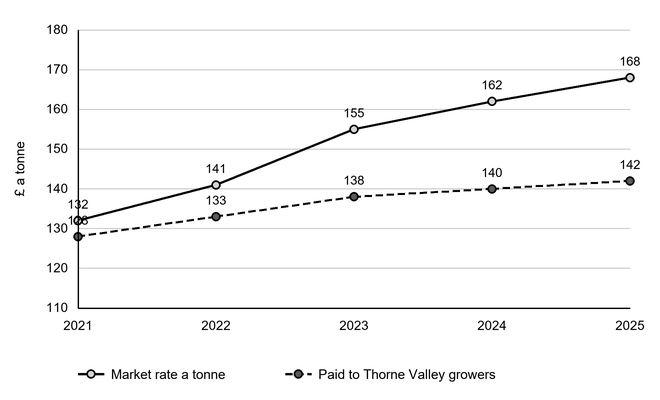
Its own orchards do not produce enough. Thorne Valley Orchards Ltd buys a further 3 380 tonnes of apples a year from fourteen contract growers, all of them small farms within thirty miles. It pays them £142 a tonne. The published market rate last year was £168 a tonne, and Appendix E shows how that gap has widened. The growers accept it because Thorne Valley Orchards Ltd takes the whole crop, pays within fourteen days and has done so for years. Its own customers, the farm shops and delicatessens, take about 45 days to settle.

The land is worth £4.6 million. Together with the buildings, press and kitchen, capital employed is £5.4 million. Against that, operating profit last year was £310 000 and profit before tax, after £64 000 of interest, was £246 000.

Marianne Vance has been offered a contract by a supermarket for 900 000 bottles of own-label juice a year at £1.10 a bottle. Her own brand sells at £2.40. The press currently runs at about 40% of what it could do.

Appendix D: Thorne Valley Orchards Ltd, summary of last year

Appendix D summary (£): revenue 2.1m own-brand, 1.1m bulk, total 3.2m; costs 1.94m; gross profit unknown; operating profit 310k; PBT 246k; land 4.6m; capital 5.4m; 3 380 tonnes at £142/t versus market £168/t.

Source: Analyst

Appendix E: What Thorne Valley Orchards Ltd pays its growers, against the market rate

Line chart of apple prices paid per tonne from 2021 to 2025: market rate rises from £132 to £168, while Thorne Valley’s growers receive £128, £133, £138, £140 and £142.Axes: £ per tonne and year.

Source: Analyst

Thorne Valley Orchards Ltd made an operating profit of £310 000 on capital employed of £5 400 000, of which £4 600 000 is the value of its land.

Evaluate whether Marianne Vance should judge Thorne Valley Orchards Ltd on the profit it makes or on the return it earns on the land it owns.