Leadership (AQA A Level Business): Exam Questions

Exam code: 7132

Syllabus Edition

First teaching 2026

First exams 2028

2 hours15 questions
1
6 marks

Source A: Linneth Hotels Ltd

Linneth Hotels Ltd owns four hotels on the Northumberland coast. Between them they have 268 rooms and 160 employees, and in the year to October 2025 the company had revenue of £8.9 million and an operating profit of £0.62 million.

The business lives and dies by the seasons. In July and August the hotels are almost full. In January and February they are more than half empty, and the company cuts shifts to match. Most of its people are therefore taken on for the season rather than the year, and many of them do not come back.

Until last year the hotels were run by Gerald Linneth, who founded the company in 1998. His way of managing was simple: he made the decisions, he told people what to do, and he checked that it had been done. Rotas were posted on a Friday for the following week and arguing with them was not encouraged. He believed hospitality was too fast-moving for discussion.

In November 2025 he handed the running of the hotels to a new general manager, Priya Raman, who had previously managed a single large hotel in Edinburgh. She has started doing things differently. Housekeeping and kitchen teams now set their own rotas within rules the company agrees. Every hotel holds a short meeting at the start of each shift where any member of staff can raise a problem. She has promised that anyone who stays a full season will be offered training towards a recognised hospitality qualification.

Not everyone is convinced. Two of the four hotel managers have worked for Gerald Linneth for over twenty years and think the new approach is slow and soft. Gerald Linneth still owns the company and still visits every week.

Source: Linneth Hotels Ltd

Appendix C: How the hotels were run, and how they are run now

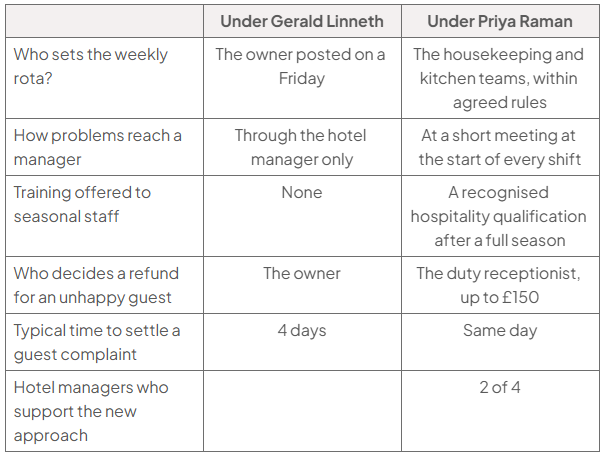
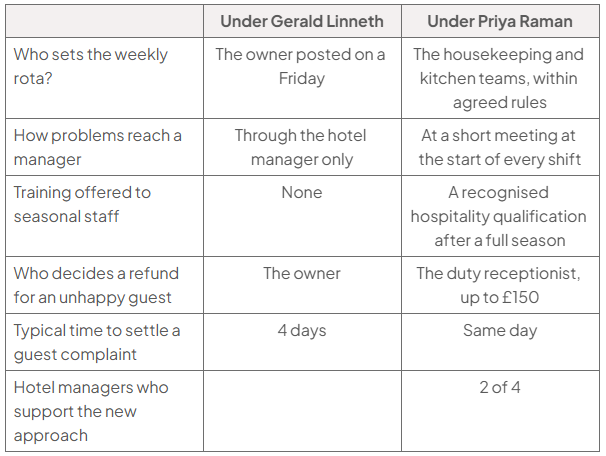
Table of how the hotels were run under Gerald Linneth and under Priya Raman: who sets the weekly rota, the owner, posted on a Friday, and the housekeeping and kitchen teams within agreed rules; how problems reach a manager, through the hotel manager only, and at a short meeting at the start of every shift; training offered to seasonal staff, none, and a recognised hospitality qualification after a full season; who decides a refund for an unhappy guest, the owner, and the duty receptionist up to £150; typical time to settle a guest complaint, 4 days and same day; hotel managers who support the new approach, not applicable under Gerald Linneth and 2 of 4 under Priya Raman.

Source: Linneth Hotels Ltd

Analyse one way in which Priya Raman's more democratic leadership style might affect the service guests receive at Linneth Hotels Ltd.

2
6 marks

Source A: Revolut

Revolut is a digital bank. It has no branches: customers open an account on their phone, usually in minutes, and use it to spend, send and exchange money. It was founded in London in 2015 by Nik Storonsky and has grown faster than almost any European business of its size.

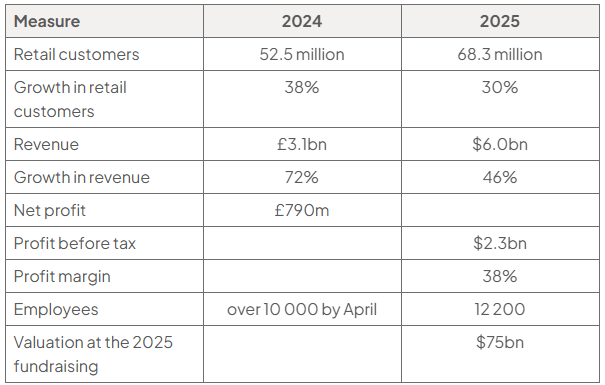
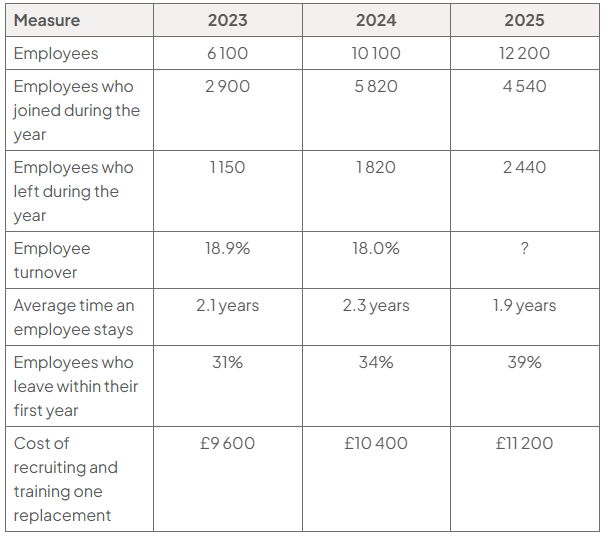
The numbers are remarkable. In 2024 it had 52.5 million retail customers, up 38%, revenue of £3.1 billion, up 72%, and net profit of £790 million. In 2025 customers rose another 30% to 68.3 million, group revenue rose 46% to 6.0 billion US dollars and profit before tax reached 2.3 billion US dollars, a profit margin of 38%. A fundraising in 2025 valued the company at 75 billion US dollars. The workforce passed 10 000 in April 2024 and reached 12 200 during 2025.

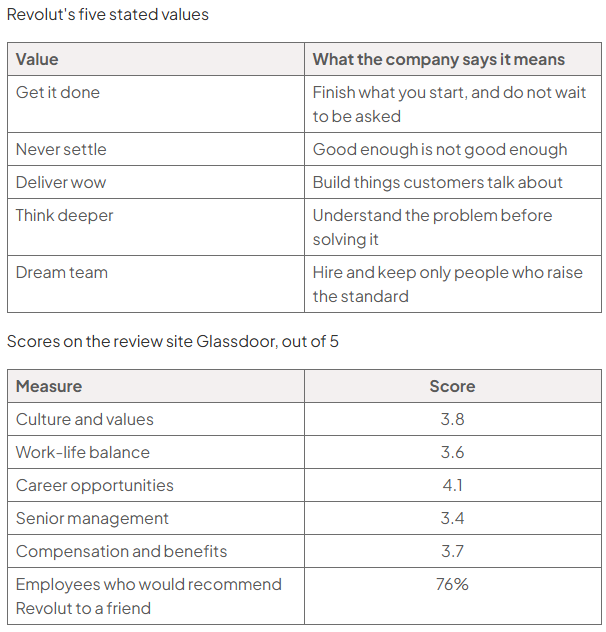
That growth has been built on a demanding set of stated values. Revolut tells its people to “get it done” and to “never settle”, alongside “deliver wow”, “think deeper” and “dream team”. Performance is measured against quarterly targets, and the company says the values are not posters on a wall but the basis on which people are hired, promoted and let go.

The culture that produces those results also attracts criticism. On the review site Glassdoor, 76% of employees say they would recommend Revolut to a friend, but the company scores 3.6 out of 5 for work-life balance and 3.8 for culture and values. A number of reviews describe meetings in which people are humiliated, managers who lack interpersonal skills, and so heavy a focus on quarterly targets that employees lose sight of anything else. Commentators have questioned whether people who are overworked and burnt out can be expected to be good colleagues, and the chief executive's management style has been criticised for creating long hours and high staff turnover.

Revolut has begun work on changing parts of its culture while insisting that the high-performance core of it stays.

Source: Revolut annual report 2024, Revolut results announcements 2025, and published reviews

Appendix A: Selected data for Revolut

Revolut data table for 2024/2025: customers 52.5m/68.3m, growth 38%/30%; revenue £3.1bn/6.0 billion US dollars, growth 72%/46%; profit £790m/2.3 billion US dollars; margin 38%; employees 10 000+/12 200; valuation 75 billion US dollars.

Source: Revolut

Analyse one way in which the leadership style described at Revolut might affect its ability to keep growing its customer numbers.

3
6 marks

Source A: John Lewis Partnership

The John Lewis Partnership owns the John Lewis department stores and the Waitrose supermarkets. It is not owned by shareholders. It is owned by the people who work in it, who are called Partners rather than employees, and who share in the profits through an annual Partnership Bonus paid as a percentage of pay.

For most of its history that bonus was the thing everybody knew about the business. It was announced each March, it was the same percentage for the chief executive as for a shelf stacker, and it was how the Partnership said what it believed: that the people who do the work should own the business and share what it earns.

Then it stopped. The Partnership paid no bonus for three years. In March 2025 it reported that profits had tripled and still did not pay one, because the money was needed to invest in the business. For the year to January 2026 the bonus came back at 2%, worth about one week's pay, the first since 2022.

The underlying business improved. Partnership sales rose 5% to £13.4 billion and profit before tax, bonus and exceptional items rose 6% to £134 million. Cash generated from operations reached £595 million, up £63 million. The Partnership is investing £108 million in base pay in 2026.

The two halves of the Partnership are very different. Waitrose grew sales 7% to £8.5 billion with an adjusted operating profit of £256 million. John Lewis grew sales 3% to £4.9 billion with an adjusted operating profit of £58 million.

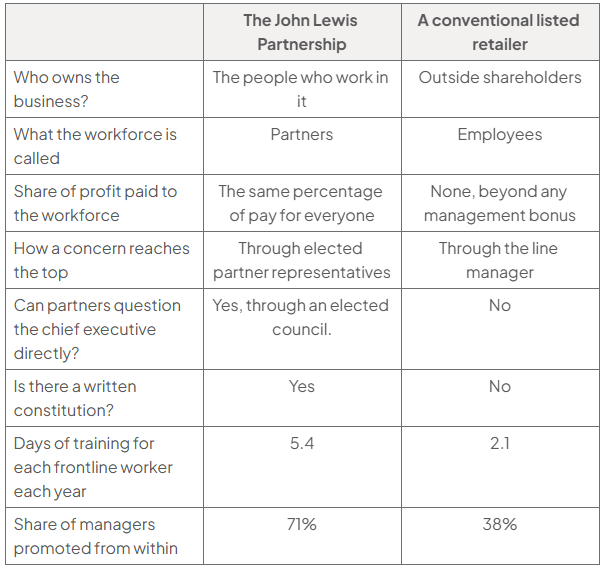
The Partnership is also run differently. It has a written constitution, Partners elect representatives who can question the chief executive, and a Partner can raise a concern through an elected body rather than through their line manager.

Source: John Lewis Partnership full year results, 2025 and 2026

Appendix C: The Partnership compared with a conventional retailer

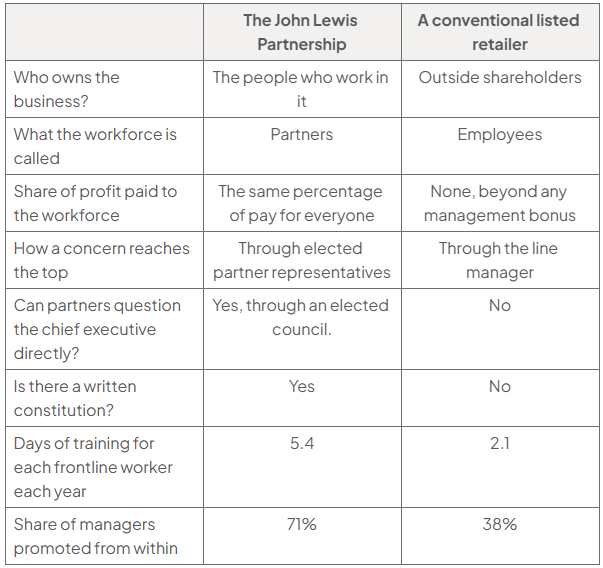
Comparison table of the John Lewis Partnership and a conventional listed retailer: worker ownership versus outside shareholders; Partners versus employees; equal profit share versus management-only bonus; elected representatives versus line manager; yes versus no for direct questioning, written constitution and internal promotion; training 5.4 versus 2.1 days, and internal promotion 71% versus 38%.

Source: Analyst

Analyse one way in which letting Partners question the chief executive through an elected council might affect the quality of decisions made at the John Lewis Partnership.

4
6 marks

Source A: Ashcombe Academy Trust

Ashcombe Academy Trust runs five secondary schools in the south west of England. It employs 480 people, of whom 285 are teachers, and teaches about 4 100 pupils. Its income last year was £31.4 million, almost all of it from government funding, and it finished the year with a surplus of £400 000.

Its problem is keeping teachers. Fifty-seven left last year. Most did not go to another school: they left teaching. When a class has no teacher the trust books a supply teacher through an agency, at a day rate that has risen every year, and supply teachers rarely mark work or know the pupils.

The chief executive, Dr Helena Marsh, cannot pay more. Teachers' pay is set nationally and the trust has no power to change it. What she can change is everything else: how teachers are appraised, how much notice they get of a timetable change, whether they have time in the school day to plan and mark, and how decisions are taken in each school.

At present every teacher is appraised once a year against three targets, two of which are pupil examination results. Heads of department set the targets in September and review them the following July. Teachers say the appraisal is about proving they are doing their job rather than helping them do it better, and that the parts of the job they find hardest, such as behaviour and workload, are not what they are measured on.

Dr Marsh has two proposals in front of her. Neither of them is more pay, because more pay is not available.

Source: Ashcombe Academy Trust

Appendix C: How teachers are appraised, now and as proposed

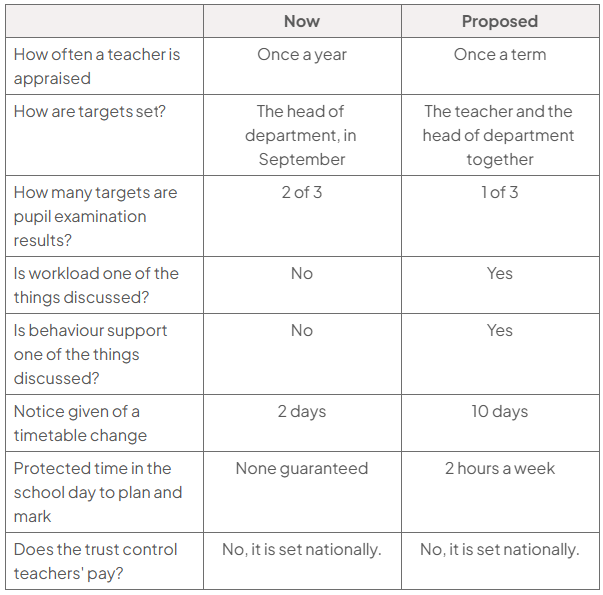
Table comparing current and proposed appraisal arrangements: yearly/termly; targets set by head of department/teacher and head together; exam-result targets 2 of 3/1 of 3; workload and behaviour no/yes; timetable notice 2/10 days; planning time none/2 hours weekly; pay nationally set in both.

Source: Ashcombe Academy Trust

Analyse one way in which letting teachers set their own appraisal targets might affect how they are led at Ashcombe Academy Trust.

5
6 marks

Source A: Saltmarsh Soft Drinks Ltd

Saltmarsh Soft Drinks Ltd makes pressed apple juice, elderflower cordial and ginger beer at a small plant in Somerset. It employs 55 people, had revenue of £6.8 million in the year to March 2025 and an operating profit of £412 500.

Pauline Saltmarsh started the company in 1996 with one press and a van. She still knows every employee's name, still tastes every batch, and until this year she signed off every decision that cost more than £500. The workforce is young: the average age is 26, and most of the production team are in their first or second job.

In January she told the board she is reducing to two days a week, and that the business needs to be able to run without her. She has promoted two people from the production floor, Ciara Nolan and Dan Beckworth, to lead production and sales, and has told them she will not overrule them in front of their teams.

It has not been straightforward. Both new leaders have spent their whole working lives being told what to do by Pauline, and both have said they find it difficult to know how much they are allowed to decide. Several of the younger staff have asked who they should now go to, and two have said the company feels less personal than it did.

The board has asked for proposals on keeping people motivated as the founder steps back. Pay at Saltmarsh is already above the local average for food production, so raising it further is not obviously the answer.

Source: Saltmarsh Soft Drinks Ltd

Appendix C: How Saltmarsh is run, before and now

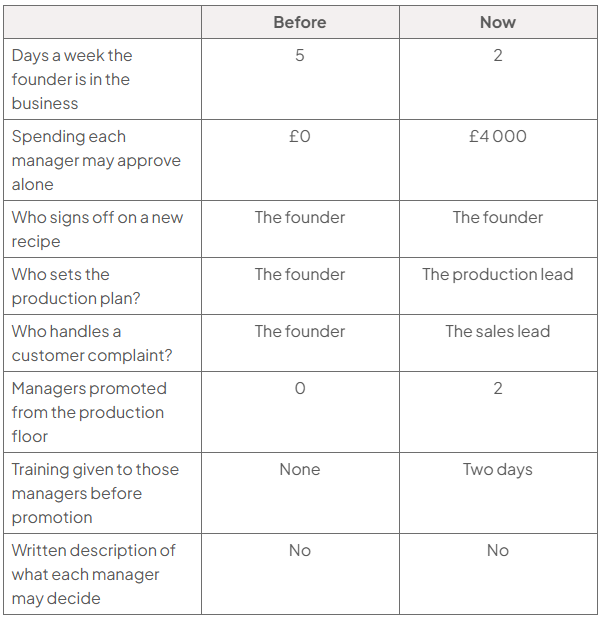
Table comparing Saltmarsh before and now: founder’s days 5/2; managers’ spending limit £0/£4 000; recipe sign-off founder/founder; production plan founder/production lead; complaints founder/sales lead; promoted managers 0/2; training none/two days; decision descriptions no/no.

Source: Saltmarsh Soft Drinks Ltd

Analyse one way in which the founder reducing to two days a week might affect how quickly decisions are made at Saltmarsh Soft Drinks Ltd.

6
6 marks

Source A: Richer Sounds

Richer Sounds sells hi-fi, televisions and home cinema equipment from 51 stores and a website. It has always been unusual in how it treats the people who work in it, and in 2019 it did something almost no company of its size has done.

On 10 May 2019 the founder, Julian Richer, transferred 60% of his shares, worth £9.2 million, into an Employee Ownership Trust. The colleagues now own the majority of the business they work in. He also paid every colleague other than the directors a thank-you bonus of £1 000 for every year they had worked there. The average length of service was eight years, and the bill came to about £4 million.

He stepped back from running it. The day-to-day business was left with the existing management board, and a colleagues' advisory council was set up, chaired by a trustee, to put colleagues' views in front of the people making decisions.

The rest of the Richer approach has been in place for far longer. Colleagues get a share of the profit, free use of the company's holiday homes, interest-free loans and a hardship fund they can apply to. Almost nobody leaves. Most vacancies are filled from inside the business, and the shortest time any member of the management board has served is twenty-five years.

That last figure is the one the company is now asked about. A business where everybody stays and everybody is promoted from within has deep knowledge of how it does things, and very little experience of how anybody else does them.

Source: Richer Sounds and Co-operative News

Appendix C: How Richer Sounds grows its own people

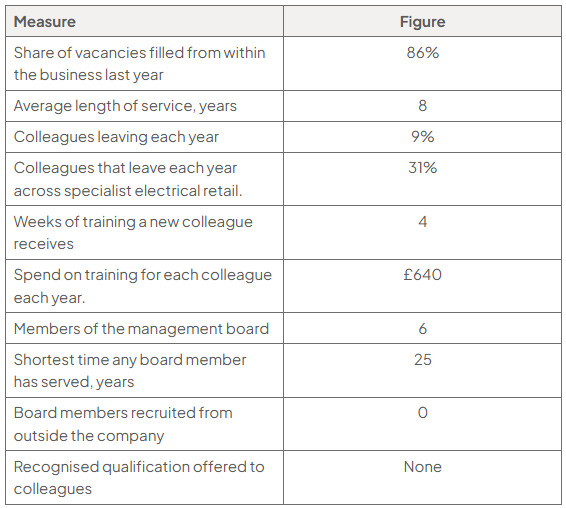
Table of Richer Sounds workforce measures: vacancies filled internally 86%; average service 8 years; colleagues leaving annually 9%, versus 31% across specialist electrical retail; training 4 weeks and £640 per colleague yearly; board 6, shortest service 25 years, external recruits 0, recognised qualification none.

Source: Analyst

Analyse one way in which no member of the management board having served less than twenty-five years might affect the way Richer Sounds is led.

7
6 marks

Source A: Linmoor Software Ltd

Linmoor Software Ltd writes scheduling software for care homes and veterinary practices. Two developers founded it in 2017, it now employs 70 people, and in the year to March 2025 it had revenue of £8.6 million and an operating profit of £940 000. It keeps one office in Leeds with 24 desks, and 58 of its 70 people work mainly from home.

For the first few years everybody could hear everybody else. Decisions were made in the room, the founders knew what every customer wanted, and nobody needed telling what the company was for. Twenty-eight of the current staff joined in the last twelve months, nine of them live outside the United Kingdom, and the company works across four time zones.

The annual survey has picked up what that has done. In 2022, when there were eighteen people, 88% said they knew who decided things. The same question now gets 44%. Only 32% have met most of their colleagues in person, and 37% have never met a founder.

Nothing has been written down. There is no description of how the company works, no employee forum, and most decisions are still announced in a group chat. The six team leads have had no leadership training, and the longest any of them has been in the role is fourteen months. Both founders still personally approve any spending over £2 000.

The whole company is together in one place once a year. The board has been asked whether that is enough.

Source: Linmoor Software Ltd

Appendix C: How Linmoor is led and how decisions get made

Table of Linmoor management data: 2 founder–developer levels; 6 team leads, 9 developers each; founders approve spending over £2,000; decisions via group chat; 2 one-to-one meetings yearly; no forum; 42% asked before changes; no training; longest tenure 14 months.

Source: Analyst

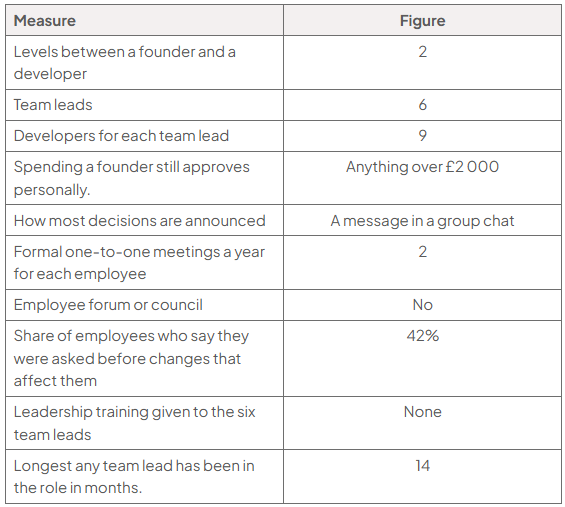
Analyse one way in which the founders approving all spending over £2 000 themselves might affect how quickly Linmoor Software Ltd can act.

1
9 marks

Source A: Linneth Hotels Ltd

Linneth Hotels Ltd owns four hotels on the Northumberland coast. Between them they have 268 rooms and 160 employees, and in the year to October 2025 the company had revenue of £8.9 million and an operating profit of £0.62 million.

The business lives and dies by the seasons. In July and August the hotels are almost full. In January and February they are more than half empty, and the company cuts shifts to match. Most of its people are therefore taken on for the season rather than the year, and many of them do not come back.

Until last year the hotels were run by Gerald Linneth, who founded the company in 1998. His way of managing was simple: he made the decisions, he told people what to do, and he checked that it had been done. Rotas were posted on a Friday for the following week and arguing with them was not encouraged. He believed hospitality was too fast-moving for discussion.

In November 2025 he handed the running of the hotels to a new general manager, Priya Raman, who had previously managed a single large hotel in Edinburgh. She has started doing things differently. Housekeeping and kitchen teams now set their own rotas within rules the company agrees. Every hotel holds a short meeting at the start of each shift where any member of staff can raise a problem. She has promised that anyone who stays a full season will be offered training towards a recognised hospitality qualification.

Not everyone is convinced. Two of the four hotel managers have worked for Gerald Linneth for over twenty years and think the new approach is slow and soft. Gerald Linneth still owns the company and still visits every week.

Source: Linneth Hotels Ltd

Appendix B: What Linneth Hotels Ltd employees say

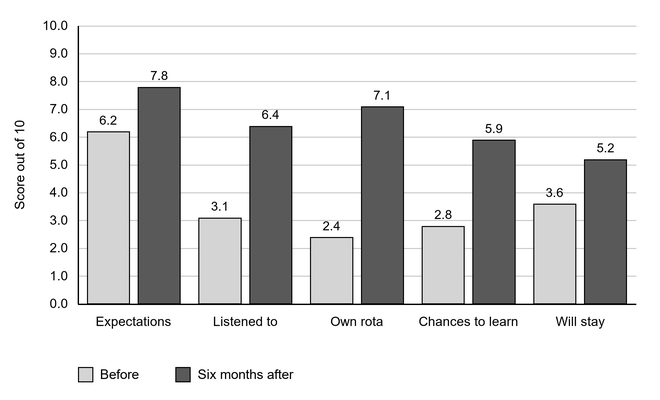
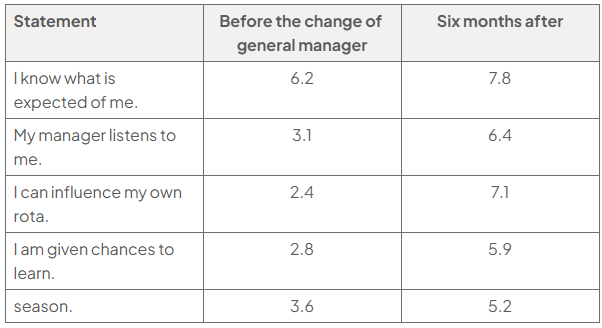
Bar chart of employee survey scores out of 10 before and six months after the change: expectations 6.2 to 7.8, manager listening 3.1 to 6.4, rota influence 2.4 to 7.1, learning 2.8 to 5.9, and intention to stay 3.6 to 5.2.

Scores out of 10, averaged across all four hotels

Table of employee survey scores out of 10 before and six months after the change: know expectations 6.2 to 7.8; manager listens 3.1 to 6.4; influence rota 2.4 to 7.1; learning 2.8 to 5.9; “season” 3.6 to 5.2.

Employees who responded: 118 of 160

Source: Linneth Hotels Ltd staff survey

Appendix C: How the hotels were run, and how they are run now

Comparison table: Gerald / Priya. Rota: owner Friday / teams within rules; problems: manager only / shift meeting; training: none / qualification after season; refunds: owner / receptionist up to £150; complaints: 4 days / same day; supporters: blank / 2 of 4.

Source: Linneth Hotels Ltd

Assess whether changing the leadership style is the best way for Linneth Hotels Ltd to improve its performance.

2
9 marks

Source A: John Lewis Partnership

The John Lewis Partnership owns the John Lewis department stores and the Waitrose supermarkets. It is not owned by shareholders. It is owned by the people who work in it, who are called Partners rather than employees, and who share in the profits through an annual Partnership Bonus paid as a percentage of pay.

For most of its history that bonus was the thing everybody knew about the business. It was announced each March, it was the same percentage for the chief executive as for a shelf stacker, and it was how the Partnership said what it believed: that the people who do the work should own the business and share what it earns.

Then it stopped. The Partnership paid no bonus for three years. In March 2025 it reported that profits had tripled and still did not pay one, because the money was needed to invest in the business. For the year to January 2026 the bonus came back at 2%, worth about one week's pay, the first since 2022.

The underlying business improved. Partnership sales rose 5% to £13.4 billion and profit before tax, bonus and exceptional items rose 6% to £134 million. Cash generated from operations reached £595 million, up £63 million. The Partnership is investing £108 million in base pay in 2026.

The two halves of the Partnership are very different. Waitrose grew sales 7% to £8.5 billion with an adjusted operating profit of £256 million. John Lewis grew sales 3% to £4.9 billion with an adjusted operating profit of £58 million.

The Partnership is also run differently. It has a written constitution, Partners elect representatives who can question the chief executive, and a Partner can raise a concern through an elected body rather than through their line manager.

Source: John Lewis Partnership full year results, 2025 and 2026

Appendix B: Sales and profitability of the two brands

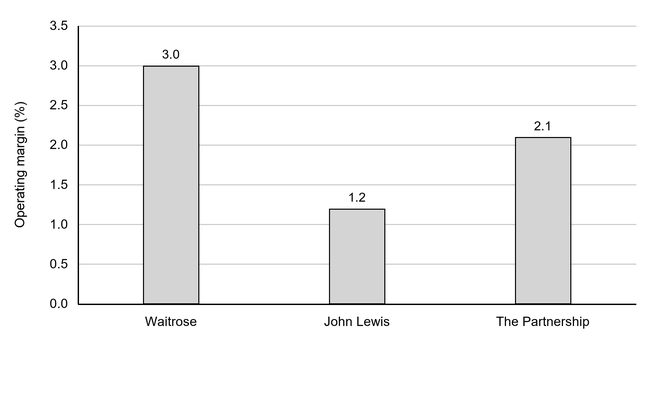
Bar chart of adjusted operating margin (%) for Waitrose, John Lewis and the Partnership: Waitrose 3.0%, John Lewis 1.2%, and the Partnership 2.1%; vertical scale 0 to 3.5%.
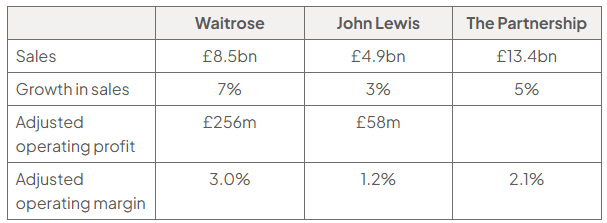
Table comparing Waitrose, John Lewis and the Partnership: sales are £8.5bn, £4.9bn and £13.4bn; sales growth 7%, 3% and 5%; profits £256m and £58m; margins 3.0%, 1.2% and 2.1%.

Source: Analyst calculation from John Lewis Partnership results

Appendix C: The Partnership compared with a conventional retailer

Comparison table: John Lewis Partnership versus conventional listed retailer—workers/shareholders; Partners/employees; equal profit share/management bonus only; elected representatives/line manager; chief executive questioned yes/no; constitution yes/no; training 5.4/2.1 days; internal promotion 71%/38%.

Source: Analyst

Assess whether being owned by its Partners makes the John Lewis Partnership harder to lead.

Calculate Waitrose's adjusted operating margin to support your answer.

3
9 marks

Source A: Harrowgate Mutual

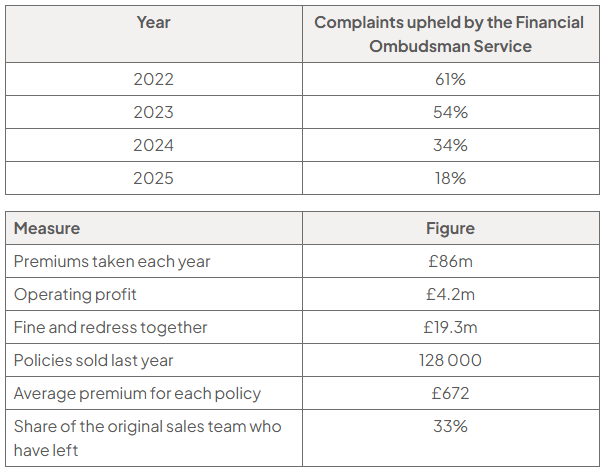
Harrowgate Mutual sells home and motor insurance. It employs 300 people in Leeds, takes £86 million in premiums a year and made an operating profit of £4.2 million in the year to March 2025. It is a mutual, which means it has no shareholders and is owned by its policyholders.

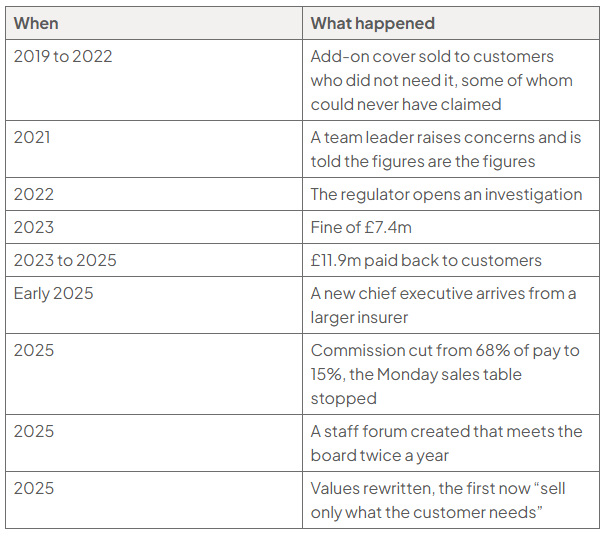
Three years ago the regulator found that Harrowgate's telephone sales team had been selling add-on cover that many customers did not need and in some cases could never have claimed on. The company was fined £7.4 million and has paid £11.9 million back to customers.

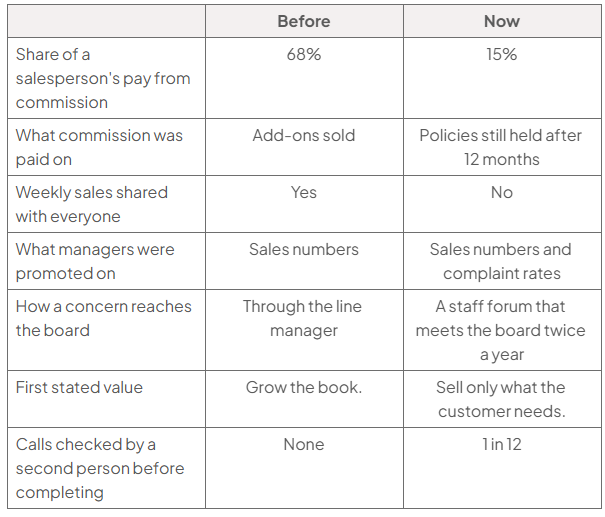
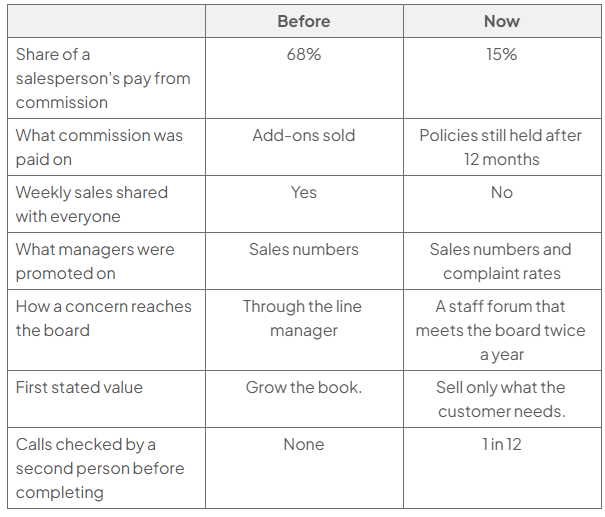
Nobody at Harrowgate set out to mis-sell. What happened was that 68% of a salesperson's pay came from commission, the commission was paid on the number of add-ons sold rather than on whether the customer kept the policy, and the weekly sales table was read out every Monday morning. Managers were promoted on the same numbers. When one team leader raised concerns in 2021 she was told the figures were the figures.

The new chief executive, Ama Boateng, arrived in early 2025 from a larger insurer. She has cut commission to 15% of pay, stopped the Monday sales table, created a staff forum that meets the board twice a year, and rewritten the company's values so that the first one is now “sell only what the customer needs”.

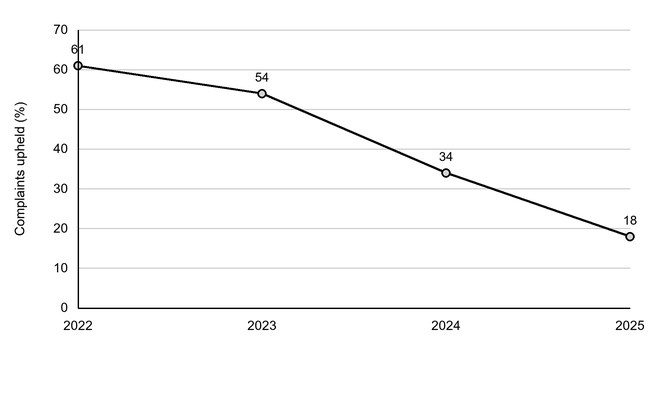
Some of it has worked. Complaints upheld against Harrowgate by the Financial Ombudsman Service have fallen sharply. Some of it has not. Sales of add-ons have fallen further than expected, a third of the original sales team has left, and several long-serving managers say privately that the company has swung from one extreme to the other and that nobody is now willing to ask a customer for anything.

Source: Harrowgate Mutual

Appendix A: What happened at Harrowgate Mutual

Timeline of what happened at Harrowgate Mutual: 2019 to 2022, add-on cover sold to customers who did not need it, some of whom could never have claimed; 2021, a team leader raises concerns and is told “the figures are the figures”; 2022, regulator opens investigation; 2023, fine of £7.4m; 2023 to 2025, £11.9m paid back to customers; early 2025, new chief executive arrives; 2025, commission cut from 68% to 15%, Monday sales table stopped, staff forum created and values rewritten to “sell only what the customer needs”.

Source: Harrowgate Mutual

Appendix C: How Harrowgate's sales team was managed, before and now

Comparison table of Harrowgate’s sales-team management before and now: commission fell from 68% to 15%; incentives, reporting, promotion criteria, values and call checks changed, including one-in-12 calls now checked.

Source: Harrowgate Mutual

Assess the impact of the new chief executive's leadership on Harrowgate Mutual's performance.

4
9 marks

Source A: Patagonia

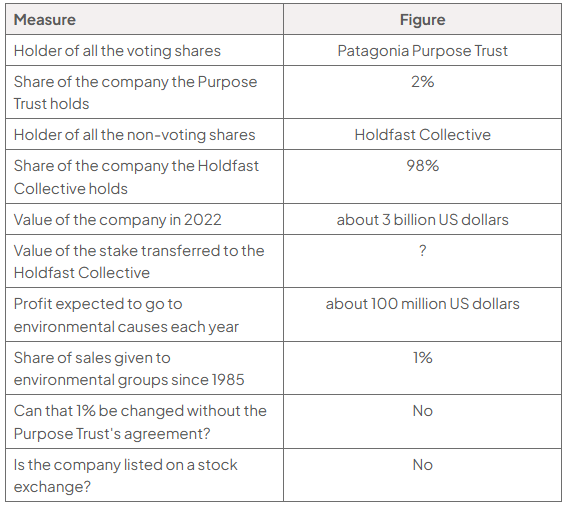
Patagonia makes outdoor clothing and equipment, and has spent fifty years arguing that people should buy less of it. It employs about 4 000 people worldwide, repairs what it has already sold through its Worn Wear programme, and has given 1% of its sales to grassroots environmental groups every year since 1985.

In September 2022 its founder, Yvon Chouinard, gave the company away. All the voting shares, which are 2% of the company, went to the Patagonia Purpose Trust, which exists to hold the company to its values. All the non-voting shares, the other 98%, went to the Holdfast Collective, a non-profit organisation that uses the money to fight the environmental crisis. The company was valued at about 3 billion US dollars at the time. Patagonia's own statement was short: Earth is now our only shareholder.

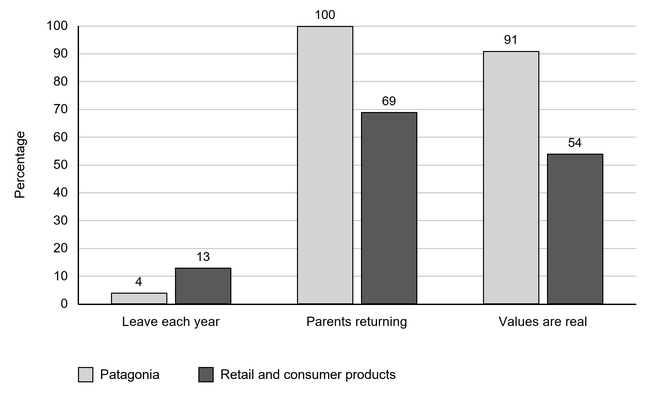
The culture inside the company is as unusual as the ownership. There has been childcare on site at head office for more than thirty years. Employees may take time out of the working day when the surf is up or the snow is good, on the understanding that the work still gets done. Very few people leave: about four in every hundred each year, against roughly thirteen in a hundred across retail and consumer products.

None of this removes the contradiction at the centre of the business. Patagonia sells clothing, and making clothing uses materials and energy. One per cent of sales goes to protecting nature; the other ninety-nine per cent goes on running a clothing company that would rather its customers mended what they already own.

Source: Patagonia Works

Appendix A: Who owns Patagonia since September 2022

Table of Patagonia ownership and finances: Purpose Trust holds 2% voting shares; Holdfast Collective 98% non-voting shares. Company value about 3 billion US dollars; stake value is ?; annual environmental profit about 100 million US dollars.

Source: Patagonia Works

Appendix B: Patagonia compared with its sector

Bar chart comparing Patagonia with retail and consumer products: percentage leaving each year (4 versus 13), parents returning after leave (100 versus 69), and saying values are real (91 versus 54).
Tables compare Patagonia with retail and consumer products: annual leavers 4%/13%, parents returning 100%/69%, and values lived 91%/54%. Culture details include childcare over 30 years, flexible sport-based hours, Worn Wear since 2012, 4,000 staff and Earth as shareholder.

Source: Analyst

Assess the influence of the founder's values on the way Patagonia is now owned and led.

Calculate the value of the stake transferred to the Holdfast Collective to support your answer.

5
9 marks

Source A: Linmoor Software Ltd

Linmoor Software Ltd writes scheduling software for care homes and veterinary practices. Two developers founded it in 2017, it now employs 70 people, and in the year to March 2025 it had revenue of £8.6 million and an operating profit of £940 000. It keeps one office in Leeds with 24 desks, and 58 of its 70 people work mainly from home.

For the first few years everybody could hear everybody else. Decisions were made in the room, the founders knew what every customer wanted, and nobody needed telling what the company was for. Twenty-eight of the current staff joined in the last twelve months, nine of them live outside the United Kingdom, and the company works across four time zones.

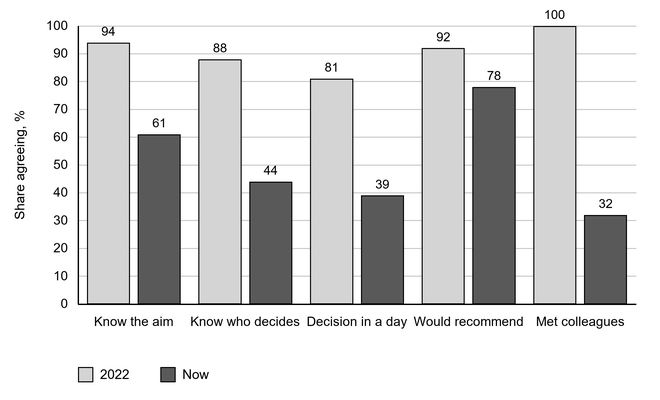
The annual survey has picked up what that has done. In 2022, when there were eighteen people, 88% said they knew who decided things. The same question now gets 44%. Only 32% have met most of their colleagues in person, and 37% have never met a founder.

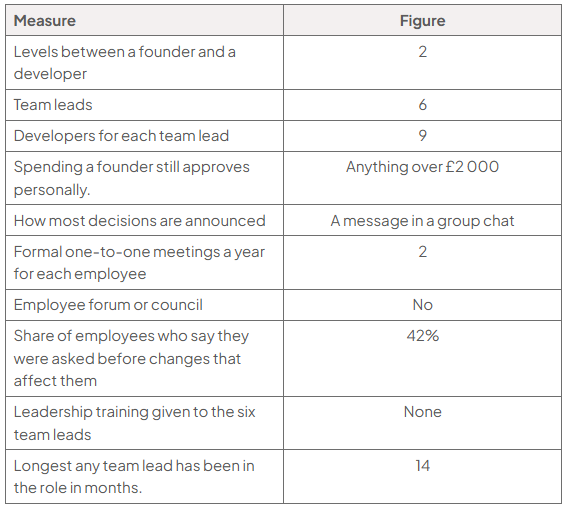
Nothing has been written down. There is no description of how the company works, no employee forum, and most decisions are still announced in a group chat. The six team leads have had no leadership training, and the longest any of them has been in the role is fourteen months. Both founders still personally approve any spending over £2 000.

The whole company is together in one place once a year. The board has been asked whether that is enough.

Source: Linmoor Software Ltd

Appendix B: What Linmoor's people said in 2022, and what they say now

Bar chart of staff agreement in 2022 versus now: knowing the aim 94% versus 61%, decision-maker 88% versus 44%, decision in a day 81% versus 39%, recommending work 92% versus 78%, and meeting colleagues 100% versus 32%.

Share agreeing, percentages

Source: Analyst

Appendix C: How Linmoor is led and how decisions get made

Table of how Linmoor is led: 2 levels between a founder and a developer; 6 team leads; 9 developers for each team lead; a founder still personally approves any spending over £2 000; most decisions are announced by a message in a group chat; 2 formal one-to-one meetings a year for each employee; no employee forum or council; 42% of employees say they were asked before changes that affect them; no leadership training given to the six team leads; 14 months is the longest any team lead has been in the role.

Source: Analyst

Assess how well Linmoor Software Ltd is led now that most of its people work from home.

1
15 marks

Source A: Revolut

Revolut is a digital bank. It has no branches: customers open an account on their phone, usually in minutes, and use it to spend, send and exchange money. It was founded in London in 2015 by Nik Storonsky and has grown faster than almost any European business of its size.

The numbers are remarkable. In 2024 it had 52.5 million retail customers, up 38%, revenue of £3.1 billion, up 72%, and net profit of £790 million. In 2025 customers rose another 30% to 68.3 million, group revenue rose 46% to 6.0 billion US dollars and profit before tax reached 2.3 billion US dollars, a profit margin of 38%. A fundraising in 2025 valued the company at 75 billion US dollars. The workforce passed 10 000 in April 2024 and reached 12 200 during 2025.

That growth has been built on a demanding set of stated values. Revolut tells its people to “get it done” and to “never settle”, alongside “deliver wow”, “think deeper” and “dream team”. Performance is measured against quarterly targets, and the company says the values are not posters on a wall but the basis on which people are hired, promoted and let go.

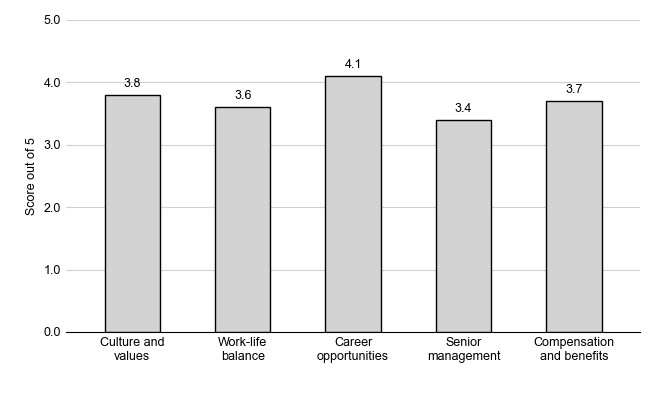
The culture that produces those results also attracts criticism. On the review site Glassdoor, 76% of employees say they would recommend Revolut to a friend, but the company scores 3.6 out of 5 for work-life balance and 3.8 for culture and values. A number of reviews describe meetings in which people are humiliated, managers who lack interpersonal skills, and so heavy a focus on quarterly targets that employees lose sight of anything else. Commentators have questioned whether people who are overworked and burnt out can be expected to be good colleagues, and the chief executive's management style has been criticised for creating long hours and high staff turnover.

Revolut has begun work on changing parts of its culture while insisting that the high-performance core of it stays.

Source: Revolut annual report 2024, Revolut results announcements 2025, and published reviews

Appendix B: Revolut's stated values and what employees say

Bar chart of Glassdoor scores out of 5: career opportunities is highest at 4.1; culture and values 3.8, compensation and benefits 3.7, work-life balance 3.6, and senior management lowest at 3.4.
Two tables. Revolut's five stated values and what the company says each means: get it done, finish what you start and do not wait to be asked; never settle, good enough is not good enough; deliver wow, build things customers talk about; think deeper, understand the problem before solving it; dream team, hire and keep only people who raise the standard. Scores on the review site Glassdoor, out of 5: culture and values 3.8; work-life balance 3.6; career opportunities 4.1; senior management 3.4; compensation and benefits 3.7; 76% of employees would recommend Revolut to a friend.

Source: Revolut and published reviews

Appendix C: Revolut's workforce

Table of Revolut workforce data for 2023, 2024 and 2025: employees 6 100, 10 100, 12 200; first-year leavers 31%, 34%, 39%; average stay 2.1, 2.3, 1.9 years; replacement cost £9 600, £10 400, £11 200.

Source: Analyst

Evaluate two ways in which Revolut's leaders could reduce the number of employees who leave within their first year and recommend which one they should choose.

2
15 marks

Source A: Harrowgate Mutual

Harrowgate Mutual sells home and motor insurance. It employs 300 people in Leeds, takes £86 million in premiums a year and made an operating profit of £4.2 million in the year to March 2025. It is a mutual, which means it has no shareholders and is owned by its policyholders.

Three years ago the regulator found that Harrowgate's telephone sales team had been selling add-on cover that many customers did not need and in some cases could never have claimed on. The company was fined £7.4 million and has paid £11.9 million back to customers.

Nobody at Harrowgate set out to mis-sell. What happened was that 68% of a salesperson's pay came from commission, the commission was paid on the number of add-ons sold rather than on whether the customer kept the policy, and the weekly sales table was read out every Monday morning. Managers were promoted on the same numbers. When one team leader raised concerns in 2021 she was told the figures were the figures.

The new chief executive, Ama Boateng, arrived in early 2025 from a larger insurer. She has cut commission to 15% of pay, stopped the Monday sales table, created a staff forum that meets the board twice a year, and rewritten the company's values so that the first one is now “sell only what the customer needs”.

Some of it has worked. Complaints upheld against Harrowgate by the Financial Ombudsman Service have fallen sharply. Some of it has not. Sales of add-ons have fallen further than expected, a third of the original sales team has left, and several long-serving managers say privately that the company has swung from one extreme to the other and that nobody is now willing to ask a customer for anything.

Source: Harrowgate Mutual

Appendix B: Complaints and sales at Harrowgate Mutual

Line chart of complaints upheld by the Financial Ombudsman Service, falling steadily from 61% in 2022 to 54% in 2023, 34% in 2024 and 18% in 2025.
Two tables: complaints upheld fell from 61% in 2022 to 54% in 2023, 34% in 2024 and 18% in 2025; figures include £86m premiums, £4.2m profit, £19.3m fine and redress, 128 000 policies, £672 average premium and 33% staff turnover.

Source: Harrowgate Mutual

Appendix C: How Harrowgate's sales team was managed, before and now

Before/now table: commission 68%/15%; paid on add-ons sold/policies held 12 months; sales shared yes/no; promotion on sales/sales plus complaints; concerns via manager/staff forum; values “Grow the book”/“Sell only what the customer needs”; checks none/1 in 12.

Source: Harrowgate Mutual

Evaluate two ways in which Harrowgate Mutual's leaders could win back the trust of the sales team and recommend which one they should choose.

3
15 marks

Source A: Ashcombe Academy Trust

Ashcombe Academy Trust runs five secondary schools in the south west of England. It employs 480 people, of whom 285 are teachers, and teaches about 4 100 pupils. Its income last year was £31.4 million, almost all of it from government funding, and it finished the year with a surplus of £400 000.

Its problem is keeping teachers. Fifty-seven left last year. Most did not go to another school: they left teaching. When a class has no teacher the trust books a supply teacher through an agency, at a day rate that has risen every year, and supply teachers rarely mark work or know the pupils.

The chief executive, Dr Helena Marsh, cannot pay more. Teachers' pay is set nationally and the trust has no power to change it. What she can change is everything else: how teachers are appraised, how much notice they get of a timetable change, whether they have time in the school day to plan and mark, and how decisions are taken in each school.

At present every teacher is appraised once a year against three targets, two of which are pupil examination results. Heads of department set the targets in September and review them the following July. Teachers say the appraisal is about proving they are doing their job rather than helping them do it better, and that the parts of the job they find hardest, such as behaviour and workload, are not what they are measured on.

Dr Marsh has two proposals in front of her. Neither of them is more pay, because more pay is not available.

Source: Ashcombe Academy Trust

Appendix B: When teachers leave Ashcombe

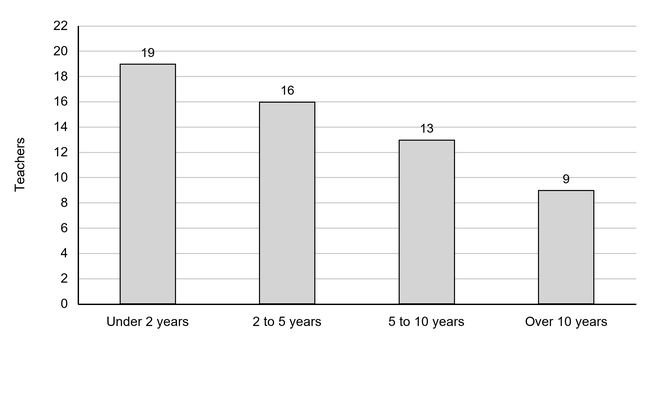
Bar chart of teachers leaving by length of service: under 2 years, 19; 2 to 5 years, 16; 5 to 10 years, 13; over 10 years, 9. The vertical axis shows teachers from 0 to 22.
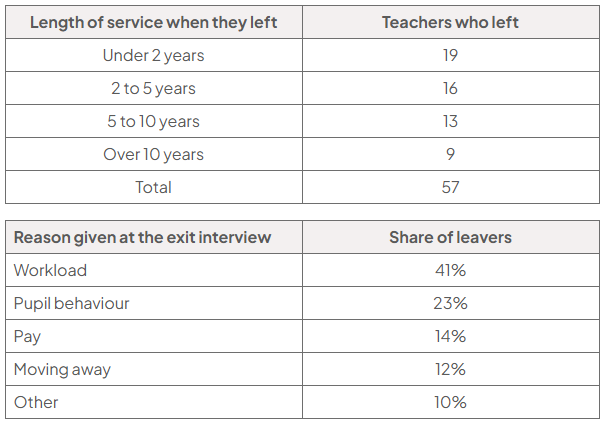
Two tables show 57 teachers leaving: under 2 years 19, 2 to 5 years 16, 5 to 10 years 13 and over 10 years 9. Exit reasons: workload 41%, pupil behaviour 23%, pay 14%, moving away 12%, other 10%.

Source: Ashcombe Academy Trust

Appendix C: How teachers are appraised, now and as proposed

Table of how teachers are appraised, now and as proposed: how often a teacher is appraised, once a year now, once a term proposed; how targets are set, the head of department in September now, the teacher and the head of department together proposed; how many targets are pupil examination results, 2 of 3 now, 1 of 3 proposed; is workload one of the things discussed, no now, yes proposed; is behaviour support one of the things discussed, no now, yes proposed; notice given of a timetable change, 2 days now, 10 days proposed; protected time in the school day to plan and mark, none guaranteed now, 2 hours a week proposed; does the trust control teachers' pay, no, it is set nationally, both now and as proposed.

Source: Ashcombe Academy Trust

Evaluate two ways in which Ashcombe Academy Trust's leaders could improve the way teachers are managed, given that they cannot change pay, and recommend which one they should choose.