Financial Reporting (AQA A Level Business): Exam Questions

Exam code: 7132

Syllabus Edition

First teaching 2026

First exams 2028

2 hours15 questions
1
6 marks

Source B: Big Issue Media Ltd

Big Issue Media Limited publishes The Big Issue, a weekly magazine sold on the street by people who are homeless or at risk of becoming homeless. The company was set up in 1991 and is part of a group of 16 companies known as the Big Issue Group. It is a social enterprise: it trades like any other business, but it exists to create work for its vendors rather than to pay outside shareholders.

The selling model is unusual. Vendors buy copies of the magazine from Big Issue Media Limited at half the cover price, then sell them at the full price and keep the difference. A vendor is not an employee. What they earn depends entirely on how many copies they sell, so the number of magazines moving through the business is also the number that decides whether a vendor can pay their rent.

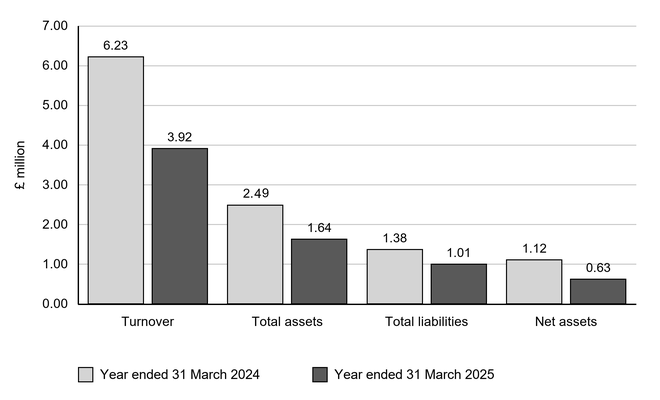
That number has been falling. Fewer people carry cash, fewer people buy print magazines, and the streets are quieter than they were. In the year to 31 March 2025 turnover fell by 37.1% to £3.92 million. The company cut its workforce from 74 people to 56. Cash at the bank fell to £297 000 and net assets fell by 43.6% to £630 000. Appendix D shows how the business changed.

The directors are considering two ways forward. They could raise the cover price, which would give each vendor more money for every copy sold. Or they could push more sales through the Big Issue app and website, which costs less to run but cuts the vendors out of the sale.

Source: information sourced from Companies House, 2026

Appendix D: How Big Issue Media Ltd changed during the year

Grouped bar chart of Big Issue Media Ltd accounts (£ million) for years ended 31 March 2024 and 2025: turnover 6.23 to 3.92, total assets 2.49 to 1.64, liabilities 1.38 to 1.01, and net assets 1.12 to 0.63.

Source: Companies House

Big Issue Media Ltd's accounts show its turnover but not the number of vendors it supports.

Analyse one reason why Big Issue Media Ltd's accounts might not show how successful the business has been.

2
6 marks

Source B: Big Issue Media Ltd

Big Issue Media Limited publishes The Big Issue, a weekly magazine sold on the street by people who are homeless or at risk of becoming homeless. The company was set up in 1991 and is part of a group of 16 companies known as the Big Issue Group. It is a social enterprise: it trades like any other business, but it exists to create work for its vendors rather than to pay outside shareholders.

The selling model is unusual. Vendors buy copies of the magazine from Big Issue Media Limited at half the cover price, then sell them at the full price and keep the difference. A vendor is not an employee. What they earn depends entirely on how many copies they sell, so the number of magazines moving through the business is also the number that decides whether a vendor can pay their rent.

That number has been falling. Fewer people carry cash, fewer people buy print magazines, and the streets are quieter than they were. In the year to 31 March 2025 turnover fell by 37.1% to £3.92 million. The company cut its workforce from 74 people to 56. Cash at the bank fell to £297 000 and net assets fell by 43.6% to £630 000. Appendix D shows how the business changed.

The directors are considering two ways forward. They could raise the cover price, which would give each vendor more money for every copy sold. Or they could push more sales through the Big Issue app and website, which costs less to run but cuts the vendors out of the sale.

Source: information sourced from Companies House, 2026

Appendix D: How Big Issue Media Ltd changed during the year

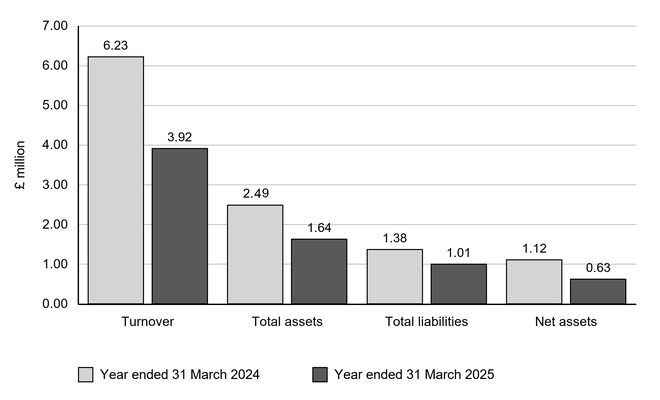
Grouped bar chart comparing 2024 and 2025 figures (£ million): turnover 6.23 to 3.92, total assets 2.49 to 1.64, liabilities 1.38 to 1.01, and net assets 1.12 to 0.63.

Source: Companies House

Big Issue Media Ltd's turnover fell by 37.1% in the year to 31 March 2025.

Analyse one reason why one year's figures might give a misleading picture of how Big Issue Media Ltd is performing.

3
6 marks

Source A: Ridgeway Signs

Tomasz Nowak trades as Ridgeway Signs. He is a sole trader, which means the business is not separate from him in law: he owns everything it owns and he is personally responsible for everything it owes. He has no employees and works from a rented unit on a small industrial estate, with a van.

He designs, prints and fits signs for local businesses: shop fascias, vehicle graphics, banners, menu boards and exhibition displays. Almost all of his customers are other businesses within about twenty miles. Every job is quoted separately, and he wins roughly one quote in three.

Last year Ridgeway Signs took £85 000. Materials cost about 30p in every pound of work Tomasz does himself, so he keeps about 70p. Rent on the unit, the van, insurance and design software cost £21 000 a year whatever he sells.

The business has a shape to it. Appendix B shows sales month by month. October and November are his best months, because retailers refit before Christmas, and January and February are his worst.

There is one piece of work he cannot do. Large-format printing, such as vehicle wraps and big banners, needs a machine he does not own, so he sends those jobs to a trade printer in another town. Last year that work was worth £22 000 of his sales, but the trade printer takes most of it: Tomasz keeps only about 20p in the pound. He also turns away large jobs when the trade printer is busy.

A wide-format printer costs £24 000. Tomasz has £6 200 in the business account. Appendix C sets out what his accountant thinks would happen if he bought one.

Ridgeway Signs is a sole trader and does not have to publish its accounts.

Analyse one way in which not having to publish its accounts might affect Ridgeway Signs' ability to win work from local competitors.

4
6 marks

Source A: Softcat plc

Softcat plc sells technology to other organisations. If a company needs 400 laptops, a new firewall, a cloud contract and someone to set it all up, it can deal with a dozen manufacturers or it can deal with Softcat. It is a public limited company listed in London, and it sells to about 10 200 customers: businesses of every size and a large amount of public sector work.

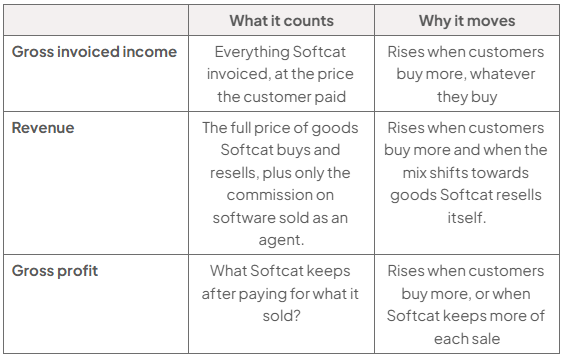
Softcat does not describe its own size the way most companies do, and the reason is worth understanding. When it sells a laptop it buys the laptop and sells it on, so the whole price counts as its revenue. When it sells a software licence it is acting more as an agent for the software company, and accounting rules require it to count only the commission it keeps, not the price the customer paid. Two sales of exactly the same value to the customer therefore appear in Softcat's accounts at completely different sizes.

That is why it publishes a third figure. Gross invoiced income is the total value of everything it invoiced, whichever way the accounting treats it, and Softcat regards gross profit as its main measure of scale.

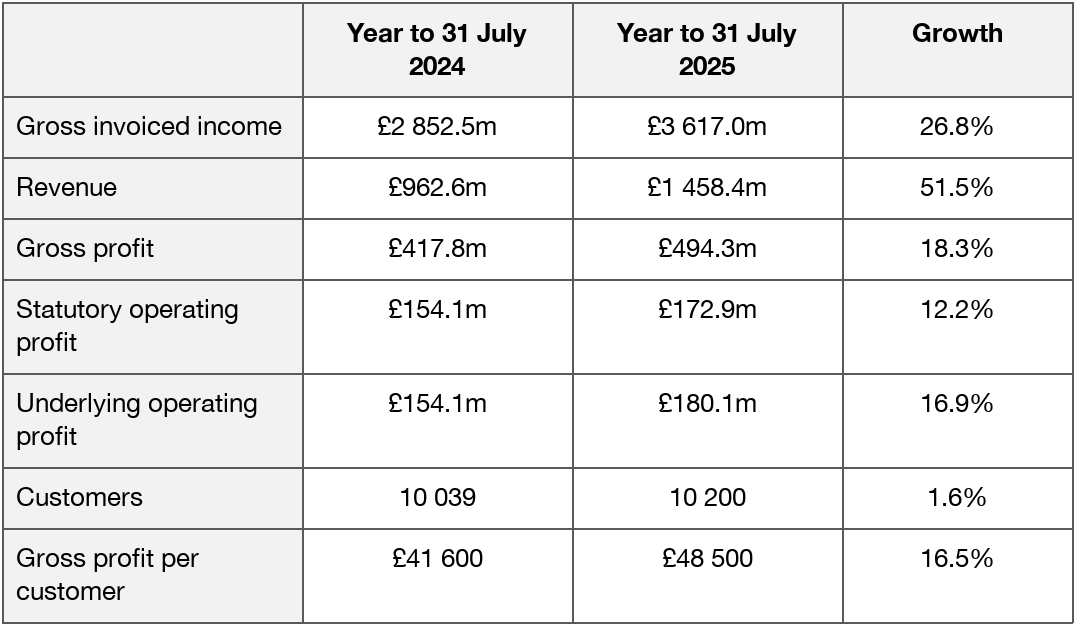
In the year to 31 July 2025 all three grew, and none of them agreed with the others. Gross invoiced income rose 26.8% to £3 617.0 million. Revenue rose 51.5% to £1 458.4 million. Gross profit rose 18.3% to £494.3 million. Statutory operating profit rose 12.2% to £172.9 million and underlying operating profit rose 16.9% to £180.1 million. Appendix B shows the three top-line measures together.

Behind all of it, the customer numbers barely moved. Softcat served 10 200 customers, 1.6% more than the year before, and gross profit per customer rose 16.5% to £48 500. It also completed its first acquisition.

Source: information sourced from Softcat plc preliminary results for the year ended 31 July 2025

Appendix A: Softcat plc selected results

Table comparing Softcat results for years to 31 July 2024 and 2025: 2024 gross invoiced income £2,852.5m, revenue £962.6m, gross profit £417.8m, operating profits £154.1m, 10,039 customers and £41,600 gross profit per customer.

Source: Softcat plc

Appendix C: Why the three figures differ

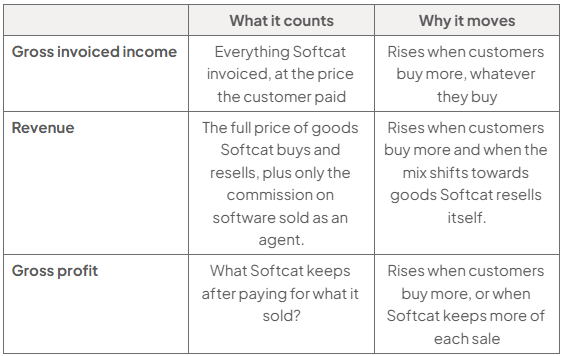
Table comparing what each measure counts and why it rises: gross invoiced income counts all customer invoices; revenue counts resold goods plus software commission; gross profit is what Softcat keeps. All rise with sales, while revenue and profit also depend on sales mix and margin.

Source: Analyst

Softcat plc publishes gross invoiced income as well as revenue.

Analyse one way in which publishing an extra measure might help investors judge how fast Softcat plc is growing.

5
6 marks

Source B: Thorne Valley Orchards Ltd

Thorne Valley Orchards Ltd grows apples on 180 acres in Herefordshire and turns them into juice and chutney in a press and kitchen on the same site. It is a private limited company run by Marianne Vance, whose family has farmed the land since 1954, and it employs 26 people, more in the picking season.

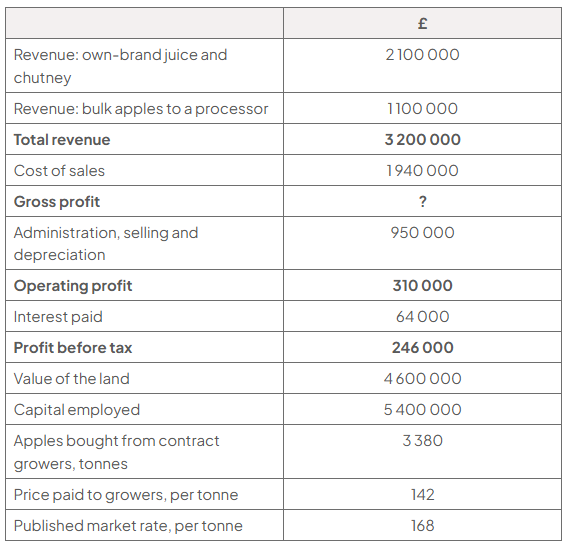
It sells in two ways. Its own-brand juice and chutney go to farm shops, delicatessens and garden centres, and brought in £2.1 million last year. Bulk apples it does not need go to a large juice processor, which brought in £1.1 million. Total revenue was £3.2 million.

Its own orchards do not produce enough. Thorne Valley Orchards Ltd buys a further 3 380 tonnes of apples a year from fourteen contract growers, all of them small farms within thirty miles. It pays them £142 a tonne. The published market rate last year was £168 a tonne, and Appendix E shows how that gap has widened. The growers accept it because Thorne Valley Orchards Ltd takes the whole crop, pays within fourteen days and has done so for years. Its own customers, the farm shops and delicatessens, take about 45 days to settle.

The land is worth £4.6 million. Together with the buildings, press and kitchen, capital employed is £5.4 million. Against that, operating profit last year was £310 000 and profit before tax, after £64 000 of interest, was £246 000.

Marianne Vance has been offered a contract by a supermarket for 900 000 bottles of own-label juice a year at £1.10 a bottle. Her own brand sells at £2.40. The press currently runs at about 40% of what it could do.

Appendix D: Thorne Valley Orchards Ltd, summary of last year

Appendix D table: cost of sales £1 940 000, gross profit shown as “?”, and administration, selling and depreciation £950 000; it also lists land value £4 600 000, capital employed £5 400 000 and grower prices of £142 versus £168 per tonne.

Source: Analyst

Thorne Valley Orchards Ltd's accounts show land valued at £4 600 000 and a profit before tax of £246 000.

Analyse one way in which the value of the land might affect how a bank reads Thorne Valley Orchards Ltd's accounts.

6
6 marks

Source B: Foxhall Creamery Ltd

Foxhall Creamery Ltd makes hard cheese on the Shropshire border. It is a private limited company owned in equal shares by Kate Foxhall, who is 61, and Owen Ridd, who is 58, and it employs 48 people. Revenue last year was £6 800 000, sold to farm shops, delicatessens and independent grocers, none of whom takes more than 4% of output.

The cheese has to sit. The youngest thing Foxhall Creamery Ltd sells has been in the store for nine months, and its best-known cheese comes out at fourteen. Every wheel in the store is money already spent and not yet earned, and there are two rooms of them.

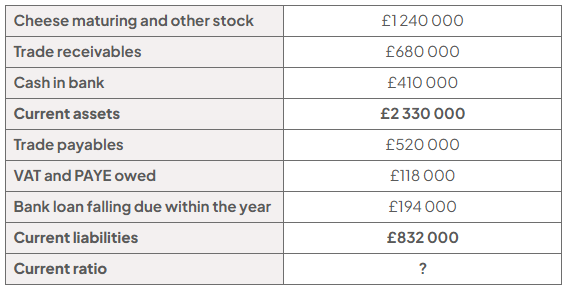
The accounts look reassuring. At the year end the company held £1 240 000 of inventory, was owed £680 000 by customers and had £410 000 in the bank, against £520 000 owed to suppliers, £118 000 in VAT and PAYE, and £194 000 of the bank loan falling due within the year. The loan stands at £1 460 000 in total, and the financial objective for this year is to reduce it by £200 000.

Foxhall Creamery Ltd values the cheese in its store at what the milk, the labour and the power have cost. A wheel that has been maturing for thirteen months appears in the accounts at the same figure as it did on the day it was made, although the price it will fetch has roughly doubled in the meantime.

The company needs a third maturing store, which will cost £900 000. It can pay for it out of the bank balance and this year's retained profit, or it can borrow again.

There is a larger question behind that one. Kate Foxhall wants to retire within five years. A cheese wholesaler has offered £4 900 000 for the company. The alternative the two of them have been reading about is an employee ownership trust, which would buy the business on behalf of the 48 staff and pay Kate Foxhall and Owen Ridd out of future profits over about seven years.

Appendix D: Foxhall Creamery Ltd, current assets and current liabilities

Table: current assets are cheese inventory £1.24m, receivables £680k and bank £410k (£2.33m total); current liabilities are payables £520k, VAT/PAYE £118k and loan due within a year £194k (£832k total). Current ratio: ?

Source: Analyst

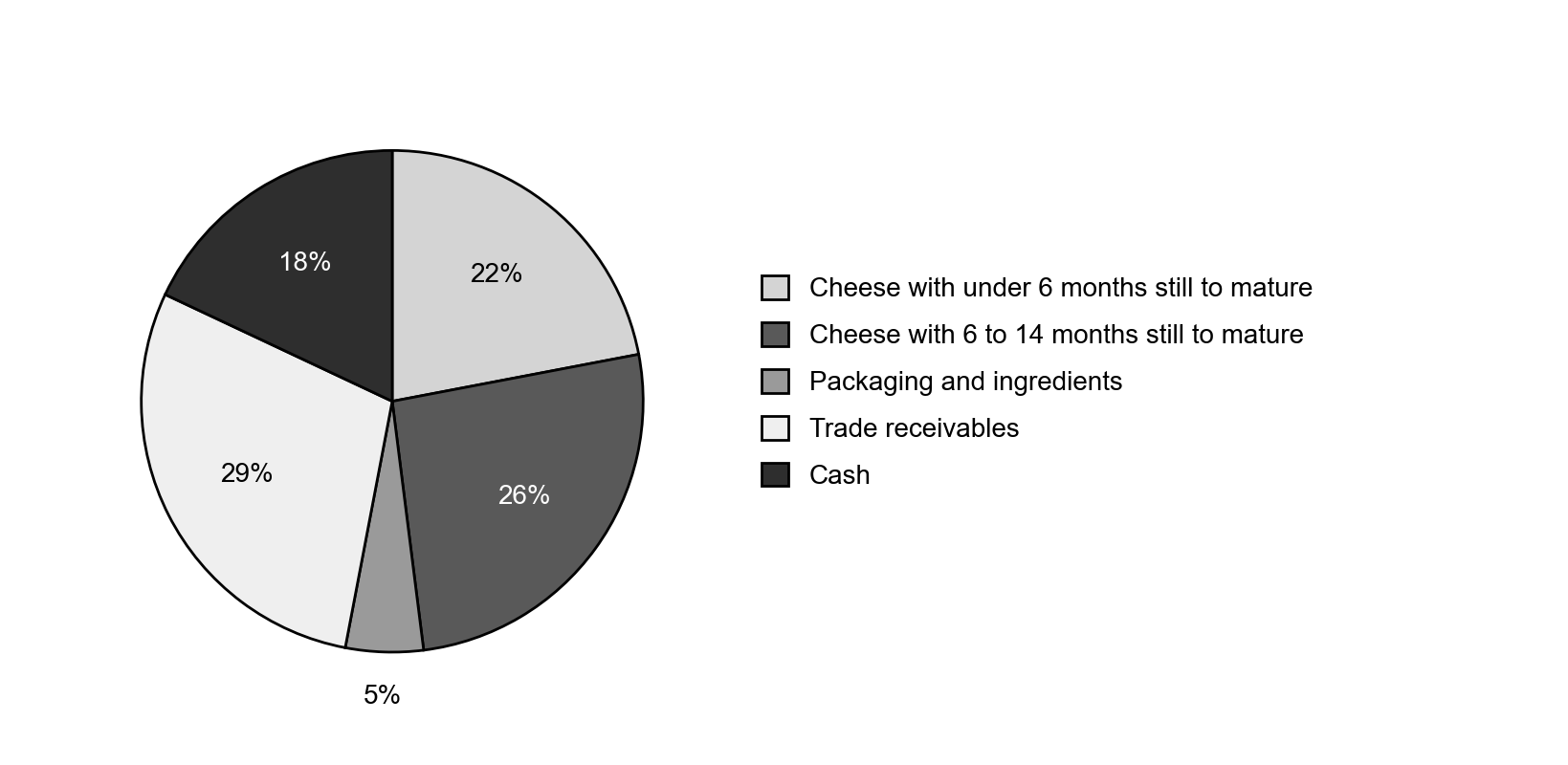
Appendix E: What Foxhall Creamery Ltd's current assets are made of

Pie chart of Foxhall Creamery’s current assets: trade receivables 29%, cheese still maturing 48% (22% under six months and 26% six to fourteen months), cash 18%, and packaging and ingredients 5%.

Source: Analyst

Foxhall Creamery Ltd values a wheel of cheese that has been maturing for thirteen months at what the milk, labour and power have cost, although the price it will fetch has roughly doubled.

Analyse one way in which valuing cheese in this way might affect what Foxhall Creamery Ltd's accounts show about the business.

7
6 marks

Source A: Softcat plc

Softcat plc sells technology to other organisations. If a company needs 400 laptops, a new firewall, a cloud contract and someone to set it all up, it can deal with a dozen manufacturers or it can deal with Softcat. It is a public limited company listed in London, and it sells to about 10 200 customers: businesses of every size and a large amount of public sector work.

Softcat does not describe its own size the way most companies do, and the reason is worth understanding. When it sells a laptop it buys the laptop and sells it on, so the whole price counts as its revenue. When it sells a software licence it is acting more as an agent for the software company, and accounting rules require it to count only the commission it keeps, not the price the customer paid. Two sales of exactly the same value to the customer therefore appear in Softcat's accounts at completely different sizes.

That is why it publishes a third figure. Gross invoiced income is the total value of everything it invoiced, whichever way the accounting treats it, and Softcat regards gross profit as its main measure of scale.

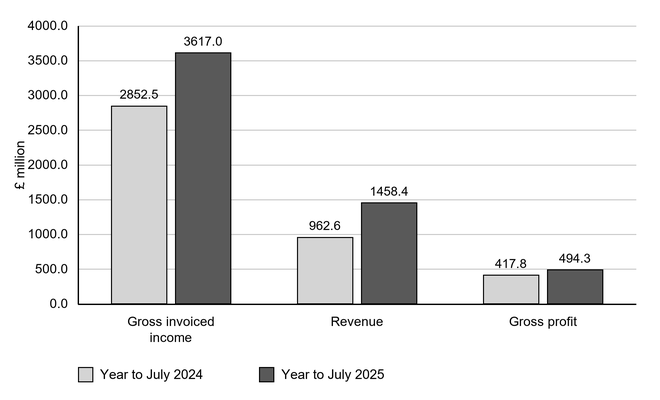
In the year to 31 July 2025 all three grew, and none of them agreed with the others. Gross invoiced income rose 26.8% to £3 617.0 million. Revenue rose 51.5% to £1 458.4 million. Gross profit rose 18.3% to £494.3 million. Statutory operating profit rose 12.2% to £172.9 million and underlying operating profit rose 16.9% to £180.1 million. Appendix B shows the three top-line measures together.

Behind all of it, the customer numbers barely moved. Softcat served 10 200 customers, 1.6% more than the year before, and gross profit per customer rose 16.5% to £48 500. It also completed its first acquisition.

Source: information sourced from Softcat plc preliminary results for the year ended 31 July 2025

Appendix B: Three measures of Softcat plc's size

Bar chart of Softcat plc’s three size measures in £ million for years to July 2024 and 2025: all increase—gross invoiced income 2,852.5 to 3,617.0, revenue 962.6 to 1,458.4, and gross profit 417.8 to 494.3.

Source: Softcat plc

Appendix C: Why the three figures differ

Table of three measures: gross invoiced income counts all invoices; revenue counts resale prices plus software commission; gross profit counts what Softcat keeps. All rise with spending, while revenue reflects product mix and gross profit sales value.

Source: Analyst

In the year to 31 July 2025 Softcat plc's gross invoiced income rose 26.8%, its revenue rose 51.5% and its gross profit rose 18.3%.

Analyse one way in which publishing three different measures of size might affect how someone outside Softcat plc judges the business.

1
9 marks

Source A: Jet2 plc

Jet2 plc describes itself as the UK's leading provider of package holidays and its third largest airline. It is a public limited company with shares traded on the London Stock Exchange, based at Leeds Bradford Airport, and it employs more than 14 000 people. Steve Heapy is the chief executive.

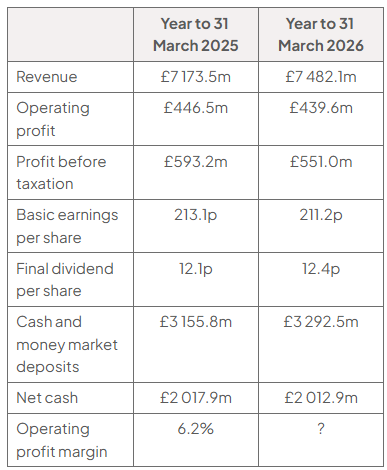
The company sells two different things. A package holiday combines flights, a hotel and transfers in one booking. A flight-only seat is just the flight. In the year to 31 March 2026 Jet2 flew a record 20.83 million passengers, up 5%. Within that total, flight-only passengers rose 15% to 7.64 million while package holiday customers rose 1% to 6.62 million. Jet2 counts each package holiday customer once, while flown passengers are counted on every flight, outbound and return.

Customers pay for a holiday months before they take it, so money arrives long before the flight happens. At the year end the company held £3 292.5 million in cash and money market deposits, and net cash of £2 012.9 million.

The year's results were mixed. Revenue reached a record £7 482.1 million, up 4%. But operating profit fell 2% to £439.6 million, after absorbing £11.0 million of start-up costs for a new base at London Gatwick and £50 million of increased costs from employment taxes and sustainable aviation fuel. Profit before tax fell 7% and earnings per share fell 1% to 211.2p.

Shareholders were rewarded anyway. Jet2 returned £363.0 million to them during the year through share buybacks and dividends, raised the final dividend 2% to 12.4p a share, and announced a further £250 million buyback.

Source: Jet2 plc preliminary results, 8 July 2026, and Companies House

Appendix A: Jet2 plc selected financial results

Comparative financial-results table for years to 31 March 2025 and 2026; 2026 revenue is £7,482.1m and operating profit £439.6m, with operating profit margin shown as “?”. 2025 margin is 6.2%.

Source: Jet2 plc

Assess whether Jet2 plc's record revenue in the year to 31 March 2026 means it had a successful year.

Calculate Jet2 plc's operating profit margin for the year to 31 March 2026 to support your answer.

Give your answer to one decimal place.

2
9 marks

Source B: Battersea Dogs' and Cats' Home

Battersea Dogs' and Cats' Home is a registered charity, number 206394. It works with animals, provides services to the general public, and operates in London, in Windsor and Maidenhead, and in Kent. It has no shareholders and no owners. Any money left over at the end of the year stays in the charity.

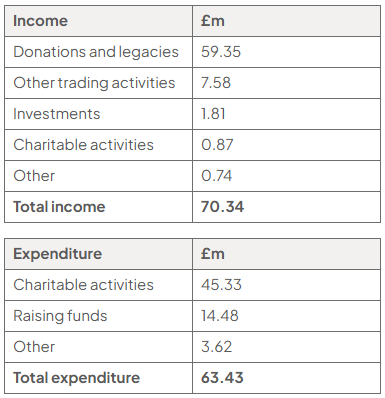
Almost all of its money is given rather than earned. In the year to 31 December 2024 its total income was £70.34 million, of which £59.35 million came from donations and legacies. A legacy is money left to a charity in somebody's will, and legacies alone came to £32.57 million, almost half of everything Battersea received. The rest came from other trading activities, £7.58 million, from charitable activities, £869 000, from investments, £1.81 million, and from other sources, £741 000.

Raising that money costs money. Battersea spent £14.48 million on raising funds during the year. It spent £45.33 million on its charitable activities and £3.62 million on other costs, giving total expenditure of £63.43 million.

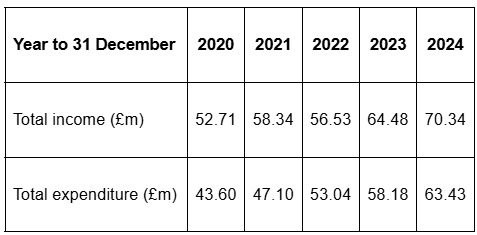
Income has grown in three of the past four years, from £52.71 million in 2020 to £70.34 million in 2024. Expenditure has risen every year over the same period. Appendix E shows both.

The charity faces a planning problem that a company selling to customers does not. Nobody can be told in advance how much will be left to Battersea in wills, or when. Legacies are the largest single source of its income and the least predictable.

Source: Charity Commission register of charities, entry 206394

Appendix D: Battersea Dogs' and Cats' Home income and expenditure, year to 31 December 2024

Appendix D tables show 2024 figures in £m: income—donations and legacies 59.35, trading 7.58, investments 1.81, charitable activities 0.87, other 0.74; total 70.34. Expenditure totals 63.43.

Appendix E: Battersea Dogs' and Cats' Home income and expenditure, 2020 to 2024

Appendix E table of Battersea’s total income and expenditure (£m), for years ending 31 December: income 52.71, 58.34, 56.53, 64.48, 70.34; expenditure 43.60, 47.10, 53.04, 58.18, 63.43 (2020–2024).

Source: Charity Commission

Assess whether Battersea Dogs' and Cats' Home was in a stronger position in 2024 than in 2020.

3
9 marks

Source B: Riverford Organic Farmers Ltd

Riverford Organic Farmers Limited grows and delivers organic vegetables. Guy Singh-Watson began delivering boxes of vegetables to local households from the family farm in Devon, and the business was registered as a private limited company in 1999. Its registered office is still Wash Barn at Buckfastleigh in Devon, and its registered business activity is the growing of vegetables, roots and tubers.

Customers subscribe to a weekly box rather than choosing individual items. Boxes are packed at Riverford's own sites and delivered straight to the door by its own drivers, so the company controls its route to market and does not sell through supermarkets. Subscribers pay in advance and can pause or change an order online. Riverford owns five of its sites outright and holds another nine on lease.

In 2018 Guy Singh-Watson began transferring ownership of the company to the people who work in it. The process finished on 8 June 2023, when he sold his remaining shares and the Riverford Employee Ownership Trust became the company's only person with significant control. The business is now held in trust on behalf of its roughly 1 000 employees. There are no outside shareholders, so no dividends are paid to investors outside the business.

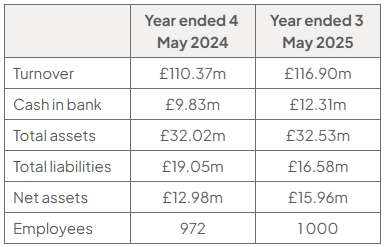
In the year ended 3 May 2025 turnover rose by 5.9% to £116.9 million. Cash held at the bank rose by a quarter to £12.31 million, and total liabilities fell by 13.0%.

Organic food remains a small part of UK grocery, and supermarkets have been widening their own organic ranges at lower prices.

Because there are no outside shareholders, the directors and the trust decide together what to do with each year's profit. There is £2.4 million available this year. It could be paid to the co-owners as a profit share, or it could be spent on solar panels and new refrigeration at Wash Barn, which would cut the company's running costs every year from then on.

Source: information sourced from Companies House, 2026

Appendix D: Riverford Organic Farmers Ltd selected financial data

Riverford selected financial data, 2024 versus 2025 (figures in £m unless stated): turnover 110.37/116.90; cash 9.83/12.31; assets 32.02/32.53; liabilities 19.05/16.58; net assets 12.98/15.96; employees 972/1,000.

Source: Companies House

Assess whether Riverford Organic Farmers Ltd's financial position at 3 May 2025 was strong enough for it to pay £2.4 million to its co-owners as a profit share.

4
9 marks

Source B: Brompton Bicycle Ltd

Brompton Bicycle Limited makes folding bicycles. Andrew Ritchie designed the first one in 1975 and built it in a workshop under a railway arch, and the company was registered the following year. Fifty years on, every Brompton is still made by hand and quality checked at the company's own factory in Greenford, west London. It is a private limited company with around 100 shareholders and is led by chief executive Will Butler-Adams, who joined the company in 2002 and has led it since 2008.

In principle the product has barely changed. A Brompton folds into a small package in under 20 seconds, so an owner can carry it onto a train, put it in a car boot or tuck it under a restaurant table. The range now includes electric, lightweight titanium and larger-wheel models. Brompton describes its purpose as creating urban freedom for happier lives, and it sells durability as part of the deal. Every frame carries a seven-year warranty, the bikes are designed to be repaired rather than replaced, and there are now more than a million Brompton owners and over 300 owners' groups around the world.

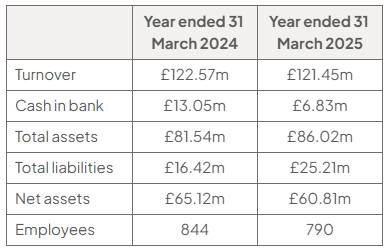
The year to 31 March 2025 was harder than usual. Turnover slipped by 0.9% to £121.45 million, the workforce fell by 54 people to 790, and cash at the bank almost halved. Over the same year the company's total liabilities rose by 53.5%.

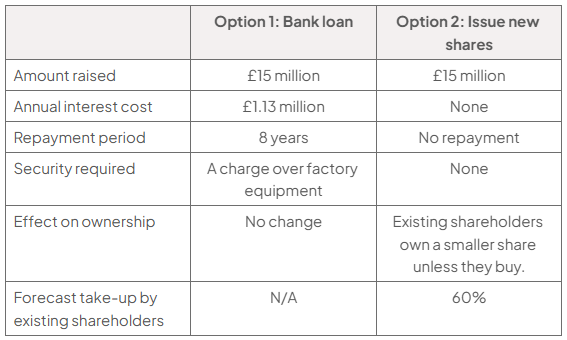
Brompton would like to invest £15 million in its factory so that it can build more bikes at a lower cost per bike. It does not hold enough cash to pay for this out of its own resources. It could borrow the money from a bank, or it could ask its existing shareholders to buy new shares. Appendix F shows information on the two options.

Source: information sourced from Companies House and Brompton Bicycle Ltd, 2026

Appendix D: Brompton Bicycle Ltd selected financial data

Appendix D table comparing 2024 and 2025: turnover £122.57m to £121.45m; cash £13.05m to £6.83m; assets £81.54m to £86.02m; liabilities £16.42m to £25.21m; net assets £65.12m to £60.81m; employees 844 to 790.

Source: Companies House

Appendix F: Data for two ways of raising £15 million

Appendix F compares raising £15m by bank loan or new shares. The loan costs £1.13m annual interest, is repaid over 8 years and secured on factory equipment; shares have no interest, repayment or security, may dilute ownership, with 60% forecast take-up.

Source: Analyst

Assess whether Appendix D shows that Brompton Bicycle Ltd can afford to invest £15 million in its factory.

5
9 marks

Source B: Ashgrove Print Ltd

Ashgrove Print Ltd is a commercial printer in Dewsbury. Ken Ashgrove started it in 1994 after fifteen years at a firm that lost its only large customer and closed in a fortnight, and he told his daughter Nadia more than once that he built Ashgrove Print Ltd so that nobody would ever again be able to tell him what to charge. Nadia Ashgrove has run it since 2021. It is a private limited company and employs 34 people.

The work comes in two kinds. Long-run work is leaflets and shelf-edge cards for Fenwold Stores, a supermarket group: high volume, printed to a price Fenwold Stores fixes, and paid for in 74 days. It brought in £2 472 000 last year and cost £2 100 000 in paper, ink, plates and press time. Short-run work is menus, packaging, programmes and art prints for about 300 small local customers: low volume, priced job by job, and paid for in 21 days, often on collection. It brought in £1 648 000 and cost £784 000.

Across all its customers, Ashgrove Print Ltd waits an average of 53 days to be paid. It buys paper from two mills on 30-day terms. Its agreed terms with its own smaller suppliers, the plate makers, the bindery, the finishers and the courier, are also 30 days. Last year it paid them on average in 61 days. Its overdraft facility is £150 000 and it was £96 000 into it at the year end.

Fenwold Stores has now offered Ashgrove Print Ltd all of its print work on a three-year contract. It would need a new press costing £340 000, which the bank will lend against. Appendix F sets out that future and the one Nadia Ashgrove has been building towards instead.

Appendix D: Ashgrove Print Ltd, income statement for last year

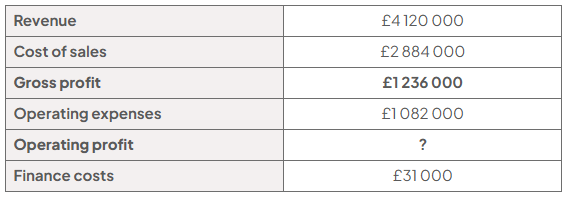
Income statement table: revenue £4,120,000; cost of sales £2,884,000; gross profit £1,236,000; operating expenses £1,082,000; operating profit shown as ?; finance costs £31,000.

Source: Analyst

Assess what Ashgrove Print Ltd's income statement shows about the state of the business.

Calculate Ashgrove Print Ltd's operating profit for last year to support your answer.

1
15 marks

Source B: Apple's Vision Pro

In September 2023, Apple launched the Vision Pro in North America. Vision Pro is a virtual reality (VR) headset. Unlike rival headsets which require hand-held controllers, Vision Pro is controlled by hand movements, voice commands and eye tracking. Analysts estimated over $8 billion had been spent developing Vision Pro over five years.

The Vision Pro may turn out to be one of Apple's lowest-selling products. Apple reportedly hoped to sell 3 million units in the first year. Some experts expected sales would be below 200,000 units in this period – lower than any of Apple's other major product launches. Others were more optimistic about Vision Pro's long-term sales. Apple set a high price of $3499. This price was three times more expensive than Meta's competing headset, the Quest. Other issues with the product included a battery that lasted only two hours and a headset that some users said was awkward to wear.

Apple was keen to release the Vision Pro because of strong competition, especially from Meta. Meta had been selling the Quest at a loss to increase its market share.

Steve Jobs, Apple's founder, once said that customers do not know what they want until Apple makes it.

Over 2 billion Apple devices are in use around the world. Apple also has:

  • a huge database of information about current users of its products.

  • a wide product portfolio including iPads, Mac computers, iPods, Apple TV, and the Apple watch.

  • a trusted brand. In a 2021 survey, three times as many people said they would buy a headset from Apple compared to its closest competitor.

In 2023, Apple increased its dividend payments to about 15% of its yearly profits.

Source: Apple, 2024

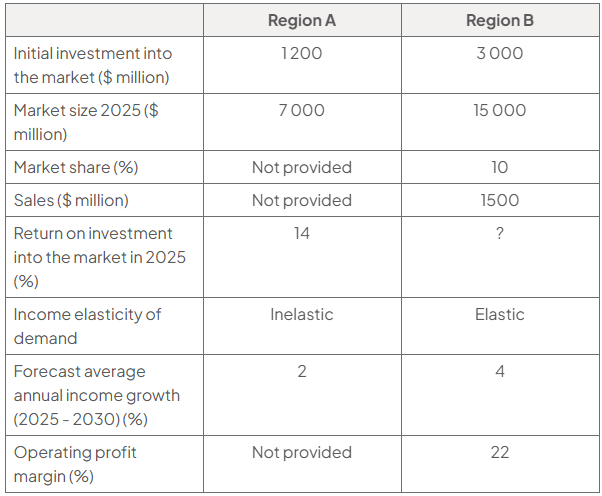
Appendix G: Market and financial data for launching Vision Pro in Region A and Region B

Table comparing Regions A and B: investment 1,200/3,000 million dollars; 2025 market size 7,000/15,000 million; B share 10% and sales 1,500 million; ROI A 14%, B unknown; growth 2%/4%; income elasticity of demand A inelastic, B elastic; B margin 22%; A share, sales and margin not provided.

Appendix G shows market and financial data for launching the Vision Pro in two regions.

Evaluate whether Apple should launch the Vision Pro in Region A or Region B.

Calculate the return on investment in Region B in 2025 to support your answer.

2
15 marks

Source B: Halvergate Storage Ltd

Halvergate Storage Ltd rents storage units by the month. It has three sites in East Anglia, at Norwich, King's Lynn and Lowestoft, with 1 200 units between them. It is a private limited company owned by two brothers, Tom and Michael Ferris, and it employs nine people.

Its customers are households between moves, people who have downsized, and small businesses storing inventory. A unit costs an average of £100 a month. Once a unit is let it costs Halvergate Storage Ltd about £12 a month in electricity, cleaning and administration. Everything else is fixed: staff of £290 000 a year and rates, insurance and maintenance of £186 000, which are paid on the whole building whether the units inside it are full or empty.

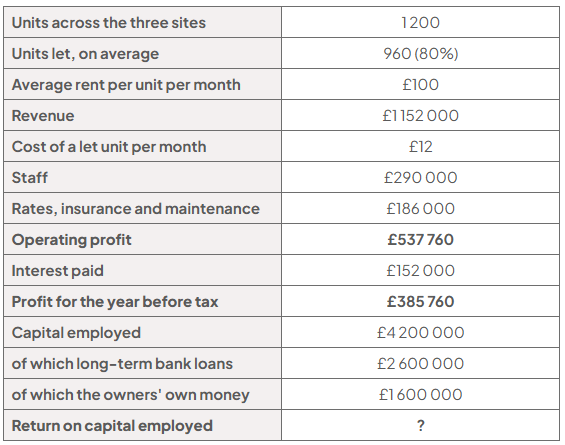
Last year 80% of the units were let, which is 960 of the 1 200, and revenue was £1 152 000. Operating profit was £537 760. After £152 000 of interest, profit for the year before tax was £385 760.

The interest is there because the sites were built with borrowed money. The three sites together represent capital employed of £4.2 million, of which £2.6 million is long-term bank loans and £1.6 million is the brothers' own money.

Tom and Michael Ferris have set the company an objective: a return on capital employed of 15% within three years. They are also looking at a fourth site, at Bury St Edmunds, which would cost £1.6 million.

Appendix D: Halvergate Storage Ltd, summary of last year

Summary table: 1,200 units, 960 (80%) let, £100 monthly rent, £1,152,000 revenue, £537,760 operating profit, £152,000 interest, £385,760 pre-tax profit, £4.2m capital (£2.6m loans; £1.6m owners’ money), ROCE unknown.

Source: Analyst

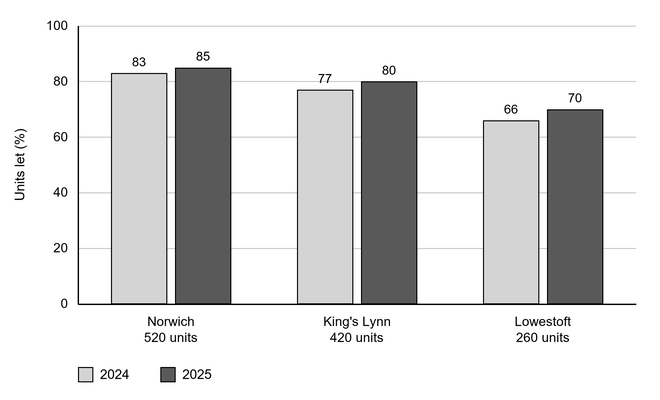
Appendix E: Halvergate Storage Ltd, units let by site

Grouped bar chart of units let by site in 2024 and 2025, with percentages on a 0 to 100% axis: Norwich 83% to 85%, King’s Lynn 77% to 80%, and Lowestoft 66% to 70%.

Source: Analyst

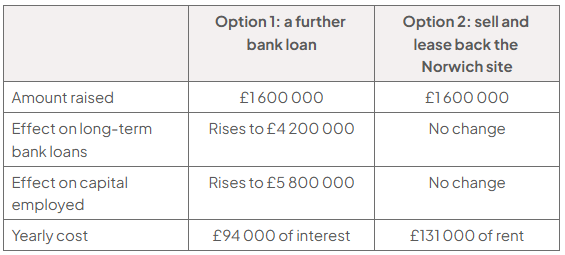
Appendix F: Data for two ways of paying for a fourth site

Table comparing two £1.6 million funding options: a further bank loan raises long-term loans to £4.2 million and capital employed to £5.8 million, costing £94,000 interest yearly; selling and leasing back Norwich leaves both unchanged and costs £131,000 rent yearly. Gearing after each option is not given.

Source: Analyst

Halvergate Storage Ltd made a profit before tax of £385 760 on capital employed of £4 200 000, of which £2 600 000 is borrowed.

Evaluate whether Tom and Michael Ferris should judge how well Halvergate Storage Ltd is doing on its profit for the year or on its return on capital employed.

3
15 marks

Source B: Aldergate Landscapes Ltd

Aldergate Landscapes Ltd designs and builds gardens across Cheshire and north Staffordshire. It is a private limited company owned by Joss Aldergate and his wife Ruth, and it employs 19 people alongside regular subcontractors for stonework and electrics.

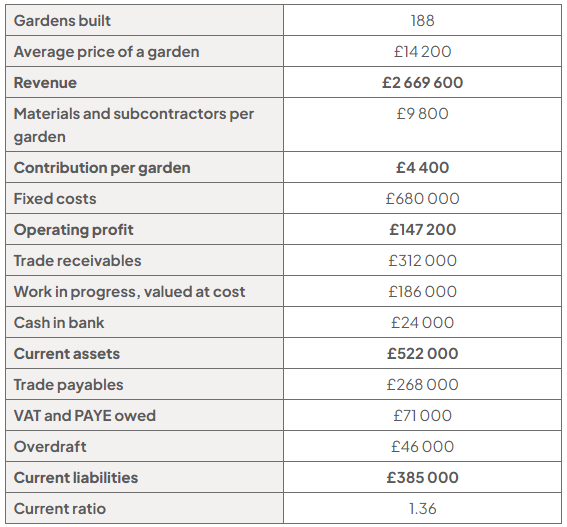
Most of the work is for private clients having a whole garden rebuilt, at an average of £14 200 a garden. The rest is for two housing developers who want the gardens finished before a show home opens. Last year the company built 188 gardens for revenue of £2 669 600. Materials and subcontractors cost £9 800 a garden. Everything else, meaning the yard, the vans, the permanent staff, the designer and the office, cost £680 000.

The work does not arrive evenly. Appendix E shows what comes in each month, and the three months from December to February brought in £214 000 between them, against fixed costs of about £170 000 for the same period.

To manage this, Aldergate Landscapes Ltd asks private clients for a 50% deposit when the design is signed off. The deposit is spent almost immediately, though not usually on that client's garden: it pays for materials on the job already running.

At the year end the company was owed £312 000 by clients and developers, held £186 000 of gardens that were half built and not yet invoiced, and had £24 000 in the bank. Against that it owed £268 000 to suppliers and subcontractors, £71 000 in VAT and PAYE, and was £46 000 into its overdraft.

Appendix D: Aldergate Landscapes Ltd, summary of last year

Appendix D summary table: contribution per garden £4,400; operating profit £147,200; current assets £522,000; current liabilities £385,000; current ratio 1.36.

Source: Analyst

Joss Aldergate wants to strengthen the company's liquidity before the quiet months from December to February. He is considering two options. The first is to push the crews and subcontractors to finish and invoice the £186 000 of half-built gardens before December. The second is to arrange a £120 000 overdraft facility with the bank, which would cost about £7 400 a year and would need Joss to guarantee it personally.

Evaluate whether Aldergate Landscapes Ltd should finish and invoice its half-built gardens before December or arrange a £120 000 overdraft facility.