Understanding the HL Essay (DP IB English A: Literature: HL): Revision Note

This section is designed to help you understand the structure and expectations of the Higher Level Essay on your IB Diploma English A: Literature (HL) course. It consists of:
How the HL Essay is assessed
Core skills assessed in the HL Essay
Types of extended essay
Choosing your text for the HL Essay
How the HL Essay is assessed
The HL Essay is a formal, academic essay completed during your IB Diploma English A: Literature (HL) course. It enables you to demonstrate your ability to construct a sustained analysis using a literary work.
Overview
The HL Essay is worth 20% of your overall grade
It must be completed under teacher supervision and is externally assessed
It must be between 1,200–1,500 words in length
You are required to develop your own independent line of inquiry for the essay:
This is not a broad topic or general theme but a focused question that strictly guides your argument
You must choose one text or work studied during your course:
This can be a literary text, or a work (a collection of literary texts, like a collection of poetry)
You are expected to plan, draft and refine your essay before submission
Core skills assessed in the HL Essay
The HL Essay is designed to assess your higher-order thinking skills and your ability to construct an independent, sustained line of argument about a literary work.
While this builds on skills that you will have developed in other components of the course, it requires greater depth and control. You will be expected to:
Formulate a focused line of inquiry
Develop a sustained and coherent argument
Analyse how and why authorial choices construct meaning
Select and integrate relevant textual evidence
Maintain a consistent analytical focus throughout
Examiner Tips and Tricks
Your learner portfolio is an incredibly important tool as you prepare for the HL Essay as it will help you track your ideas and interpretations as you study your texts. Using a reading log can support you in recording your impressions, questions and insights while you read each text. These notes can help you to reflect on your ideas and can also help you to identify interesting questions that could form the focus of your essay.
There are four assessment criteria.
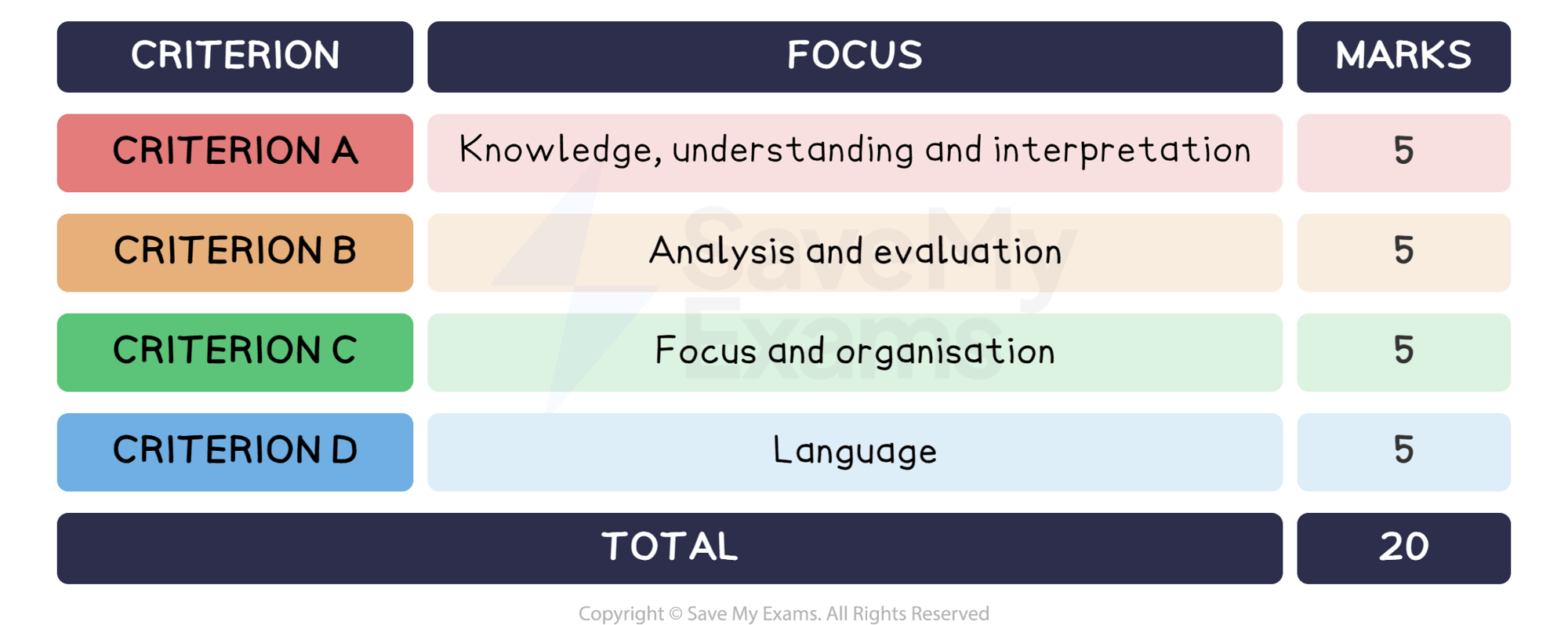
Choosing your text for the HL Essay
Selecting the right text is one of the most important decisions you will make in preparing for your HL Essay. Before developing a line of enquiry, you should revisit all of the texts you have studied during the course so that you can make an informed and thoughtful choice.
You may base your essay on:
One literary text
A literary work:
A “work” comprises multiple shorter texts by the same author, e.g. 15–20 poems or 5–10 short stories
It is useful to create a list of your studied texts like this one:
List of texts studied | |||
Woman at Point Zero – Nawal El Saadawi | Hamlet – William Shakespeare | The Kite Runner – Khaled Hosseini | Death and the Maiden – Ariel Dorfman |
The World’s Wife – Carol Ann Duffy | A Streetcar Named Desire – Tennessee Williams | Beloved – Toni Morrison | Selected poems – Seamus Heaney |
Interpreter of Maladies – Jhumpa Lahiri | Persepolis – Marjane Satrapi | Antigone – Sophocles | The Handmaid’s Tale – Margaret Atwood |
Across the course, you will study a range of literary works including novels, drama, poetry, short fiction and, in some cases, graphic novels or literary memoir. When choosing your HL Essay text, consider works that offer rich material for sustained analysis — texts where authorial choices around language, structure, voice and form generate complex meanings that you can develop into a focused argument. Remember that your chosen text or work must have been studied in class, as you cannot use a text which has not been part of your course.
Examiner Tips and Tricks
Although you are not required to frame your HL Essay around one of the seven course concepts, the IB recommends using them as a helpful starting point. These concepts are intentionally broad and can be interpreted and applied to a wide range of texts in different ways.
Remember, choosing a topic you genuinely care about will make your analysis more thoughtful and sustained. Therefore use the HL Essay to explore ideas that genuinely interest you, including those that you may have already discussed in class.
Choosing the right text for your HL Essay is important. This table outlines key factors to consider when selecting your texts.
Depth and complexity | Range of authorial choices | Suitable for focused enquiry | Familiarity |
Choose a text that is rich enough to sustain a detailed analysis within 1,200–1,500 words. The work should provide sufficient depth to explore ideas | Ensure the text offers enough literary, visual or linguistic features to analyse how meaning is constructed | Some texts are better suited to a more narrowly focused analysis than others. Select a text that enables you to create a clearly defined line of inquiry | Focus on a text or author you know thoroughly. A well-understood text will allow for a more precise and controlled analysis |
Examiner Tips and Tricks
If you are considering shorter literary works such as poems or song lyrics, you will need to analyse more than one text by the same author. Although it is possible to focus on a single short work, this should only be done if both you and your teacher are confident that it provides enough material for a sustained discussion.
Here are some examples of texts that require careful selection.
Text type | Example | What you should consider |
Poetry collection | The World's Wife by Carol Ann Duffy |
|
Short story collection | Dubliners by James Joyce |
|
Essay collection | George Orwell |
|
Drama | A Streetcar Named Desire by Tennessee Williams |
|
Top tips
Choose a text suitable for literary analysis:
Your HL Essay must analyse authorial choices and textual features
It should explore the effects these choices create for the reader or audience
Use a conceptual line of inquiry:
Your essay should focus on how meaning is constructed in the text
This involves analysing authorial choices, language and structure and effects on the reader/audience
Think strategically about your text choice and consider:
The scope of the texts
The amount of material available
Whether the text allows for close analysis
Ensure your text selection provides enough material for analysis:
If you choose shorter texts you may need to select a group of texts
Your selection should allow you to provide sufficient analysis and allow you to make supported claims rather than broad generalisations
Consult your teacher regularly as they can help you:
Refine your line of inquiry
Confirm that your text is appropriate
Ensure your essay is analytical

Unlock more, it's free!
Join the 100,000+ Students that ❤️ Save My Exams
the (exam) results speak for themselves:

Was this revision note helpful?